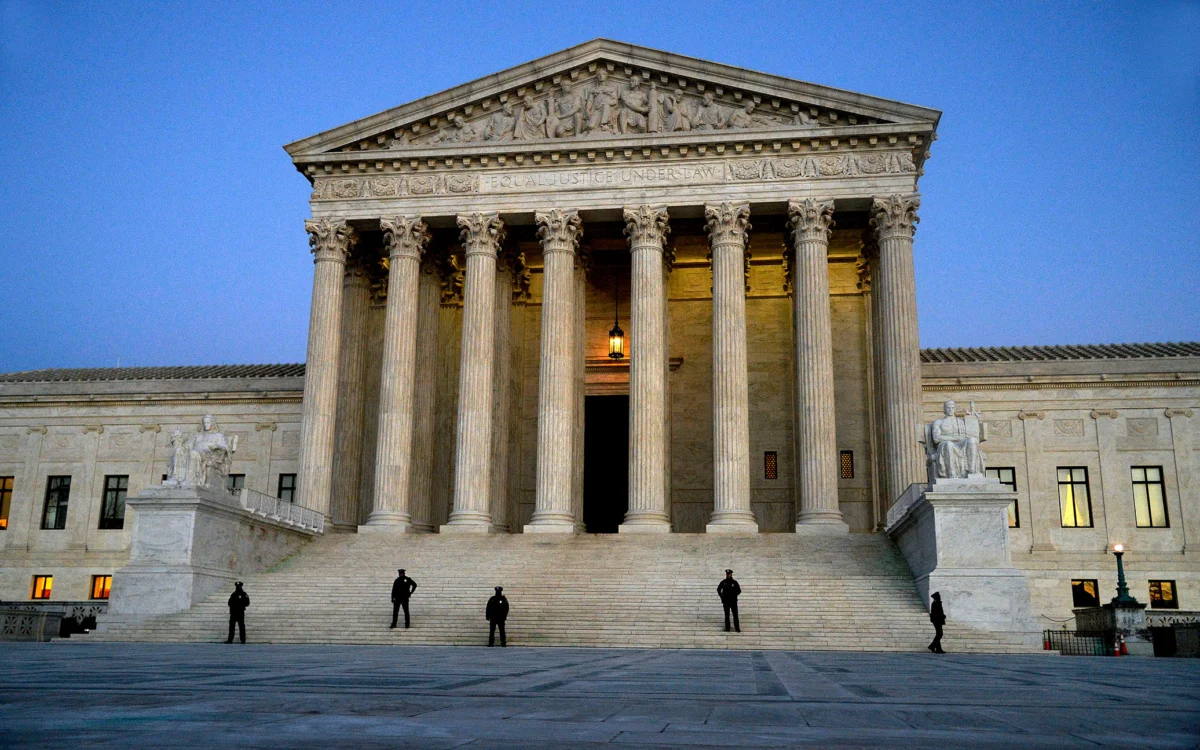
In a surprising turn of events, the U.S. Supreme Court has dismissed a pivotal case, Hamm v. Smith, that had advocates bracing for potentially sweeping changes to the definition and application of intellectual disability in capital punishment proceedings. The decision, announced Thursday, effectively sidesteps a complex legal question concerning how to interpret multiple IQ scores when determining if an individual qualifies for protection against execution under the Eighth Amendment.
The case centered on Joseph Clifton Smith, an Alabama inmate convicted of capital murder. Smith’s intellectual capacity has been assessed through five separate IQ tests, yielding scores that range from 72 to 78. Alabama authorities argued that Smith should remain eligible for execution, citing his consistent scores above the commonly used threshold of 70 for intellectual disability. However, Smith’s legal team contended that the variability of his scores and the presence of significant limitations in his adaptive functioning warranted a more nuanced evaluation, one that extended beyond a strict reliance on IQ metrics.
The Supreme Court’s decision to dismiss the case, without issuing a substantive ruling on the merits of the legal question presented, leaves a cloud of uncertainty hanging over the application of intellectual disability in the criminal justice system. While the immediate outcome preserves the status quo, the concurring opinion from Justice Sonia Sotomayor suggests the Court’s reluctance stemmed from a perceived lack of sufficient legal and scientific evidence presented within the case to craft definitive guidance.
Background of the Legal Challenge
The genesis of the Hamm v. Smith case lies in the landmark Supreme Court decision of Atkins v. Virginia (2002). In Atkins, the Court ruled that the execution of individuals with intellectual disabilities constitutes cruel and unusual punishment, thereby violating the Eighth Amendment. This ruling established a critical protection for a vulnerable population, acknowledging that intellectual disability significantly diminishes an individual’s culpability and moral responsibility. Subsequent legal interpretations and state statutes have largely affirmed this precedent, generally requiring a diagnosis of intellectual disability to include limitations in intellectual functioning (typically, an IQ score below 70) and significant deficits in adaptive behavior that manifest before the age of 18.
However, the practical application of the Atkins ruling has proven complex, particularly concerning the interpretation of IQ scores. The use of a single IQ score as a definitive cutoff has been widely criticized by disability advocates and many mental health professionals. They argue that IQ tests are not infallible and that a person’s cognitive abilities can fluctuate. Furthermore, intellectual disability is a clinical diagnosis that requires a comprehensive assessment, encompassing not only cognitive capacity but also adaptive functioning – the ability to cope with everyday life and social demands.
The Hamm v. Smith case presented the Supreme Court with a direct challenge to how these multifaceted considerations should be weighed, especially when presented with a range of IQ scores. Alabama’s position, as articulated by its legal representatives, appeared to favor a more rigid application of the IQ threshold, suggesting that scores consistently above 70 should preclude an intellectual disability diagnosis, regardless of other factors. This approach, disability advocates warned, risked undermining the spirit and intent of the Atkins decision.
A Timeline of Key Legal Developments
- 2002: The U.S. Supreme Court decides Atkins v. Virginia, ruling that executing individuals with intellectual disabilities is unconstitutional under the Eighth Amendment. This landmark decision mandates a more thorough evaluation beyond a simple IQ score.
- Post-Atkins Era: Numerous state legislatures and courts grapple with establishing criteria for identifying intellectual disability in capital cases. Disagreements arise over the precise IQ cutoff and the weight given to adaptive functioning assessments.
- Recent Years: Cases like Hamm v. Smith emerge, highlighting the persistent legal disputes over the interpretation of intellectual disability in capital sentencing. Advocacy groups actively engage in these legal battles, seeking to ensure robust protections for individuals with intellectual disabilities.
- Arguments Heard: The Supreme Court hears oral arguments in Hamm v. Smith, acknowledging the case’s potential to clarify or redefine the legal standards for intellectual disability in capital cases. Disability rights organizations express significant concern over the implications of a ruling that could narrow protections.
- Thursday’s Dismissal: The Supreme Court announces its decision to dismiss Hamm v. Smith, opting not to rule on the core legal question. The majority opinion is unsigned, offering no explicit rationale, while concurring and dissenting opinions offer glimpses into the justices’ deliberations.
Advocacy Groups Sound the Alarm
Leading up to the Supreme Court’s decision, a coalition of disability advocacy organizations voiced grave concerns about the potential ramifications of a ruling in Hamm v. Smith. These groups, including the Bazelon Center for Mental Health Law and The Arc, urged the Court to uphold the established clinical framework for diagnosing intellectual disability. This framework, they emphasized, necessitates a holistic evaluation that considers significant limitations in both intellectual functioning and adaptive behavior, which must have originated before adulthood.
Jennifer Mathis, deputy director at the Bazelon Center for Mental Health Law, articulated these concerns, stating, "A Supreme Court decision could have potentially narrowed protections for people with intellectual disabilities against being executed and could have reflected an inappropriately strict view of intellectual disability." Mathis further elaborated on the potential for broader societal impact, noting, "Further, a decision narrowing how intellectual disability is determined could have had ramifications beyond death penalty cases if it were used to argue for a restrictive view of intellectual disability in other contexts, such as for purposes of qualifying for services."
The fear was that a ruling favoring a narrow interpretation of IQ scores could lead to a rollback of protections, making it easier to declare individuals eligible for execution. Moreover, such a precedent could trickle down into other areas of law and policy, potentially impacting access to essential services and accommodations for individuals with intellectual disabilities.
Judicial Deliberations and Divergent Views
The Supreme Court’s dismissal of Hamm v. Smith was met with a fractured judicial response, as evidenced by the concurring and dissenting opinions. The majority opinion, unsigned and devoid of explanation, offered no insight into the Court’s reasoning for declining to rule on the merits. This silence, for some justices, was problematic.
Justice Sonia Sotomayor, joined by Justice Ketanji Brown Jackson, offered a concurring opinion that shed some light on the Court’s internal deliberations. Sotomayor opined that the specific legal arguments and evidence presented in Hamm v. Smith were insufficient to allow the Court to provide "meaningful guidance on how courts should assess multiple IQ scores." This suggests that the case, as argued, may not have presented the ideal vehicle for the Court to establish definitive legal standards in this complex area.
In stark contrast, Justice Samuel A. Alito Jr., in a dissenting opinion joined by Chief Justice John G. Roberts Jr. and Justices Clarence Thomas and Neil M. Gorsuch, expressed strong disagreement with the Court’s decision to remain silent. Alito argued that by dismissing the case, the Court "exacerbates the confusion that plagues our jurisprudence in this area." This sentiment highlights a concern among some justices that the lack of clear guidance from the highest court will perpetuate legal battles and inconsistencies in how intellectual disability is addressed in capital cases across the nation.
Adding a particularly sharp dissent, Justice Clarence Thomas reiterated his long-held view that the Atkins decision itself should be overturned. This stance underscores a fundamental disagreement within the Court regarding the constitutional protection afforded to individuals with intellectual disabilities facing execution.
Implications of the Dismissal: Precedent Holds, But Uncertainty Lingers
The immediate consequence of the Supreme Court’s dismissal of Hamm v. Smith is that the precedent set by Atkins v. Virginia remains firmly in place. The established legal standard that executing individuals with intellectual disabilities is unconstitutional continues to govern capital cases.
Shira Wakschlag, senior executive officer for legal advocacy and general counsel at The Arc, emphasized the significance of this outcome. "It is settled law that executing people with intellectual disability is unconstitutional," Wakschlag stated. She characterized Alabama’s argument as an attempt to "erase that precedent and focus exclusively on IQ scores," which she argued "could have upended decades of precedent, ignored science, and put people with intellectual disability at risk of unlawful execution." Wakschlag concluded that the Court’s decision to dismiss the case ensures that the Atkins precedent endures, reaffirming that "an intellectual disability diagnosis requires a holistic and comprehensive evaluation conducted by qualified individuals."
However, while the Atkins precedent stands, the absence of a ruling on the specific question of interpreting multiple IQ scores leaves a void. Legal practitioners and lower courts will continue to navigate the complexities of intellectual disability assessments without definitive Supreme Court guidance on this particular issue. This may lead to continued litigation and varying interpretations across different jurisdictions.
The case of Joseph Clifton Smith, for instance, will likely be remanded back to lower courts, where the debate over his intellectual disability status will continue under existing legal frameworks. The Supreme Court’s decision, while preserving protections, has also highlighted the ongoing challenges in ensuring consistent and equitable application of the law for individuals with intellectual disabilities facing the gravest of punishments. The underlying debate about how best to define and identify intellectual disability in the context of capital punishment remains unresolved at the highest judicial level, leaving room for future legal challenges.