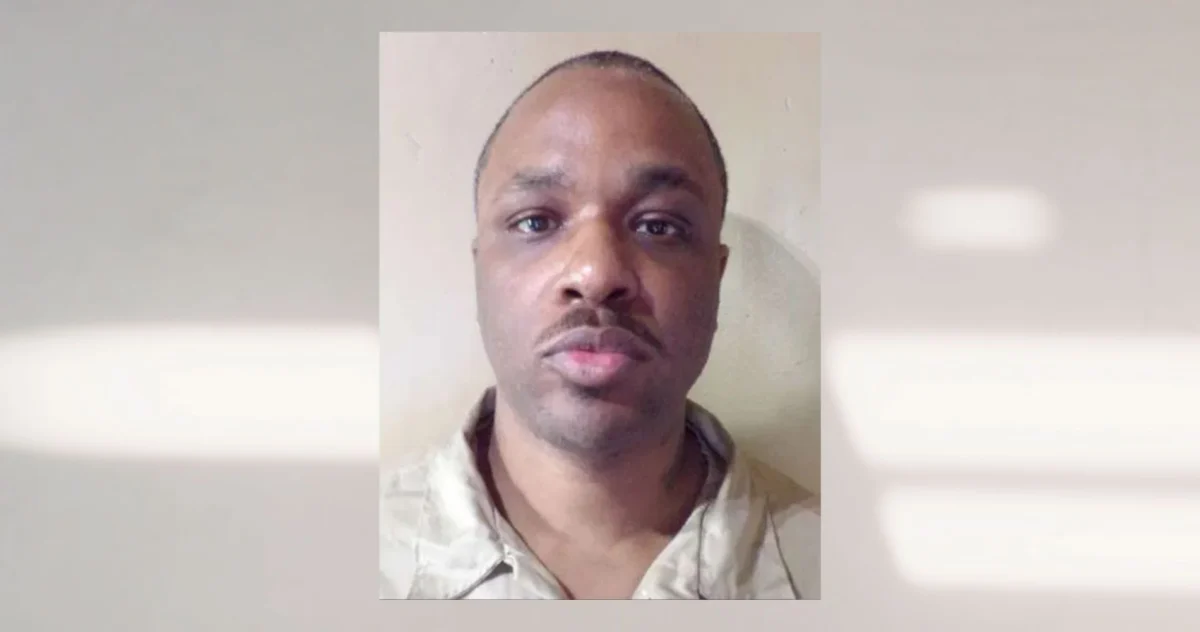
The United States Supreme Court today refused to overturn a federal trial court’s ruling, effectively barring the state of Alabama from proceeding with the scheduled execution of Jeffery Lee by nitrogen suffocation. The high court’s decision upholds lower court findings that Alabama’s proposed method for Mr. Lee, nitrogen hypoxia, is unconstitutional under the Eighth Amendment due to the substantial risk of prolonged and agonizing suffering it presents. The ruling arrived at 8:10 p.m. on Wednesday, hours before Mr. Lee’s execution was set to take place.
The Supreme Court’s Decision and Immediate Impact
The Supreme Court’s denial of Alabama’s request for an emergency stay and to vacate the injunction solidifies a series of legal victories for Mr. Lee, who has spent decades on death row. The state had sought to proceed with the execution despite a federal district court’s finding, upheld by the Eleventh Circuit Court of Appeals, that the nitrogen hypoxia protocol presented an unconstitutional risk of "serious harm over and above death itself." This latest legal development halts Alabama’s attempt to utilize a method that has drawn significant scrutiny and ethical concerns from legal experts, medical professionals, and human rights advocates worldwide.
The immediate implication is that Jeffery Lee will not be executed by nitrogen suffocation as planned. For Alabama, the ruling represents a significant setback in its efforts to implement a new execution method amidst ongoing challenges to traditional lethal injection protocols. The state has increasingly sought alternative methods as pharmaceutical companies have restricted the sale of drugs used in lethal injections, leading to shortages and legal battles over drug efficacy and constitutionality.
The Genesis of the Challenge: Nitrogen Hypoxia Protocol
Jeffery Lee initiated his federal lawsuit last year, challenging Alabama’s nitrogen suffocation protocol as cruel and unusual punishment. His legal team argued that the method would subject inmates to "prolonged air hunger and feelings of suffocation, which evoke severe anxiety, fear, and physiological distress." The core of the argument lay in the assertion that forcing an individual to breathe pure nitrogen gas, thereby depriving them of oxygen, would trigger primal survival instincts to breathe while simultaneously preventing them from doing so, cruelly "superadding pain" in violation of the Eighth Amendment.
Nitrogen hypoxia involves replacing the oxygen in a person’s breathing air with pure nitrogen, leading to oxygen deprivation. Proponents of the method, including Alabama, have suggested it would be a humane and painless alternative to lethal injection, citing that nitrogen is an inert gas and its inhalation would lead to rapid unconsciousness and death without suffering. However, medical experts and opponents argue that the experience of acute hypoxia (lack of oxygen) can be extremely distressing. The sensation of "air hunger," or dyspnea, is a powerful physiological response to the body’s desperate need for oxygen, often described as terrifying and agonizing.
Justice Sonia Sotomayor, in a related context, previously recognized that such a method could inflict "unnecessary psychological terror" through "conscious, excruciating suffocation" and "severe emotional suffering" as the individual "consciously experienc[es] the ‘primal urge to breathe.’" These concerns underscore the deep ethical and constitutional questions surrounding the use of nitrogen hypoxia as a means of execution. The method is experimental; no state has successfully carried out an execution using nitrogen gas. Oklahoma, Mississippi, and Alabama have authorized its use, but Alabama was the first to attempt to implement it.
A Contentious Method: Legal Battles Over "Air Hunger"
The legal journey for Mr. Lee’s challenge was complex and swift, reflecting the urgency of a scheduled execution.
-
May 28, [Year]: Following a bench trial, U.S. District Court Judge Emily Marks initially ruled that while death by nitrogen hypoxia "involves some suffering," Mr. Lee "fails to show that the protocol is cruel and unusual in violation of the Eighth Amendment." The court acknowledged that individuals executed by this method would "likely experience severe air hunger," resulting in "profound physiological discomfort and distress, as well as anxiety, fear, and dread," and conceded that this suffering "can be worse than pain." However, Judge Marks concluded that this suffering was not unconstitutional because consciousness would be lost "in not significantly more than one to three minutes" after nitrogen flow began. This duration, she reasoned, did not cross the constitutional threshold.
-
Monday, [Date]: Mr. Lee appealed this decision. The Eleventh Circuit Court of Appeals reversed the district court’s finding, concluding that one to three minutes of such suffering "presents a substantial risk of serious harm over and above death itself" in violation of the Eighth Amendment. The appellate court emphasized the profound nature of "air hunger," stating, "Counting to 60 or 180 seconds is not a quick exercise, and constitutionally speaking, that timeframe is intolerable given the suffering that would likely take place under Alabama’s nitrogen hypoxia protocol." This ruling highlighted the courts’ increasing scrutiny of execution methods and the definition of "cruel and unusual" punishment, particularly when new, untested protocols are introduced.
-
Tuesday Evening, [Date]: Supreme Court precedent dictates that for an execution method to be deemed unconstitutional, a person facing execution must not only prove "intolerable" suffering but also identify an alternative method that is feasible, readily implemented, and significantly reduces the risk of harm. Mr. Lee’s legal team identified the firing squad as such an alternative. The Eleventh Circuit remanded the case to the district court to make findings on the viability of the firing squad and to decide whether to stay the execution. The district court quickly determined that the firing squad met the criteria for a constitutional alternative method and, consequently, held that Alabama’s nitrogen suffocation protocol violated the Eighth Amendment. The court then issued a permanent injunction, blocking Alabama from using nitrogen suffocation to execute Mr. Lee.
-
Late Wednesday, [Date]: The Eleventh Circuit denied Alabama’s request to overturn this injunction. The State then turned to the Supreme Court, seeking an emergency order to vacate the injunction and allow the execution to proceed. The Supreme Court’s denial of this motion sealed Mr. Lee’s immediate reprieve from nitrogen hypoxia.
Alabama’s Pursuit of New Execution Methods
Alabama’s persistent efforts to introduce nitrogen hypoxia are part of a broader national trend. States across the U.S. have faced increasing difficulty in obtaining the drugs required for lethal injections, primarily due to European pharmaceutical companies refusing to sell their products for use in executions. This has led states to explore alternative methods, including gas chambers, firing squads, and various drug combinations, often sparking new legal challenges from death row inmates and advocacy groups.
The state of Alabama, in particular, has a history of controversial execution protocols. In recent years, it has faced criticism for several botched lethal injections, including the prolonged execution of Joe Nathan James Jr. in 2022, which took over three hours and raised serious concerns about the level of suffering inflicted. These incidents have intensified the debate over the humanity and constitutionality of execution methods, placing a greater burden on states to demonstrate that their chosen protocols do not violate the Eighth Amendment. The Supreme Court’s consistent engagement in these cases, including the current ruling on Mr. Lee, underscores the judiciary’s role in ensuring that capital punishment, when administered, adheres to constitutional standards.
The Judge Override Legacy: A Flawed Sentencing
Beyond the immediate legal battle over execution methods, Jeffery Lee’s case brings to light a deeply troubling aspect of Alabama’s past capital punishment system: the practice of judicial override. In 2000, an Alabama jury voted 7-5 against imposing the death penalty on Mr. Lee, choosing instead a sentence of life imprisonment without parole. However, the trial judge disregarded the jury’s verdict and sentenced Mr. Lee to death, exercising a unique power then allowed under Alabama law.
This practice, known as judicial override, allowed judges to overrule jury verdicts in death penalty cases. Alabama was the only state where judges routinely overrode jury verdicts of life imprisonment to impose death sentences, doing so in more than 100 cases since 1976. This made nearly 20% of the individuals on Alabama’s death row at the time sentenced to death by elected judges, even after their juries had explicitly chosen life imprisonment.
The arbitrariness of this system became a national concern. Florida and Delaware, the only other states that permitted judge override, abolished it in 2016 following the Supreme Court’s decision in Hurst v. Florida, which struck down Florida’s judge-centric sentencing scheme. Alabama followed suit, becoming the last state to abolish judge override on April 11, 2017. However, this change was not applied retroactively, leaving individuals like Mr. Lee, whose trials occurred before 2017, still facing execution under sentences imposed through a now-defunct and widely condemned practice.
This non-retroactivity means that if Mr. Lee’s trial had taken place today, or at any point after 2017, he would have been sentenced to life imprisonment without parole, precisely as his jury had decided. His continued presence on death row highlights a profound injustice, where a person’s fate is determined by a legal mechanism that the state itself has since deemed flawed and unconstitutional.
Former Chief Justice of the Alabama Supreme Court, Drayton Nabers Jr., has been a vocal critic of this lingering injustice. In a recent op-ed, he called upon Governor Kay Ivey to commute Mr. Lee’s death sentence, citing "fidelity to the conservative principles of limited government, respect for the jury system, and the rule of law." Nabers emphasized, "A jury of Alabamians voted for life. The state of Alabama later agreed that juries, not judges, should make that call. Governor Ivey can honor both of those judgments – the jury’s and the Legislature’s – by commuting Jeffery Lee’s sentence to life imprisonment without the possibility of parole." His appeal underscores the moral and legal imperative to rectify past wrongs, particularly when the state itself has acknowledged the system’s inherent flaws.
An Unreliable Capital Trial: Systemic Flaws
Jeffery Lee, who is Black, was convicted in 2000 for the 1998 shooting deaths of Jimmy Ellis and Elaine Thompson and the attempted murder of Helen King during a pawn shop robbery near Orrville in Dallas County, Alabama. All three victims were white. The circumstances of his trial further reveal systemic issues that cast doubt on the reliability of his capital conviction and sentence.
Dallas County, located in Alabama’s historically significant Black Belt, has a deeply entrenched history of racial injustice, including a legacy of racial discrimination in its legal system. During Mr. Lee’s trial, the prosecution notably used all 21 of its peremptory strikes against Black potential jurors. This aggressive use of strikes against minority jurors raises serious questions under Batson v. Kentucky (1986), which prohibits striking jurors based solely on race. While such challenges are difficult to prove, the pattern in Dallas County suggests a concerted effort to shape a jury that was not representative of the community and potentially less sympathetic to a Black defendant.
Furthermore, Mr. Lee, who had lived his entire life in chronic poverty, was represented by appointed counsel who had never tried a capital case. According to court filings, his defense attorneys undertook minimal preparation for the trial. This constitutes a severe deficiency in legal representation, potentially falling short of the Sixth Amendment’s guarantee of effective assistance of counsel, as established by Strickland v. Washington (1984). In capital cases, the stakes are highest, and the standard for effective counsel is critical; a lack of experience or preparation can have devastating consequences for the defendant.
The trial itself lasted less than two days, a remarkably brief period for a capital murder case, suggesting an inadequate investigation and presentation of evidence. Following his conviction, at the sentencing hearing, defense counsel presented no additional evidence or mitigating factors in support of a life sentence. This further weakened Mr. Lee’s position before the judge, who ultimately overrode the jury’s life verdict and imposed the death sentence. The combination of racially biased jury selection, inexperienced and unprepared counsel, and a rapid trial process paints a picture of a capital trial that was profoundly unreliable and riddled with systemic flaws.
Transformation on Death Row and Calls for Clemency
Despite being condemned to death for over 25 years, Jeffery Lee, now 49, has undergone a significant personal transformation during his incarceration. He has become a leader within the Kairos prison ministry, an assistant chaplain, and a mentor to other men on death row. The Catholic Mobilizing Network, which has actively called on Governor Kay Ivey to grant clemency for Mr. Lee, describes him as "a man of strong Christian faith" who has maintained a record of no violent infractions throughout more than a quarter-century in prison. His profound spiritual growth and positive influence on the prison community stand in stark contrast to the state’s efforts to execute him.
Retired Brig. Gen. Carlton Fisher, drawing on his extensive experience as a chaplain in both correctional and military settings, has also publicly advocated for Mr. Lee. In an op-ed, Fisher argued that "Nothing good will come from executing Jeffery." He highlighted the often-overlooked emotional and psychological toll that carrying out death sentences can take on correctional officers, especially when juries have not supported the death penalty. "Even for officers who never speak publicly," Fisher wrote, "carrying out death sentences a jury did not support is a heavy weight to bear." His perspective emphasizes the broader human cost of capital punishment, extending beyond the condemned individual to those tasked with executing the state’s will. These appeals for clemency underscore the belief that Mr. Lee’s life has value and that his transformation should be recognized, offering an alternative path to justice and societal benefit.
Broader Implications for Capital Punishment
The Supreme Court’s denial of Alabama’s motion has significant implications, both for the state of Alabama and for the broader landscape of capital punishment in the United States. For Alabama, the ruling effectively blocks the use of nitrogen hypoxia for Jeffery Lee and sends a strong signal that the method will face intense judicial scrutiny. While the decision is specific to Mr. Lee’s case and the particular details of Alabama’s protocol, it creates a precedent that other states considering or implementing nitrogen hypoxia will have to contend with. Any future attempt by Alabama or other states to use this method will likely face similar legal challenges, forcing them to refine their protocols to address the "air hunger" and "prolonged suffering" concerns identified by the courts. This may further complicate states’ efforts to carry out executions amidst ongoing challenges to lethal injection.
More broadly, the case reinforces the judiciary’s critical role in upholding the Eighth Amendment’s prohibition against cruel and unusual punishment. As states continue to experiment with new execution methods in response to drug shortages, courts are increasingly being called upon to evaluate the humanity and constitutionality of these novel approaches. This judicial oversight ensures that even in the context of capital punishment, fundamental constitutional rights are protected, and that states do not adopt methods that inflict unnecessary pain and suffering.
Finally, Jeffery Lee’s case serves as a poignant reminder of the enduring controversies surrounding capital punishment in America. It encapsulates issues of unreliable trials, racial bias, ineffective counsel, and the arbitrary application of the death penalty, particularly through practices like judicial override that have since been abolished. The confluence of these factors, combined with the legal fight over the method of execution, places Mr. Lee at the center of a national debate about justice, human rights, and the very nature of state-sanctioned killing in the 21st century. The Supreme Court’s latest decision, while a victory for Mr. Lee, does not resolve these deeper, systemic questions about fairness and constitutionality in the American death penalty system.