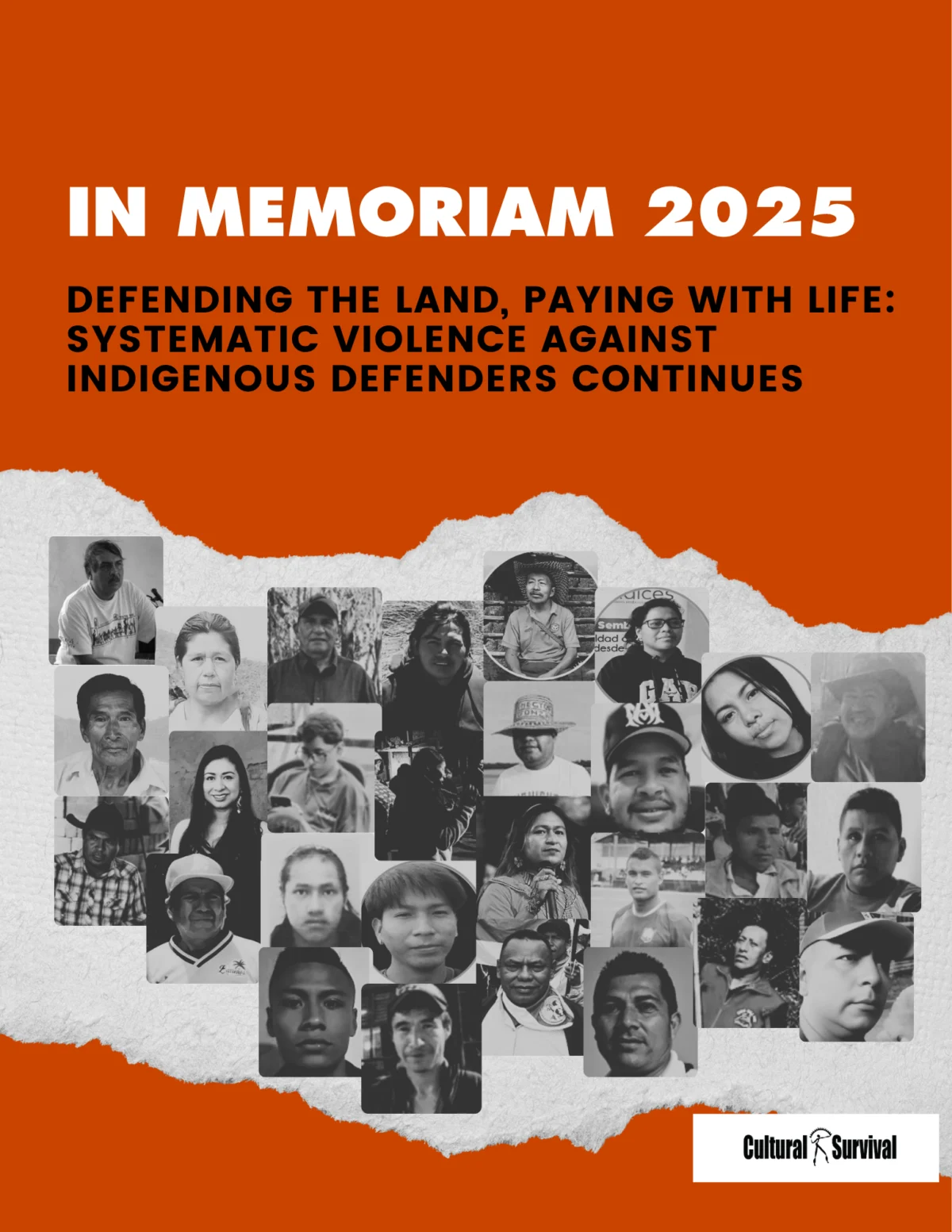
On March 10, 2026, Indigenous Peoples’ rights organization Cultural Survival released its annual "In Memoriam" report, meticulously documenting the tragic murders of Indigenous land and rights defenders across Latin America in 2025. The report, a stark reminder of the perilous realities faced by those safeguarding their ancestral territories, coincides with the 25th session of the UN Permanent Forum on Indigenous Issues. At this critical juncture, Cultural Survival has unveiled a new advocacy brief, "Defending the Land, Paying with Life." This comprehensive document delves into the systemic violence underpinning these assassinations, situating them within the established frameworks of international human rights law. It culminates in a series of urgent recommendations directed at the entities bearing responsibility for the protection of these defenders and the implementation of Indigenous rights, including corporations, national governments, the UN Permanent Forum on Indigenous Issues, the governing board of the Escazú Agreement, and the broader international community.
Latin America’s unenviable distinction as the world’s most dangerous region for land and environmental defenders is a persistent and alarming trend. Data from 2024 underscores this grim reality, with a staggering 82% of the 146 documented murders of defenders occurring within this geographical expanse. Nations such as Mexico and Colombia, despite possessing established protection mechanisms for human rights defenders, tragically continue to be among the most lethal environments for those on the front lines of environmental and territorial defense. The continued loss of life, coupled with pervasive threats, intimidation, kidnappings, and various forms of physical and digital attacks, highlights the profound inadequacy of existing safeguards. These aggressions are strategically designed to cripple or render unsustainable the vital work undertaken by Indigenous communities to protect their lands and the natural resources they sustain.
Cultural Survival’s "In Memoriam" report does more than present statistics; it humanizes the crisis by naming and honoring each Indigenous defender whose life was extinguished. These individuals, the report emphasizes, were not merely activists; they were stewards of their communities and the living ecosystems intertwined with their territories. Their deaths represent a profound loss not only to their peoples but to the global community, as their work is intrinsically linked to the planet’s well-being. By defending their lands, these individuals were actively protecting forests, safeguarding water sources, and resisting extractive projects whose supply chains contribute directly to climate change and a cascade of environmental disasters. Their commitment to these vital causes ultimately cost them their lives.
The advocacy brief, "Defending the Land, Paying with Life," meticulously details a robust array of international human rights standards and legal precedents that underscore the obligations of States and other actors. Prominent among these are the UN Declaration on the Rights of Indigenous Peoples (UNDRIP), International Labor Organization Convention 169, the International Covenant on Civil and Political Rights, and landmark decisions by the Inter-American Court of Human Rights. These legal instruments collectively provide a solid foundation for demanding concrete actions from States to implement the rights of Indigenous defenders and ensure their safety and security. The report argues that the current level of violence signifies a systemic failure to uphold these established international commitments.
A Grim Chronicle: The Escalating Violence Against Indigenous Defenders
The systematic targeting of Indigenous defenders is not a new phenomenon, but its intensity and scope in recent years have drawn increased international scrutiny. The data presented by Cultural Survival and other monitoring organizations paint a clear and disturbing picture. The year 2025, as documented in the "In Memoriam" report, saw a continuation of this tragic trend, with each reported death representing a community robbed of its leader, protector, and vital connection to ancestral knowledge.
The roots of this violence are often deeply embedded in economic interests, particularly those related to resource extraction. Large-scale agricultural expansion, mining operations, logging, and infrastructure projects frequently encroach upon Indigenous territories, leading to conflicts over land rights and environmental degradation. Indigenous communities, often acting as the first line of defense against these incursings, find themselves pitted against powerful corporate entities and, at times, complicit state apparatuses. The defenders are frequently branded as obstacles to "development" or "progress," a narrative that serves to legitimize the repression they face.
A closer examination of the patterns of violence reveals a disturbing consistency. Assassinations are often preceded by a period of intense harassment, threats, and surveillance. This creates a climate of fear, intended to silence dissent and discourage collective action. When these tactics fail, physical violence, including targeted killings, becomes the ultimate instrument of repression. The perpetrators are often linked to these extractive industries, their security forces, or individuals acting with their tacit or explicit approval. The lack of accountability for these crimes exacerbates the problem, creating a cycle of impunity that emboldens further violence.
The Role of Corporations and State Complicity
"Defending the Land, Paying with Life" critically examines the role of corporations in this crisis. While many companies publicly espouse commitments to corporate social responsibility and human rights, the report suggests a significant gap between rhetoric and reality. The pursuit of profit often overrides respect for Indigenous rights, leading to practices that directly or indirectly contribute to the violence faced by defenders. This can include the failure to conduct adequate human rights due diligence, the use of private security forces that engage in intimidation and violence, and lobbying efforts that undermine protective legislation.
Furthermore, the report highlights instances of state complicity. This can manifest in various forms, including the failure of law enforcement and judicial systems to adequately investigate and prosecute perpetrators, the issuance of permits for projects that violate Indigenous rights without free, prior, and informed consent, and the active suppression of Indigenous protests and activism. The existence of protection mechanisms, while a positive step, often proves insufficient when the political will to enforce them is lacking or when the very state agencies meant to protect are part of the problem.
International Legal Frameworks and Their Underutilization
The existence of robust international legal frameworks, such as UNDRIP, is a critical element in the defense of Indigenous rights. UNDRIP, adopted by the UN General Assembly in 2007, affirms the collective rights of Indigenous peoples, including the right to self-determination, the right to their lands, territories, and resources, and the right to free, prior, and informed consent regarding any development projects affecting their lands. However, the report underscores that the implementation of these rights remains a significant challenge.
The Escazú Agreement, officially known as the Regional Agreement on Access to Information, Public Participation and Access to Justice in Environmental Matters in Latin America and the Caribbean, represents a crucial regional instrument aimed at strengthening environmental democracy and protecting environmental defenders. The report’s call to action directed at the Presidency of COP Escazú’s governing board signifies the recognition of this body’s pivotal role in ensuring the agreement’s effective implementation and in holding member states accountable for their commitments. The urgency of this call is amplified by the persistent violence against those who are most instrumental in upholding environmental justice.
Key Recommendations for Urgent Action
Cultural Survival’s advocacy brief outlines a series of concrete recommendations designed to address the systemic issues driving the violence against Indigenous land defenders:
- For States: To fully implement international human rights standards, including UNDRIP and ILO Convention 169, and to ensure the effective protection of Indigenous defenders through robust, independent, and adequately resourced protection mechanisms. This includes prompt and impartial investigations into all killings and acts of violence, and the prosecution of perpetrators.
- For Companies: To conduct rigorous human rights due diligence throughout their operations and supply chains, ensuring free, prior, and informed consent from Indigenous communities for any projects affecting their lands. Companies must also cease any involvement with security forces known to engage in human rights abuses and publicly commit to upholding Indigenous rights.
- For the UN Permanent Forum on Indigenous Issues: To continue to serve as a vital platform for Indigenous voices and to advocate for the implementation of its recommendations by States and other relevant actors. The Forum is urged to strengthen its monitoring and reporting mechanisms on the situation of Indigenous defenders.
- For the Presidency of COP Escazú’s Governing Board: To prioritize the protection of environmental defenders within the framework of the Escazú Agreement, promoting regional cooperation and accountability for states that fail to meet their obligations.
- For the International Community: To increase financial and technical support for Indigenous organizations working to defend their rights and territories, and to exert diplomatic pressure on states that consistently fail to protect Indigenous defenders and uphold human rights standards.
Alicia Moncada, Cultural Survival’s Director of Advocacy and Communications, eloquently captured the profound significance of the report’s findings: "Every name in this report is a universe that was extinguished, a language, a territory, a form of knowledge that the world will never recover. In memoriam is not an act of mourning; it is an act of resistance." This statement underscores the report’s dual purpose: to honor the fallen and to galvanize ongoing efforts to prevent future tragedies.
Mobilizing for Justice: Actions for Global Solidarity
In addition to the policy recommendations, Cultural Survival is urging individuals and organizations to take immediate action to support Indigenous land defenders. Two critical avenues for engagement are highlighted:
- Signing Petitions: Urgent calls to action have been launched for authorities in Mexico and Colombia. These petitions implore the respective governments to fulfill their fundamental obligations to protect Indigenous defenders, proactively prevent violence, and ensure that justice is served in all cases of documented crimes. These campaigns aim to amplify the voices of civil society and place direct pressure on national institutions.
- Public Awareness Campaign: The organization encourages individuals to participate in a global social media campaign. This involves sharing a vertical photograph of oneself holding a sign that reads: "Justice for Indigenous defenders murdered in Latin America." This visual act of solidarity serves to raise awareness, demonstrate widespread concern, and create a collective demand for accountability.
The campaign utilizes specific hashtags, including #ProtejanALasDefensorasIndigenas, #JusticiaParaLxsDefensorxsIndigenas, #ProtectTheProtectors, and #DefendTheDefenders, to amplify its reach and foster a global conversation. Participants are also encouraged to tag @culturalsurvival to connect with the organization’s efforts.
Furthermore, direct engagement with relevant government agencies is facilitated through provided social media handles for key authorities in Mexico and Colombia, including their Attorneys General’s Offices, Ministries of the Interior, and national protection units. This direct engagement aims to ensure that these institutions are made aware of the global outcry and the demand for tangible action.
The release of "Defending the Land, Paying with Life" by Cultural Survival is a critical intervention in the ongoing struggle for Indigenous rights and environmental justice. It serves as a powerful indictment of the systemic violence that continues to silence those who are most vital to the planet’s health. The report’s comprehensive analysis, coupled with its clear recommendations and actionable steps, provides a roadmap for concerted action by states, corporations, international bodies, and individuals alike. The time for platitudes has passed; the moment for decisive and unwavering defense of Indigenous land defenders is now. Their lives, their knowledge, and their territories are not only essential for their own survival but for the sustainable future of all life on Earth.