A groundbreaking initiative is set to etch a new chapter in the annals of space exploration as European Space Agency (ESA) para-astronaut John McFall is on track to become the first individual with a physical disability to venture into Earth’s orbit. This historic endeavor is gaining momentum through a significant agreement between the U.K. Space Agency and Vast, an American commercial space company, paving the way for a potential mission to Vast’s pioneering commercial space station, Haven-1, slated for launch in 2027.
The ambitious plan involves Vast actively seeking sponsorships to underwrite astronaut McFall’s journey to their orbital facility. This collaboration represents a pivotal step in demonstrating the inclusivity and evolving accessibility of space travel, moving beyond traditional astronaut profiles.
A Journey Forged Through Resilience and Determination
John McFall’s path to this potential orbital mission is one marked by extraordinary resilience and a profound dedication to pushing boundaries. A British surgeon by profession, McFall’s athletic career as a Paralympic sprinter was tragically interrupted at the age of 19 following a severe motorbike accident that necessitated the amputation of his right leg. Undeterred, he channeled his formidable spirit into his medical career and, more recently, into the pursuit of spaceflight.
His selection as a member of the ESA’s astronaut reserve in 2022 was a significant milestone. This role was specifically designed to facilitate a comprehensive study assessing the feasibility of spaceflight for astronauts with physical disabilities. The research aims to identify and overcome any unique challenges or requirements that may arise, ensuring that future space missions can be accessible to a broader spectrum of humanity.
In a testament to his capabilities and the rigorous evaluations undertaken, the ESA announced last year that McFall had achieved a critical breakthrough: he was the first astronaut with a disability to receive full medical clearance to serve as an integrated crew member on a long-duration mission. This clearance was for a six-month expedition to the International Space Station (ISS), underscoring the thoroughness of the assessment and the growing confidence in accommodating diverse astronaut profiles.
A Vision for Inclusivity in Space
McFall himself has expressed immense enthusiasm for the prospect of his mission. "Signing this agreement with Vast is incredibly exciting," he stated. "If we can make this mission happen, it won’t just be a milestone for human spaceflight, it will send a powerful message about what people with disabilities are capable of, and that there should be no limit to what you can achieve – on Earth or in space."
His words highlight the profound symbolic importance of this undertaking. Beyond the scientific objectives, McFall’s potential journey to orbit is poised to serve as a powerful inspiration, challenging preconceived notions about disability and demonstrating that the final frontier is within reach for all.
The Vast Haven-1 Project: A New Era of Commercial Space Stations
The collaboration hinges on the successful development and deployment of Vast’s Haven-1 space station. The company has ambitious plans to launch the world’s first commercial space station in 2027, marking a significant shift towards private sector leadership in orbital infrastructure. Haven-1 is envisioned as a versatile platform for various commercial activities, including scientific research, tourism, and manufacturing.
The agreement with the U.K. Space Agency and McFall’s potential mission signifies a deliberate effort by Vast to integrate diverse representation into their early orbital endeavors. By sponsoring McFall’s trip, Vast is not only contributing to a historic moment but also potentially leveraging the mission for unique research opportunities that could benefit both space exploration and life on Earth.
Scientific Implications: Research with Earthly Benefits
While specific mission details are still being finalized, if John McFall embarks on his journey to the Vast space station, he is expected to participate in a series of vital research experiments. These investigations are projected to focus on several key areas, offering significant insights into human physiology and the practicalities of living and working in microgravity:
- Human Physiology and Musculoskeletal Adaptation: Understanding how the human body, particularly in the context of an existing physical difference, adapts to the unique conditions of space. This could involve studying changes in bone density, muscle mass, and overall physiological responses over an extended period in orbit.
- Prosthetics Performance in Microgravity: A critical area of research will be evaluating how prosthetic limbs, like McFall’s, function and perform in a microgravity environment. This includes assessing their durability, functionality, and the biomechanical interactions they experience.
- Movement and Balance in Space: Investigating the ways individuals with diverse physical characteristics navigate and maintain balance in the absence of gravity. This research could refine our understanding of human locomotion and spatial orientation in extreme environments.
The findings from these experiments hold the potential for substantial benefits that extend far beyond the confines of space. According to the U.K. Space Agency, the research could:
- Advance Prosthetic Technology on Earth: Insights gained into the performance and design of prosthetics in microgravity could directly inform the development of lighter, more adaptable, and functional prosthetics for individuals on Earth. This could significantly improve the quality of life for amputees worldwide.
- Deepen Understanding of Bone and Muscle Conditions: The study of musculoskeletal adaptation in space could provide invaluable data for understanding and treating conditions prevalent on Earth, such as osteoporosis (bone density loss) and muscle wastage. This could lead to improved preventative measures and rehabilitation techniques.
- Enhance Rehabilitation Techniques for Amputees: By observing McFall’s adaptations and performance, researchers may uncover new approaches and therapies to aid in the rehabilitation process for amputees, potentially accelerating recovery and improving long-term outcomes.
A Chronology of Progress
The journey towards this historic orbital mission for John McFall has been a progressive series of milestones:
- 2022: John McFall is selected as a member of the European Space Agency’s astronaut reserve, specifically for a study on the feasibility of spaceflight for astronauts with physical disabilities.
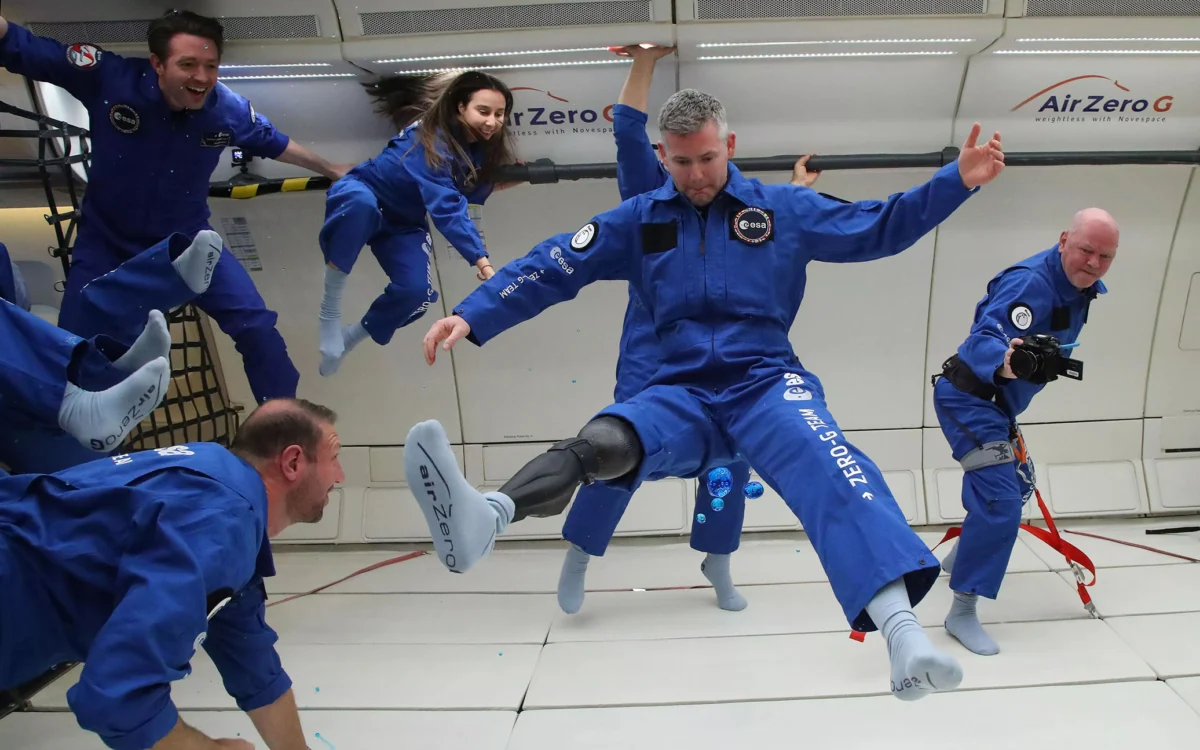
- 2023: McFall undergoes parabolic flight training with Novespace/AirZeroG, a crucial step in experiencing microgravity conditions and preparing for potential space missions. This training is vital for assessing physiological responses and developing operational procedures.
- Prior to 2025: McFall receives comprehensive medical clearance from the ESA to serve as a fully integrated crew member on a long-duration mission, a significant validation of the study’s findings and his personal readiness.
- 2025 (Projected/Implied): The news of the agreement with Vast emerges, marking a concrete step towards an orbital mission beyond the ISS.
- 2027 (Projected): Vast aims to launch its Haven-1 commercial space station, the intended destination for McFall’s historic journey.
This timeline illustrates a steady and deliberate progression, built upon scientific inquiry, rigorous evaluation, and strategic partnerships.
Official Responses and Industry Perspectives
The announcement has been met with widespread enthusiasm from space agencies and advocacy groups alike. While specific statements from Vast have not been detailed in the initial report, their commitment to this initiative, as evidenced by the agreement with the U.K. Space Agency, suggests a forward-thinking approach to commercial space exploration.
The U.K. Space Agency’s active role underscores the nation’s commitment to fostering innovation and inclusivity in space. Their support highlights the potential for international collaboration in achieving ambitious spaceflight goals.
Disability advocacy organizations are likely to view this development as a monumental step forward, reinforcing the message that opportunities in STEM fields, including space exploration, should be accessible to everyone, regardless of physical ability.
Broader Impact and Future Implications
John McFall’s potential orbital mission transcends individual achievement; it represents a profound shift in the paradigm of human spaceflight. Historically, the physical requirements for astronauts have been highly stringent, often excluding individuals with disabilities. This new era, spearheaded by initiatives like ESA’s para-astronaut program and commercial ventures like Vast, signals a move towards a more inclusive and representative future for space exploration.
The success of this mission could catalyze further research and development in adaptive technologies for space. It could also inspire a new generation of aspiring astronauts with disabilities, demonstrating that their dreams of reaching the stars are not only possible but actively being pursued.
Furthermore, the commercialization of space, with companies like Vast developing private space stations, is creating new avenues for participation. The ability to secure sponsorships for such missions democratizes access, potentially opening doors for a wider range of individuals and research objectives.
The implications for scientific understanding are also substantial. By studying McFall’s adaptation to space, researchers can gain unprecedented insights into human physiology that could have direct applications for improving life on Earth, particularly for individuals with mobility impairments or conditions affecting bone and muscle health.
In essence, John McFall’s impending journey is more than just a space mission; it is a powerful testament to human potential, a catalyst for technological advancement, and a beacon of hope for a future where the cosmos is truly accessible to all.