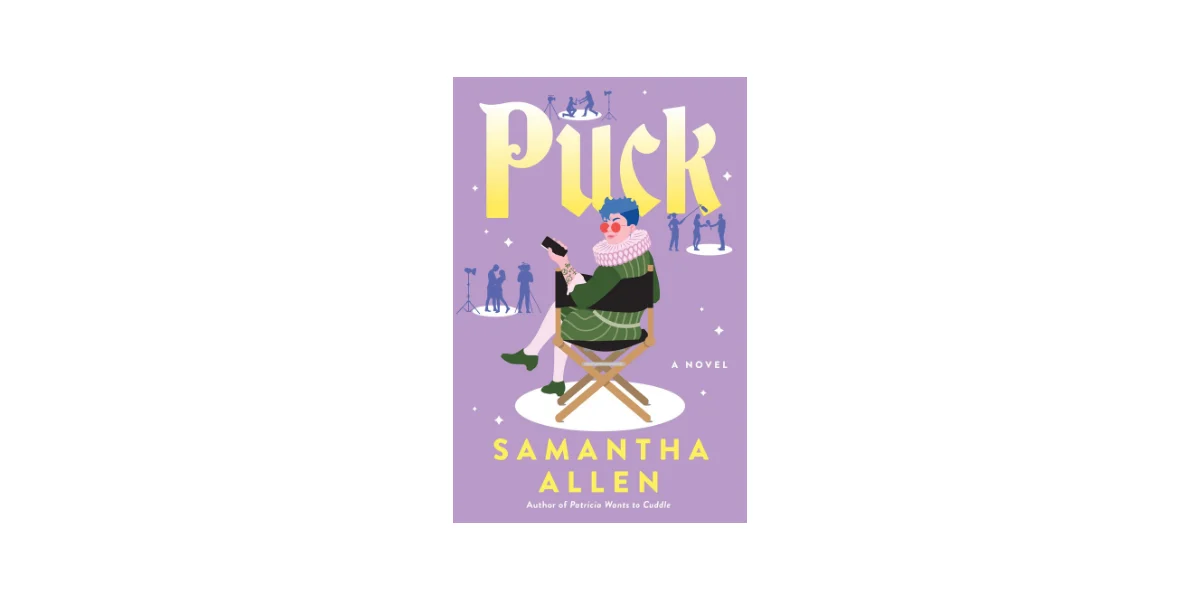
The publication of Samantha Allen’s latest novel, Puck, marks a significant departure from the established norms of contemporary romance literature. By utilizing the framework of William Shakespeare’s A Midsummer Night’s Dream, Allen introduces a protagonist who deliberately challenges the "likability" standard often imposed on marginalized characters in fiction. The novel follows Puck, a nonbinary reality television producer, as they navigate a high-stakes wedding week in the American South, attempting to sabotage the impending nuptials of their best friend, Mia. This narrative choice serves as a catalyst for a broader discussion regarding the current state of the publishing industry, the "sanitization" of queer characters, and the evolving expectations of the modern reader.
Narrative Structure and Modern Adaptation
The core of the novel is a meticulous translation of Shakespearean archetypes into a 21st-century setting. In the original play, Robin Goodfellow—also known as Puck—is a mischievous sprite who serves King Oberon and uses magic to create romantic chaos among Athenian lovers. In Allen’s reimagining, the "magic" is replaced by the manipulative tactics of reality television production. As a producer for a show titled Homewreckers, the protagonist possesses a professional skillset centered on destabilizing relationships for entertainment.
The plot centers on a one-week timeline leading up to the wedding of Mia and Damon. The central conflict arises from Puck’s conviction that Mia is making a fundamental mistake by marrying Damon, the "rich boy" of their college friend group, rather than Xander, her long-term former partner. This interventionist stance mirrors the meddling of the original Puck but grounds it in the psychological complexities of long-term friendship and the resentment that can brew when social circles begin to diverge in adulthood.
Chronology of Events and Character Development
The narrative follows a strict chronological progression that mirrors the escalating tension of a wedding countdown.
- The Prelude: The backstory establishes a tight-knit college quartet—Puck, Mia, Xander, and Damon. The group’s cohesion is fractured by Xander’s struggle with alcoholism and Mia’s subsequent decision to end their relationship to protect her own well-being.
- The Invitation: Years later, Mia announces her engagement to Damon. Puck, viewing this as a betrayal of the group’s original dynamic and Mia’s true feelings, arrives at the wedding venue—a Southern estate—with the intent to intervene.
- The Intervention (Days 1–4): Puck utilizes their professional experience to sow seeds of doubt between Mia and Damon while simultaneously attempting to facilitate a reconciliation between Mia and Xander.
- The Romantic Complication: Puck encounters Robyn, the maid of honor and a self-described "normie." Their immediate antagonism evolves into a physical and emotional entanglement, complicating Puck’s cynical view of the wedding guests.
- The Climax (The Wedding Day): The sabotage tactics are revealed, leading to a public confrontation. The emotional damage inflicted on the group forces a reckoning regarding Puck’s behavior and their dismissiveness of their friends’ personal growth.
- The Resolution: The characters move toward a state of accountability. Puck is forced to acknowledge that their perception of their friends was frozen in time, failing to account for the reality of their current lives and choices.
Analysis of the "Problematic" Narrative Trap
A central theme in the critical reception of Puck is its rejection of the "problematic" narrative trap. In the current literary market, particularly within the contemporary romance and Young Adult genres, there is an observed trend of authors prioritizing the moral purity of their characters to avoid "bad faith" readings or social media backlash. This often results in characters who are hyper-aware of their privileges and social standing, frequently narrating their own ethical correctness in a way that critics argue feels inorganic.
Allen’s protagonist, conversely, is characterized as brash, self-centered, and occasionally hostile toward service workers. This "messiness" is a deliberate stylistic choice. By allowing a nonbinary protagonist to be unlikable, Allen challenges the trope of the "palatable" queer character—a figure whose sharp edges are often removed to make them more acceptable to a mainstream audience. This shift reflects a broader movement in "literary romance" where the goal is not to present a role model, but to present a fully realized, flawed human being.
Supporting Data: Trends in Romance and Representation
The release of Puck occurs amidst a period of significant growth and diversification in the romance genre. According to data from Circana (formerly NPD BookScan), the romance genre saw a 52% increase in sales between 2019 and 2023, driven largely by the influence of social media platforms like TikTok.
Within this growth, there has been a documented rise in demand for "diverse" romance. A 2022 report by the State of Diverse Romance indicated that while representation for LGBTQ+ leads is increasing, nonbinary protagonists remain significantly underrepresented compared to their cisgender counterparts. Furthermore, the "unlikable female lead" or "messy protagonist" trend—popularized by works such as Fleabag or the novels of Ottessa Moshfegh—has only recently begun to intersect with queer romance. Allen’s work sits at this intersection, providing data points for publishers regarding the commercial viability of "difficult" marginalized characters.
Industry Implications and Critical Reception
The implications of Puck extend to how the publishing industry handles the "sensitivity" of characters. For years, marginalized authors have reported pressure to make their protagonists "exemplary" to counter negative stereotypes. However, literary analysts suggest that this creates a new kind of flattening.
Industry reactions to the novel highlight several key areas of impact:
- The "Service Worker" Litmus Test: Critics have noted a specific scene where Puck is dismissive toward a bartender as a turning point for reader empathy. In journalistic analysis, this is cited as a bold move by Allen to test the limits of protagonist-reader rapport.
- Genre Blending: By combining the tropes of the "wedding-wrecker" movie with Shakespearean satire and contemporary gender discourse, the novel expands the boundaries of what is considered a "romance."
- Representation without Sanctimony: The novel is being recognized for its ability to depict a nonbinary experience that is not centered solely on the "coming out" narrative or the struggle with identity, but rather on the character’s personality flaws and professional life.
Broader Impact on Contemporary Literature
The broader impact of Allen’s work lies in its contribution to the "New Adult" and "Contemporary Romance" landscape, where readers are increasingly seeking authenticity over aspirational perfection. The "Puck" character serves as a mirror for the "untamed id," representing the darker impulses people feel during high-stress social events like weddings—resentment of change, jealousy of stability, and the urge to disrupt the status quo.
Furthermore, the novel’s success or failure in the market will likely influence how future nonbinary characters are written. If readers embrace a character as abrasive as Puck, it signals to editors and agents that queer characters do not need to be "sanded down" to be marketable. It suggests a maturing market where the complexity of the character is valued over their adherence to social etiquette.
In conclusion, Puck by Samantha Allen is more than a modern retelling of a classic play; it is a clinical examination of the "unlikable protagonist" within a genre that traditionally demands happily-ever-afters and moral clarity. By placing a nonbinary reality TV producer at the center of a Shakespearean comedy of errors, Allen forces a confrontation between the reader’s expectations of "good" representation and the reality of human fallibility. As the romance genre continues to dominate the publishing landscape, works like Puck provide a necessary friction, ensuring that the evolution of the genre includes the right to be messy, complicated, and—at times—wholly exasperating.