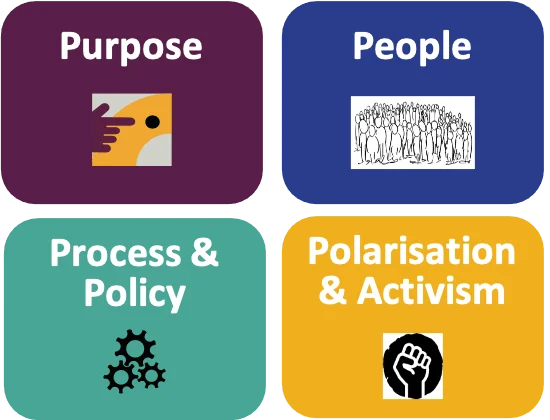
The past two years have undeniably marked a period of unprecedented upheaval, forcing a rapid, global experiment in new work methodologies. The ongoing pandemic era has fundamentally reshaped our understanding of work, its purpose, and its future, leaving a trail of evolving data and persistent questions, particularly concerning Diversity, Equity, and Inclusion (DEI). This comprehensive analysis delves into four critical emerging trends – Purpose, People, Process & Policy, and Polarisation & Activism – examining their profound implications for organizations and society as we navigate this ambiguous and fast-changing landscape.
The Pandemic’s Unprecedented Catalyst for Change
The year 2020 ushered in an abrupt and unparalleled shift in the global workforce. As COVID-19 spread, governments worldwide implemented lockdowns, compelling businesses to rapidly transition to remote operations. This initial phase was characterized by an urgent scramble to maintain business continuity, with technology playing a pivotal role in enabling virtual collaboration. Millions of employees, previously tethered to physical offices, found themselves working from home, often balancing professional responsibilities with new caregiving duties.
As the pandemic endured, the temporary measures solidified into sustained practices. The distinction between "essential" and "non-essential" workers became stark, highlighting existing societal inequalities and the precariousness of many frontline roles. Burnout rates soared across sectors as individuals grappled with increased workloads, blurred boundaries between work and personal life, and persistent uncertainty. This prolonged period of disruption acted as an accelerator for pre-existing trends, such as the growing demand for flexible work arrangements, a heightened focus on mental well-being, and an increasing expectation for corporate social responsibility. The collective experience of a global crisis provided an unexpected lens through which individuals began to re-evaluate their priorities, values, and the very nature of their professional engagement. This re-evaluation has since blossomed into a complex array of shifts that continue to redefine the employer-employee relationship and the broader economic fabric.
Purpose-Driven Work and the Quest for Meaning
One of the most profound shifts emerging from the pandemic is the widespread introspection regarding personal purpose and its alignment with professional life. The life-shaking experience of the pandemic compelled many to question the fundamental "why" of their work. A U.S. McKinsey survey revealed that nearly two-thirds of respondents actively reflected on their purpose due to the pandemic. Fundamental questions like, "Is this job truly worth my energy and time?" and "Does it align with how I want to live my life?" gained prominence.
This introspection has significantly altered the implicit work model that often prioritized career growth through personal sacrifice. A global Edelman survey in August 2021 indicated that almost 60% of employees have either left or plan to leave their jobs to find roles that better fit their personal values, while 50% seek improved lifestyles. These motivations now often outweigh traditional drivers like higher compensation or career advancement, which were primary reasons for job changes in the pre-pandemic era. This purpose-driven shift transcends generational boundaries. In the U.S., millennial workers were three times more likely to re-evaluate their work, while in the U.K., the number of employees over 50 taking early retirement more than doubled. While not every departure is solely due to a lack of purpose, it has become an undeniable and critical consideration.
The forced lockdowns illuminated how traditional work models often hindered the fulfillment of personal purpose, particularly for marginalized groups. For instance, the dual burden faced by many women in professional and domestic spheres, though long documented, gained undeniable visibility. The pandemic experience created an unavoidable, stark realization that old ways of working were unsustainable for many. Consequently, women with caregiving responsibilities reported significantly higher rates of burnout and resignation. Globally, women’s employment declined by 54 million (4.2%) in the first year of the pandemic, compared to a 3% drop for men. This demands an immediate response to foster healthier, more integrated work models that holistically support personal purpose and life sustainability for all employees, especially women.
While research prior to the pandemic (PwC) showed nearly 79% of business leaders acknowledging purpose’s importance, only 34% integrated it into decision-making. The pandemic has drastically shaken this intention-action gap, forcing leaders to grapple with the implications of a workforce that increasingly prioritizes meaning. Organizations are now challenged to not only define a compelling corporate purpose but also to create environments that enable employees to find and live their personal purpose within their professional roles, affecting employees, managers, leaders, and stakeholders across the organization and society.
The Great Reassessment of Talent: People and Power Dynamics
As economies and organizations strive for recovery, talent has emerged as the linchpin of success. The pandemic era has fundamentally shifted the power dynamic towards employees, who are now in a much stronger position to voice their expectations for attracting and retaining them. This period birthed "The Great Resignation," a global phenomenon characterized by unprecedented numbers of workers voluntarily leaving their jobs. A March 2021 Microsoft survey found over 40% of employees considering leaving their employers that year. While researchers note a pre-existing trend of resignations, the pandemic dramatically accelerated it.
The statistics underscore the magnitude of this shift. In August 2021, the U.S. saw 4.3 million voluntary quits alongside 10.4 million open jobs. Similarly, the U.K. recorded over 1 million open jobs. This talent gap is a long-term concern, with 70% of U.S. employers expecting it to continue into the following year, and 61% struggling with employee retention (Willis Towers Watson). Germany, Europe’s largest economy, also reported a significant jump (11% in three months) in companies worried about the lack of skilled employees, reaching 34.6% by July 2021 (Ifo).
Analysis by Harvard Business Review revealed that resignation rates were particularly prevalent among mid-career individuals, increasing by 20% from pre-pandemic levels, especially in the tech and healthcare sectors—areas that experienced immense demand during the crisis. While high turnover in service and hospitality sectors persisted, the pandemic brought greater public awareness and empathy for often poor working conditions. A more alarming trend is the rise of "Rage Quitting," where workers impulsively leave jobs due to intolerable negative work environments, underscoring a sharp decline in tolerance for exploitative or disrespectful workplaces.
The pandemic has undeniably sharpened the focus on valuing employees and ensuring inclusive workplaces with fair labor practices. In this era of pervasive uncertainty, some employees have viewed it as an opportunity for introspection and new opportunities, actively "quitting to do better." Organizations can no longer ignore the critical link between workplace culture, employee experience, talent attraction, retention, and ultimately, organizational success. A "people-centred" work culture is not merely a desirable trait but a necessity for "The Great Reset" and "build back better" initiatives envisioned post-pandemic.
It is crucial to acknowledge that not all employment changes have been voluntary "Great Resignations." The "Great Divergence" refers to the deepening inequalities in the economic recovery. In OECD countries, 20 million fewer people were in work since the pandemic’s onset, and over 110 million fewer jobs worldwide. The International Labour Organization (ILO) estimated that global hours worked in 2021 would be 4.3% below pre-pandemic levels, equivalent to 125 million full-time jobs. These losses disproportionately affected low-paid jobs, as highlighted by the OECD. While global unemployment saw a slight drop in May 2021, it remained higher than pre-pandemic levels. An inclusive approach to talent and employment is imperative, one that addresses the full scope of pandemic-era shifts and aims for a fairer system for all. This period presents a profound opportunity for systemic change.
Reshaping the Workplace: Process, Policy, and the Future of Work
Periods of profound change illuminate the inadequacies of the status quo, offering invaluable opportunities to reassess, design, and experiment with innovative solutions. The pandemic intensely highlighted where and how work is performed, fundamentally disrupting the social contract between employees and employers. Workers now exhibit a significantly lower tolerance for outdated norms such as workplace "presenteeism," arduous commutes, rigid dress codes, substandard working conditions, unfair compensation, discrimination, the false promise of meritocracy, limited control over their work, and "always-on" availability expectations. Issues like excessive business travel, feelings of isolation, and a lack of psychological safety and gender equality for family care have been brought into sharp relief. It has become clear that many workplaces operated on outdated models that failed to support healthy, connected, and fulfilled lives.
This moment demands that organizations reset and clearly articulate their policies regarding work location and methodology. The shift to remote work has been one of the most significant policy upheavals. Emerging data, though sometimes conflicting, consistently shows a strong desire among various demographic groups to continue working remotely. In the U.S., remote work is projected to continue at least one day a week (Economic Strategy Group). Crucially, the desire for flexible work is strongest among women, working parents, and employees of color, who reported improved employee experience scores while working remotely (Future Forum). This has significant social ramifications, including potential for greater employee diversity, improved work-life balance, and expanded talent pools as geographical constraints diminish (Barclays Investment Bank).
However, a substantial portion of employees, estimated at two-thirds, expect more than one day of remote work per week and are willing to quit if remote options are not the norm (McKinsey, Time). Prior to the pandemic, remote work policies were often ad hoc, leading to biases, burdening managers with subjective decisions, and creating a stigma for employees—especially women and junior staff—who desired flexibility but feared professional repercussions. Research by Lisa and Veronika Hucke in 2019 showed that senior males predominantly utilized remote work, while working mothers faced stigma, and junior staff felt unable to request it. The global experience of remote work during the pandemic provides a critical opportunity to rectify these historical imbalances and establish equitable policies.
Yet, the process of creating these policies is as crucial, if not more so, than the policies themselves. An approach designed in isolation risks irrelevance, low acceptance, and the exacerbation of existing inequalities. A multi-country survey of knowledge workers by Future Forum revealed a staggering disconnect: 66% of executives reported designing post-pandemic workforce policies with little to no direct input from their employees. Furthermore, 66% of executives felt they were being "very transparent," while only 42% of workers agreed. Such a top-down approach is almost certainly doomed to fail, representing a missed opportunity to engage the very people most affected in an inclusive co-creation process.
The collective call to action from the pandemic era is clear: policies must be continuously assessed for their fit with current and future realities, leverage data and diverse input from across the organization, integrate behavioral insights, and be implemented with agile experimentation. This iterative approach is essential to designing sustainable and truly inclusive work models.
Navigating Societal Divides: Polarization and Employee Activism
As societies emerge from lockdowns, a complex mix of emotions—sadness, loss, fear, lack of control, and anger—has spilled over into the public sphere, exacerbating existing divisions. Research across 17 countries (Pew Research) indicated that 60% of people felt their society was more divided than before the pandemic, a 30% increase from pre-pandemic rates.
This polarization manifests in workplaces through new challenges, such as "no jab, no job" policies, which ignite intense debates about public health versus individual liberties. Global frustration and fatigue have led to over 50,000 pandemic-related protests (The Telegraph). "COVID rage" has contributed to increasing accounts of customer abuse towards workers, particularly in hospitality and service sectors, where up to 80% of staff have witnessed or experienced such incidents (Harvard Business Review, One Fair Wage). These issues are further complicated by widening inequalities in vaccine access, threatening an inclusive economic recovery and starkly highlighting the gap between the "haves" and "have-nots."
Beyond pandemic-specific divisions, a long-term erosion of trust in public officials and civic institutions has been building for years. An August 2021 global study (World Economic Forum) revealed that Millennials and Generation Z harbor such deep mistrust that they express more "faith in governance by a system of artificial intelligence than by a fellow human being." This generation is disillusioned by perceived corruption, stale political leadership, and threats to physical safety, particularly for activists and people of color. The tragic murder of George Floyd in May 2020 ignited global Black Lives Matter and anti-racism activism in over 60 countries, bringing issues of inequality and discrimination into urgent societal and workplace discussions.
Employees now increasingly expect and demand that their workplace leaders take a public stand on critical social issues. A global Edelman survey in August 2021 found that 76% of employees expect this, and 60% feel empowered to be change-makers in their workplaces. Alarmingly, 75% globally stated they would take action to advance urgently needed changes within their organization, with 40% willing to go public through whistleblowing, protesting, or social media. In the U.S., there has been a notable resurgence of interest in labor unions, driven by a desire to safeguard human rights at work and participate in redesigning organizational cultures. October 2021 alone saw over 25,000 workers on strike, significantly higher than the average of 10,000 in the preceding three months (The New York Times).
Despite these clear shifts, organizational leaders may not be fully attuned. The Edelman survey indicated that only 48% of employees felt their employers were acting on their stated values. This disconnect risks eroding trust, credibility, and engagement. The Great Resignation continues, with 33% of employees quitting when their employer "didn’t speak out about a societal or political issue the employee felt it had an obligation to address." The era of the silent executive on DEI issues is over, as is tolerance for performative public statements without tangible action. The new standard is inclusive leadership demonstrated through active allyship.
Towards an Inclusive Future of Work
The pandemic has served as an undeniable catalyst, forcing a comprehensive re-evaluation of the fundamentals of work. The convergence of these four critical trends—the quest for personal purpose, the shift in employee power dynamics, the imperative to redesign processes and policies, and the heightened societal polarization alongside employee activism—collectively dictates a radically different future of work. This transformation places Diversity, Equity, and Inclusion not as an optional add-on, but as an indispensable core component of organizational resilience, talent strategy, innovation, and ethical leadership.
Organizations that fail to genuinely integrate DEI principles into their purpose, people strategies, policies, and responses to societal issues will struggle to attract and retain top talent, foster engagement, and maintain their social license to operate. Conversely, those that embrace this moment as an opportunity for systemic change, prioritizing human-centered design, co-creation with employees, and authentic leadership, stand to build more equitable, sustainable, and thriving workplaces. The pandemic offered a stark mirror to existing inequalities and delivered an urgent mandate for proactive, data-driven, and human-centered approaches to cultural transformation. The path forward demands courageous leadership, a commitment to continuous learning, and an unwavering focus on creating inclusive environments where every individual can find purpose, thrive, and contribute meaningfully.