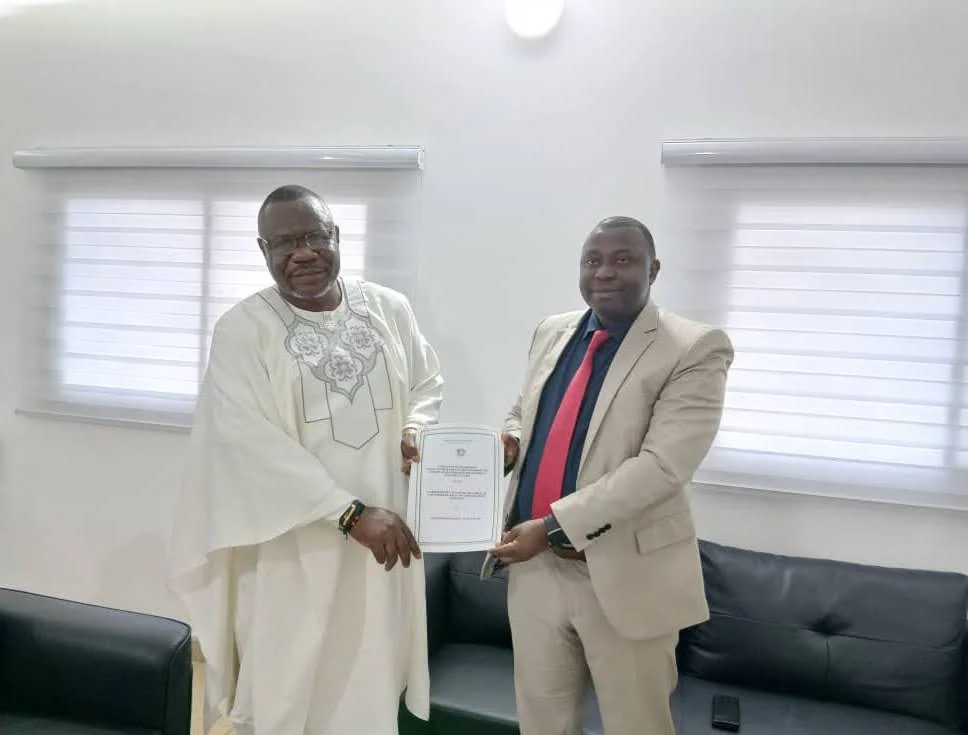
In a landmark step toward strengthening educational infrastructure and community leadership in West Africa, World Education—operating as a JSI initiative—has officially signed a renewable five-year partnership agreement with Côte d’Ivoire’s Ministry of National Education, Literacy, and Technical Education (MENAET). The formalization of this alliance, sealed on August 27, 2026, in the economic capital of Abidjan, marks a pivotal milestone in a collaborative relationship that has spanned over a decade. The agreement is explicitly designed to optimize the performance, accountability, and operational governance of public School Management Committees, universally known as COGES, across Côte d’Ivoire.
The signing ceremony brought together key stakeholders from both organizations. Moustapha Sangaré, Chief of Staff representing MENAET, and Ferdinand Leammayon Beblai, Country Director of World Education Côte d’Ivoire, affixed their signatures to the document, which establishes a robust institutional framework for ongoing and future educational interventions. Chief among these is the continued support for activities funded by Mondelez International’s flagship Cocoa Life initiative, a program deeply invested in sustainable cocoa production and community development within the nation’s primary agricultural regions.
The Core Mission and Objectives of the Partnership
At the heart of this comprehensive agreement is the modernization and capacity-building of COGES. Established by national decree to champion community-driven, participatory governance within public educational institutions, COGES play an indispensable role in bridging the gap between local communities and school administrations. These committees are tasked with managing school resources, identifying infrastructure needs, mobilizing local support, and ensuring that public schools remain functional, welcoming, and responsive to the needs of students and teachers alike.
Under the terms of the newly minted five-year accord, World Education and MENAET will concentrate their collaborative efforts on several critical pillars. First, the partnership aims to substantially enhance the governance, transparency, and administrative management capacities of COGES members. This will be achieved through targeted training programs tailored to the realities of rural and semi-urban public schools. Second, the initiative will deliver specialized training for a wide array of local educational actors operating within targeted cocoa-producing communities. Finally, the agreement facilitates the procurement and distribution of essential equipment and learning materials designed to vastly improve the physical learning environments of children in underserved regions.
A Decade of Collaboration and Institutional Evolution
The signing of the 2026 agreement does not represent a beginning, but rather a formalization and elevation of a long-standing working relationship. For more than ten years, World Education has collaborated closely with MENAET to strengthen more than 100 COGES across Côte d’Ivoire. Through thoughtful, participatory institutional strengthening, the organization has consistently helped build grassroots community leadership in education, ensuring that parents, local leaders, and teachers have a direct voice in the academic welfare of their children.
Reflecting on the significance of the event, Mr. Beblai highlighted the arduous path required to reach this institutional milestone. “We have been negotiating this type of partnership for several years, and this agreement strengthens the credibility of our work with COGES in Côte d’Ivoire,” Mr. Beblai stated following the signing ceremony. “It is a formal recognition of World Education’s work over the years in partnership with the government and provides a solid institutional framework for continued partnership.”
This sentiment underscores the growing recognition by national governments that sustainable educational reform cannot be achieved through top-down mandates alone. Instead, it requires deep, institutionalized partnerships with experienced international non-governmental organizations that possess the methodological tools and community trust necessary to drive lasting behavioral and structural change.
Chronology of Educational Development and COGES Evolution in Côte d’Ivoire
To fully comprehend the weight of the August 2026 agreement, it is necessary to examine the historical trajectory of educational administration and community involvement in Côte d’Ivoire over the past several decades.
During the post-independence era, Côte d’Ivoire’s educational system expanded rapidly, relying primarily on a centralized bureaucratic model managed directly from Abidjan. While this centralized approach facilitated rapid expansion, it frequently struggled with localized accountability, resource allocation efficiency, and maintenance of rural school infrastructure. By the late 1990s and early 2000s, the Ministry of National Education recognized the urgent need to decentralize certain administrative functions and actively engage local populations in the daily oversight of public schools.
This realization led to the establishment of School Management Committees (COGES) by official national decrees. COGES were designed to institutionalize community participation, allowing parents and local stakeholders to contribute financially and logistically to school development plans. However, early implementation phases revealed significant capacity gaps. Many COGES members lacked formal training in financial management, project planning, procurement, and transparent governance, leading to uneven performance across different regions of the country.
Recognizing these systemic challenges, World Education began partnering with local authorities and communities to pilot targeted capacity-building interventions. Over the course of the 2010s, these efforts expanded gradually, shifting from localized pilot projects to structured regional programs. A significant catalyst for this expansion was the introduction of corporate-backed sustainability programs, most notably Mondelez International’s Cocoa Life initiative, which recognized that protecting child rights and improving community livelihoods in cocoa-growing areas required robust, well-managed local schools.
Between 2015 and 2025, World Education worked alongside MENAET to strengthen over 100 COGES, developing standardized training modules, financial tracking tools, and participatory management guides. Despite these successes, operations frequently relied on project-specific memoranda of understanding rather than a comprehensive, national institutional framework. The negotiations that commenced in the early 2020s aimed to bridge this gap, culminating in the comprehensive five-year framework signed on August 27, 2026.
Demographic and Socioeconomic Context in Cocoa-Growing Regions
The focus of the World Education and MENAET partnership on cocoa-producing communities is neither accidental nor arbitrary. Côte d’Ivoire is the world’s leading producer and exporter of cocoa beans, supplying roughly 40 percent of the global market. The agricultural sector is the backbone of the national economy, employing a substantial portion of the rural population and generating vital export revenues.
However, the economic reliance on cocoa production intersects with profound socioeconomic challenges, particularly in rural hinterlands. Many cocoa-farming communities face infrastructural deficits, limited access to clean water, health services, and, critically, quality educational facilities. In these regions, schools often suffer from overcrowding, lack of teaching materials, and high rates of teacher absenteeism or turnover. Furthermore, the economic vulnerabilities of farming households have historically increased the risk of child labor and early school dropouts, as families struggle to balance agricultural labor demands with the long-term benefits of formal education.
Data compiled by various international development agencies and governmental bodies indicate that strengthening local school governance directly correlates with improved student retention rates, enhanced learning outcomes, and better protection mechanisms for children. When a COGES is well-trained, transparent, and actively supported by the community, it functions as an effective early-warning system against child labor, monitors student attendance with precision, and mobilizes local resources to maintain school infrastructure before minor damages escalate into major structural failures.
The Role of Mondelez International’s Cocoa Life Initiative
A critical element enabling the execution of the new five-year agreement is the financial and strategic backing of Mondelez International through its Cocoa Life program. Launched globally to tackle the complex systemic challenges rooted in cocoa supply chains—including deforestation, climate change, gender inequality, and rural poverty—Cocoa Life places a heavy emphasis on community development and education.
In Côte d’Ivoire, Cocoa Life has consistently invested in community-level interventions that address the root causes of child labor by ensuring that children have access to quality education. By funding the training programs and material provisions outlined in the World Education-MENAET agreement, Cocoa Life bridges the gap between private sector sustainability commitments and public sector educational mandates.
Corporate social responsibility experts point out that initiatives like Cocoa Life have evolved significantly over the past decade. Moving away from purely philanthropic donations or isolated school-building projects, modern sustainability frameworks focus heavily on institutional strengthening. By empowering public entities like MENAET and specialized NGOs like World Education, corporate funders help build sustainable, self-reliant local systems that endure long after specific corporate project cycles conclude.
Operational Framework and Oversight Mechanisms
To ensure transparency, accountability, and seamless execution over the five-year duration of the partnership, the agreement establishes a rigorous joint oversight mechanism. Operations will be managed through a dedicated steering committee operating in direct coordination with MENAET’s Directorate for the Promotion and Monitoring of COGES (Direction de la Promotion et du Suivi des COGES).
This institutional linkage is crucial for maintaining alignment with national educational policies. By embedding the partnership directly within a specialized directorate of the Ministry, the signatories ensure that all capacity-building modules, training manuals, and equipment distributions comply fully with national educational standards and strategic priorities. Furthermore, this institutional integration facilitates data sharing, monitoring, and evaluation, allowing both World Education and MENAET to measure the tangible impact of their interventions on student enrollment, school pass rates, and financial transparency within targeted COGES.
Broad Implications for Educational Reform and Child Protection
The formalization of the partnership between World Education and the Ivorian Ministry carries broad implications for the wider landscape of educational development in West Africa. As governments across the region grapple with constrained public budgets and rapidly growing school-age populations, decentralized community governance models are increasingly viewed as indispensable strategies for expanding access while maintaining quality.
By standardizing and professionalizing the operations of COGES, the agreement addresses one of the most persistent bottlenecks in rural education: the disconnect between central educational policies and grassroots implementation. When school committees are equipped with the knowledge to manage budgets transparently, prioritize needs effectively, and advocate for their schools within local government structures, the entire educational ecosystem benefits.
Moreover, the explicit focus on child protection within cocoa-growing regions reinforces the nexus between education and human rights. Access to a functional, supportive school environment is widely recognized by international child welfare organizations as the single most effective deterrent against hazardous child labor. By strengthening schools, improving learning environments, and engaging parents directly through COGES, the partnership creates a protective cocoon around vulnerable children, ensuring they remain in classrooms rather than agricultural fields during critical developmental years.
Expert Analysis: Challenges and Future Outlook
While education and development specialists have universally praised the signing of the August 2026 agreement as a major step forward, analysts also point to several structural challenges that will require careful navigation during the five-year implementation period.
Chief among these is the challenge of institutional sustainability and volunteer fatigue. COGES members are typically community volunteers—parents, local farmers, and community leaders—who dedicate their time without financial compensation. Maintaining high levels of engagement, preventing burnout, and ensuring smooth leadership transitions when members rotate out of their positions will require continuous, decentralized support and ongoing refresher training.
Additionally, scaling the successes achieved in targeted cocoa-producing communities to a truly national level will demand sustained financial commitment from both public and private stakeholders. While the current partnership provides a solid framework for activities supported by Cocoa Life and World Education, expanding these methodologies to non-cocoa regions will ultimately depend on mobilizing additional domestic resources and international development aid.
Nevertheless, the establishment of a formal, five-year institutional framework provides a stable foundation upon which these future expansions can be built. By bridging the expertise of an international capacity-building leader with the authority of a national ministry, the alliance between World Education and MENAET sets a compelling benchmark for public-private-NGO collaboration in the pursuit of sustainable educational quality and community empowerment.
Conclusion
As Côte d’Ivoire continues to navigate its path toward sustainable economic development and social equity, the strengthening of foundational institutions like School Management Committees remains a critical priority. The renewable five-year partnership agreement signed on August 27, 2026, represents a mature, highly structured approach to educational governance—one that respects national authority while leveraging international expertise and private sector sustainability investments.
Through targeted capacity-building, transparent financial management, and a steadfast commitment to child protection in vital agricultural regions, World Education and MENAET have established a durable roadmap for the future. As implementation gets underway, the outcomes of this collaboration will be closely monitored by regional and international observers, offering valuable lessons for community-driven educational reform across the African continent.