
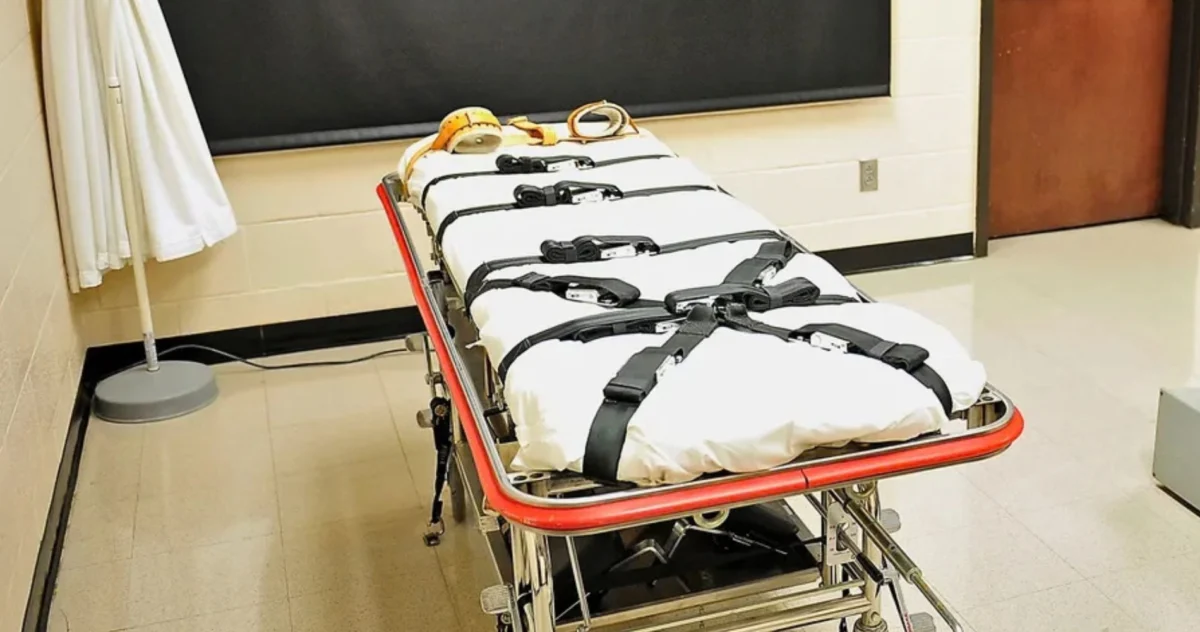
Christa Pike remains hospitalized this morning, a survivor of the State of Tennessee’s failed attempt to carry out her death sentence via lethal injection last night. Her legal counsel, who were denied access to information regarding her current medical status, released a blistering statement early this morning characterizing the ordeal as a catastrophic breakdown of state protocol. The attorneys cited specific, recurring failures: persistent difficulties in achieving intravenous access, the rupturing of veins, the utilization of degraded pentobarbital, and a glaring absence of emergency medical protocols when the procedure deviated from the intended, albeit secret, plan.
Pike, 50, was scheduled to be executed at 10 a.m. yesterday for a 1995 murder conviction stemming from when she was 18 years old. The events leading up to the failed procedure were marked by rapid-fire judicial intervention, ending in a late-afternoon Supreme Court decision that cleared the path for the state to proceed.
A Chronology of a Failed State Procedure
The legal maneuvering began in the morning hours when the U.S. Court of Appeals for the Sixth Circuit granted a stay of execution, citing a need for the court to further deliberate on unresolved legal challenges regarding Pike’s conviction. The State of Tennessee immediately bypassed standard lower-court channels, appealing directly to the U.S. Supreme Court. By 6 p.m., the high court had vacated the stay, effectively reinstating the execution order.
By 9 p.m., despite having been administered two doses of pentobarbital, Pike remained conscious and vocal. Media witnesses, who were instructed to vacate the prison premises, observed an ambulance and emergency personnel arriving at the facility, signaling that the execution had not proceeded as intended.
Reporters stationed in the witness room provided a harrowing account of the evening. According to these accounts, the blinds to the execution chamber were opened at 7:26 p.m. Witnesses heard Pike articulate full, coherent sentences, at one point stating, "My arm feels like it’s about to bust. One spot is really throbbing." As the process continued, she was observed kicking her feet with enough force to displace the sheets covering her body. The blinds were closed at 7:46 p.m., reopened at 7:49 p.m., and finally closed again at 8:05 p.m. Throughout this period, witnesses reported hearing her breathing and, later, snoring, even after the internal microphones were deactivated.
Patterns of Operational Failure in Tennessee
This incident marks the second time in less than five months that Tennessee has struggled to carry out a lethal injection. In May, the attempted execution of Tony Carruthers was aborted after prison staff spent an extended period attempting to establish venous access, causing the inmate significant physical trauma and visible distress.
These recurring issues echo the 2022 moratorium declared by Governor Bill Lee, which followed a "technical oversight" in the planned execution of Oscar Smith. A subsequent third-party investigation revealed that the Tennessee Department of Correction had failed to ensure that lethal drugs were tested for endotoxins, a violation of the state’s own established protocols. That investigation resulted in the termination of two high-ranking corrections officials.
Critics argue that the state’s reliance on a "veiled" protocol—one that shields the source of drugs and the specifics of the training of the execution team—has created an environment prone to human error and mechanical failure. Legal experts note that when protocols are hidden from public or judicial scrutiny, there is no accountability mechanism to prevent the repetition of past mistakes.
Legal Challenges and the Question of Trauma
At the heart of Pike’s legal battle was the argument that her original trial was fundamentally compromised by her counsel’s failure to introduce evidence of her severe history of abuse. Psychological evaluations conducted later in her incarceration revealed that Pike endured years of systematic physical and sexual assault, starting as early as kindergarten and continuing through her adolescence.
Prosecutors in the original 1995 trial characterized these claims as fabrications. However, recent legal filings reflect a concession by the state that Pike’s history of trauma was, in fact, accurate. Her defense team argued that this revelation should have prompted a new sentencing hearing, as a jury aware of the documented abuse might not have opted for the death penalty.
Justice Sonia Sotomayor, in her dissent regarding the Supreme Court’s decision to vacate the stay of execution, noted the gravity of the situation. Joined by Justices Elena Kagan and Ketanji Brown Jackson, Sotomayor warned that the court was "short-circuiting the ordinary process of appellate review" at the expense of a defendant’s "fundamental interest in [her] own life."
The Response from State Leadership
In the wake of last night’s failure, Governor Bill Lee announced a pause on all executions in Tennessee for the remainder of the year. He has called for a comprehensive, independent third-party review of the Department of Correction’s procedures.
"The state’s desire to expedite an execution cannot override the necessity of following the rule of law and ensuring human rights," said an independent legal observer who monitors death penalty protocols. "When a state fails to execute a prisoner twice in a year, it indicates a deep-seated structural issue that a temporary pause may not be sufficient to resolve."
The Tennessee Department of Correction has remained largely silent, providing only a brief statement confirming that Pike was transported to an off-site medical facility and asserting that they "stand by their protocol." No department officials appeared at the post-execution press conference, leaving many questions about the current condition of the inmate and the specific nature of the complications unanswered.
Implications for the Death Penalty
The failure to execute Christa Pike brings into focus the broader national trend of increasing legal scrutiny over lethal injection protocols. As pharmaceutical companies have become more restrictive regarding the sale of drugs for execution purposes, states have increasingly relied on compounding pharmacies and secret, non-transparent supply chains.
The "drowning, suffocating, and burning" sensations often cited in expert testimony regarding the three-drug protocol are now at the center of the debate. Autopsy reports from previous executions nationwide have suggested that even when executions are "successful" by the state’s definition, the experience of the inmate may involve severe respiratory distress and panic, potentially violating the Eighth Amendment’s prohibition against cruel and unusual punishment.
As Tennessee moves forward with its third-party review, the focus will likely shift to the professional qualifications of the execution team, the quality control of the chemical supply, and the transparency of the Department of Correction. The case of Christa Pike will almost certainly serve as a primary exhibit in future federal litigation regarding the viability of lethal injection as a constitutional means of punishment.
For now, the state of Tennessee faces a crisis of confidence. The recurring nature of these failures suggests that the issue is not a series of isolated accidents, but a systemic failure to manage a process that, by its very nature, demands a level of precision and human care that the current prison system has proven unable to provide. The legislative and judicial fallout from this event is expected to continue for months, if not years, as the state attempts to reconcile its commitment to capital punishment with its demonstrated inability to carry it out lawfully and humanely.




