
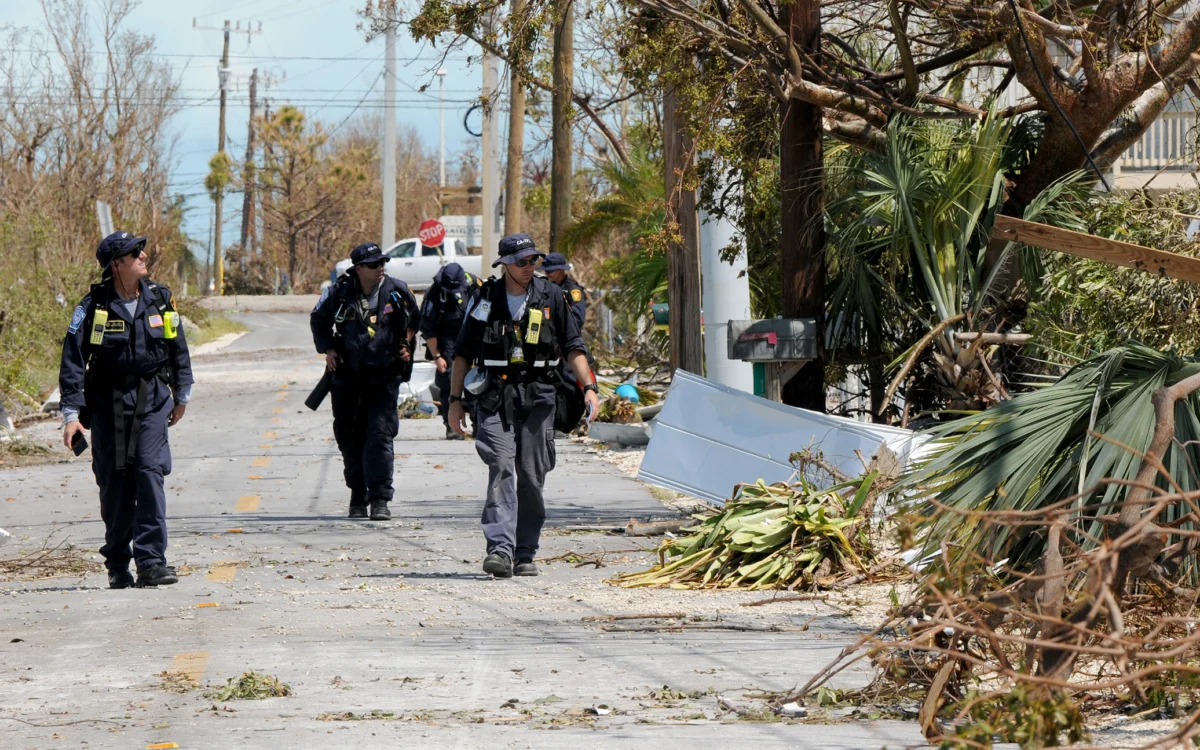
The Federal Emergency Management Agency has announced it will reverse a controversial decision and restore specialized training programs focused on meeting the needs of individuals with disabilities during natural disasters. The reversal follows the release of a damning federal watchdog report highlighting significant disparities in disaster recovery outcomes for disabled Americans, coupled with a more than year-long suspension of critical instructional frameworks for emergency personnel.
The announcement marks a significant pivot for the nation’s premier emergency response agency. In response to findings and recommendations issued by the U.S. Government Accountability Office, FEMA officials have committed to redesigning and relaunching educational initiatives designed to ensure that state, local, tribal, and territorial partners are fully equipped to handle the unique challenges faced by vulnerable populations before, during, and after catastrophic events.
The Genesis of the Suspension and the GAO Investigation
The controversy stems from administrative shifts that occurred in 2025. According to the GAO report released this week, FEMA removed specialized training modules concerning disability-inclusive emergency management from its active curriculum. The removal was executed in direct response to various executive orders issued during that period, which prompted federal agencies to review and streamline their training frameworks, compliance mandates, and administrative burdens.
However, the discontinuation of these programs left a profound void in the nation’s emergency preparedness ecosystem. Because state and local jurisdictions rely heavily on FEMA for technical guidance, instructional resources, and operational frameworks, the absence of standardized training meant that emergency responders on the ground were left without up-to-date methodologies for identifying, evacuating, and sheltering people with mobility impairments, sensory disabilities, chronic health conditions, and neurodivergent profiles.
For more than a year, no official federal training addressing these specific populations was offered through the agency’s primary channels. The GAO report sharply criticized this outcome, warning that the policy shift directly compromised public safety.
"Without this training, FEMA’s state and local partners risk not being able to effectively assist people with disabilities," the GAO stated in its comprehensive evaluation, explicitly urging the agency to reverse course and re-establish robust educational protocols.
Disparities in Disaster Recovery: The Data Behind the Crisis
The timing of the GAO’s intervention is underscored by troubling data regarding how disabled individuals experience and recover from natural disasters. Decades of demographic research and post-disaster analyses have consistently shown that people with disabilities are disproportionately impacted by hurricanes, floods, wildfires, and tornadoes. They face heightened risks during evacuation phases due to inaccessible transportation, generalized shelter designs that fail to accommodate medical equipment, and communication breakdowns during emergency alerts.
Yet, the disparities extend far beyond the immediate crisis response phase into the long-term recovery cycle. According to the GAO report, empirical data collected between 2022 and 2025 revealed a stark inequity in federal relief distribution: individuals with disabilities were statistically significantly less likely to be approved for financial and housing assistance from FEMA compared to the general population.
Emergency management experts point to a multitude of factors contributing to this disparity. Application portals that lack comprehensive digital accessibility features, complex damage-assessment processes that fail to account for the specialized costs of replacing durable medical equipment, and field inspectors who lack training in recognizing the functional losses experienced by disabled survivors all combine to create systemic barriers to recovery.
For a population that often operates on fixed incomes and possesses fewer liquid assets to absorb the shocks of property destruction, a delayed or denied FEMA claim can mean the difference between stable housing and prolonged homelessness or institutionalization.
Official Responses and Agency Commitments
Confronted with the findings of the GAO report, FEMA leadership moved quickly to signal compliance and outline a corrective path forward. In its formal response to the federal watchdog, the agency concurred with the underlying assessment regarding the necessity of inclusive emergency planning.
"FEMA agrees with the importance of providing state, local, tribal and territorial partners with practical training and technical assistance to support emergency management so that the needs of individuals with disabilities are addressed before, during and after disasters," the agency stated in the official record.
Rather than merely reinstating the legacy curriculum, however, FEMA indicated an intention to upgrade the educational content comprehensively. The agency committed to a process aimed at redesigning and strengthening training support to reflect contemporary best practices, technological advancements in accessibility, and lessons learned from recent catastrophic weather events.
Agency officials have established a tentative internal timeline, projecting that the overhauled training frameworks will be fully developed, validated, and made available to regional partners by next September. This multi-month window will allow curriculum designers to consult with disability advocates, accessibility experts, and emergency management practitioners to ensure the new modules are both practical and legally robust.
Standardization of Regional Specialists and Application Improvements
Beyond the reinstatement of the general training curriculum, the GAO report pressed FEMA on two additional operational fronts: the standardization of regional disability coordinators and the refinement of the individual assistance application process.
Presently, FEMA deploys regional disability specialists across its geographic zones to coordinate with local officials, advise on shelter accessibility, and advocate for vulnerable populations during active disaster deployments. However, the GAO found that the roles, responsibilities, and authority of these specialists varied widely from one region to another. This lack of uniformity created operational inconsistencies, meaning that a disaster survivor in one FEMA region might receive robust advocacy and accommodation support, while a survivor facing similar challenges in another region might encounter an ad-hoc approach.
In response to the GAO’s recommendations, FEMA has agreed to standardize the role of regional disability specialists, establishing clear performance expectations, deployment protocols, and operational authorities nationwide. This change is intended to ensure that disability integration is treated as a core operational pillar rather than an optional regional preference.
Furthermore, the agency has committed to overhauling its individual assistance application process by actively soliciting direct feedback from people with disabilities. By incorporating the lived experiences of individuals who have navigated the FEMA application maze, the agency hopes to eliminate procedural bottlenecks, simplify digital forms, and train frontline caseworkers to better identify and accommodate disability-related needs during the claims evaluation stage.
Broader Implications for Emergency Management
The course correction by FEMA reflects a broader, long-overdue evolution in American emergency management. Historically, disaster response models were built around a generalized "average" citizen, often treating accessibility accommodations and functional needs as afterthoughts or specialized add-ons rather than foundational requirements.
Legal mandates, such as the Stafford Act and the Rehabilitation Act, have long required federal disaster operations to adhere to civil rights and anti-discrimination standards. Yet, translating high-level legal obligations into practical, ground-level execution has remained a persistent challenge for emergency services at every level of government.
The suspension of disability-focused training in 2025 served as a stark reminder of how fragile these integration efforts can be when administrative priorities shift. The subsequent GAO intervention and FEMA’s subsequent capitulation demonstrate the critical oversight function played by independent watchdogs in safeguarding civil rights and public safety during times of bureaucratic flux.
As FEMA works toward its self-imposed September deadline to roll out the redesigned curriculum and standardize its regional specialists, the true test will lie in implementation. State and local emergency managers, many of whom operate under severe resource constraints, will need to be incentivized or mandated to complete the updated training. Simultaneously, disability advocacy groups will be watching closely to see whether the promised procedural reforms actually translate into measurable improvements in assistance approval rates and recovery outcomes for disabled survivors.
Ultimately, the events underscore an immutable reality of modern disaster management: as the frequency and severity of extreme weather events continue to escalate due to changing environmental conditions, building a truly resilient nation requires an emergency response infrastructure that leaves no one behind.




