The past two years have ushered in an era of unprecedented transformation in the global workplace, marked by a rapid and often tumultuous experimentation with new operational paradigms. What began as an emergency response to a global health crisis has evolved into a profound re-evaluation of fundamental assumptions about work, its purpose, location, and execution. This period, often dubbed the "Great Experiment," has not merely adjusted existing structures but has fundamentally shifted the social contract between employees and employers, necessitating a critical reassessment of organizational processes and policies. This article, part of a broader series exploring emerging trends categorized as ‘Purpose,’ ‘People,’ ‘Process & Policy,’ and ‘Polarisation & Activism,’ delves specifically into the profound changes observed in the realm of organizational processes and policies, highlighting their far-reaching implications for Diversity, Equity, and Inclusion (DEI).
The Genesis of Transformation: A Chronology of Change
The catalyst for this seismic shift arrived abruptly in early 2020 with the onset of the COVID-19 pandemic. Organizations globally were forced into an immediate, large-scale migration to remote work, a model previously considered a niche benefit by many.
- Early 2020 (March – June): Emergency Remote Work & Adaptation. Companies scrambled to equip employees for home offices, secure digital infrastructure, and maintain business continuity. Initial concerns about productivity loss were often countered by surprising resilience and adaptability from workforces. This phase highlighted significant disparities in digital access and home environments, immediately flagging potential equity issues.
- Mid-2020 (July – December): Realization of Long-Term Implications. As the pandemic persisted, it became clear that remote work was not a temporary anomaly but a potentially enduring feature of the professional landscape. Companies began to consider more structured approaches, moving beyond ad-hoc solutions to contemplate permanent hybrid or fully remote models. Discussions around employee well-being, digital fatigue, and the blurring lines between work and home life gained prominence.
- Early 2021 (January – June): The ‘Always-On’ Culture and Burnout. While remote work offered flexibility, it also introduced new challenges. The lack of clear boundaries led to an "always-on" expectation, contributing to increased burnout and mental health concerns among employees. This period saw a rise in calls for policies that protect employee well-being and delineate work-life separation.
- Mid-2021 (July – December): The Return-to-Office Debates and Employee Empowerment. With vaccine rollouts, many organizations began planning for a return to physical offices. However, they were met with significant employee resistance. Having experienced greater autonomy and flexibility, a substantial portion of the workforce expressed a strong desire to retain remote or hybrid options. This period marked the beginning of the "Great Resignation," as employees, empowered by choice and a tight labor market, began leaving roles that did not offer desired flexibility.
- Late 2021 – Present: Policy Re-evaluation and the New Normal. The sustained demand for flexibility has compelled organizations to fundamentally re-evaluate their traditional processes and policies. This ongoing period is characterized by intense data gathering, policy experimentation, and a critical focus on designing equitable and sustainable future-of-work models.
Challenging Outdated Norms: The Erosion of Traditional Workplace Expectations
The pandemic served as a stark revealer, exposing the obsolescence of many long-held workplace norms. Employees, having experienced an alternative, now exhibit a significantly lower tolerance for practices previously accepted as the "status quo." This shift represents a fundamental renegotiation of the employer-employee social contract.
Key traditional expectations now under scrutiny include:
- Workplace Presenteeism: The expectation that employees must be physically present in the office, often regardless of actual productivity or need, has been widely debunked. Studies by organizations like Gallup consistently show that engaged remote workers can be as, if not more, productive than their in-office counterparts. Pre-pandemic, presenteeism often led to employees coming to work sick or staying late unnecessarily, detrimental to both individual well-being and collective health.
- Long Office Commutes: The daily grind of commuting, with its associated costs in time, money, and environmental impact, is no longer seen as an unavoidable given. Data from sources like the U.S. Census Bureau indicates that the average American commute can be upwards of 27 minutes each way, translating to hundreds of hours annually. Remote work has offered a reprieve, allowing individuals to reclaim this time for personal pursuits or family.
- Formal Clothing Codes: The necessity of traditional business attire has been questioned, particularly in roles with minimal client-facing interaction. A more relaxed approach to dress codes, often seen during remote work, has been linked to increased comfort and a sense of authenticity for employees.
- Poor Working Conditions & Unfair Compensation: Heightened awareness during the pandemic brought into sharper focus issues of inadequate workspace, excessive workloads, and compensation not commensurate with effort or market value. The "Great Resignation" highlighted that employees are increasingly unwilling to tolerate these conditions.
- Abuse and Discrimination: The period of remote work, ironically, sometimes brought a new lens to workplace culture, as employees had space to reflect on and report instances of discrimination or harassment that might have been normalized in an in-person environment. Organizations are under increasing pressure to ensure robust reporting mechanisms and accountability regardless of work location.
- False Belief in Meritocracy: The pandemic exposed how informal networks and ‘face time’ often influence career progression, undermining a true meritocratic system. In remote or hybrid settings, explicit performance metrics and transparent evaluation processes become even more critical to counteract unconscious biases that might favor those with more in-office visibility.
- Low Control Over Work: The forced flexibility of remote work often granted employees greater autonomy over their schedules and work environment. This taste of self-direction has led to a demand for sustained control, pushing back against rigid top-down management styles.
- "Always-On" Availability Expectations: While remote work initially blurred boundaries, the backlash against constant availability has led to calls for policies that protect personal time and promote digital well-being.
- Excessive Business Travel: The pandemic demonstrated that many meetings and collaborations previously requiring travel could be effectively conducted virtually, prompting a re-evaluation of its necessity and frequency, with benefits for both cost savings and environmental sustainability.
- Lack of Well-being and Psychological Safety: The stress of the pandemic amplified the need for organizations to prioritize employee mental health and create environments where individuals feel safe to express concerns, take risks, and be themselves without fear of negative consequences. Studies by Google on Project Aristotle underscored the critical role of psychological safety in high-performing teams.
- Gender Inequality for Family Care: The strains of balancing work and family during lockdowns disproportionately affected women. The pandemic highlighted the urgent need for equitable policies around family leave, flexible hours, and childcare support, challenging the outdated notion that family care is solely a private matter.
These revelations collectively underscore that many workplaces were operating on outdated norms that no longer align with current realities or employee expectations. This presents a critical opportunity for organizations to reset and proactively design policies for where and how work happens, integrating lessons learned from this unprecedented period.
The Paradigm Shift in Work Location: Remote and Hybrid Models
One of the most significant and contentious policy shifts revolves around the physical location of work. While data on remote work preferences can appear conflicting, a consistent trend emerges: a substantial segment of the workforce across various demographics desires continued flexibility.
Research from the U.S. is particularly illustrative, projecting that remote work will continue at least one day a week for many. Notably, the desire for flexible work is strongest among specific demographic groups: women, working parents, and employees of color. These groups have often reported significant gains in employee experience scores while working remotely, suggesting that flexible arrangements can mitigate historical disadvantages and improve work-life balance. For instance, remote work can reduce the ‘double burden’ for working mothers and provide more equitable access for individuals with disabilities or those living in areas without robust public transportation.
These shifts carry broad social ramifications, as noted by institutions like Barclays. They foresee greater employee diversity due to expanded talent pools (location becomes less of a barrier), improved work-life balance, and potentially revitalized local economies outside traditional urban centers.
Employee Demand and the Threat of the Great Resignation
Despite these clear preferences, a significant disconnect persists. Estimates suggest that up to two-thirds of workers expect more than just one day a week of remote work, and a substantial number are willing to quit their jobs if adequate remote or hybrid options are not provided. This sentiment fueled the "Great Resignation" or "Great Renegotiation," where employees exercised unprecedented leverage in the labor market. A 2021 survey by McKinsey found that 40% of employees were likely to leave their jobs in the next 3-6 months if their flexibility needs were not met.
The Pre-Pandemic Landscape: Biases in Flexible Work Access
Prior to the pandemic, many organizations approached remote work on an ad-hoc basis, leading to inconsistent application and inherent biases. Research conducted by Lisa and Veronika Hucke in 2019 revealed that remote work was predominantly accessed by more senior males within organizations. Working mothers frequently felt stigmatized when requesting flexible arrangements, fearing it would be perceived as a lack of commitment. Similarly, more junior staff, though often desiring remote work, hesitated to ask, fearing they would be seen as "not serious about their job." This created a two-tiered system where access to flexibility was often a privilege, not a standard option, exacerbating existing inequalities. The pandemic, by forcing universal remote work, offered a unique opportunity to rectify these historical imbalances and establish equitable policies.
The Peril of Top-Down Policy Making: A Disconnect in Design
Perhaps one of the most concerning trends emerging from this period is the disconnect between leadership and employees in the policy-making process. A multi-country survey of knowledge workers by Future Forum revealed that a staggering 66% of executives reported designing post-pandemic workforce policies with little to no direct input from their employees. This top-down approach is inherently risky, as it risks creating policies that are not fit for purpose, lack employee buy-in, and may inadvertently exacerbate existing inequalities or create new ones.
This isolated policy design also fosters a significant empathy gap regarding transparency. The same Future Forum report found that while 66% of executives confidently believed they were being "very transparent" about future work plans, only 42% of employees agreed. This disparity can erode trust, foster cynicism, and lead to low adoption rates of new policies, essentially dooming initiatives from the start. Neglecting to engage the very people these policies are meant to serve represents a profound loss for achieving genuinely inclusive and effective outcomes.
Redefining Processes and Policies for an Inclusive Future
The collective pandemic-era experience presents a clear call to action: organizations must rigorously assess existing policies for their fit with current and future operational realities. This assessment must be followed by a commitment to data-driven, inclusive co-creation of new solutions that integrate behavioral insights and are implemented with agile experimentation.
Key Areas for Policy Overhaul:
- Work Location Policies: Moving beyond ad-hoc arrangements to establish clear, equitable guidelines for remote, hybrid, and in-office work. This includes defining eligibility criteria, expectations for in-office presence, and mechanisms for collaboration across distributed teams.
- Performance Management: Redesigning performance evaluation systems to focus on outcomes rather than ‘face time.’ This requires clear goal setting, regular feedback, and mitigating proximity bias in evaluations.
- Meeting Culture: Implementing practices that ensure equitable participation and information sharing for all attendees, regardless of their location. This might include ‘remote-first’ meeting protocols, leveraging digital tools effectively, and ensuring all voices are heard.
- Onboarding and Offboarding: Adapting processes to effectively integrate new hires and manage departures in a distributed environment, ensuring a consistent and inclusive experience.
- Learning & Development: Providing equitable access to training and development opportunities for all employees, ensuring remote workers are not overlooked for critical skill-building or career advancement programs.
- Well-being and Mental Health Support: Formalizing policies that promote work-life balance, address burnout, and provide accessible mental health resources, acknowledging the unique stressors of remote and hybrid work.
- Compensation and Benefits: Reviewing compensation structures in light of geographical flexibility and ensuring benefits packages (e.g., home office stipends, mental health support) are equitable across all work models.
Leveraging Behavioural Insights for Equitable Outcomes:
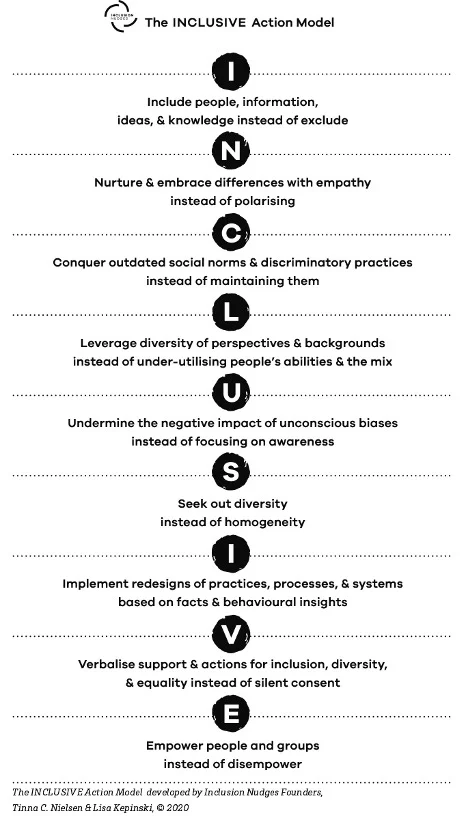
Simply having policies is not enough; how they are designed and implemented profoundly impacts their effectiveness and equity. Incorporating behavioral insights, or "nudges," can help counteract unconscious biases and steer individuals towards desired behaviors. For instance, making flexible working the default option rather than an opt-in request significantly increases its uptake across all demographics, as seen in Inclusion Nudges like "Flexible Working as the Default & Norm." Similarly, proactively revealing gaps in flexible working uptake can prompt leaders to investigate and address underlying barriers. Policies like "Default as ‘All Jobs Are 80% Jobs’" challenge the pervasive assumption of full-time, inflexible work, promoting a more sustainable and inclusive approach.
Implications for Diversity, Equity, and Inclusion (DEI)
The shifts in process and policy offer both immense opportunities and significant challenges for advancing DEI.
Unlocking Diverse Talent Pools:
By de-emphasizing physical location, organizations can access a significantly broader and more diverse talent pool. This allows for recruitment from different geographies, socioeconomic backgrounds, and individuals with specific needs (e.g., those with disabilities, caregivers) who might have been excluded by traditional office-centric models. The increased flexibility can also improve retention rates for diverse employees who value work-life integration.
Mitigating New Biases: The Proximity Trap:
While remote work can reduce some biases, it introduces new ones. "Proximity bias" is a significant concern, where leaders may unconsciously favor employees they see more frequently in the office for promotions, projects, or mentorship opportunities. Policies must explicitly counteract this by ensuring equitable access to opportunities, visibility, and sponsorship for all employees, regardless of their work location. Regular, structured check-ins, transparent project allocation, and outcome-based performance reviews are crucial.
Cultivating Psychological Safety in Distributed Environments:
Building psychological safety is more complex in remote or hybrid settings where informal cues are harder to read. Policies need to support intentional efforts to foster connection, trust, and open communication. This includes training managers in inclusive leadership for distributed teams, creating virtual ‘water cooler’ moments, and ensuring channels for feedback and grievances are accessible and safe for everyone.
The Path Forward: Agility, Empathy, and Continuous Evolution
The current era demands organizational agility, empathy, and a commitment to continuous learning and adaptation. Policies cannot be static; they must be dynamic, informed by ongoing data, and refined through iterative experimentation. The success of these new models hinges not just on technological infrastructure but on a culture of trust, transparency, and a genuine commitment to equity. Leaders must prioritize listening to their employees, co-creating solutions, and consciously designing processes that promote inclusion rather than inadvertently creating new forms of exclusion.
Expert Commentary and Resources
The insights presented here draw from extensive research and discussions, including those shared by Lisa Kepinski in an HR Master Class as part of Legal Island’s support for DEI change makers. This session, held in September 2021, explored these pandemic-era research trends and their specific implications for DEI.
For organizations seeking to embed these principles, behavioral design tools, such as Inclusion Nudges, offer practical strategies. These include "Reveal Gaps in Flexible Working to Increase Use by All," "Flexible Working as the Default & Norm," and "Default as ‘All Jobs Are 80% Jobs’," all designed to overcome unconscious biases and create more equitable workplace practices.
As organizations navigate this evolving landscape, engaging experts for advisory consulting, coaching, and speaking can provide invaluable guidance in translating these insights into actionable strategies for inclusive leadership and sustainable organizational change. The journey towards a truly inclusive and equitable future of work is ongoing, requiring vigilance, empathy, and a proactive approach to process and policy design.