The efficacy of diversity, equity, belonging, and inclusion (DEBI) initiatives hinges profoundly on the precision with which these foundational concepts are defined and communicated within organizations and broader society. A recent analysis underscores that the language used to articulate DEBI principles can either galvanize collective action or erect unseen barriers, directly influencing outcomes and the very culture such efforts aim to transform. This critical insight, drawn from decades of practical experience and academic research, reveals that abstract or misaligned definitions frequently trigger resistance, misunderstanding, and a sense of exclusion among key stakeholders, ultimately undermining the best intentions.
The initial reception to terms like "diversity," "equity," and "inclusion" often varies dramatically across individuals, evoking a spectrum of thoughts, feelings, and past associations. For some, these words are met with enthusiasm and a sense of progress; for others, they can elicit reactions ranging from disinterest ("Uhhh!" or "Blah blah blah!") to outright defensiveness or a perception of threat. Common sentiments observed in organizational settings include: "Diversity isn’t my issue; it only applies to minority groups," "I’m the one being discriminated against, so it’s not my job to fix it," or conversely, "You’re diverse, so you fix it." Other patterns reveal a delegation of responsibility ("It’s not my day job; someone else needs to fix it") or a misinterpretation of goals ("Let’s attract some diversity talent," often meaning only minorities or women). A particularly contentious perception is the "zero-sum game" mentality, where efforts to promote underrepresented groups are seen as inherently disadvantaging others, particularly white men, leading to statements like: "If we promote women and minorities, then we have to exclude others."
These varied reactions are not arbitrary but are deeply rooted in historical approaches to DEBI work. For many years, organizational strategies often focused on "fixing the minority" or implementing programs for gender equality that exclusively targeted women, implicitly framing the issue as a deficit within these groups rather than a systemic challenge requiring broad engagement. Such approaches frequently overlook the crucial need to engage all people—majority and minority groups alike—in reshaping implicit norms and redesigning systems that perpetuate discriminatory practices. The outcome is often assimilation rather than genuine inclusion, fostering an "us and them" dynamic that fragments rather than unites. This traditional framing inadvertently creates "hidden trip wires," working against the very benefits that diversity is meant to unlock and paradoxically excluding individuals who feel targeted or marginalized by the discourse itself.
The challenge is exacerbated when DEBI professionals articulate these terms in abstract, academic, or jargon-laden ways that lack common understanding or clear pathways for action. This can create a significant disconnect, limiting progress and perpetuating a cycle of misperception. The profound impact of words, though often underestimated, is well-documented by science. Language is fundamental to human experience, shaping perceptions, behaviors, and cultures. The "priming effect," for instance, demonstrates how words can unconsciously influence thoughts and actions. Studies have shown that exposure to words associated with stereotypes (e.g., "elderly" terms like "wrinkle" or "forgetful") can subtly alter subsequent behaviors, such as walking speed. Similarly, attempts to counteract stereotypes, like stating "girls are as good as boys at math," can inadvertently reinforce the very stereotype they aim to dismantle by drawing attention to the perceived disparity. This highlights the immense power of linguistic framing.
Beyond cognitive influence, words also trigger powerful emotions that drive unconscious thinking, decision-making, and behavior. The "fear of loss," a potent psychological bias, can manifest when individuals perceive DEBI initiatives as a zero-sum game. If achieving equity is equated with a loss of personal power or privilege, it triggers "loss-aversion bias," leading to resistance and a fight to maintain the status quo. This emotional response can severely impede engagement with necessary changes. Furthermore, an innate "tribal mentality" can be activated by the "unknown," leading to unconscious fear or anxiety when interacting with "out-group" members. This bias can cause individuals to unintentionally exclude knowledge or information from perceived outsiders while more readily trusting and processing information from "in-group" members. These emotional reactions significantly impact how input is sorted and how mental models are formed.
Another critical, often unspoken, emotional barrier is "shame." Language used in DEBI work can inadvertently evoke feelings of shame in some individuals, particularly those who may have unknowingly contributed to discrimination or who feel privileged yet unsure how to address inequality. This can manifest as unconscious micro-aggressions or resistance, creating a profound "stuck pattern" that hinders change. These psychological and emotional responses underscore that merely articulating definitions rationally is insufficient; the framing must actively disarm these inherent biases and foster constructive engagement.
The historical absence of formally articulated, commonly understood definitions for DEBI terms within organizations has allowed for a proliferation of diverse and often conflicting interpretations. For some, "diversity" might exclusively refer to "women"; for others, "inclusion" might be limited to establishing "diversity networks." "Equity" might be narrowly perceived as "minority hiring targets." While these interpretations may capture aspects of the terms, they rarely encompass their full scope. This lack of a common framework creates an "absurd reality" where misaligned actions are an inevitable consequence, hindering collective progress. Organizations operating without clear, shared definitions are essentially navigating without guiding stars, leading to fragmented efforts and stalled initiatives.
Recognizing this critical gap, the Inclusion Nudges global initiative, founded by Lisa and Tinna, champions a strategic approach that grounds DEBI efforts in robust, action-oriented definitions. These definitions serve not merely as semantic guidelines but as fundamental guides for designing inclusive workplaces, communities, and societies. The Inclusion Nudges framework posits that effective DEBI definitions must be comprehensive and inclusive of all individuals, moving beyond narrow interpretations that perpetuate division.
Their definitions are as follows:
- Diversity: The Mix of All of Us. Diversity encompasses all people, recognizing their demographic differences, varied backgrounds, multiple identities, unique experiences, perspectives, knowledge, abilities, and ideas. It explicitly reframes diversity as a characteristic of all people and the differences among us, not solely a reference to specific minority characteristics.
- Equity: The Fairness Frame for the Mix. Equity is defined as ensuring that all people have equal access to opportunities and fair treatment, actively working to eliminate discriminatory practices, systems, laws, policies, social norms, and cultural traditions. It emphasizes balancing power and correcting existing inequalities, including addressing behavioral patterns and processes that inadvertently perpetuate disparities. The fundamental intent of equity is fairness to all.
- Belonging: I Feel Valued as a Part of the Mix. Belonging centers on an individual’s lived experience within a setting—feeling welcomed, safe, seen, heard, and valued. It implies the existence of equitable and inclusive structures that enable individuals to be their full, authentic selves without needing to "cover" or downplay personal traits. Belonging is the desired outcome when diversity, equity, and inclusion are effectively implemented.
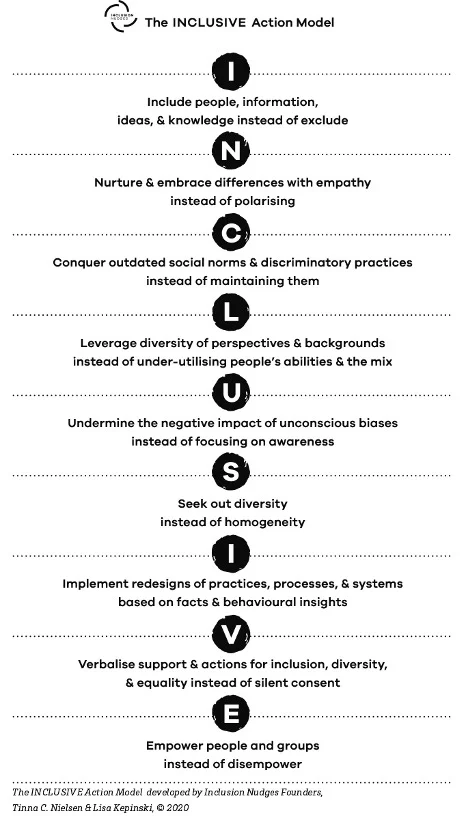
- Inclusion: Welcoming and Applying the Mix. Inclusion focuses on fostering the structures, systems, processes, culture, behaviors, and mindsets that embrace and respect all people and all forms of diversity. It is about actively seeking out diverse knowledge, perspectives, information, and ideas, challenging exclusive norms and stereotypes, fostering openness, and encouraging individuals to speak up. Inclusion ensures that all people are valued, can participate fully, and contribute to their utmost potential.
Crucially, simply articulating and communicating these definitions is not enough. A purely rational understanding, residing in the conscious mind (System 2 thinking), often fails to translate into inclusive behaviors, which are frequently driven by unconscious processes (System 1). While DEBI specialists can tailor definitions to align with organizational strategies (e.g., linking inclusion to innovation, agility, or global mindset), this top-down approach often misses the mark for individuals, whose understanding is shaped by their unique lived experiences. When words do not align with observable actions, distance and mistrust can arise. Therefore, a pivotal step is to engage "the people it’s about" in defining what diversity, equity, belonging, and inclusion mean to them.
This approach advocates for "inclusive definitions of inclusive actions." Rather than focusing solely on abstract words, organizations should engage all stakeholders in identifying concrete actions and behaviors that they perceive as inclusive, inviting, respectful, empathetic, and that make them feel included, belonging, valued, and empowered. This co-creation process yields definitions that are contextually relevant and, critically, fosters immediate ownership and engagement among participants, effectively onboarding them into the change initiative from its inception. This process intrinsically leverages the diversity within the group, making the development of definitions an inclusive act in itself.
Once these examples of inclusive behavior are gathered, the next step is to make them widely visible and accessible. Instead of burying them in complex spreadsheets or lengthy documents, these diverse, real-life practical examples and personal stories should be showcased through various communication channels: internal communications, posters in factories and offices, digital displays, and even public billboards. This sustained visibility illustrates the multifaceted nature of inclusion without necessarily overusing the term "inclusion" itself. When communicating, it is effective to share one example at a time, highlighting that these actions are being undertaken by peers and similar others. Leveraging social proof, by stating facts like "8 out of 10 of your colleagues are doing X," can further normalize and encourage desired behaviors.
The ultimate goal is to achieve inclusion without constantly talking about inclusion. Over time, through consistent reinforcement of action-oriented examples, a shared, intuitive understanding of DEBI will organically take shape. While formal definitions may be necessary for strategic documents, KPIs, or websites, the emphasis should shift from buzzwords to behavioral integration. Framing inclusion as "how work gets done here" or "how people experience being in the group" transforms it from a standalone initiative into an embedded cultural norm. The challenge lies in enabling thousands of individuals to internalize these principles and act inclusively in a synchronized manner, despite their diverse understandings and reactions. This systemic transformation is precisely what the Inclusion Nudges change approach aims to facilitate through its practical tools and methodologies, turning definitions into lived realities and making inclusion the default state—everywhere, for everyone.