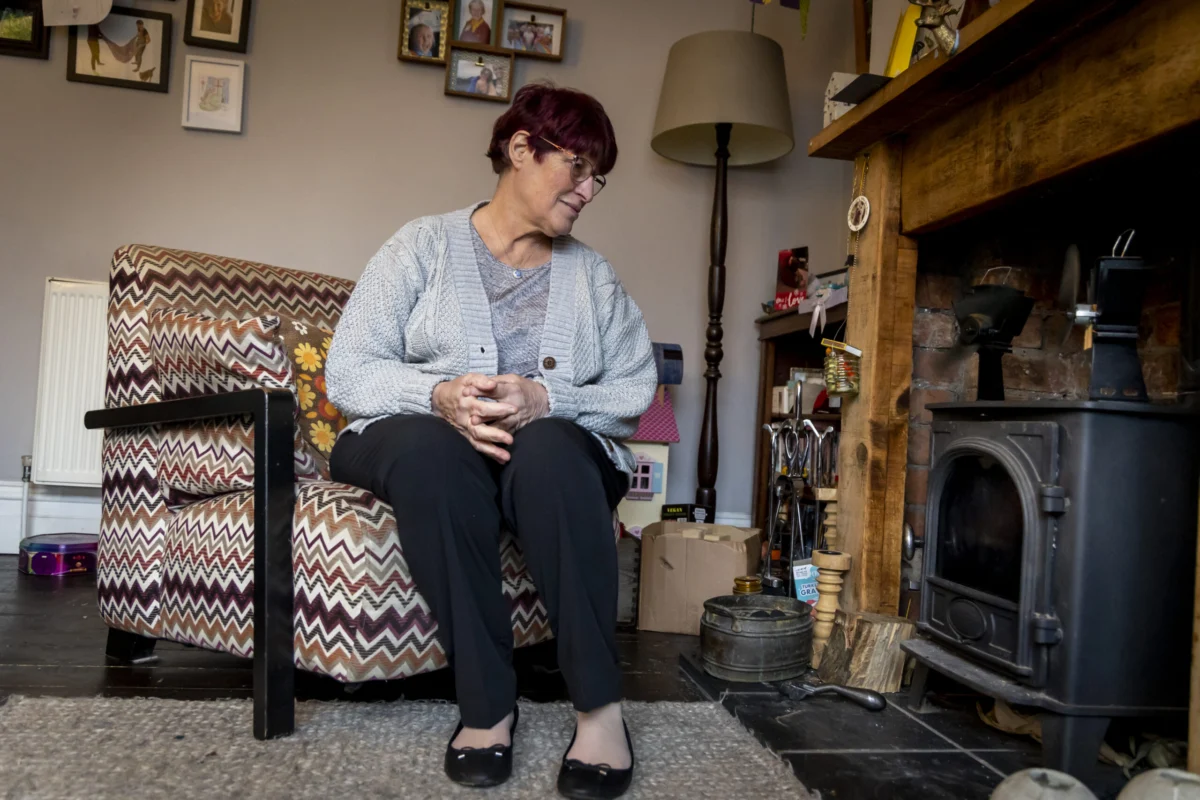
The unveiling of Ireland’s Budget 2025 has drawn sharp criticism and measured praise from Age Action, the nation’s leading advocacy organization for older persons. While the government announced a €12 weekly increase for those in receipt of a full state pension, the organization contends that this adjustment fails to account for the cumulative impact of inflation over the last four years. According to Age Action’s policy adviser, Dr. Nat O’Connor, the state has missed a critical opportunity to restore the purchasing power of the pension to its 2020 levels, leaving many older citizens in a precarious financial position despite the headline increases.
The timing of the budget announcement coincided with the International Day of Older Persons, a fact that underscored the gravity of the policy decisions for Ireland’s aging demographic. Age Action’s analysis suggests that while the €12 increase provides a marginal buffer against rising weekly costs, it falls significantly short of the €18 increase required to match the value of the pension as it stood in 2020. This gap highlights a broader systemic issue: the government’s continued delay in implementing a formal benchmarking and indexation system for the state pension, a standard practice across most Western European nations.
The Erosion of Pension Value and the Call for Indexation
The core of Age Action’s critique lies in the erosion of income security. In 2020, before the onset of the global inflation crisis and the energy shocks precipitated by international conflicts, many older people were already struggling to meet their basic needs. Since then, the cost of essentials—food, heating, and healthcare—has risen at a rate that has consistently outpaced pension adjustments. Dr. O’Connor noted that the failure to deliver on promises of benchmarking—linking the pension to a percentage of average earnings—and indexation—linking it to the Consumer Price Index (CPI)—has left older people vulnerable to the whims of annual budget cycles.
In most Western European countries, pensions are adjusted automatically based on economic indicators, ensuring that retirees do not lose ground relative to the working population or the cost of living. Ireland’s reliance on discretionary, "ad-hoc" increases means that the real value of the pension is subject to political negotiation rather than economic reality. Age Action argues that without a legislated link to inflation, the "peace of mind" essential for a dignified retirement remains elusive for hundreds of thousands of Irish citizens.
Energy Poverty and Reforms to the Fuel Allowance
A significant portion of Age Action’s response focused on energy poverty, a condition that disproportionately affects older cohorts. The organization welcomed the government’s decision to reform the fuel allowance, specifically granting those aged 66 and over access to the scheme under a more generous means test. This move is seen as a vital recognition of the physiological and structural realities facing seniors in Ireland.
Statistically, older people occupy some of Ireland’s most poorly insulated housing stock. Many live in "traditional" builds that lack modern retrofitting, leading to higher energy consumption to maintain habitable temperatures. Furthermore, biological factors play a role; as the human body ages, it retains less heat, and many older people spend more time at home, necessitating constant heating during the winter months. By broadening the eligibility for the fuel allowance, the government has taken a tangible step toward mitigating the risk of energy poverty, which Age Action identified as a high-priority area in its pre-budget submissions.
The Stagnation of Support for Older People Living Alone
Despite the progress on fuel allowance, Age Action expressed deep regret regarding the lack of targeted support for older people living alone. The "Living Alone Allowance" has remained largely stagnant since 2022, when it received a meager €3 increase. For Budget 2025, no further increase was sanctioned, a decision that advocacy groups describe as a failure to recognize a uniquely vulnerable cohort.
The economic reality of living alone is stark. Recent research cited by Age Action indicates that a single person living alone bears approximately 79% of the costs faced by a couple. Fixed costs—such as property tax, standing charges for utilities, home insurance, and maintenance—do not halve simply because a household size reduces. This "singles penalty" has led to a dramatic rise in material deprivation. Data shows that older people living alone were twice as likely to experience material deprivation in 2023 compared to 2020.
Furthermore, the disparity extends to the carer’s allowance means test. Currently, an older person living alone is permitted only half the income of those living with another person before their allowance is impacted. This pattern of disadvantage suggests a lack of granular understanding in policy formation regarding the specific financial pressures faced by single-person households in the over-65 demographic.
Gender Inequality and the Pension Gap
The failure to address the needs of those living alone also has significant implications for gender equality. Approximately 60% of older people living alone in Ireland are women. This demographic is already disadvantaged by a 35% gender pension gap, a legacy of historical workforce participation patterns, the "marriage bar" that existed until the 1970s, and the prevalence of unpaid care work performed by women.
By allowing the Living Alone Allowance to stagnate, the government is effectively compounding the financial hardship of older women. Many of these women rely solely on the state pension and have little to no private savings or occupational pensions to fall back on. Age Action argues that targeted interventions for single-person households are not just a matter of social welfare, but a necessary step toward closing the inequality gap that persists into old age.
Transport, Social Inclusion, and the Universal Companion Pass
One of the more positive highlights of Budget 2025 for Age Action was the announcement of a universal companion pass, scheduled for introduction in September 2025. This pass will allow an older person to bring a companion on public transport free of charge, regardless of the companion’s age or status.
Transport inadequacy is a major driver of social isolation in Ireland, particularly in rural areas where public transit is infrequent. Many older people who possess a Free Travel Scheme pass find themselves unable to use it because they require physical assistance to navigate stations, board vehicles, or walk the "last mile" to their destination. The introduction of the companion pass acknowledges that mobility is often a social and assisted activity. Dr. O’Connor noted that this "simple improvement" would be greatly appreciated by those who find traveling alone difficult or impossible, thereby fostering greater participation in community life and reducing the risks associated with loneliness and exclusion.
Comparative Chronology: The Road to Budget 2025
To understand the context of Age Action’s disappointment, it is necessary to look at the timeline of Irish fiscal policy since the start of the decade:
- 2020: The state pension stood at a level that advocacy groups considered the bare minimum for a dignified life.
- 2021-2022: Global supply chain issues and the energy crisis led to a spike in inflation. The government introduced "one-off" cost-of-living payments rather than permanent structural increases to the base pension rate.
- 2023: Inflation continued to erode the real value of the pension. Age Action raised alarms that the Living Alone Allowance was failing to keep pace with the 79% cost-burden reality.
- 2024 (Budget 2025): The government announced a €12 increase. While the largest nominal increase in years, it remains €6 below the €18 required to restore 2020 purchasing power.
This chronology illustrates a shift toward temporary measures—such as one-off energy credits—rather than the permanent, predictable income security that benchmarking would provide. While the energy credits are welcomed by households, they do not assist with the permanent rise in the cost of food, services, and healthcare.
Broader Implications and Future Outlook
The implications of Budget 2025 extend beyond the immediate financial year. Ireland is facing a significant demographic shift, with the number of people aged 65 and over expected to hit 1 million by 2030. The decisions made today regarding benchmarking and indexation will determine the quality of life for a massive portion of the population in the coming decade.
Economists and social policy analysts suggest that the government’s reluctance to index the pension may be rooted in concerns over long-term fiscal sustainability. However, Age Action and other NGOs argue that the "cost of inaction" is higher. Material deprivation in older age leads to poorer health outcomes, which in turn increases the burden on the acute hospital system and long-term residential care services.
As the 2025 fiscal measures take effect, the focus will likely shift to the implementation of the companion pass and the impact of the fuel allowance means-test reform. However, for Age Action, the primary goal remains unchanged: a legislated commitment to ensure that the state pension is never again allowed to lose its real-world value. The organization has renewed its call for the government to move away from "budget-day surprises" and toward a transparent, data-driven system that protects the dignity and peace of mind of all citizens in their retirement years.