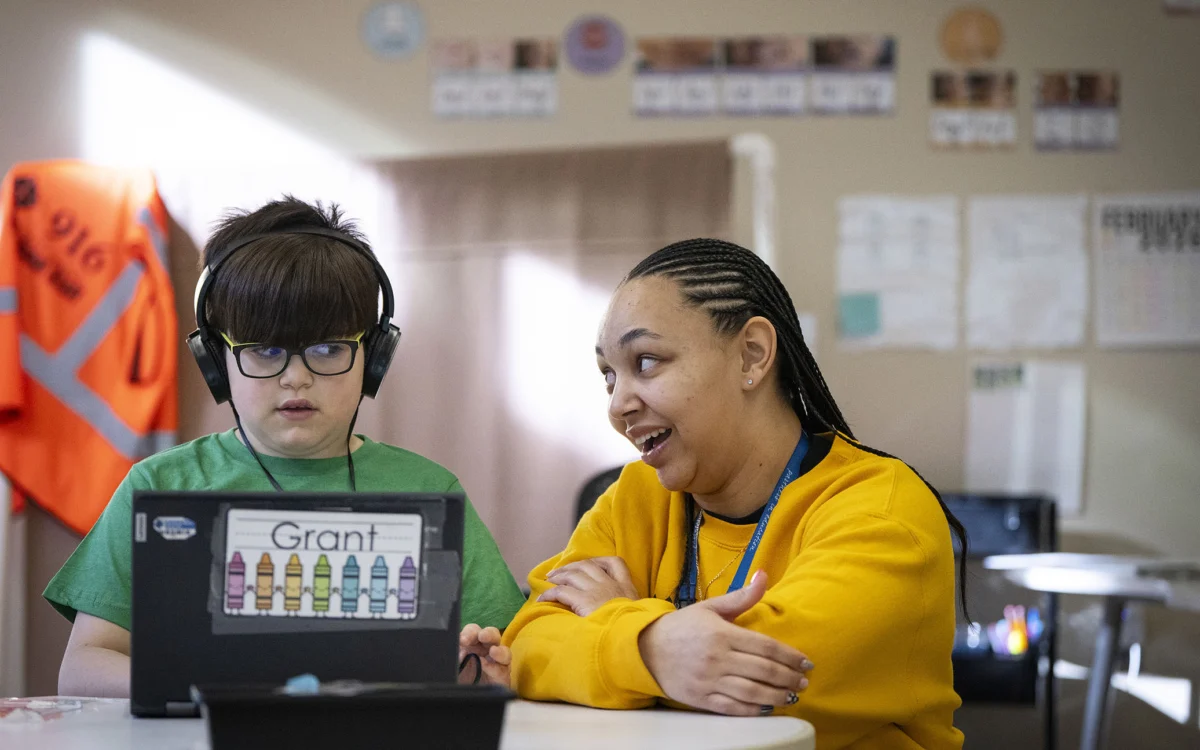
The challenging environment of Karner Blue Education Center in Circle Pines, where special education students with high needs and intense emotions require dedicated teams of educators, is emblematic of a broader crisis gripping Minnesota’s school systems. A persistent struggle to adequately staff classrooms with teachers qualified to support students with autism and emotional behavior disorders is placing immense strain on educational institutions. In response, a groundbreaking teacher apprenticeship program is set to graduate its first cohort, offering a novel solution by providing educational assistants with on-the-job training and university coursework. Organizers are hopeful this initiative will cultivate the skills and resilience necessary for educators to remain in a field notoriously plagued by high turnover.
Bridging the Gap: The Genesis of an Innovative Apprenticeship
The urgency to address the special education teacher shortage in Minnesota has been a growing concern for years. Data from the state’s Professional Educator Licensing and Standards Board consistently highlights significant gaps in specialized teaching areas. A report released in December revealed that statewide, approximately 10% of special education teachers were not considered "highly qualified." However, in intermediate districts, which serve students with the most complex needs, this figure escalated to an alarming 20% and was on an upward trajectory. This critical deficit threatened to compromise the quality of education and support for vulnerable students.
Gina Boots, a teacher and apprenticeship liaison at BrightWorks, an educational cooperative, described the program as "student teaching on steroids," underscoring its intensive and immersive nature. BrightWorks is currently overseeing two cohorts of apprentices across four Twin Cities intermediate school districts, actively working to cultivate a new generation of specialized educators. The program was formally launched in 2024, driven by a palpable frustration with the status quo. "I was really tired of watching students not get the services they deserve," Boots stated, articulating the core motivation behind the initiative.
A Hands-On Approach to Teacher Development
The apprenticeship model is designed to offer a comprehensive pathway to licensure, blending practical experience with academic rigor. Educational assistants, already immersed in the daily realities of special education classrooms, are provided with structured, on-the-job training. This practical component is complemented by university coursework, ensuring they acquire the theoretical knowledge and pedagogical strategies necessary to excel. The aim is to provide these aspiring teachers with not only the technical skills but also the emotional fortitude and adaptability required to navigate the demanding landscape of special education.
Deb Rime, a native of the Philippines, exemplifies the program’s potential. She began her career in education as a paraprofessional with Northeast Metro ISD 916 during the 2017-18 school year. By May, she will be among the first graduates of the apprenticeship program, having already stepped into the role of lead teacher for students in Learning Lab 1106 at Karner Blue. Rime’s transition highlights the program’s ability to accelerate the development of qualified educators, bringing much-needed expertise to classrooms that desperately need it.
The Impact of Dedicated Educators: A Glimpse Inside the Classroom
The effectiveness of this hands-on approach is evident in the classrooms. Rime’s teaching style is characterized by an enthusiastic and affirming presence. Her interactions with students, filled with positive reinforcement and specific praise, demonstrate an understanding of evidence-based practices that yield significant benefits in special education settings. Amelia Barrons, a special education teacher with Northeast Metro 916 and a program navigator, emphasized the profound impact of such engagement. "We know that when we are excited and engaged with our students that they are going to be excited and engaged with us," Barrons explained. She expressed deep admiration for the apprentices, stating, "I’ll get emotional because I’m so impressed by these people. I’m so proud of how far they’ve come. They’re so good."
This emphasis on positive feedback is crucial. In traditional classroom settings, a question might be posed, answered, and the lesson moved forward. However, in special education, particularly for students with autism and emotional behavior disorders, personalized and affirming feedback can be a powerful tool for building confidence, fostering engagement, and reinforcing learning. Barrons’ emotional response speaks to the dedication and transformative impact of these educators, who are not only filling a critical need but also demonstrating exceptional aptitude and passion.
Addressing the Scale of the Shortage: Data and Projections
The statistics surrounding the special education teacher shortage underscore the critical nature of this issue. Beyond the 10-20% of teachers not meeting "highly qualified" standards, the Minnesota Department of Education identifies specific areas of acute need. As of recent reports, there were 438 unfilled positions in the area of emotional behavior disorders and 361 in the area of autism spectrum disorders. These numbers represent a significant gap between the demand for specialized instruction and the available qualified personnel.
The Professional Educator Licensing and Standards Board’s December report further illuminated the problem, stating that even with candidates enrolled in licensure programs, "there are still significant numbers of positions filled with not fully prepared teachers." This situation directly impacts the learning outcomes and well-being of students who require specialized support to thrive. The apprenticeship program, therefore, is not merely an educational initiative; it is a strategic intervention designed to mitigate a systemic crisis.
The intermediate districts, which are at the forefront of this challenge, have invested significantly in the apprenticeship program. The initial cohort comprised 20 apprentices, followed by a second cohort of 30. The program has ambitious plans for expansion, aiming to recruit an additional 30 teacher hopefuls for the 2026-27 school year. This phased growth reflects a calculated effort to build a sustainable pipeline of qualified educators. Notably, Minneapolis Public Schools also operates its own parallel apprenticeship program, indicating a broader, multi-district commitment to this innovative approach.
The Journey of an Apprentice: From Assistant to Lead Teacher
The progression within the apprenticeship program is designed to be both challenging and rewarding. Channelle Bell, currently in her first year of the program, shared her evolving perspective. Initially, she found the work demanding, admitting, "Oh my goodness, this is kind of hard." However, her experience has fostered a deep desire to contribute more significantly to student development. She now yearns to be involved in creating educational plans, expressing a proactive mindset: "OK, I want more, give me more."
Bell’s current role involves taking notes during Individualized Education Program (IEP) meetings, a crucial step in understanding the collaborative process of developing personalized learning plans. While she looks forward to the day she feels confident enough to draft her own IEPs, she acknowledges the daunting nature of that responsibility. "For now, however, I’m like, woo, that sounds scary," she admitted. This candid reflection highlights the significant growth and learning curve involved, a sentiment echoed by Rime, who acknowledged, "It is scary."
The program’s emphasis on practical application extends to developing crucial skills like emotional regulation support. Rime recently utilized a tablet to help her students identify and express their current emotions. Her approach, which involved honoring students’ feelings without judgment, even when expressing anger, is a testament to the empathetic and responsive teaching methodologies fostered by the apprenticeship. Barrons observed this interaction, noting, "She honored their voice, heard what they were saying."
Rime’s personal journey reflects the transformative power of the apprenticeship. She described the past two years as "busy and rewarding," detailing how she has been "gaining hands-on experience, building confidence, building skills, and growing every day." Her ultimate aspiration is clear: "And at the end of the day, I’m like, ‘Oh my gosh, I’m almost there. One step closer to being a teacher.’" This sentiment encapsulates the hope and determination that the program aims to instill in its participants.
Broader Implications and Future Outlook
The implications of this apprenticeship program extend far beyond individual classrooms. By providing a structured and supportive pathway for aspiring special education teachers, it addresses a critical workforce shortage that has long hampered the ability of schools to provide adequate services. The program’s success could serve as a model for other districts and states facing similar challenges.
The emphasis on retaining educators in a high-turnover field is particularly significant. The intensive training, coupled with ongoing mentorship and a clear career progression, aims to foster a sense of commitment and professional growth. This is crucial for building stable and experienced special education teams, which are vital for the long-term success of students.
The historical context of special education teacher shortages in Minnesota is a complex one, often linked to factors such as demanding working conditions, insufficient support, and a lack of accessible pathways to licensure. The apprenticeship program directly confronts these issues by offering a more integrated and practical route to becoming a qualified teacher. As Boots aptly stated, "We should have done this 15 years ago, but we didn’t, so here we are. Let’s go," reflecting a sense of urgency and a forward-looking determination to rectify past shortcomings.
The placement of students in intermediate districts is a critical component of the special education system. These districts serve students whose needs are so specialized that they cannot be adequately met in their home districts. The goal is to provide intensive programming that supports students in developing self-regulation skills and academic competencies, ultimately facilitating their return to less restrictive educational settings. The apprentices, as they develop their expertise, play a vital role in this mission.
The success of this apprenticeship program could have a ripple effect, potentially influencing teacher preparation models across the state and beyond. By demonstrating the efficacy of an on-the-job training approach, it challenges traditional pathways and offers a more accessible and practical alternative for individuals seeking to enter the special education field. The ongoing expansion of the program and the positive feedback from participants and mentors suggest a promising future for special education in Minnesota, driven by a new generation of highly trained and dedicated educators.
The commitment from educational cooperatives like BrightWorks, in collaboration with intermediate school districts and universities, underscores a collective effort to address a pressing educational need. As the first cohort of apprentices transitions from trainees to fully licensed teachers, their impact on the lives of students with high needs will be a tangible measure of the program’s success and a beacon of hope for the future of special education.
© 2026 The Minnesota Star Tribune
Distributed by Tribune Content Agency, LLC