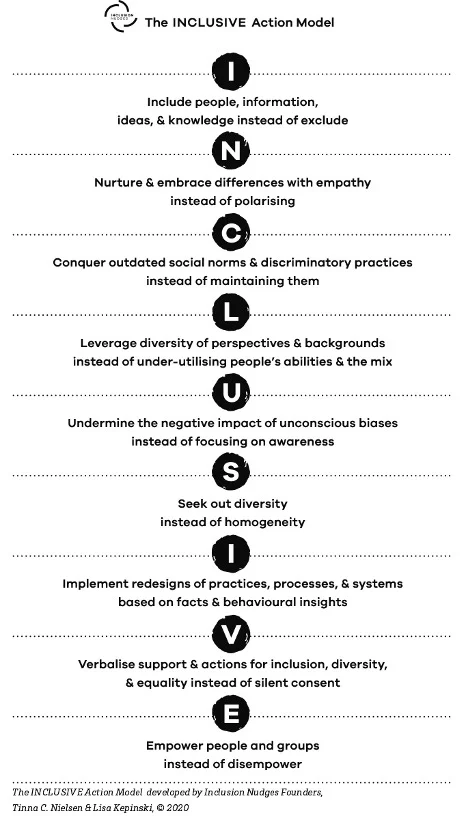
The discourse surrounding diversity, equity, belonging, and inclusion (DEBI) has become a cornerstone of modern organizational strategy, yet the very language employed in these initiatives often dictates their success or failure. Far from being mere semantic distinctions, the definitions and framing of DEBI terms profoundly influence perception, engagement, and ultimately, the tangible outcomes of efforts to foster more inclusive environments. How organizations choose to articulate these concepts can either dismantle barriers to progress or inadvertently erect "hidden tripwires" that trigger resistance, disengagement, and a profound sense of alienation among key stakeholders.
The Evolving Landscape of DEBI: Investment and Intent
Over the past two decades, DEBI has evolved from a compliance-driven obligation to a recognized strategic imperative, intrinsically linked to innovation, employee retention, market competitiveness, and financial performance. Global spending on DEBI initiatives has surged, with organizations investing heavily in training, policy adjustments, and cultural transformation programs. Reports from leading consulting firms consistently highlight a strong correlation between diverse leadership teams and superior financial returns, and inclusive cultures with higher employee satisfaction and lower turnover rates. For instance, McKinsey’s "Diversity Wins" report (2020) found that companies in the top quartile for gender diversity on executive teams were 25% more likely to have above-average profitability than companies in the fourth quartile, a figure that rises to 36% for ethnic and cultural diversity. Deloitte’s research has similarly underscored that inclusive companies are six times more innovative and more likely to achieve their financial targets. This significant investment underscores a genuine intent to leverage the full spectrum of human potential within the workforce.
However, despite this widespread recognition and investment, many DEBI initiatives struggle to gain traction, often eliciting reactions ranging from apathy ("Uhhh!") to cynicism ("Blah blah blah!"). This disconnect frequently stems not from a lack of commitment, but from a fundamental misunderstanding or miscommunication of what DEBI truly entails, and for whom. When individuals encounter terms like "diversity," "equity," or "inclusion," their minds immediately activate a complex web of thoughts, feelings, associations, and personal memories. These unconscious responses, shaped by individual experiences, societal narratives, and existing biases, can inadvertently sabotage well-intentioned efforts.
The Unseen Tripwires: How Language Elicits Resistance and Division
Decades of work in the DEBI field have revealed recurring patterns of perception that transform these vital concepts into sources of friction rather than catalysts for change. These patterns are not isolated incidents but widespread phenomena that create significant obstacles to achieving inclusive cultures.
- "Diversity isn’t my issue! It only applies to people from minority groups, not me!": This common sentiment highlights a narrow interpretation of diversity, often reducing it to demographic categories associated with underrepresented groups. It fosters a sense of detachment among those who do not identify with these groups, absolving them of responsibility and creating an "us vs. them" dynamic.
- "I am the one being discriminated against. Don’t ask me how to fix it – it’s your problem." (Often from minority groups): This reaction reflects a legitimate burden felt by individuals who have historically faced discrimination. When DEBI initiatives are framed as solely addressing the "problems" of minority groups, it can inadvertently place the onus of solving systemic issues back onto those who are most impacted, leading to fatigue and resentment.
- "You’re diverse, so you need to fix it – it’s your problem." (Often directed at minority groups): This perception, akin to the previous one, highlights tokenism and the unfair expectation that individuals from underrepresented backgrounds should bear the sole responsibility for driving DEBI efforts, further marginalizing them and diverting them from their primary roles.
- "Diversity and inclusion are not my day job, so I don’t really have time for that. Someone else has got to fix it.": This reflects a siloed view of DEBI, perceiving it as a specialized function rather than an integral aspect of every role and every interaction within an organization. It leads to a diffusion of responsibility and a lack of widespread ownership.
- "Let’s make sure we attract some diversity talent." (Meaning: minority or women): While seemingly positive, this phrasing can perpetuate the idea of "diversity" as a specific talent pool rather than an inherent characteristic of the entire workforce. It can lead to token hiring practices and a perception that individuals are valued for their demographic attributes rather than their skills and contributions.
- "If we are going to promote women and minorities, then we have to exclude others." (Meaning: white men): This reflects a deeply ingrained "zero-sum game" mentality, where progress for one group is perceived as a loss for another. This perception triggers fear, resentment, and active resistance, particularly among historically dominant groups who may feel threatened or unfairly targeted.
These reactions are not arbitrary; they are deeply rooted in the historical positioning of DEBI efforts. For years, strategies often focused on "helping the minority" or "fixing the women," developing programs and setting targets primarily for underrepresented groups. This approach, while well-intentioned, often overlooked the crucial need to engage all people—majority and minority alike—and to fundamentally redesign systems and implicit norms that perpetuate discriminatory practices. The outcome was frequently an emphasis on "fixing the difference" and assimilation, rather than fostering genuine inclusivity that values and embraces every individual’s unique attributes. Such framing inherently creates division, reinforcing an "us and them" bias that works directly against the very intentions of DEBI, ultimately excluding rather than including.
The Psychological Underpinnings of Linguistic Impact
The profound impact of language on DEBI initiatives is not merely anecdotal; it is substantiated by extensive psychological and neuroscientific research. Language, a defining aspect of human cognition, shapes our perceptions, behaviors, and cultural norms.
- The Priming Effect: Studies have consistently demonstrated how words and images can unconsciously influence our thoughts and subsequent behaviors. The classic experiment by Bargh, Chen, and Burrows (1996) showed that participants primed with words associated with the elderly (e.g., "wrinkle," "forgetful") subsequently walked slower than those primed with neutral words. In the DEBI context, terms that subtly reinforce stereotypes or imply a deficit can unconsciously trigger biased responses, even when conscious intent is to be inclusive. For instance, a study seeking to encourage girls in math by stating "girls are as good as boys at math" inadvertently backfired, strengthening the underlying stereotype that boys are inherently better at math.
- Loss Aversion and the Zero-Sum Game: Words carry emotional weight, activating powerful unconscious drivers of decision-making and behavior. When DEBI language is perceived through a "zero-sum game" lens—where one group’s gain is another’s loss—it triggers loss aversion bias. This deeply ingrained cognitive bias makes individuals disproportionately sensitive to potential losses compared to equivalent gains. If promoting equality is framed as requiring a relinquishment of existing power or privilege, individuals will instinctively resist change, fight to maintain the status quo, and view DEBI initiatives with suspicion.
- Tribalism and Fear of the Unknown: Human beings possess an innate tribal mentality, an evolutionary mechanism that fosters solidarity within "in-groups" but can trigger an unconscious fear of the "out-group" or the unknown. DEBI language that inadvertently emphasizes differences without simultaneously fostering common ground can activate this tribal instinct. This can lead to unconscious exclusion of ideas or information from "out-group" members, while information from "in-group" members is more readily accepted and trusted, hindering genuine collaboration and diverse thought integration.
- Shame and Defensive Reactions: A significant, though often unspoken, emotional barrier in DEBI work is shame. Individuals may feel shame when confronted with language that implies blame for past discrimination (even if unintentional) or when facing their own privilege in the context of persistent inequality. This shame can manifest as unconscious defensive behaviors, including micro-aggressions or passive resistance, creating a "stuck pattern" that impedes genuine dialogue and change.
These psychological responses demonstrate that the words we use are not neutral; they are powerful tools that can either open pathways to understanding and engagement or create significant psychological barriers. Left unaddressed, imprecise or divisive language can create an "absurd reality" where well-intentioned DEBI initiatives are undermined from within.
The Consequence of Ambiguity: Stalled Progress and Alienation
The failure to formally articulate clear, shared definitions for DEBI terms leaves individuals within organizations to construct their own interpretations. This results in a fragmented understanding, where "diversity" might mean only "women" to some, "inclusion" might equate solely to "diversity networks," and "equity" might be reduced to "minority hiring targets." While these interpretations may contain elements of truth, they rarely capture the full scope and interconnectedness of the concepts.
Without a common framework, expecting aligned actions and behaviors across a diverse workforce becomes an unrealistic, indeed absurd, expectation. This definitional ambiguity leads to:
- Lack of Alignment: Different departments, teams, or individuals pursue DEBI goals based on disparate understandings, leading to disjointed efforts and inefficient resource allocation.
- Superficial Engagement: Without a deep, shared understanding, engagement often remains superficial, focusing on performative gestures rather than systemic change.
- Reinforced Division: Ambiguous language can exacerbate existing divides, creating resentment among those who feel targeted or excluded by ill-defined initiatives.
- Stalled Progress: The cumulative effect of these challenges is often a deceleration or complete stagnation of DEBI progress, despite significant investment and effort.
Redefining the Foundations: Clarity as a Guiding Principle
To overcome these pervasive challenges, a conscious and deliberate effort to define and frame DEBI terms is paramount. The Inclusion Nudges global initiative, for example, champions a set of clear, actionable definitions designed to reveal barriers, engage all people, and make inclusion the norm. These definitions serve as guiding stars, illuminating the desired state of workplaces, communities, and societies.
- Diversity: The Mix of All of Us: This definition intentionally broadens the scope beyond specific demographic groups, emphasizing that diversity encompasses every individual’s demographic differences, backgrounds, multiple identities, unique experiences, perspectives, knowledge, abilities, and ideas. By framing diversity as "the mix of all of us," it becomes an inherent characteristic of humanity, fostering a sense of shared ownership and relevance for everyone, not just "the minority."
- Equity: The Fairness Frame for the Mix: Equity is distinguished from mere equality by focusing on ensuring fair access to opportunities and treatment for all people, actively eliminating discriminatory practices, systems, laws, policies, social norms, and cultural traditions. It acknowledges and corrects historical imbalances, seeking a balancing of power and proactive redress where inequality exists. This definition shifts the focus from treating everyone the same (equality) to giving everyone what they need to succeed (equity), recognizing that different individuals require different supports.
- Belonging: I Feel Valued as a Part of the Mix: Belonging centers on the individual’s lived experience within an environment. It signifies a state where individuals feel welcomed, safe, seen, heard, and valued for their full, authentic selves. It means not having to "cover" or downplay personal traits, avoiding the limiting toll of self-censorship. Belonging is presented as the natural outcome when diversity, equity, and inclusion are successfully implemented, signifying a culture where individuals naturally feel connected and integral.
- Inclusion: Welcoming and Applying the Mix: Inclusion is defined as the active fostering of structures, systems, processes, culture, behaviors, and mindsets that embrace and respect all people and their diversity. It’s about proactively seeking out and valuing the diversity of knowledge, perspectives, and ideas. Inclusion involves challenging excluding norms, stereotypes, being open to others, and speaking up against injustice. It is the active process of ensuring that all people are valued, can participate fully, and contribute to their fullest potential.
Beyond Definitions: From Words to Action and Ownership
While clear definitions are foundational, simply articulating them is insufficient. Rational understanding, residing in the conscious "System 2" mind, often fails to translate into consistent behavior, which is frequently driven by unconscious "System 1" processes. For definitions to truly drive change, they must resonate with individuals’ lived experiences and be translated into actionable behaviors.
A more effective approach involves inclusive definition-setting: engaging all people in defining what diversity, equity, belonging, and inclusion mean to them, framed not as abstract concepts but as concrete actions. This shifts the focus from words to observable behaviors. Organizations can facilitate workshops or dialogues where employees identify specific actions and behaviors they perceive as inclusive, inviting, respectful, empathetic, and those that make them feel included, belonging, valued, growing, and empowered.
This participatory approach yields several critical benefits:
- Contextual Relevance: Definitions are tailored to the specific organizational context, ensuring they are meaningful and actionable within that environment.
- Enhanced Ownership and Buy-in: By involving employees in the co-creation process, they develop a sense of ownership over the DEBI initiatives, transforming them from external mandates into shared commitments. This "onboarding" in the development phase itself becomes a powerful change mechanism.
- Leveraging Internal Diversity: The process itself becomes an exercise in inclusion, leveraging the diverse perspectives and experiences within the group to build a richer, more comprehensive understanding.
Once these inclusive behaviors are identified, the next step is to make them vividly visible and commonplace. Rather than burying them in spreadsheets or policy documents, these real-life, practical examples and personal stories should be integrated into communication materials, displayed prominently in physical spaces (factories, offices, meeting rooms), and shared through internal channels. The key is to communicate these examples one at a time, highlighting that these are actions taken by "peers and similar others." If data indicates a majority of people engaging in specific inclusive behaviors, communicating this social norm (e.g., "8 out of 10 of your colleagues are doing XX") can be a powerful nudge, leveraging social proof to encourage wider adoption.
Achieving Inclusion Without Always "Talking About Inclusion"
The ultimate goal is to embed DEBI into the organizational fabric so deeply that it becomes "how work gets done here" or "how people experience being in the group," rather than a separate, buzzword-laden initiative. While formal definitions may be necessary for strategies, KPIs, and external communications, organizations should strive to reduce the overuse of DEBI terminology in daily discourse.
Instead, the focus should shift to referencing the desired outcomes. For example, instead of saying "we need more inclusion," one might say, "we need the thinking from everyone for new solutions" or "we need our systems designed to enable our most objective decision-making." This subtle linguistic shift reframes DEBI from an abstract concept to a tangible driver of business objectives, innovation, and effective collaboration. By creating positive, resource-oriented perceptions of diversity and inclusion, these practices foster inclusive behaviors and cultures as the norm, rather than an isolated program.
The Strategic Imperative: Integrating DEBI into Organizational DNA
The challenge of translating definitions into reality—of moving thousands of people toward a shared, inclusive direction despite varied understandings—is a core dilemma for change leaders. This is precisely why approaches like Inclusion Nudges, grounded in behavioral science, are critical. They provide practical frameworks and tools to design environments that unconsciously steer individuals towards inclusive choices and behaviors.
Effective DEBI language and framing are not merely HR best practices; they are fundamental to an organization’s strategic resilience and future readiness. By consciously shaping how DEBI is understood and discussed, leaders can dismantle psychological barriers, foster genuine engagement, and cultivate cultures where every individual feels valued, empowered, and contributes to their fullest potential. This paradigm shift—from abstract rhetoric to actionable, inclusively defined behaviors—is the bedrock upon which truly equitable, diverse, and belonging-rich organizations are built.
Let us join forces in this crucial endeavor, recognizing the profound power of our words and leveraging them to make inclusion the norm—everywhere, for everyone.