In a profound celebration marking the 20th anniversary of The Gordon Parks Foundation, the exhibition Gordon Parks: We Shall Not Be Moved has opened, presented by Alison Jacques in partnership with the Foundation. Curated by the esteemed civil rights attorney and founder of the Equal Justice Initiative (EJI), Bryan Stevenson, this solo exhibition powerfully underscores the enduring capacity of art to champion social justice and ignite societal change. The collection of photographs, spanning a critical 25-year period of Gordon Parks’ prolific career from 1942 to 1967, serves as a poignant testament to the struggles, resilience, and unwavering spirit of Black Americans.
The Curatorial Vision: Bryan Stevenson’s Perspective
Bryan Stevenson’s unique curatorial approach is deeply rooted in his personal and professional commitment to justice, offering a compelling lens through which to view Parks’ work. Stevenson, himself an African American and a tireless advocate for civil rights, articulated his vision, stating, "The scope of the images from Parks represents the struggle, resilience, and constant striving of Black Americans." His selection highlights Parks’ profound dedication to social justice, a commitment born from lived experience. "As an African American survivor of racial injustice," Stevenson explained, "Parks was keenly aware of race and class in America, and this palpably informed his work." This understanding allows Stevenson to connect Parks’ historical documentation directly to contemporary issues of inequality and human dignity, making the exhibition not merely a historical review but a vibrant call to action.
Stevenson’s involvement elevates the exhibition beyond a typical retrospective. His work with the EJI, including the National Memorial for Peace and Justice and the Legacy Museum in Montgomery, Alabama, demonstrates a deep understanding of historical trauma and its ongoing echoes in society. This background equips him to draw powerful parallels between Parks’ visual narratives of mid-20th-century America and the persistent challenges of racial injustice today. His curation thus transforms the exhibition into a dialogue between past and present, urging viewers to confront the uncomfortable truths of American history and to recognize the ongoing fight for equity.
A Chronicle of Injustice and Resilience: Parks’ Iconic Works
The exhibition features several of Parks’ most iconic and emotionally resonant photographs, each telling a vital part of the American story. Among these is American Gothic, Washington, D.C. (1942), an image that has become synonymous with the systemic racism of its era. This stark portrait of Ella Watson, a Black cleaning woman holding a broom and mop before an American flag, was captured during Parks’ tenure with the Farm Security Administration (FSA). It was a direct response to Parks’ own experience of racial discrimination in a Washington D.C. department store, prompting him to confront the irony of American ideals versus its racial realities. The image, a powerful subversion of Grant Wood’s famous painting, served as an immediate and enduring symbol of the indignity faced by Black Americans under segregation.
Further illustrating Parks’ unparalleled ability to document pivotal moments in history, the exhibition includes photographs from the seminal 1963 March on Washington for Jobs and Freedom. His portrait of Dr. Martin Luther King Jr. delivering his immortal "I Have a Dream" speech captures not just a historical figure, but the very essence of a movement on the cusp of profound change. These images serve as powerful reminders of the courage and collective will that propelled the Civil Rights Movement, offering a visual record of a nation grappling with its conscience. The March, attended by an estimated 250,000 people, was a watershed moment, symbolizing the growing demand for federal legislation to ensure civil rights and end discrimination, a demand that Parks meticulously documented.
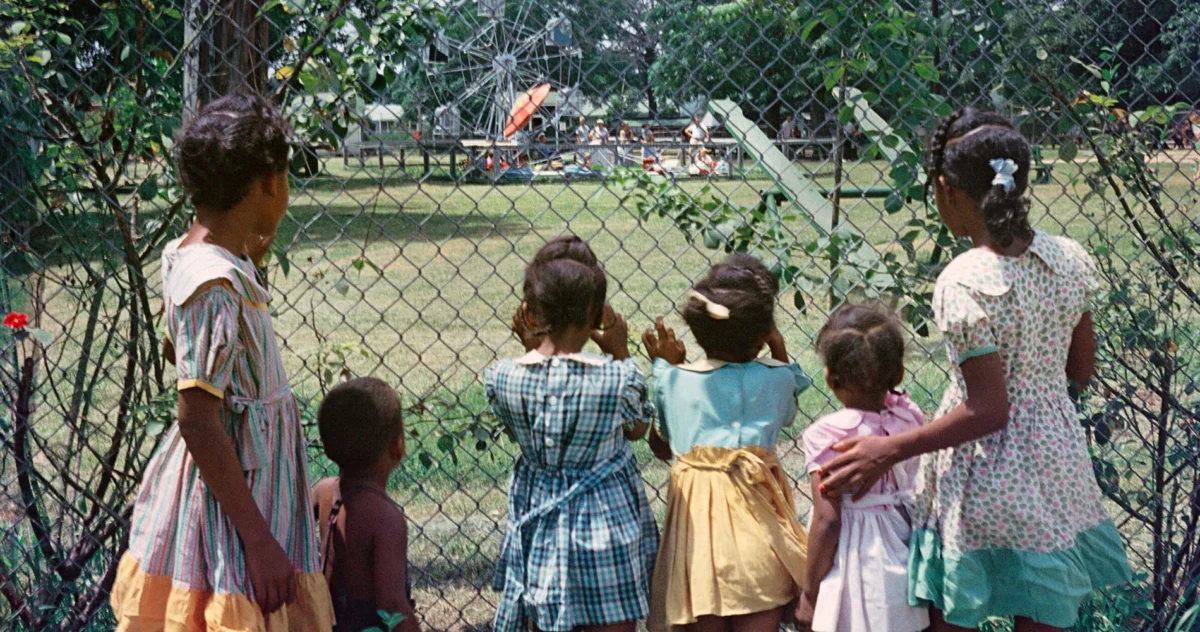
A significant portion of the exhibition is dedicated to Parks’ groundbreaking Segregation Story series, commissioned by Life Magazine in 1956. Published under the title "The Restraints: Open and Hidden," this series offered an unprecedented look into the daily lives of Black families in segregated Alabama. Images such as Outside Looking In, Department Store, and Mr. and Mrs. Albert Thornton vividly portray the pervasive and dehumanizing effects of Jim Crow laws. Parks’ approach was revolutionary: rather than merely documenting overt acts of violence, he focused on the subtle yet relentless humiliations of everyday life, such as segregated drinking fountains, schools, and public spaces. The Gordon Parks Foundation explains that Parks often wrote his own accompanying articles, "allowing him to inject his personal perspective and challenge stereotypes." This comprehensive storytelling approach "humanised the effects of Jim Crow segregation by following the daily lives of Black families in Alabama, creating narratives that consistently expressed the dignity and complex humanity of his subjects, starkly contrasting with mainstream representations." This series was instrumental in bringing the reality of Southern segregation to a national audience, fostering empathy and contributing to the momentum for change.
Gordon Parks: A Life Dedicated to Truth and Artistry
Born in Fort Scott, Kansas, in 1912, Gordon Parks’ early life was marked by the harsh realities of poverty and racial discrimination prevalent in the early 20th century. Orphaned at a young age and forced to fend for himself, he experienced firsthand the systemic injustices that would later become the subject of his most compelling work. It was in his late twenties, after purchasing a camera from a pawn shop, that Parks discovered his true calling. Self-taught, he quickly honed his skills, finding in photography a powerful medium to articulate his experiences and expose societal ills. He famously described his camera as his "weapon of choice" against prejudice and poverty.
Parks’ career trajectory was remarkable. After gaining recognition for his photographic work in Chicago, he secured a fellowship with the FSA in 1942, a federal agency tasked with documenting the lives of impoverished Americans during the Great Depression. It was here that he produced American Gothic, Washington, D.C., marking the beginning of his influential photojournalism. Following the FSA, he worked for the Office of War Information (OWI) before becoming a freelance fashion photographer for Vogue. His breakthrough came in 1948 when he joined Life Magazine as its first African American staff photographer and writer. For over two decades, he chronicled a wide range of subjects, from fashion to poverty, from segregation to the Civil Rights Movement, establishing himself as one of the most significant photojournalists of his time.
Beyond photography, Parks was a polymath: a gifted composer, writer, and film director. His directorial debut, The Learning Tree (1969), was based on his semi-autobiographical novel, and he went on to direct the iconic blaxploitation film Shaft (1971), shattering racial barriers in Hollywood. This diverse body of work solidified his legacy not just as a visual artist but as a multifaceted cultural figure who consistently used his platforms to advocate for justice and human dignity. The Gordon Parks Foundation, established in 2006, continues to preserve and promote his work, ensuring that his powerful narratives resonate with new generations. The 20th anniversary of the Foundation highlights its enduring commitment to Parks’ vision and its role in fostering a deeper understanding of American history and culture through his lens.
The Enduring Relevance: Art as a Catalyst for Social Justice
Bryan Stevenson’s accompanying essay for the exhibition provides crucial historical context, articulating why Gordon Parks’ courageous, innovative, and challenging work remains profoundly relevant today. Stevenson argues that Parks’ images are particularly vital "in a moment when there is an intense and active effort of erasure, retreat from civil rights and silencing of Black voices and history in the United States." He contends that Parks’ work "absolutely suggests resistance to bigotry and oppression," offering "insight and relevance to our current discourse."
Stevenson’s essay delves into the painful legacy of slavery and its aftermath. He reminds us that following the Civil War in 1865, four million formerly enslaved people, despite unimaginable suffering, made the remarkable decision to commit to building a more just America. They chose citizenship over retribution, creating institutions like churches, schools, and families with extraordinary fortitude. Yet, this commitment was tragically betrayed. Just a decade after the war, protections for African Americans were systematically withdrawn, leading to the rise of white supremacists and the abandonment of constitutional commitments to equal protection and voting rights.
Parks was born into this era, the early 20th century, a period when racial segregation laws, mob violence, lynching, and the denial of voting rights marginalized and humiliated most African Americans. He witnessed and endured the "stress and degradation of racial hierarchy" but also understood the "strength, resilience, artistry, resolve, and beauty that animated Black life." His camera became a tool to expose the hypocrisy of an America preaching democracy abroad while mired in racial bigotry at home, illuminating "the pain and humiliation of segregation, the despair of poverty, the violence of abusive law enforcement officers."
Crucially, Parks was also energized by the resistance he documented. The Civil Rights Movement, the emergence of "Black power," and the triumphs of Black athletes, musicians, and leaders provided counter-narratives to racial discrimination, which Parks brilliantly brought to life. His art, Stevenson asserts, "helped challenge the legitimacy of racial caste and enabled a new generation of Black and white leaders to tear down the architecture of Jim Crow laws." Parks, through his artistry, helped imagine a more hopeful future, less burdened by racial bigotry and violence, aligning with Langston Hughes’ poetic vision for "America be America."
Contemporary Echoes and a Call to Action
The resonance of Parks’ work is perhaps more profound today than ever. Stevenson highlights that "the art and photography of Gordon Parks is powerful because his work details the reality and history of America that is now being distorted and denied." He points to current trends where "many in the United States are retreating from a full commitment to equality and justice for all." There are ongoing efforts by "powerful people… to rewrite history, minimizing the harms of slavery, lynching, segregation and racial bigotry." Concurrently, "People of color are being demonized and castigated because of their race, ethnicity or national origin," leading many Black Americans to recognize that their struggle remains unfinished. This includes the "reinforced presumption of dangerousness, guilt or incompetence" assigned based on color, and the "sabotage" of Black political power through various schemes.
These contemporary challenges—including efforts to restrict voting rights, ban books that address racial history, and curb discussions on systemic racism in educational institutions—mirror the historical context Parks documented. As the gains of the Civil Rights Movement face erosion, and censorship and the whitewashing of history become more prevalent, "it’s easy to understand why many people might want to escape, retreat and once again become silent. To many, silence seems safer."
However, Gordon Parks, as an artist and an individual, "absolutely rejected silence or retreat." His profound understanding of the human spirit’s persistence and strength meant he never put down his camera, even when faced with "cruel and abusive power." His art, Stevenson concludes, takes on "renewed significance in 2026 because it is a retort to those who want to force Americans back to some earlier era of perceived greatness when racial and gender hierarchy reigned."
The Exhibition: History, Education, and Protest
Ultimately, Gordon Parks: We Shall Not Be Moved is more than an art exhibition; it is a vital act of "history, education and protest." It serves as a powerful reminder that the fight for justice is ongoing and that art plays an indispensable role in this struggle. The meticulous curation by Bryan Stevenson, combined with the timeless power of Parks’ photographs, compels viewers to engage with difficult truths and to resist forces that seek to undermine equality.
The Gordon Parks Foundation, through such significant exhibitions, reaffirms its mission to not only preserve Parks’ legacy but also to ensure his work continues to inspire social change. This exhibition is a testament to the fact that his artistry makes clear what many are prepared to say: "we cannot turn back, we cannot remain silent and we cannot retreat from advancing true justice." The message is unambiguous, echoing the defiant anthem of the Civil Rights Movement: We Shall Not Be Moved. The exhibition challenges viewers to consider their own role in upholding justice, ensuring that the visual narratives of Gordon Parks continue to stir consciences and foster a more equitable society.