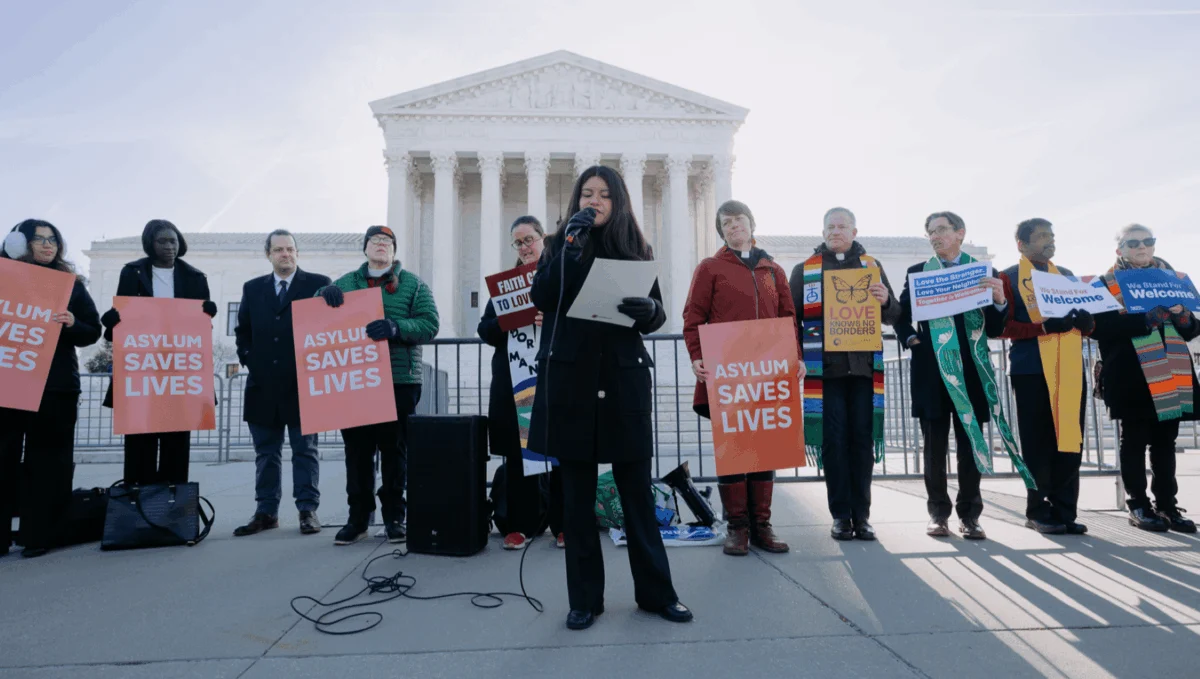
HIAS CEO Beth Oppenheim recently appeared on NBC San Diego’s "Politically Speaking" program to voice grave concerns over emerging policies that could subject resettled refugees to arrest and detention. Oppenheim’s appeal is a direct call for the safeguarding of individuals who have been welcomed into the United States through the U.S. Refugee Admissions Program (USRAP), a program historically grounded in humanitarian principles and once enjoying broad bipartisan support. The intervention by HIAS, a prominent organization with a long history of assisting refugees, highlights a growing unease within humanitarian circles regarding potential shifts in refugee policy and their implications for vulnerable populations.
The interview, which also featured a link to a YouTube video, served as a platform for Oppenheim to articulate the human dimension of refugee policy. "Whatever is in the headlines today, it involves the lived experience of people who have been refugees in the past," Oppenheim stated during the broadcast. "And for me, that’s what carries my passion and my work forward… We have to keep reminding people that that really is the story of America." This sentiment underscores a fundamental argument for refugee resettlement: its historical role in shaping the American narrative and contributing to the nation’s fabric.
The U.S. Refugee Admissions Program: A Historical Perspective
The U.S. Refugee Admissions Program (USRAP) has been a cornerstone of American humanitarian policy for decades. Established formally through the Refugee Act of 1980, it codified the nation’s commitment to providing refuge for individuals fleeing persecution, war, or disaster. Prior to 1980, ad hoc measures and executive orders addressed refugee crises, but the Act provided a more structured and predictable framework. The program’s operations typically involve a multi-agency approach, including the Department of State, the Department of Homeland Security, and various non-governmental organizations (NGOs) like HIAS, which provide crucial resettlement services.
Historically, the USRAP has been lauded for its thorough vetting process, which can take years and involves multiple government agencies, including intelligence and security services. This rigorous screening is designed to ensure national security while also identifying individuals genuinely in need of protection. The program has resettled hundreds of thousands of individuals from diverse backgrounds, contributing to American society in various sectors. However, the program’s capacity and the political climate surrounding it have fluctuated significantly over time, often influenced by geopolitical events and domestic political discourse.
Emerging Policy Concerns and Their Implications
Oppenheim’s concerns stem from reports and observations of a potential shift in how individuals processed through the USRAP are being treated. While specific details of these "new policies" were not fully elaborated in the provided snippet, the implication is that individuals previously admitted under the protection of the refugee program might now be subject to measures typically reserved for immigration enforcement or those suspected of national security threats. This raises significant questions about due process, the integrity of the refugee determination process, and the fundamental principles of humanitarian protection.
The potential for arrest and detention of resettled refugees, even those who have been living in the U.S. for some time, could have profound consequences. It could create an atmosphere of fear and uncertainty among refugee communities, undermining their ability to integrate and thrive. Furthermore, it could erode public trust in the government’s commitment to its humanitarian obligations and the fairness of its immigration system.
The Role of HIAS and Humanitarian Advocacy
HIAS, formerly the Hebrew Immigrant Aid Society, has a century-long legacy of assisting refugees and displaced persons, initially focusing on Jewish refugees fleeing persecution in Europe. Over time, its mission has broadened to encompass people of all backgrounds and nationalities, reflecting a commitment to universal human rights. As a key implementing partner in the USRAP, HIAS provides essential services such as cultural orientation, housing assistance, legal support, and help with accessing education and employment.
The organization’s advocacy efforts are crucial in shaping public discourse and influencing policy. By speaking out against policies that could jeopardize the safety and well-being of refugees, HIAS aims to uphold the principles of asylum and protection that are vital for those fleeing persecution. Oppenheim’s appearance on NBC San Diego is part of a broader strategy to raise awareness and mobilize support for policies that are consistent with humanitarian values and the historical role of the United States as a haven for the persecuted.
Supporting Data and Context
While specific data on the "new policies" was not provided, general trends in refugee admissions and resettlement can offer context. For instance, refugee admissions have varied dramatically over the past few decades. Under the Obama administration, the U.S. resettled a peak of over 80,000 refugees in fiscal year 2016. This number significantly decreased under the Trump administration, reaching a low of fewer than 11,000 in fiscal year 2020. While the Biden administration has aimed to increase admissions, challenges in processing and capacity have persisted.
The U.S. has historically been a global leader in refugee resettlement, though its capacity and willingness have been subject to political winds. According to the UNHCR, as of the end of 2022, there were over 35 million forcibly displaced people worldwide, including over 5.4 million refugees. The U.S. resettles only a small fraction of this global population. Therefore, any policy that makes it more difficult for refugees to find safety or that targets those already resettled could have significant humanitarian implications, both domestically and internationally.
Chronology of Potential Policy Shifts (Inferred)
While the exact timeline of these "new policies" is not detailed, their emergence can be understood within the broader context of evolving immigration and national security discussions.
- Pre-2016: The U.S. Refugee Admissions Program operated with relatively consistent bipartisan support, though admissions numbers fluctuated based on global crises.
- 2016-2020: During the Trump administration, there was a significant reduction in refugee admissions, and policies were enacted that increased scrutiny and imposed travel bans affecting several Muslim-majority countries. This period saw a heightened focus on national security concerns in the context of immigration.
- 2021-Present: The Biden administration has sought to rebuild and expand the USRAP, increasing admissions targets. However, the broader immigration landscape remains complex, with ongoing debates about border security, asylum processing, and the integration of immigrants and refugees. It is within this contemporary context that Oppenheim’s concerns about new policies targeting resettled refugees appear to have arisen. The nature of these policies suggests a potential re-evaluation of the status or rights of individuals already admitted through the refugee process, possibly linked to ongoing national security reviews or shifts in enforcement priorities.
Reactions from Related Parties (Inferred)
While direct statements from other parties were not included, it is reasonable to infer potential reactions based on the roles of various stakeholders:
- Immigrant Rights Advocates and Refugee Organizations: These groups would likely echo HIAS’s concerns, emphasizing the importance of due process, humanitarian protections, and the need for clear, non-discriminatory policies. They would likely highlight the positive contributions of refugees to society and the potential harm caused by policies that create fear and instability.
- Government Agencies (Department of Homeland Security, Department of State): These agencies are responsible for implementing U.S. refugee and immigration policies. Their response would likely focus on the rationale behind any new policies, emphasizing national security interests, the integrity of the immigration system, and the commitment to a fair and orderly process. They might argue that such policies are necessary to address evolving security threats or to ensure compliance with immigration laws.
- Congressional Representatives: Members of Congress, particularly those on committees related to immigration, homeland security, and foreign affairs, would be key figures. Those who historically support refugee resettlement would likely align with HIAS’s call for protection. Conversely, those with a more restrictive approach to immigration might view such policies as necessary enforcement measures. Bipartisan dialogue would be crucial in shaping the future of these policies.
- The Public: Public opinion on refugee resettlement is often divided. Oppenheim’s statement aims to appeal to the humanitarian aspect of the American identity. Supporters of resettlement would likely be galvanized by her message, while those concerned about national security or economic impacts might remain skeptical or opposed.
Broader Impact and Analysis
The potential implementation of policies that allow for the arrest and detention of resettled refugees carries significant implications.
- Erosion of Trust: Such policies could severely damage the trust that resettled refugees place in the U.S. government and the humanitarian systems designed to protect them. This could lead to increased fear, reluctance to engage with authorities, and a hampered ability to rebuild their lives.
- Undermining Humanitarian Principles: It raises questions about the U.S.’s commitment to international refugee law and its role as a global leader in humanitarian assistance. If individuals admitted through a rigorous vetting process can be subsequently detained, it suggests a lack of stable legal protections for refugees.
- Impact on Integration: Fear and uncertainty can impede the social and economic integration of refugees. This could lead to marginalized communities, increased reliance on social services, and missed opportunities for refugees to contribute to their new communities.
- Legal and Ethical Challenges: Policies targeting individuals based on their refugee status, particularly after they have been admitted, could face legal challenges concerning due process, equal protection, and the arbitrary deprivation of liberty. Ethically, it raises concerns about punishing individuals who have already endured significant hardship and sought safety.
- Geopolitical Ramifications: A perceived weakening of refugee protections in the U.S. could embolden other nations to reduce their own commitments to refugee protection, exacerbating global humanitarian crises.
Oppenheim’s assertion that the "story of America" is intertwined with the experience of refugees serves as a powerful reminder of the nation’s historical identity. The U.S. has long prided itself on being a beacon of hope for those fleeing oppression. The current policy debates, as highlighted by HIAS, underscore the ongoing tension between national security concerns and the enduring humanitarian imperative to offer refuge. The outcome of these policy discussions will not only shape the lives of vulnerable individuals but also reflect on the values and principles that define the United States on the global stage. The call for protection for resettled refugees is therefore not merely about specific policies, but about the fundamental character of American compassion and commitment to human rights.