A comprehensive survey conducted by the Pew Research Center in October 2025 reveals that despite the widespread adoption of digital technologies, physical print books continue to hold a dominant position in the reading habits of Americans. While the popularity of e-books and audiobooks has seen a steady increase over the past decade, the traditional printed format remains the preferred choice for a majority of the population. Furthermore, the survey highlights that participation in book clubs, a communal reading activity, remains a niche pursuit for most Americans.
The Enduring Appeal of Print
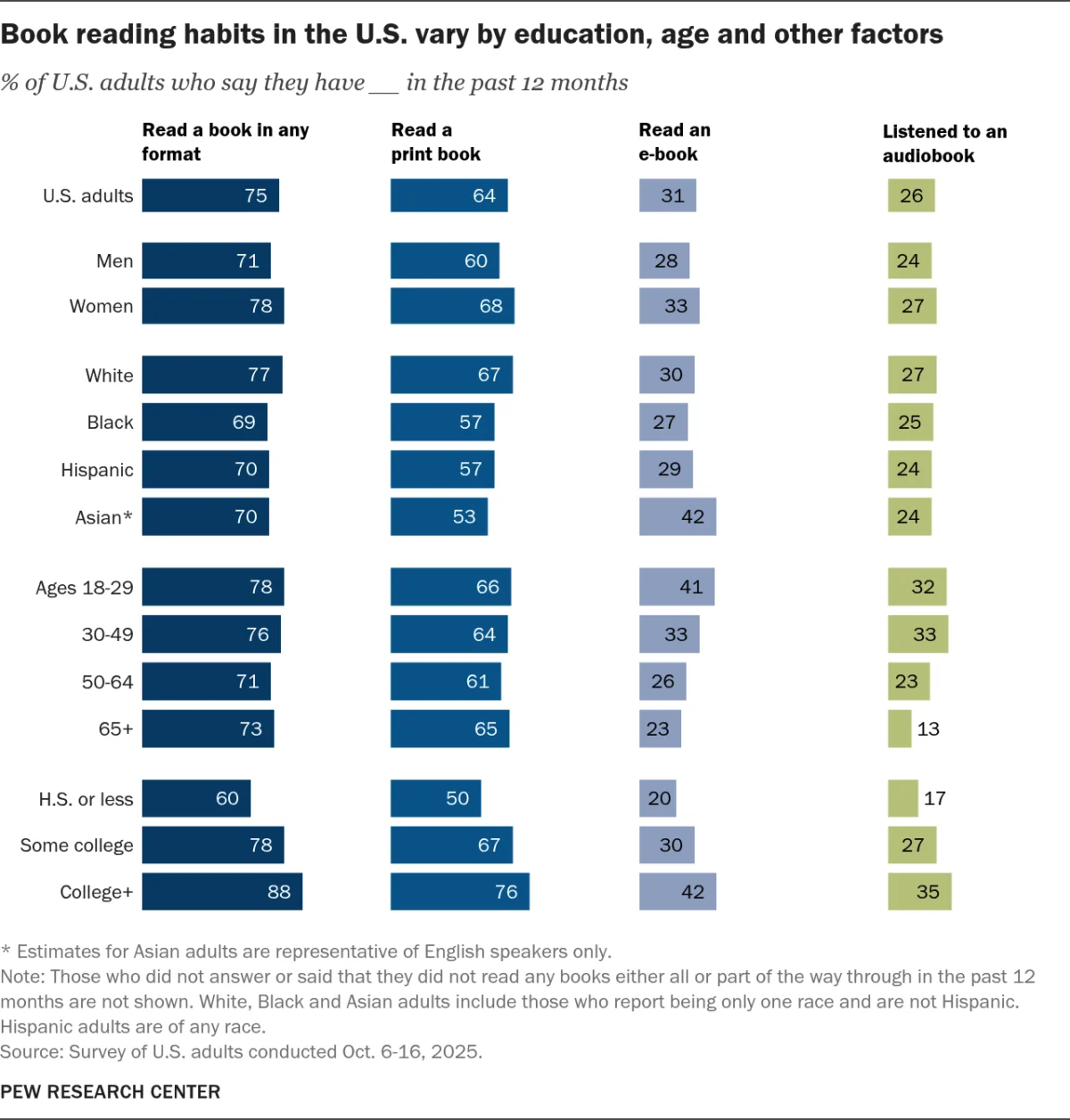
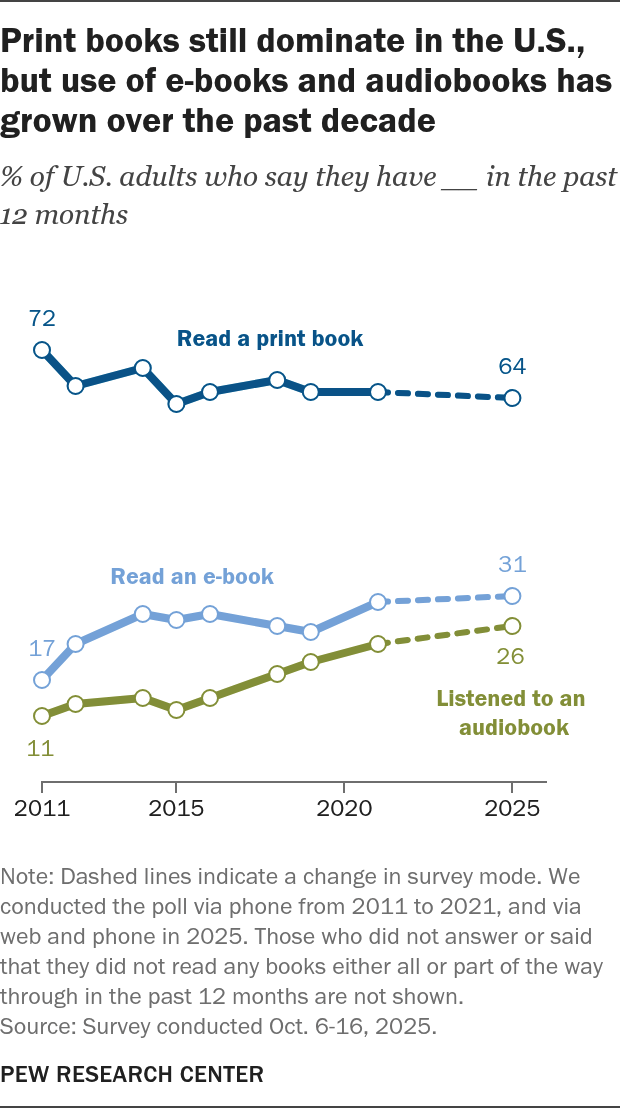
The findings underscore a persistent preference for tactile reading experiences, with approximately 64% of U.S. adults reporting that they have read a print book within the last 12 months. This figure, while showing a slight decrease from 72% in 2011, still positions print books as the most widely consumed format by a significant margin. This enduring appeal can be attributed to a variety of factors, including the sensory experience of holding a physical book, the perceived ease of reading without screen fatigue, and the established habit of print readership that spans generations.
In contrast, e-books and audiobooks, while experiencing notable growth, cater to a smaller, albeit expanding, segment of the reading public. The survey indicates that 31% of adults have read an e-book in the past year, a substantial rise from 17% in 2011. Similarly, audiobook consumption has surged, with 26% of Americans reporting that they have listened to an audiobook in the past 12 months, more than doubling the 11% recorded in 2011. This growth in digital and audio formats reflects broader trends in media consumption, where on-demand access and portability are increasingly valued.

A Decade of Shifting Reading Landscapes
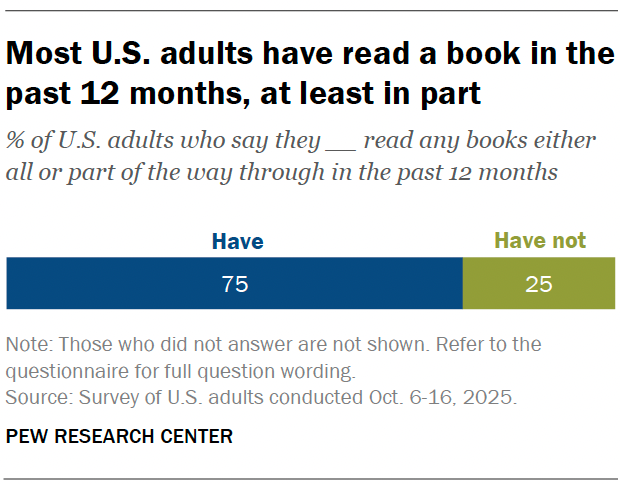
The period between 2011 and 2025 has witnessed a dynamic evolution in how Americans engage with literature. While the overall percentage of adults who read at least one book per year has remained relatively stable, hovering around 75%, the composition of reading formats has undergone a significant transformation. The initial decade saw a pronounced shift towards digital alternatives, driven by the proliferation of e-readers, tablets, and smartphones. E-book readership peaked in the mid-2010s before plateauing slightly, while audiobooks have experienced more consistent and robust growth throughout the period.
However, the most recent data suggests a potential stabilization in these trends. Between 2021 and 2025, the survey observed minimal changes in the overall percentage of book readers and the preferred formats they utilize. This suggests that the market for different book formats may be reaching a new equilibrium, with print books maintaining their core audience, e-books serving a dedicated digital readership, and audiobooks attracting a growing segment of listeners. This leveling off could be influenced by a variety of factors, including market saturation for certain devices, a renewed appreciation for traditional reading, or the economic considerations of purchasing different book formats.
Demographic Variations in Reading Habits
While book reading is a widespread activity across the United States, certain demographic factors correlate with differing reading habits and format preferences. The Pew Research Center’s analysis, based on a survey of 8,046 U.S. adults, provides nuanced insights into these variations.
Gender: Women generally exhibit higher rates of reading across all formats compared to men. In the past 12 months, 78% of women reported reading a book in any format, compared to 71% of men. This trend extends to specific formats, with women more likely to read print books (68% vs. 60%), e-books (33% vs. 28%), and audiobooks (27% vs. 24%).
Race and Ethnicity: Reading habits show some variation across racial and ethnic groups. White adults report the highest overall reading rates (77%), followed closely by Asian adults (70%), Hispanic adults (70%), and Black adults (69%). However, when examining format preferences, Asian adults stand out for their significantly higher engagement with e-books, with 42% reporting reading one in the past year, a figure notably higher than other groups. Print book readership is relatively consistent across White (67%), Black (57%), and Hispanic (57%) adults, though slightly lower for Asian adults (53%). Audiobook listening is broadly similar across these groups.
Age: Age plays a significant role in reading habits, particularly concerning format preferences. Younger adults, aged 18-29, demonstrate the highest engagement with digital and audio formats. A substantial 41% of this age group reported reading an e-book, and 32% listened to an audiobook. Their print book readership (66%) is lower than that of older age groups, though still robust. As age increases, print book readership tends to remain high or even increase (73% for those 65 and older read print books), while the engagement with e-books and audiobooks generally declines. For instance, only 13% of adults aged 65 and older reported listening to an audiobook in the past year.
Education Level: Educational attainment is a strong predictor of reading frequency and format preference. Adults with a college degree or higher (College+) report the highest overall reading rates (88%) and are also the most likely to engage with e-books (42%) and audiobooks (35%). Conversely, those with a high school education or less (H.S. or less) report lower overall reading rates (60%) and significantly less engagement with digital formats (20% for e-books, 17% for audiobooks).
The Quantitative Landscape of Book Consumption
Beyond format preferences, the Pew Research Center survey also sheds light on the sheer volume of reading undertaken by Americans. While 75% of U.S. adults engaged with at least one book in the past 12 months, the number of books read varies considerably. A significant portion of readers consume a moderate to high volume of literature:
- 12 books or more: 21% of adults read this many books.
- 4 to 11 books: 27% of adults fall into this category.
- 1 to 3 books: 27% of adults reported reading this number of books.
This data indicates that while a substantial majority reads, a considerable segment of the population is dedicated to consuming a larger quantity of reading material. Conversely, 25% of Americans reported reading no books at all in the past year, highlighting a segment of the population that is largely disengaged from reading.
The Niche World of Book Clubs
In contrast to the widespread nature of individual reading, participation in book clubs remains a relatively uncommon activity. The survey found that only 7% of U.S. adults reported being part of a book club in the past 12 months. This figure underscores that while shared reading experiences are valued by some, they do not constitute a mainstream practice.
Interestingly, there is a notable gender disparity in book club participation. Women are twice as likely as men to be involved in a book club, with 10% of women reporting participation compared to just 5% of men. This finding aligns with broader societal observations about women’s engagement in social and community-oriented activities.
Methodology and Context
The insights presented in this report are derived from a robust survey conducted by the Pew Research Center from October 6 to 16, 2025. The survey involved 8,046 U.S. adults who are members of the Center’s American Trends Panel or SSRS’s Opinion Panel. This methodology ensures that the findings are representative of the full U.S. adult population. The survey’s questionnaire, topline results, and detailed methodology have been made publicly available, allowing for further scrutiny and analysis by researchers and the public alike. This commitment to transparency is a hallmark of Pew Research Center’s work, aiming to provide reliable data for informed public discourse.

The research builds upon Pew Research Center’s ongoing efforts to understand the evolving landscape of media consumption and public engagement with information. By tracking trends in reading habits over time, the Center provides valuable context for policymakers, educators, librarians, and the publishing industry as they navigate the digital age and strive to promote literacy and a love of reading. The consistent methodology employed across surveys allows for meaningful comparisons and the identification of enduring patterns and emerging shifts in American reading culture.
Implications for the Future of Reading
The continued dominance of print books, coupled with the steady growth of digital and audio formats, suggests a future where a diverse ecosystem of reading options will coexist. The data implies that efforts to promote reading should acknowledge and cater to these varied preferences. For libraries and educational institutions, this means continuing to offer a wide range of formats and potentially exploring innovative ways to engage readers across different demographics.
The relatively low participation in book clubs also presents an opportunity for growth. Initiatives that lower the barriers to entry for book club participation or highlight the social and intellectual benefits of such groups could potentially increase engagement. As technology continues to evolve, the ways in which people access and consume stories will undoubtedly continue to change, but the fundamental human desire to read and connect through literature is likely to persist, with print books remaining a cherished and integral part of that experience for many Americans.