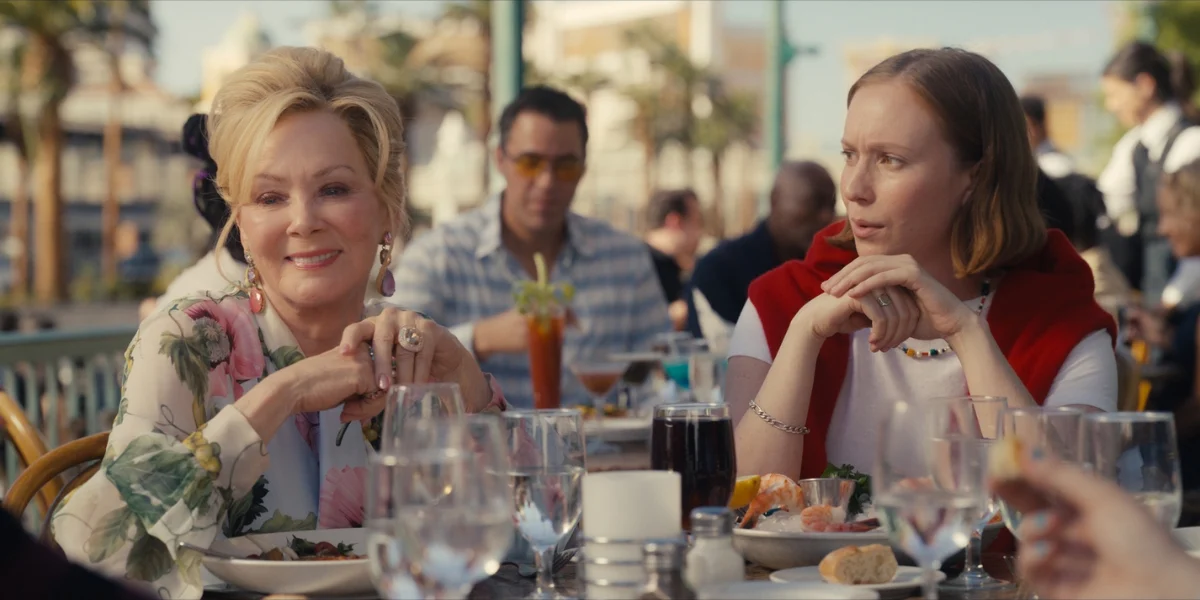
The fifth and final season of the critically acclaimed series Hacks marks a pivotal moment for both the production and the broader television landscape as creators Lucia Aniello, Paul W. Downs, and Jen Statsky bring their award-winning narrative to a planned conclusion. Premiering amidst a period of significant upheaval in the entertainment industry, the final season seeks to resolve the complex professional and personal relationship between legendary comedian Deborah Vance and her protégé, Ava Daniels, while simultaneously serving as a sharp critique of the current state of media conglomerates. Unlike many contemporary programs that face abrupt cancellation due to shifting corporate priorities, the production team has confirmed that the series is concluding on its own terms, following the original narrative arc pitched at the show’s inception. This autonomy is a rarity in a market increasingly defined by cost-cutting measures and the "deplatforming" of creative works for tax purposes.
Narrative Trajectory and the Season Five Premiere
The season five premiere resumes immediately following the events of the fourth season finale, which saw Deborah and Ava returning from a tumultuous professional engagement in Singapore. In the narrative timeline, Deborah Vance’s recent history has been marked by a descent into nihilism and a struggle with alcoholism, a storyline that reached a boiling point during their overseas stint. The premiere opens with the duo attempting to manage the fallout of a viral TMZ report erroneously claiming that Deborah had passed away. This brush with mortality serves as the primary catalyst for the season, jolting Deborah into a defensive posture regarding her professional legacy.
The plot follows Deborah’s attempts to correct the record, only to find that the media narrative has shifted from mourning to vilification. The press coverage, characterized by sexist undertones reminiscent of the obstacles Deborah faced at the start of her career in the 1970s and 80s, highlights the cyclical nature of public perception in the entertainment industry. This struggle for narrative control is further complicated by the introduction of Bob Lipka, a powerful media executive who serves as the season’s primary antagonist. Lipka represents the personification of modern corporate consolidation, wielding influence over both the news outlets reporting on Deborah and the streaming platforms that host her historical body of work.
The Role of Corporate Consolidation as a Narrative Antagonist
A significant portion of the season premiere is dedicated to the "horrors" of the modern television industry, framed through the lens of Bob Lipka’s management of the fictional conglomerate. While Lipka remains largely in the shadows—appearing primarily through digital clips and third-party reports—his impact on the protagonists is absolute. The series uses this character to explore the loss of creative agency when art is treated strictly as a line item on a corporate balance sheet.
The conflict escalates when Lipka’s streaming service deplatforms Deborah’s entire catalog, including every episode of her groundbreaking late-night talk show and her more recent stand-up special, My Bad. This act of "digital erasure" mirrors real-world trends where streaming services have removed original content to claim tax write-offs or avoid paying residuals to creators. In the context of the show, Deborah’s outcry—"They’re not just rewriting me; they’re erasing me!"—serves as a poignant commentary on the fragility of digital legacies in an era where physical media has been largely phased out.
Industry Context: The Reality of Deplatforming and Tax Write-offs
The themes explored in the Hacks premiere are grounded in recent historical data within the American media sector. Between 2022 and 2024, several major streaming services, including Warner Bros. Discovery’s Max, Disney+, and Paramount+, engaged in large-scale content removal. According to industry reports, Warner Bros. Discovery removed dozens of titles in 2023, including high-profile series like Westworld and Minx, as part of a post-merger strategy to achieve billions of dollars in "synergy" savings.
The financial mechanism behind these moves often involves "content impairment charges." By removing a show from a platform and asserting that it no longer has future economic value, companies can write off the remaining cost of the production against their taxable income. For creators, this results in the total disappearance of their work from public access, a phenomenon Hacks addresses by showing the emotional and professional toll on Deborah and Ava. This meta-commentary aligns with the show’s established identity as a "show about show business," providing a realistic, if cynical, portrayal of the creative "hellscape" navigated by modern artists.
A Chronological Overview of Hacks (2021–2025)
To understand the stakes of the final season, it is necessary to examine the trajectory of the series since its debut:
- Season 1 (May 2021): Introduced the generational clash between Deborah Vance, a Las Vegas residency staple, and Ava Daniels, a "canceled" Gen Z television writer. The season focused on the reinvention of Deborah’s act and the begrudging mutual respect formed between the two women.
- Season 2 (May 2022): Followed the duo on a cross-country tour as Deborah tested new, more personal material. The season concluded with Deborah firing Ava to allow her to pursue her own career, a move intended as an act of tough love.
- Season 3 (May 2024): Explored the characters’ lives while separated, eventually bringing them back together as Deborah pursued her lifelong dream of hosting a late-night talk show. The season ended with a power struggle as Ava blackmailed her way into a head writer position.
- Season 4 (TBA): Detailed the high-stakes environment of late-night television, culminating in the disastrous Singapore trip and Deborah’s subsequent professional crisis.
- Season 5 (Final): The current season, focusing on legacy, corporate erasure, and the final resolution of the Vance-Daniels partnership.
Throughout its run, Hacks has been a critical darling and a significant awards contender. Jean Smart, portraying Deborah Vance, has secured multiple Primetime Emmy Awards for Outstanding Lead Actress in a Comedy Series, while the show itself has been recognized for its writing and directing.
Official Responses and Creative Intent
The decision to end the series with season five was a collaborative choice between the showrunners and the network. In statements released via social media and trade publications, Lucia Aniello, Paul W. Downs, and Jen Statsky expressed gratitude for the ability to conclude the story as originally envisioned.
"We are so lucky to have been able to tell this story in exactly the way we wanted," the creators noted in a joint statement. This sentiment stands in contrast to the experiences of many other showrunners who have seen their series end on unresolved cliffhangers due to sudden executive pivots. The creators emphasized that the "emotional scaffolding" of the show—the relationship between Deborah and Ava—remains the central focus, even as the plot expands to address the structural limitations of the Hollywood industry.
Broader Impact and Theoretical Implications
The final season of Hacks arrives at a time when the television industry is reconsidering the sustainability of the "Peak TV" era. The pressures placed on creatives, as depicted in the premiere, include the demand for "international hits with sequel potential" and the enforcement of strict non-compete clauses. These narrative elements reflect the increasing corporatization of the writers’ room and the diminishing middle class of television creators.
Furthermore, the show’s focus on the "erasure" of work highlights a growing concern regarding film and television preservation. When a streamer removes a title that does not have a physical release, that title effectively ceases to exist in the cultural record. Hacks uses Deborah Vance’s catalog as a surrogate for this broader loss, arguing that the business of art has become so "tangled" with the art itself that the identity of the artist is now at the mercy of corporate algorithms and tax law.
As the series moves toward its conclusion, the central question remains whether Deborah and Ava can find a loophole through the "impossible enemy" of the current media landscape. The premiere suggests that while the system may be broken, the creative impulse persists. By providing a realistic capture of the industry’s current state, Hacks serves as both a comedy and a historical document of a transformative, and often destructive, period in American entertainment. The final episodes are expected to continue this blend of character-driven humor and industry-focused meta-commentary, providing a definitive end to one of the most significant comedies of the decade.