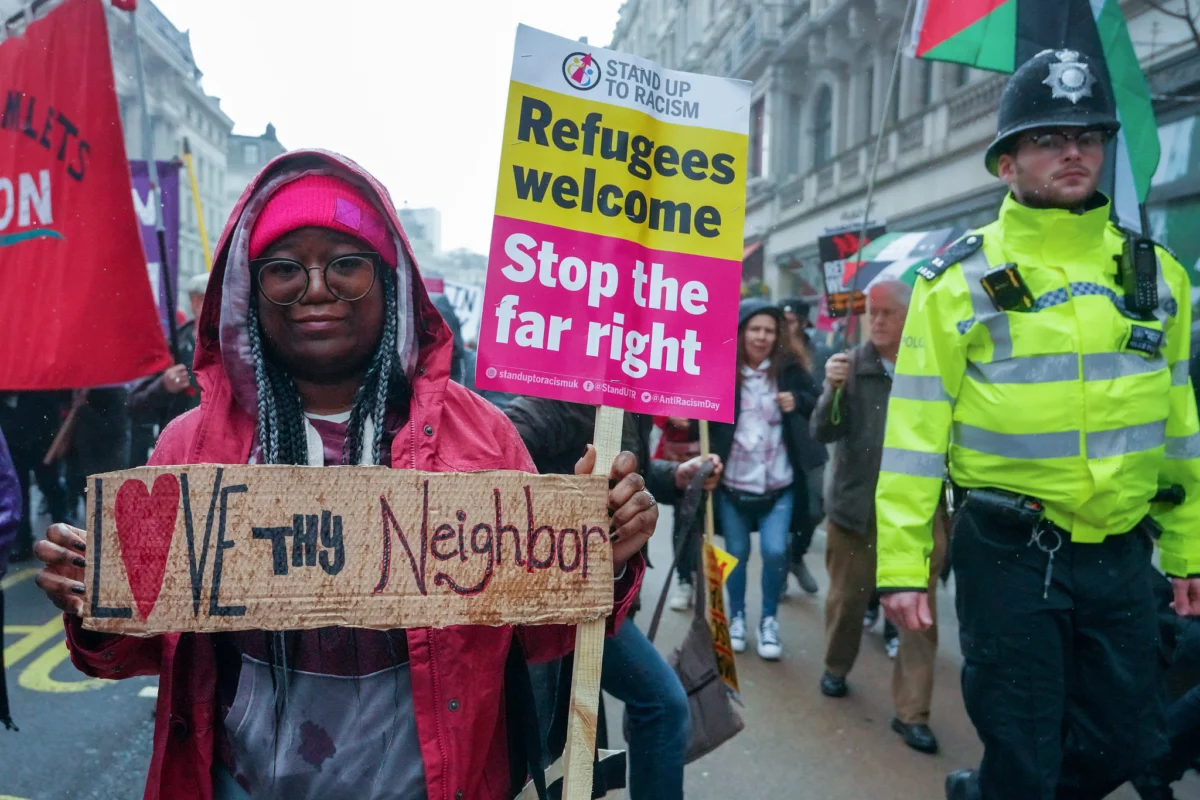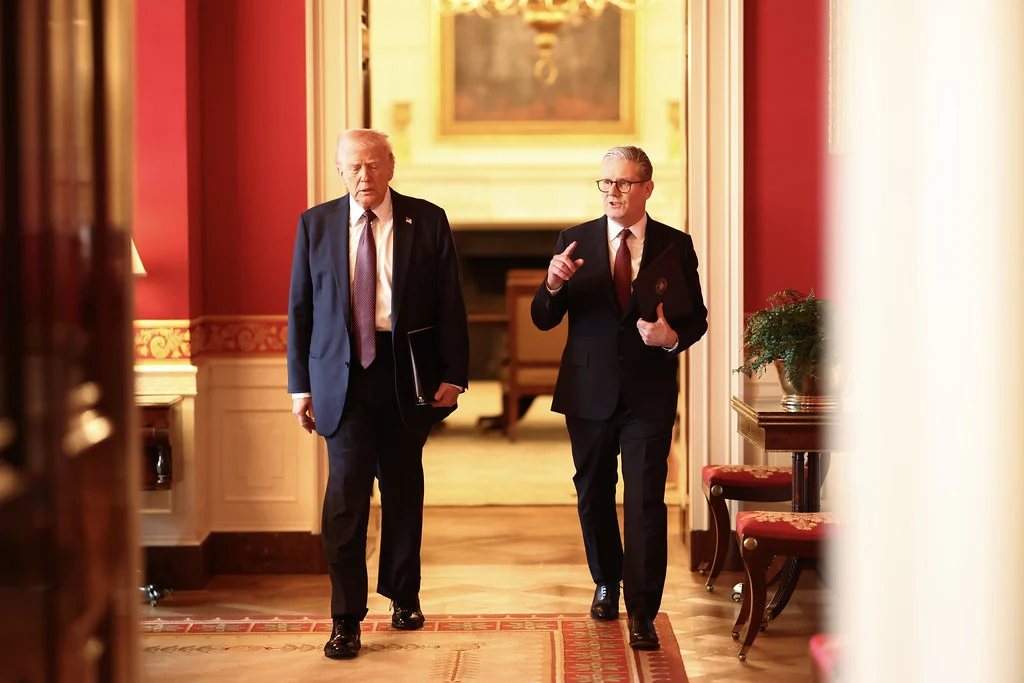
The escalating conflict in Iran has transcended regional instability to become a defining catalyst for a fundamental shift in British domestic and foreign policy. As the humanitarian toll in the Persian Gulf continues to mount, the United Kingdom finds itself at a historic crossroads, forced to reconcile its long-standing alignment with the United States’ economic and military framework against the backdrop of an increasingly erratic and nationalistic Washington. This moment of crisis is not merely a diplomatic challenge; it is the catalyst for a profound national debate regarding the future of British capitalism and the socio-economic structures that have defined the country for more than four decades.
The Humanitarian Crisis and the Geopolitical Catalyst
The war in Iran, characterized by high civilian casualties and the displacement of millions, has sent shockwaves through the international community. Beyond the immediate tragedy, the conflict has exposed a widening rift between London and Washington. While the United Kingdom has traditionally followed the lead of the United States in Middle Eastern theaters, the current American posture—defined by a combination of aggressive military intervention and a "First" doctrine that prioritizes domestic economic gain over international institutional stability—has left British policymakers in a state of strategic unease.
The civilian population in Iran is currently enduring a level of devastation that has drawn condemnation from international human rights organizations. Reports indicate that infrastructure collapse, food insecurity, and the breakdown of medical services have created a humanitarian vacuum. In London, the discourse has shifted from mere tactical support for an ally to a deeper questioning of the long-term consequences of this partnership. The central question now facing the British government is whether the "Anglosphere" gamble, intensified following the UK’s exit from the European Union, remains a viable path for a nation seeking both global influence and domestic stability.
A Chronology of Economic Realignment: 1986–2026
The current tension is the culmination of a forty-year trajectory in which the British economy has steadily mirrored the American model. This evolution can be traced through several key phases:
- The Era of Deregulation (1980s–1990s): Beginning with the "Big Bang" of 1986, the UK financial sector underwent a radical transformation, adopting the high-risk, high-reward structures of Wall Street. This period saw the weakening of trade unions and the initial wave of privatization of public utilities.
- The Tech and Finance Convergence (2000s–2010s): The UK economy became increasingly reliant on a technology sector dominated by American platforms (Google, Amazon, Meta) and a defense sector integrated with American hardware.
- The Post-Brexit Pivot (2016–2024): Following the 2016 referendum, the UK government doubled down on the "Special Relationship," seeking a comprehensive free trade agreement with the US as a cornerstone of the "Global Britain" strategy.
- The 2025-2026 Crisis: The onset of the Iran conflict and the US’s subsequent shift toward economic nationalism—characterized by protectionist trade policies and a disregard for traditional multilateral alliances—has rendered the 2016-era strategy increasingly obsolete.
This timeline illustrates that the current predicament is not an accidental byproduct of war but the result of deliberate ideological choices. The gravitational pull of the world’s largest economy led Britain to adopt a model of deregulated finance and privatized public services that is now being tested by the realities of a changing global order.
Comparative Economic Models: The American vs. the Nordic Path
As the UK reassesses its position, economic analysts are drawing sharp comparisons between the American model and the socio-economic frameworks of Northern Europe. The disparity in outcomes is significant. According to data from the OECD and the World Bank, countries such as Germany, the Netherlands, and the Scandinavian states consistently report lower levels of income inequality and higher levels of social mobility compared to both the US and the UK.
The Gini coefficient, a standard measure of statistical dispersion intended to represent the income or wealth inequality within a nation, highlights this gap. While the UK’s Gini coefficient has hovered around 0.35 in recent years, Scandinavian nations typically maintain figures between 0.25 and 0.28. These nations utilize economic models characterized by:
- Stronger Labor Rights: High levels of collective bargaining and worker representation on corporate boards.
- Regulated Finance: Financial sectors that are mandated to serve the productive economy rather than speculative markets.
- Broad Worker Ownership: Policies that encourage employee share ownership and cooperatives, reducing the concentration of wealth.
The Equality Trust, a UK-based organization focused on social and economic inequality, argues that these differences are intentional. The Northern European models are designed to address the concentration of income and power, whereas the American-style model adopted by the UK has allowed for the emergence of a feedback loop between extreme wealth and political influence.
The Influence of the Ultra-Wealthy on British Policy
A critical component of the current debate is the role of concentrated corporate power and its impact on British governance. Recent briefings, including "Money, Media, and the Lords: How the Ultra-wealthy are Shaping Britain," suggest that the drift toward the American model has fostered an environment where oligopolies can effectively shape regulation.
This concentration of power manifests in several ways:
- Lobbying Structures: Larger players in the finance and technology sectors possess the resources to influence legislative agendas, often at the expense of small and medium-sized enterprises (SMEs).
- Media Ownership: A significant portion of the British media landscape is controlled by a small number of ultra-wealthy individuals, which can skew public discourse in favor of deregulatory policies.
- Political Appointments: The presence of significant donors and corporate leaders in the House of Lords has raised questions about the impartiality of the legislative process.
The Equality Trust asserts that if Britain is to break its dependence on the American model, it must first address these internal structures that prioritize the interests of an elite minority over the broader public good.
Proposed Strategies for an Independent British Economy
In response to the current crisis, a growing chorus of economists and policy experts is calling for a "Community Wealth Building" strategy. This approach focuses on redirecting wealth back into local economies and ensuring that the benefits of economic growth are shared more equitably. Key pillars of this proposed transition include:
Domestic Industrial Investment
Rather than relying on overseas contractors for major infrastructure and defense projects, the UK could prioritize domestic firms that build capacity in "left-behind" regions. This would involve a strategic industrial policy aimed at re-shoring manufacturing and developing a green energy sector that provides high-quality, unionized jobs.
Technological Sovereignty
To counter the dominance of Silicon Valley, proponents suggest investing in UK-based technology infrastructure. This would ensure that the value generated by data and digital services circulates within the domestic economy rather than being extracted by multinational corporations.
Financial and Competition Reform
Experts recommend a significant overhaul of competition policy. This would include empowering regulators with "real teeth" to prevent the formation of monopolies and to resist the concentration of market power. Financial regulations would be adjusted to incentivize investment in the "productive economy"—such as housing, education, and sustainable technology—over speculative financial instruments.
Official Responses and Public Sentiment
The reaction from the British government has been one of cautious recalibration. While maintaining official support for the alliance with the United States, senior officials in the Foreign, Commonwealth & Development Office have privately expressed concerns regarding the reliability of Washington as a strategic partner.
Opposition leaders have been more vocal, suggesting that the war in Iran should serve as a "wake-up call" for the nation. Public opinion polls conducted in early 2026 indicate a growing weariness with the UK’s involvement in foreign conflicts and a desire for an economic model that prioritizes domestic stability and public services. A recent survey showed that 62% of respondents favored adopting labor and social policies more akin to those found in Northern Europe.
Business leaders are also divided. While the financial sector in the City of London remains wary of increased regulation, manufacturing and technology firms have expressed interest in a more interventionist industrial policy that could provide the stability currently lacking in the international market.
Future Implications: A New Strategic Autonomy
The conflict in Iran has acted as a mirror, reflecting the vulnerabilities of the British state and its economic foundations. The choice facing the United Kingdom is no longer a simple binary between the US and Europe, but a more complex decision regarding the country’s identity and its role in a multipolar world.
If the UK continues on its current path, it risks remaining tethered to a partner that is increasingly focused on its own domestic interests, potentially leaving the British economy vulnerable to the whims of American political shifts. Conversely, a move toward a more "strategically autonomous" economy—one modeled on the more equal societies of Northern Europe—would require a radical restructuring of domestic policy.
This transition would necessitate a move away from the "trickle-down" ideologies of the past forty years in favor of a model that recognizes the link between economic equality and national resilience. As Priya Sahni-Nicholas, Co-Executive Director of the Equality Trust, notes, the propositions for a more equal and autonomous economy are not radical; they are the proven methods by which the world’s most stable and prosperous nations are organized.
The coming months will be critical. As the war in Iran continues to reshape the geopolitical map, the decisions made in London will determine whether Britain remains a peripheral actor in an American-led system or whether it can forge a new path that serves the interests of all its citizens. The humanitarian catastrophe in the Middle East is a tragedy that demands an immediate response, but for Britain, it is also a moment of profound introspection that may finally answer the question of what kind of future the nation truly wants.