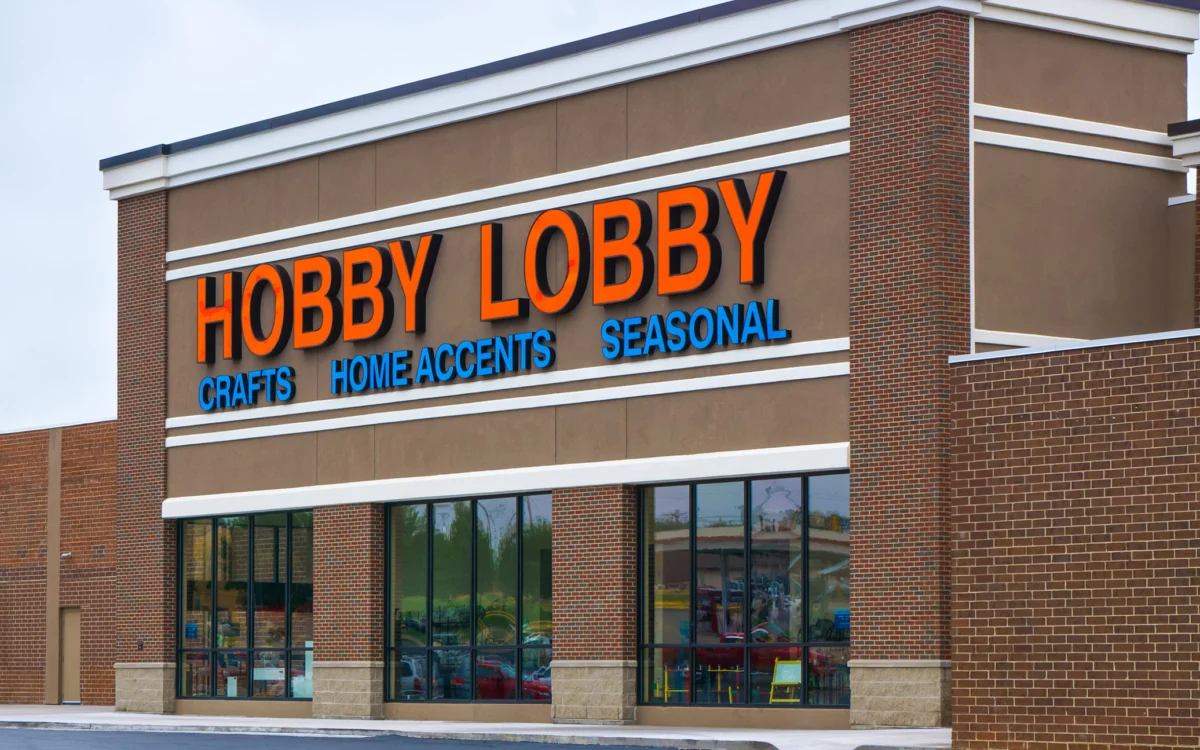
A federal jury has determined that a Hobby Lobby store in Harahan, Louisiana, unlawfully discriminated against a Jefferson Parish man with intellectual disabilities, culminating in his forceful removal from the premises and subsequent pepper-spraying three years ago. The verdict, reached by a jury of six women and two men, awarded damages to Charles "Chip" George, asserting that the actions of the store manager violated the Americans with Disabilities Act (ADA) by treating him less favorably due to his disability. While the jury found in favor of George on the discrimination claim, they rejected a separate assertion that the store failed to provide reasonable accommodations and significantly reduced the initial damages sought from approximately $450,000 to $10,000.
The civil case, brought forth by George’s family, highlighted a long-standing relationship between George and the Harahan Hobby Lobby location on Citrus Boulevard. For over a decade, George, a fervent admirer of comic book superheroes like Batman, Superman, and the Incredible Hulk, frequented the store to purchase paintings. His family’s legal team argued that these routine visits were marked by a consistent need for assistance due to his intellectual disabilities, which impacted his reading comprehension to an elementary-school level and his ability to accurately tally purchases. George frequently relied on store employees to help him calculate the cost of his desired items to ensure he had sufficient funds. His visits were often multiple times per week, a testament to his established patronage.
The Incident: A Turbulent Monday After Thanksgiving
The pivotal events unfolded on the morning of Monday, November 27, 2023, the busy Monday following Thanksgiving. Witnesses described the store as being in a state of "chaos," with significant customer volume and long queues at checkout counters. It was within this heightened atmosphere that a new store manager, Heather Ford, observed George interacting with a customer service manager. George, as was his custom, was seeking assistance with calculating the total cost of his intended purchases.
According to testimony, Ford approached George and informed him that the store was too busy to accommodate his request at that moment and that he would need to return at a later time. The situation quickly escalated. George, reportedly exhibiting distress or agitation, began to shout obscenities. In response, Ford instructed him to leave the store.
Ford’s actions then escalated to a call to 911. She reported George for loitering, described him as belligerent, and stated that he was refusing to leave. Her request to the dispatcher was for officers to "come talk to him," and she explicitly expressed her desire for George to be banned from the store. Critically, George’s attorneys later contended that Ford failed to inform the responding deputy of George’s intellectual disabilities, a crucial piece of information that could have altered the interaction.
Escalation and Legal Ramifications
Upon the arrival of a deputy, the situation further deteriorated. Court records indicate that George attempted to punch the officer, leading to his arrest for resisting arrest with violence. During the apprehension, the deputy deployed pepper spray, directly targeting George’s face and mouth. The spray also inadvertently affected George’s sister, Kimberly George, and her boyfriend, both of whom had reportedly intervened in an attempt to de-escalate and restrain Chip George. The immediate aftermath saw George taken into custody, spending approximately 25 hours in jail before his family could secure his release on bail.
The criminal charges subsequently faced by George were not pursued by prosecutors, who determined that he was incompetent to stand trial, according to court records. This finding by the criminal justice system underscored the challenges George faced due to his intellectual disabilities.
Legal Arguments and Verdict
Following the civil trial, lead plaintiff attorney Christopher Edmunds expressed a sense of vindication. "We feel vindicated," Edmunds stated. "It’s very stressful going to trial, Hobby Lobby had very competent legal counsel. But the jury heard all the evidence and at the end of the day, the jury has spoken loud and clear that Hobby Lobby violated the Americans with Disabilities Act."
The defense for Hobby Lobby, represented by attorney Hal Ungar, aimed to demonstrate that the accommodations George required would have imposed a "fundamental alteration" on the store’s operations, a recognized exception under the ADA that can excuse businesses from providing certain accommodations. Ungar argued that the plaintiff’s legal team had not presented sufficient evidence of discrimination. He contended that Ford’s actions would have been the same regardless of George’s disability, asserting that she would have removed anyone causing a similar disturbance.
"This case is about if it’s okay and reasonable to say ‘no’ if someone is being belligerent," Ungar told the jurors during the proceedings. He characterized the plaintiff’s strategy as an attempt to demonize store manager Heather Ford, stating, "Their strategy was to call Ms. Ford a monster. Over and over. And it was just to distract you with parlor tricks to hide the lack of evidence."
The jury’s decision to find Hobby Lobby liable for discrimination under the ADA signifies a crucial legal precedent in cases involving individuals with intellectual disabilities and their interactions within retail environments. However, the rejection of the reasonable accommodation claim suggests the jury found that the specific requests or the timing of those requests, particularly during a period of extreme business, did not meet the legal threshold for mandatory accommodation without undue burden.
Broader Implications and Future Actions
The outcome of this trial carries significant implications for how businesses interact with customers who have intellectual disabilities. The $10,000 damages awarded, while a fraction of what was sought, represents a finding of liability and a recognition of harm.
Lead attorney Christopher Edmunds indicated plans to petition U.S. District Judge Barry Ashe to issue an injunctive order. This order would aim to mandate comprehensive training for Hobby Lobby employees across its numerous stores nationwide on the provisions and spirit of the Americans with Disabilities Act. Additionally, Edmunds intends to request that the permanent ban imposed on Chip George from the Harahan store be lifted, allowing him to resume his patronage.
"One of the big things I wanted out of this was for the employees to have the training throughout the whole country," shared Karen Meyer, another of Chip George’s sisters. Meyer emphasized the importance of equipping employees with the skills to manage challenging situations, stating, "So at least they will have other tools or options on how to de-escalate, rather than escalate a situation." This sentiment reflects a broader desire for enhanced customer service protocols and a more inclusive approach to customer interactions within the retail sector.
The case also brings to the forefront the complexities of enforcing disability rights in real-world scenarios. While the ADA provides a framework for protection, its application often involves nuanced legal interpretations regarding what constitutes discrimination versus reasonable accommodation, especially in dynamic and high-pressure business environments. The jury’s decision to differentiate between direct discrimination and failure to accommodate suggests a careful consideration of these distinctions.
Supporting Data and Context
The Americans with Disabilities Act (ADA), signed into law in 1990, prohibits discrimination based on disability in all areas of public life, including jobs, schools, transportation, and all public and private places that are open to the general public. For retail establishments like Hobby Lobby, the ADA mandates that they provide equal access and opportunities to individuals with disabilities. This includes making reasonable modifications to policies, practices, and procedures when necessary to afford individuals with disabilities the opportunity to participate in, and enjoy the benefits of, the goods and services offered.
Intellectual disability is a neurodevelopmental disorder characterized by significant limitations in intellectual functioning and adaptive behavior, which originate during the developmental period. According to the Centers for Disease Control and Prevention (CDC), approximately 1-3% of the population has an intellectual disability. Individuals with intellectual disabilities may require support in various aspects of daily living, including communication, social skills, and managing financial transactions, as was the case with Chip George.
The period following Thanksgiving is historically one of the busiest shopping seasons in the United States. Retailers often experience peak customer traffic, leading to increased demands on staff and potential for heightened stress. This context is crucial in understanding the environment in which the incident occurred and the arguments presented by both sides regarding the feasibility of accommodations during such times.
The legal battle underscores the ongoing need for public awareness and education regarding intellectual disabilities. Many individuals with intellectual disabilities are capable of independent living and community participation when provided with appropriate support. However, misunderstandings and biases can lead to discriminatory treatment, as alleged in this case. The outcome may encourage more proactive measures by businesses to ensure their staff are trained to interact respectfully and effectively with all customers, regardless of their abilities.