The publication of "The Good Society," the latest work by renowned social epidemiologist Professor Kate Pickett, marks a pivotal moment in the ongoing national discourse regarding social equity and systemic reform in the United Kingdom. Scheduled for a formal digital launch on Wednesday, February 4, 2026, at 6:00 pm, the event will convene a panel of the country’s most prominent voices in social justice, environmental advocacy, and legislative reform. Joining Professor Pickett are George Monbiot, the investigative journalist and environmental campaigner; Caroline Lucas, the former leader of the Green Party and longtime Member of Parliament; and Baroness Ruth Lister of Burtersett, a leading academic and peer noted for her extensive work on poverty and social citizenship. The book argues that the prevailing crises in British society—ranging from deteriorating public health to environmental degradation—are not isolated phenomena but are the direct consequences of deep-seated economic inequality.
The Intellectual Framework of The Good Society
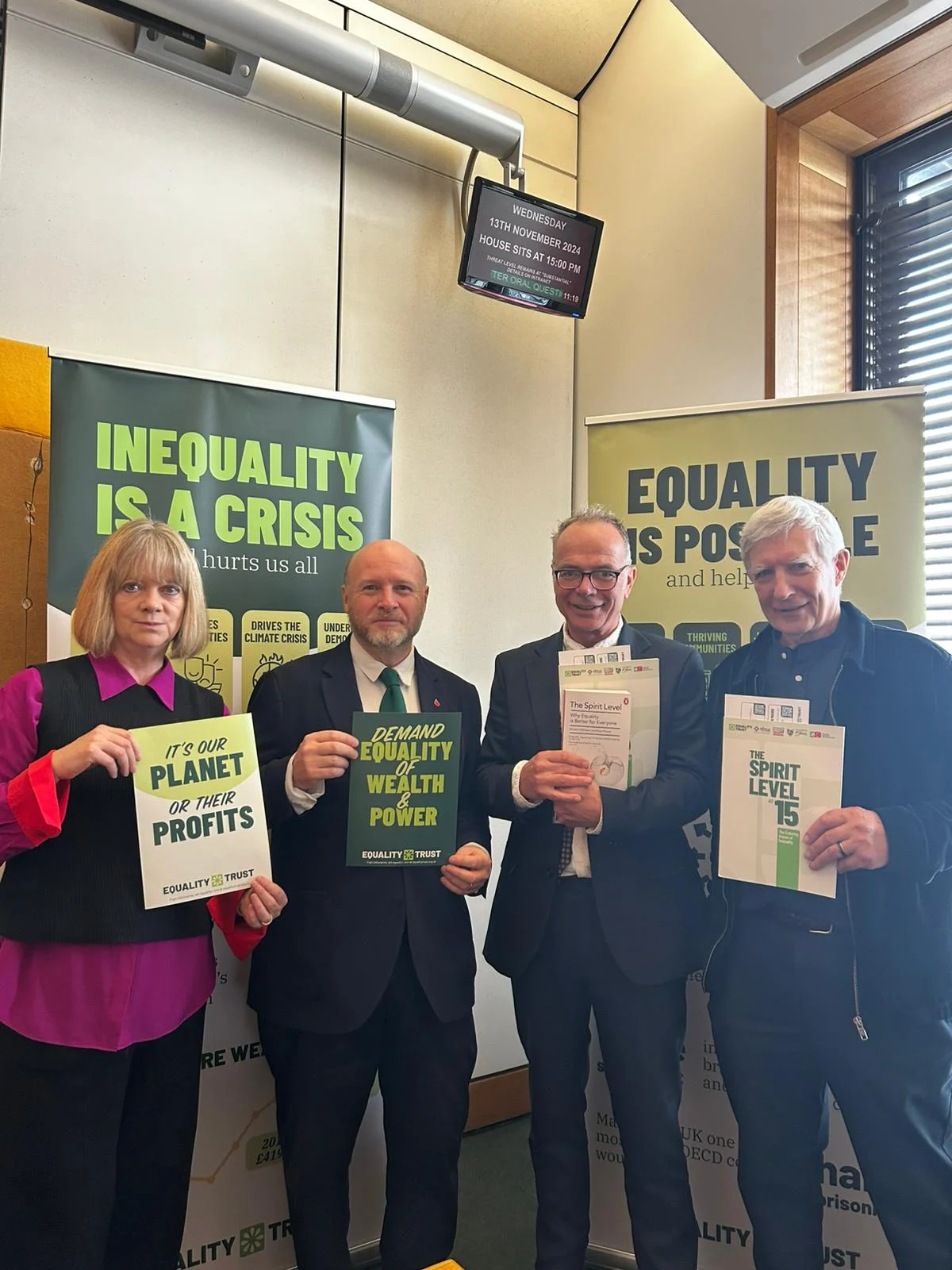
Professor Kate Pickett, a Professor of Epidemiology at the University of York, has spent decades documenting the corrosive effects of inequality on the fabric of modern civilizations. Her previous collaborations with Richard Wilkinson, most notably "The Spirit Level" (2009) and "The Inner Level" (2018), established a rigorous statistical foundation for the argument that societies with large gaps between the rich and the poor perform worse across nearly every social indicator. "The Good Society" serves as the prescriptive evolution of this research. While her earlier works focused on diagnosing the "psychological and social costs of inequality," this new volume outlines a pragmatic roadmap for structural change.
The central thesis of the book is that the UK’s most pressing challenges—failing care systems, educational disparities, rising crime rates, and the climate emergency—share a common root. Pickett posits that inequality acts as a "pollutant" in the social environment, eroding trust, increasing stress, and stifling the collective agency required to address global threats. By framing "The Good Society" not as a utopian vision but as a series of deliberate political choices, Pickett challenges the contemporary political orthodoxy that views high levels of inequality as an inevitable byproduct of economic growth.
A High-Profile Panel for a Critical Conversation
The launch event is structured to provide a multi-disciplinary analysis of Pickett’s findings. Each speaker brings a unique perspective on how inequality manifests within their respective fields of expertise:
- George Monbiot: Known for his work on "neoliberalism" and "rewilding," Monbiot is expected to address the intersection of wealth concentration and ecological collapse. His previous writings have often echoed Pickett’s sentiment that the pursuit of infinite growth in an unequal society is fundamentally incompatible with planetary boundaries.
- Caroline Lucas: As a veteran politician who has consistently advocated for a "Wellbeing Economy," Lucas provides the legislative context. Her contribution will likely focus on how Pickett’s evidence-based approach can be translated into policy frameworks, such as the Universal Basic Services or reformed environmental protections.
- Baroness Ruth Lister: A former Director of the Child Poverty Action Group, Baroness Lister’s work has long emphasized the importance of "agency" and "dignity" for those living in poverty. She is expected to discuss the book’s implications for the social security system and the moral imperatives of social citizenship.
Supporting Data: The Cost of Inequality in 2026
The launch of "The Good Society" comes at a time when statistical indicators suggest the UK is at a crossroads. Data from the Office for National Statistics (ONS) and the Equality Trust indicate that despite various policy interventions over the last decade, the wealth gap remains historically high. As of early 2026, the top 10% of households hold more than 43% of the nation’s wealth, while the bottom 50% hold less than 5%.
The public health implications, a core focus of Pickett’s research, are particularly stark. Recent longitudinal studies show that life expectancy in the most deprived areas of the UK has stalled or even declined for the first time in a century—a phenomenon Pickett attributes to "status anxiety" and the chronic stress of living in a highly hierarchical society. Furthermore, the "social gradient" in health means that even those in the middle classes suffer worse health outcomes in more unequal societies compared to their counterparts in more egalitarian nations like Norway or Japan.
In terms of education, the "attainment gap" between students from low-income backgrounds and their wealthier peers has widened by an estimated 15% since 2020, exacerbated by the long-term effects of digital poverty and underfunded local services. Pickett’s book argues that these are not failures of individual effort but failures of a system that prioritizes competition over social cohesion.
Chronology of the Book’s Development and Launch
The journey toward "The Good Society" began shortly after the global pandemic, which Pickett and many of her colleagues viewed as a "stress test" that exposed the fragility of unequal systems.
- 2023-2024: Professor Pickett conducted extensive cross-national research, updating the datasets first presented in "The Spirit Level" to include post-pandemic economic shifts.
- Mid-2025: Advanced manuscripts were shared with policy think tanks and advocacy groups, including the Equality Trust, where Pickett serves as a co-founder and patron.
- January 15, 2026: Official announcement of the book’s release and the opening of registrations for the virtual launch event.
- February 4, 2026: The scheduled launch event, intended to catalyze a national conversation ahead of the upcoming spring budget and local elections.
The Five Pillars of Reform
In "The Good Society," Pickett outlines five specific areas where political intervention can yield the highest social dividends:
- Preventative Health: Shifting the focus of the NHS from crisis management to the "wider determinants of health," such as housing quality, air purity, and income security.
- The Care Economy: Moving toward a universal social care model that treats care as a fundamental right rather than a market commodity, ensuring dignity for both the elderly and care workers.
- Educational Imagination: Reforming the national curriculum to prioritize creativity, emotional intelligence, and life skills, thereby reducing the "exam factory" pressure that contributes to the youth mental health crisis.
- Rehabilitative Justice: Investing in community-based crime prevention and restorative justice programs that address the social causes of offending, rather than relying on an expanding prison estate.
- Environmental Wellbeing: Integrating climate action with economic reform, ensuring that the transition to a green economy does not disproportionately burden the poor, but instead enhances collective wellbeing.
Broader Implications and Official Reactions
The release of "The Good Society" is expected to influence the policy platforms of various political factions. While some conservative commentators have historically critiqued Pickett’s work as being overly focused on "outcome equality" rather than "opportunity equality," the sheer volume of data supporting the social benefits of narrower wealth gaps has made her arguments increasingly difficult to dismiss.
Spokespersons for several social advocacy groups have already welcomed the book’s publication. A representative from the Equality Trust stated, "Professor Pickett has once again provided the intellectual ammunition needed to fight for a fairer Britain. This isn’t just about economics; it’s about the fundamental health and happiness of our communities."
Political analysts suggest that the "Good Society" framework could serve as a unifying blueprint for progressive parties. By linking environmental sustainability directly to economic equality, Pickett provides a narrative that bridges the gap between traditional labor movements and modern environmentalism.
Analysis: A Political Choice, Not a Utopian Dream
The most significant takeaway from "The Good Society" is its rejection of political fatalism. Pickett argues that the high levels of inequality seen in the UK and the US are "policy-driven" rather than "market-driven." This distinction is crucial; it implies that if inequality was created by policy, it can be dismantled by policy.
The book highlights that "The Good Society" already exists in fragments across the globe. From the cooperative business models in parts of Spain and Italy to the comprehensive social safety nets of Scandinavia, the evidence suggests that more equitable models are not only possible but are more resilient in the face of global shocks.
As the launch date approaches, the event on February 4 stands as more than just a book promotion; it is a gathering of minds focused on the practicalities of systemic change. In an era defined by "permacrisis," Pickett’s work offers a evidence-based argument that the path to a better world is paved with the bricks of equality. The discussion with Monbiot, Lucas, and Lister is expected to set the tone for a year of intense debate over the future of the British social contract.