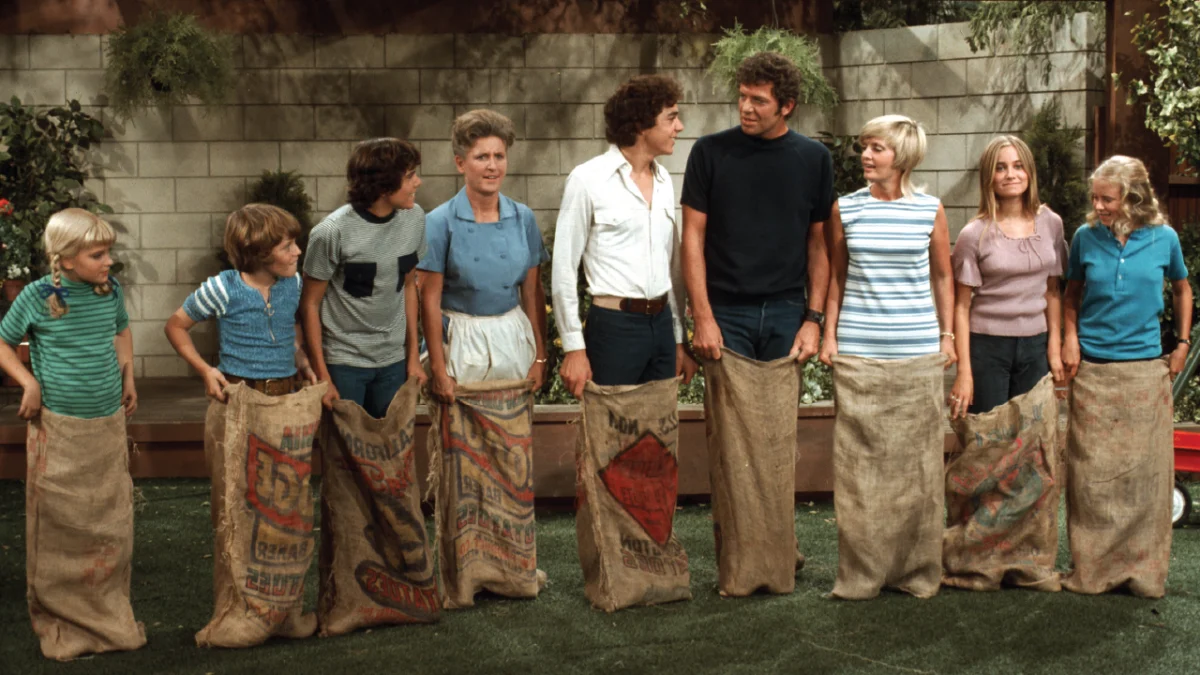
When the term "blended family" is uttered, many minds conjure the iconic image of "The Brady Bunch," a television sitcom that popularized the idea of two single parents marrying and combining their children under one roof. However, this nostalgic portrayal represents only a sliver of the complex reality of blended families in the United States. In contemporary society, a blended family is more broadly defined as any household that includes a stepparent, stepsiblings, or half-siblings. This nuanced definition underscores the diverse structures that now constitute a significant portion of American households with children.
According to a comprehensive analysis by the Pew Research Center, leveraging data from the U.S. Census Bureau, approximately 17% of U.S. children younger than 18 currently live in a blended family. This statistic reflects the primary residence of children, accounting for those living with blended family members most or all of the time. It is crucial to acknowledge that this figure may not capture the full extent of blended family connections, as some children may have stepsiblings residing in separate households or older half-siblings who have established their own independent living situations.
This in-depth examination, based on Pew Research Center’s analysis of the Survey of Income and Program Participation (SIPP), delves into the prevalence and characteristics of blended families across the nation. The research aims to provide a clearer understanding of how these family structures are evolving and their demographic underpinnings.
Understanding the Research Methodology
The Pew Research Center’s commitment to illuminating societal trends drives its ongoing study of families and relationships in the U.S. This particular analysis draws upon microdata from the U.S. Census Bureau’s Survey of Income and Program Participation (SIPP). The SIPP is a longitudinal survey that collects data on the economic and social well-being of individuals and households, providing a rich dataset for understanding family structures and dynamics. A detailed methodology document, available for review, outlines the specific data sources and calculation methods employed in this research, ensuring transparency and rigor in the findings.

Demographic Disparities in Blended Family Formation
The likelihood of a child living in a blended family is not uniform across the American population; it is significantly influenced by factors such as race and ethnicity, parental education levels, and the child’s age.
Racial and Ethnic Variations:
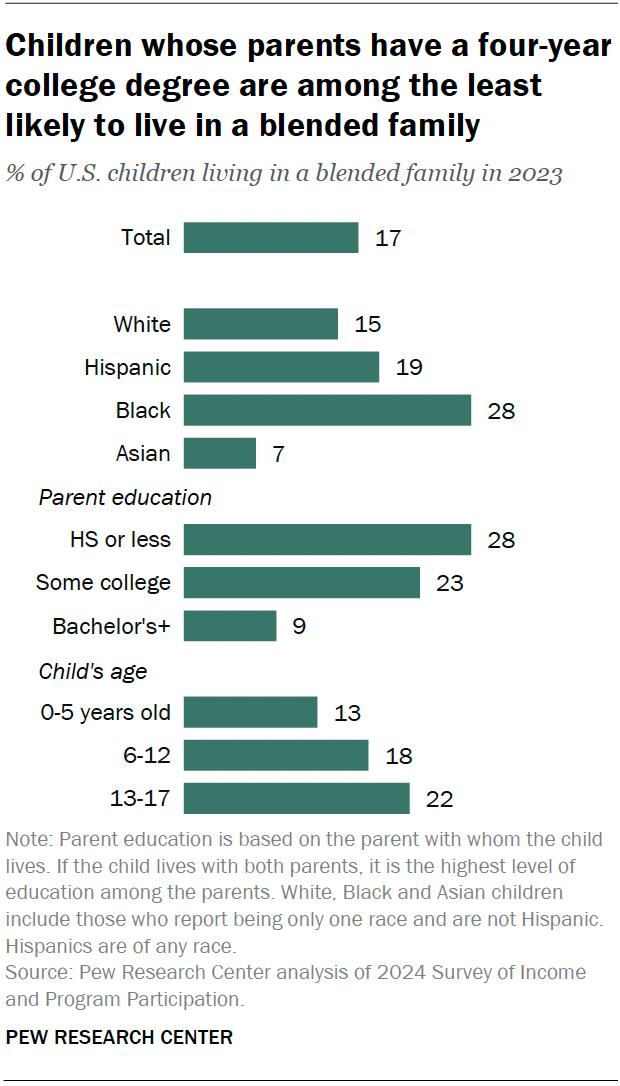
The data reveals distinct patterns when examining blended family prevalence by race and ethnicity. Black children exhibit the highest rate of living in blended families, with 28% experiencing this family structure. This is followed by Hispanic children at 19%, and White children at 15%. Asian children, conversely, represent the group least likely to live in a blended family, with only 7% in such arrangements. These disparities may be linked to broader societal factors, including marriage patterns, cohabitation trends, and historical family structures within these communities.
Parental Education as a Differentiating Factor:
A notable trend emerges when considering the educational attainment of parents. Children whose parents possess a bachelor’s degree or higher are considerably less likely to reside in blended families compared to those with parents who have lower levels of education. Specifically, 9% of children with a parent holding a bachelor’s degree or more live in blended families. This contrasts with 28% of children whose parents have only a high school diploma or less, and 23% of those with parents who have some college education.
This correlation is likely multifaceted. Adults with higher education levels tend to marry later and are less prone to non-marital childbearing, a precursor to many blended family formations. Furthermore, research indicates that individuals with a bachelor’s degree or more are less likely to experience divorce, a common pathway that can lead to the formation of blended families. These educational and marital stability factors contribute to the observed differences in blended family prevalence. For the purpose of this analysis, "parents" are defined as biological or adoptive parents, and the education level considered is that of the parent(s) with whom the child primarily resides.
Age of Children and Blended Family Structures:
The age of a child also plays a role in their likelihood of living in a blended family. Adolescents, aged 13 to 17, are the most likely demographic to be part of a blended family, with 22% in such arrangements. This is followed by children aged 6 to 12, where 18% live in blended families. Children aged 5 and younger are the least likely to be in blended families, at 13%. This pattern might suggest that blended family structures are more likely to be established or evolve as children grow older, or that parental union dissolution and reformation are more common during later stages of child-rearing.
A Shifting Landscape: Trends in Blended Family Formation
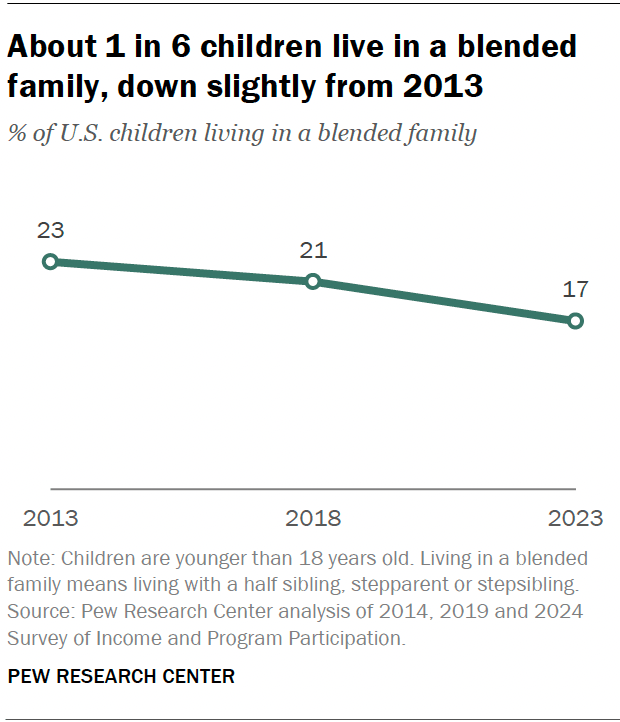
The composition of American families is dynamic, and the prevalence of blended families has seen a slight decrease in recent years. As of 2023, 17% of children live in blended families, a modest decline from 23% reported in 2013. This shift is largely attributable to a decrease in the proportion of children living with a half-sibling.
The Decline of Half-Sibling Households:
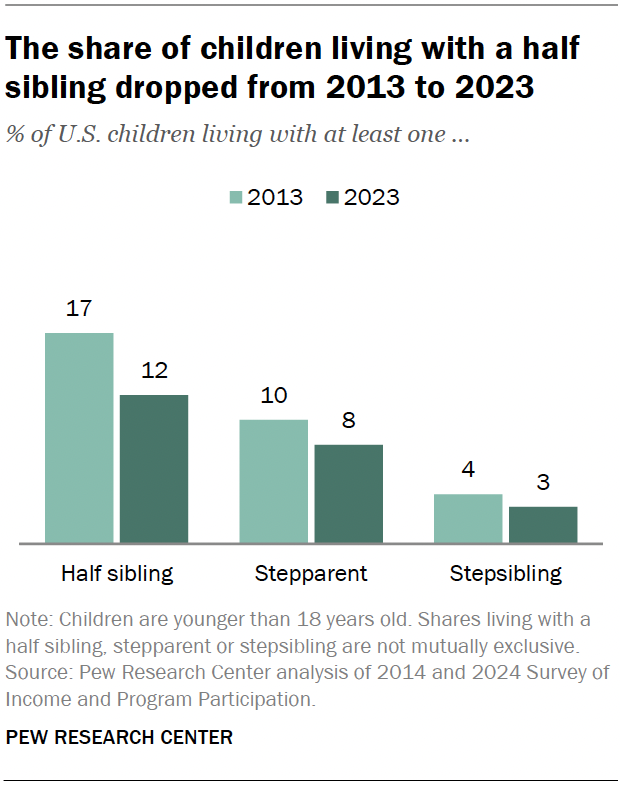
The percentage of children living with a half-sibling has fallen from 17% in 2013 to 12% in 2023. This decline is particularly pronounced among children who live with only one parent and no stepparent. This trend aligns with broader demographic shifts, including a decline in birth rates among teenagers and young adults. Historically, individuals who become parents at younger ages and outside of marriage have been more likely to have children with multiple partners, a scenario that often leads to the formation of half-sibling relationships within blended families. The decrease in these early-onset childbearing patterns is a significant factor in the observed reduction of half-sibling households.
Stability in Stepparent and Stepsibling Arrangements:
In contrast to the decline in half-sibling households, the proportion of children living with a stepparent and at least one stepsibling has remained relatively stable between 2013 and 2023. A stepparent is defined as the spouse or unmarried cohabiting partner of a child’s parent. It is important to note that these different types of blended family relationships – living with half siblings, a stepparent, or stepsiblings – are not mutually exclusive. Many children within blended families experience multiple such relationships simultaneously.
The Multifaceted Nature of Blended Family Structures
The term "blended family" encompasses a wide array of living arrangements, and there is no single, definitive model.
The Prevalence of Stepparents:
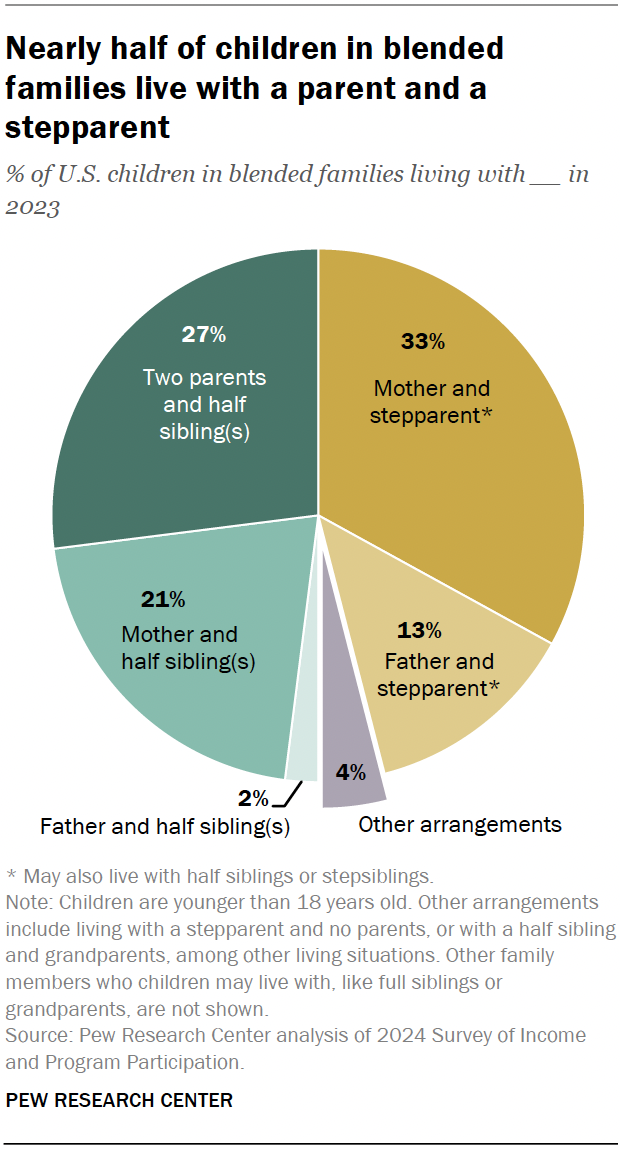
Nearly half of children in blended families (46%) reside with a parent and a stepparent. This category includes households with or without the presence of half-siblings or stepsiblings. Within this group, 33% of children live with their mother and a stepparent, while 13% live with their father and a stepparent. The marital status of the parent and stepparent also varies; 66% of children in these arrangements live with a married parent and stepparent, while 34% live with an unmarried cohabiting parent and stepparent.
Living with Half-Siblings Without a Stepparent:
A significant portion of children in blended families, 50%, do not live with a stepparent but do live with at least one half-sibling. This can manifest in several ways: 27% of children in blended families live with both biological parents and at least one half-sibling. This scenario often arises when a child lives with an older half-sibling from a parent’s previous relationship. Another 23% of children live with a single parent (most commonly their mother) and at least one half-sibling. These arrangements highlight the diverse pathways through which children navigate blended family dynamics.
Interconnected Relationships:
It is common for children in blended families to experience multiple forms of blended relationships concurrently. For instance, some children living with a parent and stepparent may also have half-siblings and/or stepsiblings. These overlapping relationships can add layers of complexity to family dynamics and underscore the fluid nature of modern family structures.
Socioeconomic Realities of Blended Families
Research consistently indicates that blended families, on average, tend to have lower household incomes and wealth compared to non-blended families. The median net worth for households with children in blended families is $86,300, a figure substantially lower than the $194,400 reported for households with children who are not in blended families. Non-blended families in this context primarily consist of children living with one or both of their biological parents, with or without full siblings.
Several factors contribute to these financial disparities:
- Child Support Dynamics: Among blended families with a child support agreement, 64% receive cash payments. Overall, 46% of blended families where at least one child lives with only one parent have a formal (court-ordered) or informal (parentally agreed upon) child support arrangement. Those receiving cash support obtain a median of $400 per month, which represents, on average, 12% of their household’s monthly income. Additionally, 15% of blended families with children living with one parent receive in-kind support, such as food, school supplies, or clothing, which can supplement household resources. (This analysis of financial aspects combines data from 2022 and 2023 due to sample size considerations.)
- Economic Instability and Relationship Transitions: The economic disparities may be linked to the circumstances that lead to blended family formation, such as parental divorce or separation, which can result in financial strain. The costs associated with maintaining multiple households, legal fees, and potential reductions in earning capacity during periods of transition can impact overall household wealth.
- Educational and Employment Factors: As previously noted, lower parental educational attainment is correlated with a higher likelihood of living in a blended family. This educational difference can translate into lower average incomes and, consequently, less accumulated wealth.
Conclusion: A Evolving Tapestry of Family Life
The American family landscape is characterized by increasing diversity, with blended families representing a significant and evolving segment. From the classic Brady Bunch model to more intricate combinations of stepparents, stepsiblings, and half-siblings, these families are shaped by a complex interplay of demographic, social, and economic forces. The Pew Research Center’s analysis provides crucial data for understanding these trends, highlighting disparities by race, education, and age, and tracking shifts in prevalence over time. As society continues to adapt, the definition and reality of the "blended family" will undoubtedly continue to evolve, reflecting the dynamic nature of human relationships and household structures in the 21st century.