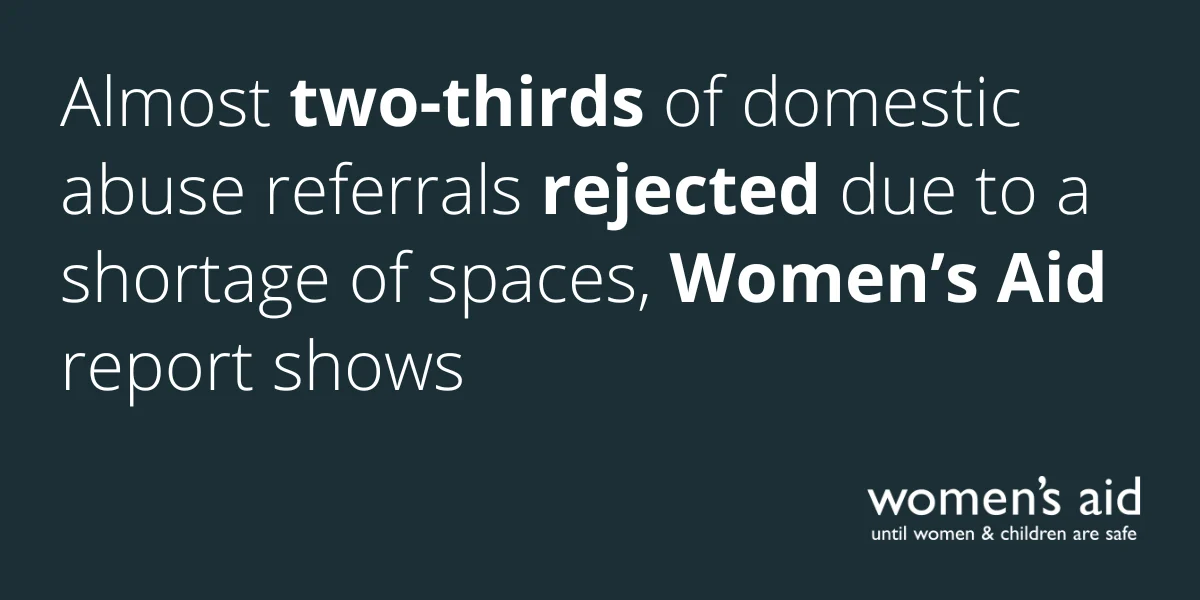
The latest annual Domestic Abuse Report from national charity Women’s Aid reveals a deepening crisis within the support system for survivors, with a staggering 65.2% of refuge referrals being rejected in the past year. This unprecedented rate, the highest in five years, is primarily attributed to a severe lack of available space and capacity, painting a stark picture of systemic failure despite recent government pledges to tackle violence against women and girls (VAWG). The report, which provides a definitive national overview of the needs and operational landscape of domestic abuse services, underscores an urgent requirement for systemic change to prevent the sector from collapsing under immense demand.
The Alarming Scale of Rejections
The core finding of the Women’s Aid report is a grave indicator of the chasm between the demand for lifesaving support and its provision. Out of thousands of desperate individuals seeking refuge from abuse, almost two-thirds were turned away. Specifically, while 10,665 women and 11,732 children found support in refuge services last year, the sheer volume of rejections highlights a critical bottleneck. This 65.2% rejection rate represents not merely a statistic, but countless individual stories of women and children left vulnerable, potentially forced to return to dangerous environments or face homelessness. The report explicitly states this is the highest proportion of rejected referrals recorded in half a decade, signaling a deteriorating situation rather than an improving one, despite increasing awareness and governmental focus on domestic abuse. The implications are profound, suggesting that for every two people seeking help, one is denied access to immediate safety, a situation directly at odds with the stated goals of creating a safer society.
Systemic Roots of the Crisis: Housing, Funding, and Commissioning
Women’s Aid identifies that while domestic abuse remains the most prevalent form of VAWG, leading to consistently high demand for safe spaces, the current unprecedented rate of refusals is a direct consequence of systemic pressures within the broader housing system. This crisis is not isolated but is interwoven with several long-standing issues. Poor commissioning practices by local authorities often fail to adequately assess and fund the true needs of specialist domestic abuse services, leading to precarious funding models. Inadequate overall funding for the sector has forced many services to operate on unstable budgets, relying heavily on reserves and the goodwill of volunteers, impacting their ability to expand or even maintain existing capacity.
Furthermore, a critical shortage of ‘move-on’ accommodation exacerbates the problem. When survivors complete their stay in a refuge, they require safe, affordable, and permanent housing options to rebuild their lives. Without these pathways, women and children are forced to remain in refuges for longer periods, occupying vital spaces that could otherwise be offered to new referrals. This creates a ripple effect, effectively blocking the flow through the system and leading directly to the high rejection rates observed. The lack of suitable, affordable housing across the country, coupled with a depleted social housing stock and rising rental costs, means that even when survivors are ready to leave a refuge, they often have nowhere safe to go, perpetuating the cycle of demand and limited supply within the refuge system itself.
Government Pledges vs. On-the-Ground Reality
The publication of Women’s Aid’s report comes at a particularly poignant time, following significant political discourse and commitments regarding violence against women and girls. The cross-government strategy aimed at building a safer society for women and girls, along with Labour’s pledge to halve VAWG within the next decade, have both set ambitious targets. However, the report starkly illustrates a disconnect between these high-level political aspirations and the grim realities faced by frontline services. The data suggests that without immediate and profound systemic change, these promises risk becoming hollow.
Farah Nazeer, Chief Executive of Women’s Aid, voiced these concerns forcefully: "As a direct result of consistently poor commissioning decisions, the domestic abuse sector has faced a decades-long funding crisis, yet despite this, it continued to deliver lifesaving care to women and children escaping abuse." Her comments highlight the resilience of the sector but also its breaking point. She emphasized that to genuinely tackle the epidemic of violence, the government must address all parts of the system, particularly the "unacceptable" situation where poor local decision-making and a lack of housing force survivors to endure longer refuge stays, leaving countless others without essential support. The irony is stark: despite a national strategy and political pledges, the very services essential to achieving those goals are struggling to remain operational and accessible.
Voices from the Frontline: Women’s Aid’s Urgent Call to Action
Farah Nazeer’s commentary extends beyond identifying problems, outlining a clear path for governmental intervention. She stressed the critical need for "dedicated, ringfenced funding for victims, survivors and those who support them." The current reality sees an unacceptable number of services operating on partial or unstable funding, with many forced to rely on reserves and volunteers. This precarious financial footing has direct, detrimental consequences for survivors, particularly those with more complex needs and individuals seeking support from "by and for Black and minoritised services," which often face additional systemic barriers and underfunding.
Nazeer passionately articulated the indispensable value of specialist domestic abuse services. "The reality is that domestic abuse cannot be eradicated without the support and knowledge that specialist domestic abuse services bring. These services understand survivors and the help they need to rebuild their lives. Their value must be recognised for the lifesaving work they do, and that they are fundamentally the backbone of our country’s response to ending violence against women and girls." Her statement serves as a powerful reminder that these services are not merely ancillary but are central to any effective national strategy against domestic abuse. Protecting and adequately funding their work is not just a moral imperative but a strategic necessity if society is to move towards a future where domestic abuse is no longer tolerated.
The Evolving Landscape of Abuse: Technology and Wider Societal Pressures
Beyond the systemic issues impacting service provision, the report also sheds light on the evolving nature of domestic abuse itself. Services are continually adapting to support survivors experiencing new and complex forms of technology-facilitated abuse. This includes a significant prevalence of online stalking, reported by 78.1% of services, and non-consensual intimate image sharing (or threats thereof), affecting 66.4% of cases. The emergence of coercive participation in platforms like OnlyFans or other online activities was identified as a new and growing concern for services in the past year, highlighting the insidious ways abusers exploit digital spaces.
Furthermore, domestic abuse services have had to navigate the broader social and political developments impacting survivors. The report notes the impact of far-right riots and the consequences of international humanitarian crises, which can create additional vulnerabilities for survivors, particularly those from marginalized communities. These factors underscore the multifaceted challenges faced by the sector, requiring not only increased funding and capacity but also specialized training and resources to address the diverse and evolving needs of survivors in a rapidly changing world. The digital realm, while offering some avenues for support, has also become a new frontier for control and abuse, demanding innovative and responsive interventions from already stretched services.
Broader Societal and Economic Implications
The implications of this crisis extend far beyond the immediate suffering of individual survivors. When specialist domestic abuse services are unable to provide timely support, the burden inevitably shifts to other public services. Survivors turned away from refuges may present at emergency rooms, seek assistance from housing departments, engage with mental health services, or interact with the criminal justice system – often without the specialist understanding of domestic abuse that is crucial for effective intervention. This not only creates additional pressure on already strained public resources but also means survivors receive less tailored, and often less effective, support, potentially prolonging their recovery journey and increasing the likelihood of re-victimization.
Economically, the cost of inaction is immense. Domestic abuse has significant financial implications for individuals, employers, and the state, encompassing healthcare costs, lost productivity, housing support, and criminal justice expenses. Investing in specialist services, while requiring upfront expenditure, ultimately leads to better outcomes for survivors, reduces demand on other public services, and contributes to a healthier, more productive society. The report implicitly argues that failing to invest in specialist services is a false economy, leading to greater costs down the line and a perpetuation of harm.
Recommendations and the Path Forward
Women’s Aid’s report is not merely a diagnostic tool; it is a call to action with clear, actionable recommendations. The charity urges the government to acknowledge the intrinsic value of specialist services and commit to long-term, sustainable investment. A critical step is for the government to expedite its welcome plans to review current commissioning standards. This review must lead to the establishment of a new National Commissioning Statement, providing clear oversight for supported housing and ensuring that poor commissioning decisions, which often prioritize cost-cutting over survivor needs, are robustly challenged and corrected. The report emphatically states that investing in non-specialist services, while seemingly cheaper, ultimately diverts survivors to other public services, creating a domino effect of pressure and inefficiency.
Crucially, Women’s Aid argues that without a significant investment in specialist services and a concerted effort to dismantle wider systemic issues, the government will unequivocally fail to deliver on its promise of halving VAWG in the next decade. The current trajectory leaves survivors with dangerously limited safe exit routes, undermining the very foundation of national efforts to combat gender-based violence. The recommendations call for a paradigm shift, moving from a reactive, piecemeal approach to a proactive, integrated strategy that recognizes and values the expertise of specialist services as indispensable.
The Unmet Promise
In conclusion, the Women’s Aid Domestic Abuse Report serves as a powerful and sobering reminder of the urgent crisis facing domestic abuse survivors and the services dedicated to supporting them. The alarming rate of rejected referrals due to a critical lack of space is a symptom of deeper systemic issues rooted in inadequate funding, poor commissioning, and a broader housing crisis. Despite political commitments to combat VAWG, the reality on the ground indicates a system struggling to cope, leaving thousands vulnerable. The path forward, as articulated by Women’s Aid, requires immediate, ringfenced investment in specialist services, a fundamental overhaul of commissioning practices, and a comprehensive strategy to ensure safe, sustainable move-on accommodation for survivors. Only through such decisive action can the promise of a safer society for women and girls be realized, and the lifeline offered by domestic abuse services be extended to all who desperately need it. The time for systemic change is not merely opportune; it is critically overdue.