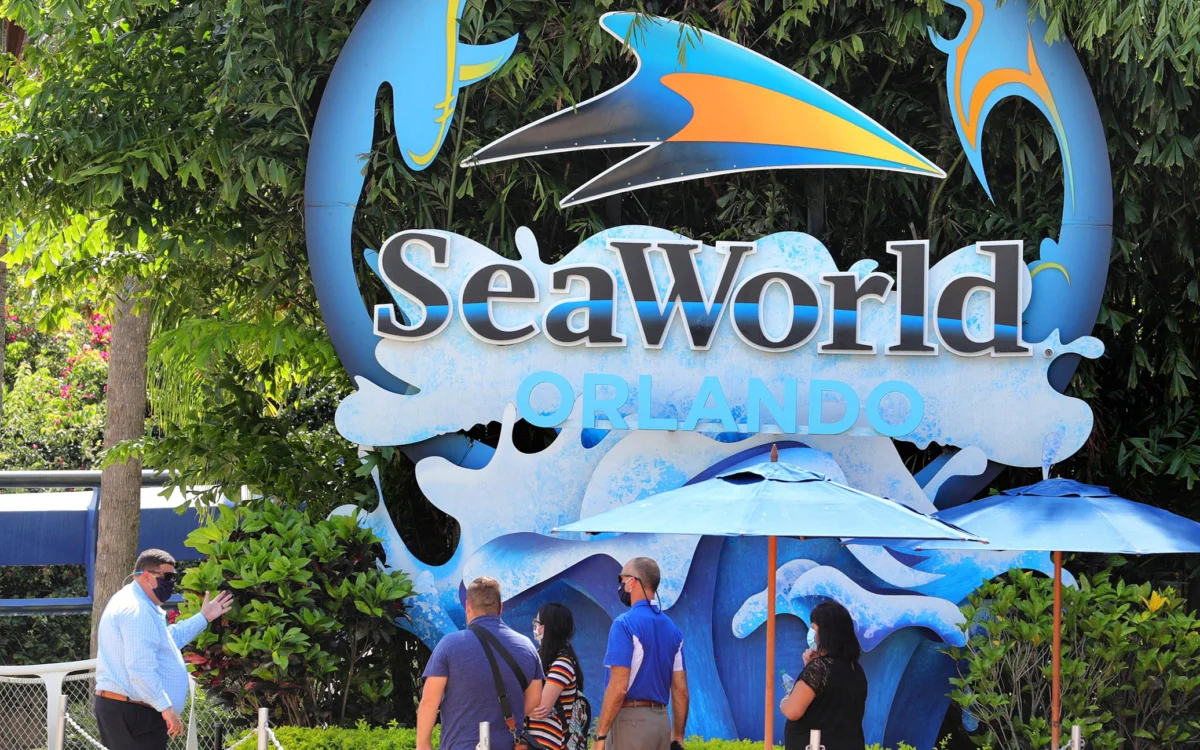
The U.S. Department of Justice has filed a lawsuit against United Parks & Resorts Inc., accusing the theme park operator of violating the Americans with Disabilities Act (ADA) by implementing policies that allegedly prevent individuals with disabilities from accessing its parks. The core of the legal challenge centers on a company-wide policy that bans rollators and other wheeled walkers equipped with seats, which the Department of Justice asserts discriminates against individuals who rely on these mobility aids. United Parks & Resorts owns and licenses a portfolio of popular theme parks, including SeaWorld, Busch Gardens, Aquatica, and Sesame Place, among others.
The lawsuit, filed in the U.S. District Court for the Middle District of Florida, contends that the ADA mandates that theme parks must permit individuals with disabilities to utilize mobility aids, such as walkers, within pedestrian areas. The Justice Department alleges that the policy prohibiting certain wheeled walkers, which reportedly took effect at some United Parks properties in November 2025, has effectively barred individuals with disabilities, including children, from entering these entertainment venues. This legal action stems from a series of investigations and complaints that have been ongoing since late last year.
A Timeline of Allegations and Investigations
The Justice Department’s engagement with United Parks & Resorts regarding this issue began in late 2025. At that time, the agency initiated an investigation into the company’s walker policy after receiving multiple complaints from individuals with disabilities. These complaints specifically highlighted the ban on rollators with seats at prominent parks such as SeaWorld Orlando, Busch Gardens Tampa Bay, and Aquatica Orlando. Guests reported that their only recourse, when their personal mobility devices were deemed non-compliant, was to rent alternative aids that were often unsuitable for their specific needs.
According to the lawsuit, around the time the investigation was launched, United Parks & Resorts made some adjustments to its policies. The ban on wheeled walkers was reportedly extended to Discovery Cove Orlando. Concurrently, policies at SeaWorld Orlando and Aquatica Orlando were updated to indicate the availability of complimentary rollators without seats or wheelchairs for guests arriving with a prohibited mobility aid. However, these alternatives were often not a satisfactory substitute for the personalized support and seating functionality provided by rollators with seats.
The Company’s Stated Rationale for the Ban
United Parks & Resorts has defended its policy by citing safety concerns. The company’s updated policies, as referenced in the lawsuit, explained the rationale behind the prohibition: “Rollators with seats can pose a safety concern when not used properly, particularly when someone is seated and the device is pushed by another person. Despite reminders and previous steps, including requiring signed waivers, we continued to see misuse and safety-related incidents. For these reasons, rollators with seats are not permitted.” The company maintains that these measures were implemented to enhance guest safety while striving to maintain accessibility.
Despite the company’s stated rationale, the Justice Department contends that the problematic policy remains in effect at SeaWorld Orlando, Aquatica Orlando, and Discovery Cove Orlando. While Busch Gardens Tampa Bay did remove the wheeled walker ban from its website this month, the broader issue persists across other properties within the United Parks portfolio.
Escalating Complaints and Specific Case Examples
The Justice Department’s investigation has continued to uncover further instances of alleged discrimination. Since the inquiry began, the agency has reportedly received additional complaints, underscoring the ongoing impact of the policy on individuals with disabilities. One particularly poignant example cited in the lawsuit involves an 8-year-old child. The child’s medical team had prescribed a pediatric posterior walker, specifically designed to support their unique needs. However, upon arrival at SeaWorld Orlando, this prescribed mobility aid was denied. Instead, the child was offered either an adult-sized rollator without a seat or a wheelchair, neither of which were deemed appropriate or functional for the child’s specific mobility requirements.
This situation highlights a critical aspect of disability accommodation: the need for individualized solutions. Mobility aids are often prescribed by healthcare professionals to address specific physical challenges and functional limitations. A blanket ban on certain types of mobility devices, without adequate and appropriate alternatives, can create significant barriers for individuals who rely on them for independence and participation in public life.
Official Statements and Legal Ramifications
U.S. Attorney Gregory W. Kehoe for the Middle District of Florida, who is leading the lawsuit, emphasized the commitment of the Justice Department to enforcing disability rights. "The ADA requires theme park companies like UPR to provide guests with equal access, regardless of ability," Kehoe stated. "This complaint reinforces our commitment to holding public accommodations in the Middle District of Florida accountable when they engage in disability discrimination."
The Justice Department is seeking a court order that would compel United Parks & Resorts to revise its mobility aid policies. Furthermore, the government is requesting that the company implement comprehensive training for its staff on the requirements of the ADA. The lawsuit also seeks civil penalties and damages to compensate individuals who have been negatively affected by the company’s alleged discriminatory practices.
United Parks & Resorts’ Response and Defense
In response to the lawsuit, United Parks & Resorts has publicly stated its disagreement with the Justice Department’s claims. The company reiterated its stance that the policy was enacted to address recurrent safety incidents stemming from the misuse of rollators with seats. "The policy at issue was implemented to address repeated safety incidents involving misuse of rollators with seats and was designed to enhance guest safety while continuing to provide accessible options for all guests," a company statement read. "We offer alternative mobility devices at no cost to ensure guests can fully enjoy our parks. We believe our approach is consistent with the requirements of the ADA and reflects our commitment to providing a safe and inclusive experience."
This statement suggests that United Parks & Resorts views its current practices as compliant with the ADA, emphasizing its provision of alternative mobility devices. The company appears to be emphasizing a balance between safety and accessibility, while the Justice Department is focusing on the alleged failure to provide equal access due to the nature of the restrictions and the inadequacy of the alternatives offered.
Broader Implications for the Theme Park Industry and Accessibility
This lawsuit against United Parks & Resorts brings to the forefront a persistent challenge in the accessibility of public accommodations: the evolving needs of individuals with disabilities and the responsibility of businesses to adapt their policies and practices accordingly. The ADA, enacted in 1990, has been a landmark piece of legislation aimed at prohibiting discrimination based on disability. However, its implementation and interpretation continue to be tested as society’s understanding of disability and the assistive technologies available evolve.
The case raises several critical questions for the broader theme park industry:
- Defining "Reasonable Accommodation": What constitutes a "reasonable accommodation" when it comes to mobility aids? The ADA requires that modifications be made unless they would fundamentally alter the nature of the goods, services, facilities, privileges, advantages, or accommodations offered. The debate here lies in whether banning certain types of mobility aids, even with alternatives, constitutes a fundamental alteration or an undue burden on the user.
- The Role of Technology and Medical Necessity: As mobility technology advances, so do the needs of individuals who use these devices. Devices like rollators with seats offer a combination of support, mobility, and rest, which can be crucial for individuals with chronic pain, fatigue, or balance issues. The lawsuit highlights the potential conflict between a business’s safety policies and the medically necessary equipment relied upon by its patrons.
- Enforcement and Compliance: The Justice Department’s proactive investigation and subsequent lawsuit underscore its commitment to enforcing the ADA. This case serves as a reminder to all public accommodations that compliance is not merely about avoiding penalties but about ensuring genuine inclusion and equal access for all individuals.
- Industry-Wide Impact: A ruling in favor of the Justice Department could set a precedent for how other theme parks and entertainment venues handle policies related to mobility aids. It could prompt a review of existing policies and potentially lead to more inclusive practices across the industry. Conversely, if United Parks & Resorts successfully defends its policy, it might embolden other businesses to implement similar restrictions, provided they can articulate a compelling safety rationale.
The legal proceedings will likely involve a detailed examination of the safety risks associated with rollators with seats, the effectiveness and appropriateness of the alternative mobility devices offered by United Parks & Resorts, and the specific needs of individuals who rely on such devices. The outcome of this lawsuit could have significant implications for how accessibility is understood and implemented within the leisure and entertainment sectors, ultimately impacting the experience of countless individuals with disabilities seeking to enjoy public spaces. The Justice Department’s action signals a firm stance on ensuring that the promise of the ADA extends to every aspect of public life, including the pursuit of recreation and entertainment.