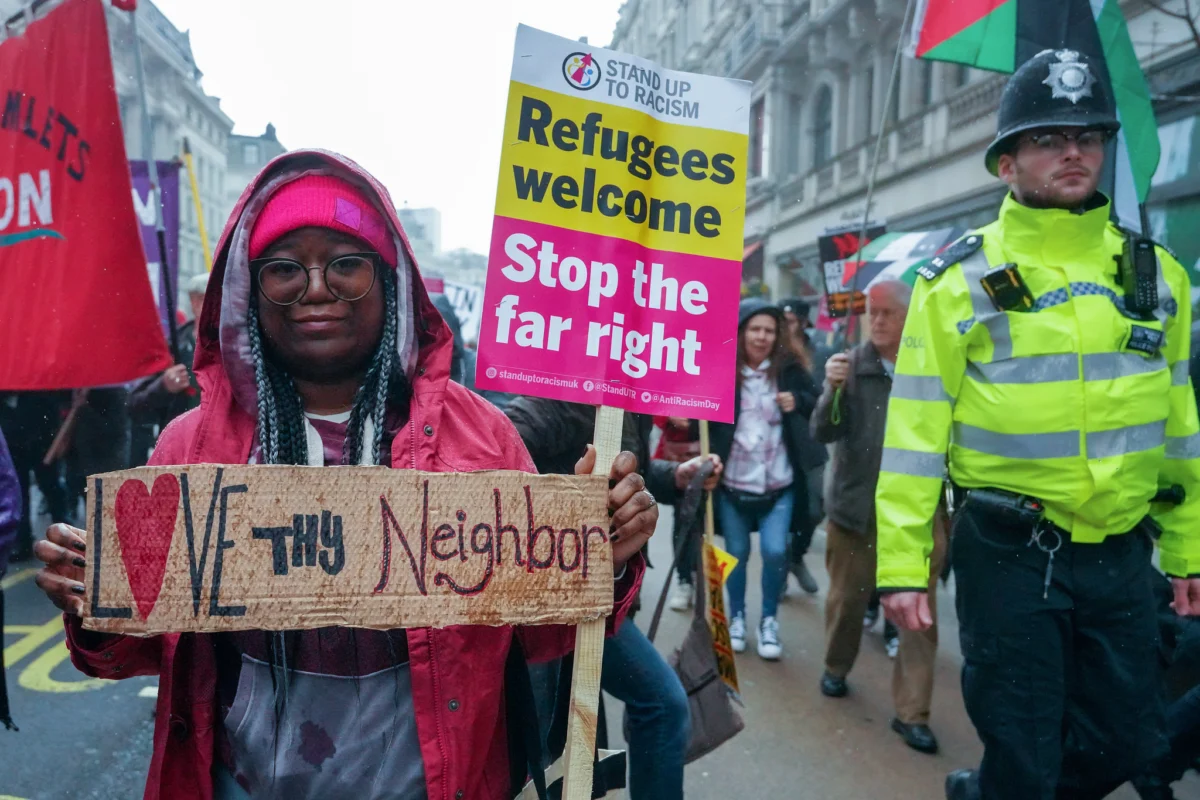
The constitutional and legal framework governing human rights in the United Kingdom is facing an unprecedented period of instability as political shifts and media-driven narratives threaten to dismantle decades of progress. As of March 2, 2026, the legislative pillars designed to protect citizens from discrimination and state overreach—primarily the Human Rights Act 1998 and the Equality Act 2010—are being subjected to intense scrutiny, with various political factions proposing significant rollbacks, replacements, or outright repeals. Legal experts and advocacy groups, led by organizations such as The Equality Trust and Liberty, are warning that these rights are not immutable guarantees but are vulnerable to the shifting tides of parliamentary sovereignty.
The current debate centers on the tension between universal protections and the political desire for greater legislative autonomy. For several years, successive administrations have explored methods to dilute the influence of international human rights standards on domestic law. This movement has gained momentum through a combination of proposed legislative reforms, the non-commencement of specific statutory duties, and a media landscape that frequently characterizes human rights as obstacles to effective governance or as "special treatments" for specific groups.
A Chronology of Legal Protections and Recent Challenges
To understand the current precarious state of UK rights, it is necessary to examine the historical trajectory of these laws. The UK’s commitment to human rights was solidified in the aftermath of World War II. Having witnessed the atrocities of the mid-20th century, British jurists were instrumental in drafting the European Convention on Human Rights (ECHR), which was signed in 1950. The convention was built on the principle of "never again," aiming to prevent the persecution of minorities and the abuse of power by the state.
The Human Rights Act 1998 (HRA) was subsequently passed to "bring rights home," allowing UK citizens to seek redress for ECHR violations in domestic courts rather than having to take every case to Strasbourg. This was followed by the Equality Act 2010, a landmark piece of legislation that consolidated over 116 separate pieces of legislation into a single Act. It provided a legal framework to protect individuals from unfair treatment and promote a fair and more equal society.
However, the last decade has seen a systematic effort to re-evaluate these protections:
- 2015–2022: Conservative governments repeatedly proposed a "British Bill of Rights" to replace the HRA. Critics argued this was a move to weaken the ability of the courts to hold the government to account, particularly regarding deportations and police powers.
- 2023–2025: Specific sections of the Equality Act remained uncommenced by the Westminster government, most notably the socio-economic duty (Section 1). Meanwhile, the Trade Union Congress (TUC) reported a "two steps forward, one step back" trend, where employment protections were simultaneously praised in rhetoric but weakened in practice through tribunal fee structures and restricted access to justice.
- 2026 (Present): Political rhetoric has escalated. The Reform UK party has officially pledged to scrap the Equality Act entirely, labeling it a "bureaucratic burden." Simultaneously, the Labour Party has signaled its intention to review the application of rulings from the European Court of Human Rights, suggesting a potential move toward a more "British-centric" interpretation of international obligations.
The Dual Pillars: Human Rights Act vs. Equality Act
The threat to UK law is bifurcated across two distinct but overlapping statutes. The Human Rights Act 1998 serves as a shield between the individual and the state. It guarantees core freedoms, including the right to life, freedom from torture, the right to a fair trial, privacy, and freedom of expression. Crucially, it mandates that all public bodies—including hospitals, police forces, and local councils—act in a way that is compatible with these rights.
In contrast, the Equality Act 2010 focuses on horizontal protections—those between individuals and private entities such as employers, landlords, and service providers. It prohibits discrimination based on nine "protected characteristics": age, disability, gender reassignment, marriage and civil partnership, pregnancy and maternity, race, religion or belief, sex, and sexual orientation.
Before the 2010 Act and its predecessors, discrimination was frequently legal and socially permissible. Employers could openly refuse to hire women of childbearing age, landlords could deny housing based on race, and service providers could exclude disabled individuals without consequence. The Equality Act transformed the UK’s social fabric by making such exclusions unlawful. However, advocates argue that the Act’s effectiveness is being eroded through "quiet regression," where underfunded enforcement bodies and narrowed judicial interpretations make it harder for victims of discrimination to seek justice.
The Socio-Economic Duty: A Tale of Three Nations
A significant point of contention in the current legislative landscape is the "socio-economic duty" contained within Section 1 of the Equality Act. This clause requires public authorities to consider how their decisions and policies can reduce the inequalities of outcome which result from socio-economic disadvantage.
While this duty was intended to be a cornerstone of the Act, it has never been formally commenced by the UK government in Westminster. Consequently, it is not legally binding on central government departments in England. In contrast, the devolved governments of Scotland and Wales have independently commenced the duty—the Fairer Scotland Duty (2018) and the socio-economic duty in Wales (2021).
Data from these regions suggests that the duty encourages more transparent decision-making regarding poverty and class-based inequality. Research by The Equality Trust indicates that the lack of commencement in Westminster represents a missed opportunity to address the UK’s widening wealth gap. Advocates argue that the refusal to activate Section 1 is a political choice that leaves the most economically vulnerable citizens without a legal mechanism to challenge policies that exacerbate poverty.
Media Influence and the Misinformation Campaign
The role of the media in shaping the debate over human rights cannot be understated. Analysis of UK media ownership reveals a high level of concentration, with approximately 90% of the national newspaper circulation controlled by just three billionaires or their parent companies. This concentration has facilitated a long-term campaign against human rights legislation.
Journalistic analysis of "clickbait" headlines over the past decade shows a pattern of misrepresenting human rights cases. Common tropes include portraying the Human Rights Act as a "criminal’s charter" or suggesting that the Equality Act provides "special privileges" rather than basic protections.
Vanessa Boon, Senior Policy and Advocacy Leader at The Equality Trust, notes that this misinformation is a "classic divide-and-rule" tactic. By framing rights as something exploited by marginalized groups at the expense of the majority, these narratives weaken public support for the very laws that protect everyone. For instance, the right to privacy or the right to a fair trial are universal; however, media focus often shifts to rare, controversial cases to justify a wholesale repeal of the underlying statute.
Supporting Data: Inequality and Public Opinion
Despite the political and media push for deregulation, statistical data highlights a continued need for robust protections. According to recent social surveys:
- Workplace Discrimination: In 2025, one in five employees reported experiencing some form of discrimination at work, with disability and age-related claims seeing a 15% increase compared to 2020.
- Economic Inequality: The UK remains one of the most unequal countries in the developed world. The top 10% of households hold 43% of all wealth, while the bottom 50% hold just 9%.
- Public Perception: Despite negative media coverage, polling suggests that 72% of the British public believe that "fundamental human rights" should be protected by law, even if they disagree with specific court rulings.
These figures suggest a disconnect between the political drive to "scrap" or "dilute" laws and the actual lived experience and desires of the electorate. The data implies that rather than needing less protection, the UK public may require more rigorous enforcement of existing laws to combat systemic inequality.
Official Responses and Global Context
The international community has expressed concern over the UK’s legislative direction. The United Nations and the Council of Europe have previously warned that replacing the Human Rights Act could undermine the UK’s global standing as a champion of the rule of law.
Domestically, civil liberties groups have drawn parallels between the UK’s situation and recent developments in the United States, where the rollback of established precedents (such as reproductive rights) has demonstrated how quickly long-standing protections can vanish. Liberty, a leading UK human rights organization, has characterized the government’s repeated attempts to restrict protest and judicial review as "worse than feared," suggesting a broader trend of executive overreach.
In response to these threats, The Equality Trust has intensified its research-led advocacy. The organization is currently focusing on three key pillars:
- Defending the Equality Act: Responding to political pledges to repeal the Act by highlighting its role in maintaining social cohesion and economic participation.
- Commencing Section 1: Lobbying for the socio-economic duty to be activated in England to ensure that poverty reduction is a statutory priority.
- Countering Misinformation: Providing fact-based analysis to correct misleading media narratives regarding human rights "loopholes."
Broader Implications of Legislative Regression
The potential repeal or weakening of the Equality Act and Human Rights Act would have far-reaching consequences for British society. Without the Human Rights Act, the primary mechanism for holding the state accountable for life-threatening failures—such as those seen in the Hillsborough disaster or the Grenfell Tower fire—would be severely compromised.
Furthermore, the removal of the Equality Act would likely lead to a fragmented legal landscape where discrimination becomes harder to prove and easier to ignore. Economically, the erosion of these rights could lead to a less productive workforce, as discriminatory practices hinder talent acquisition and retention. Socially, it risks a return to an era where exclusion based on identity was the norm rather than the exception.
As the political landscape continues to shift in 2026, the battle over the UK’s rights framework remains a defining issue of the decade. The outcome will determine whether the UK remains committed to the post-war consensus of universal dignity and legal accountability, or moves toward a model where rights are conditional and subject to the whims of the governing majority. Advocates maintain that the protection of these laws is not just a matter for lawyers and politicians, but a fundamental requirement for a stable, fair, and democratic society.