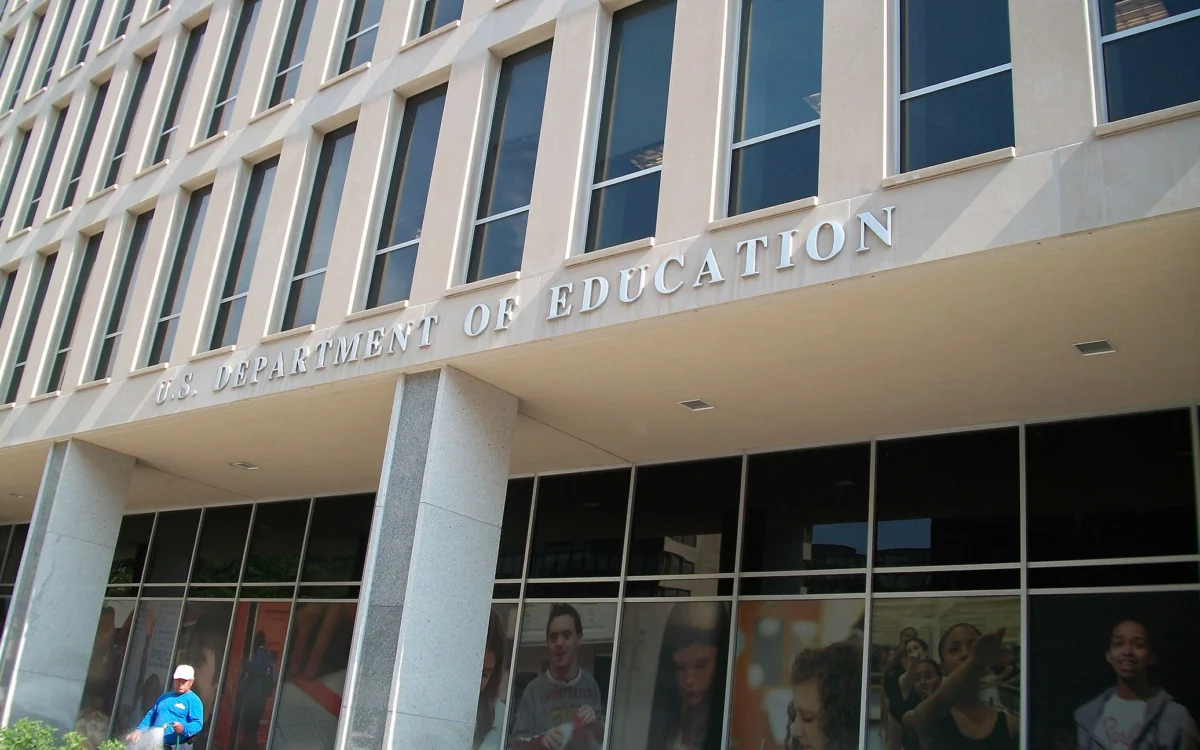
Millions of dollars annually earmarked by Congress for critical research into best practices in special education are at risk of being left unspent this year, according to a stark new analysis. The U.S. Department of Education’s Institute of Education Sciences (IES), tasked with overseeing these vital investments, has reportedly allocated only a fraction of the funds budgeted for special education research and evaluation, raising concerns among advocates and researchers about the potential loss of crucial evidence needed to support students with disabilities.
Alarming Underutilization of Special Education Research Funding
A comprehensive review of publicly available data, conducted by Knowledge Alliance, a prominent nonprofit coalition of leading education organizations, reveals a deeply concerning trend. The analysis indicates that the Trump administration has failed to allocate a staggering 84% of the money budgeted for special education research through the IES for the current fiscal year. This leaves a substantial portion of the $77 million allocated for the special education research and evaluation program uncommitted as the September 30th deadline for spending approaches. Only $11 million has been spoken for to date, placing the remaining funds in jeopardy of lapsing, a significant setback for an area of education that demands continuous innovation and evidence-based strategies.
This alarming underutilization of funds extends beyond special education. The IES, a cornerstone agency for educational research in the United States, has exhibited a general sluggishness in distributing its budget. The Knowledge Alliance analysis found that nearly 36% of the agency’s overall budget, amounting to $289 million, is also at risk of expiring at the end of September if not allocated promptly. This broad inefficiency in fund distribution by a key federal research body raises questions about the agency’s capacity to effectively manage and deploy resources intended to advance educational knowledge and practice across various domains.
The Ripple Effect of Stalled Research
The consequences of these stalled research dollars are far-reaching and deeply impactful for students with disabilities and the educators who serve them. Rachel Dinkes, President and CEO of Knowledge Alliance, highlighted the immediate repercussions, stating that long-running and essential studies tracking students with disabilities as they navigate the transitions into college and the workforce have already been forced to a halt. Such longitudinal research is invaluable for understanding the long-term outcomes of various interventions and support systems, providing critical data for policymakers and educational institutions.
Should these funding lapses materialize, the potential loss of research on how to effectively support students with disabilities in inclusive classroom settings, and other pressing issues, would leave policymakers and educators operating without the most up-to-date and evidence-based guidance. This creates a void where informed decision-making should prevail, potentially leading to the perpetuation of less effective practices and hindering progress for a vulnerable student population.
Stephanie Smith Lee, co-director of policy and advocacy at the National Down Syndrome Congress and former director of the Department of Education’s Office of Special Education Programs under President George W. Bush, underscored the gravity of the situation. "IES research is critical to identifying what truly works, for whom, and under what conditions – ensuring that limited resources are used in ways that measurably improve educational outcomes," Lee stated. "For students with disabilities, the stakes are simply too high not to rely on what works." Her perspective emphasizes the ethical imperative to utilize evidence-based approaches, especially for a population that often requires tailored and specialized support.
A Chronology of Funding and Allocation Concerns
The funding in question was originally appropriated by Congress for fiscal year 2025. A key characteristic of the IES budget, unlike many other federal agencies, is its two-year window for allocation, providing a substantial period for the distribution of funds. This year, lawmakers further bolstered support for special education research by approving an additional $93 million, which is available for use through September 2027. However, the Knowledge Alliance analysis indicates that none of this newly appropriated funding has been allocated yet, compounding concerns about the agency’s ability to utilize these resources effectively within the designated timelines.
Chad Rummel, executive director of the Council for Exceptional Children, a leading organization advocating for special education professionals, expressed profound frustration. "It is alarming that, with only five months left in a two-year spend down period for the fiscal year 2025 research dollars, there appears to be a significant amount of funding still on the table," Rummel commented. His statement highlights the shrinking window of opportunity to deploy these critical funds.
Furthermore, Rummel pointed to a discrepancy between the agency’s apparent inaction and its stated intentions. The Council for Exceptional Children is "particularly frustrated that, despite the flexibility and authority to maintain funding for special education research, the Department of Education has publicly stated that it intends to cut FY 2025 research dollars by nearly a third." This suggests a potential divergence between congressional intent and the Department’s strategic allocation decisions, raising questions about internal priorities and budgetary management.
Supporting this claim, the Education Department’s recently released budget request for IES for fiscal year 2027 reveals an agreement with the White House Office of Management and Budget (OMB) to limit spending on the Research in Special Education program to $45.3 million for fiscal year 2025, despite Congress having appropriated $64.3 million for that year. This planned reduction, even before the full allocation of the congressionally appropriated funds, is a significant point of contention for advocacy groups.
Official Response and Expert Perspectives
In response to these concerns, an Education Department spokesperson conveyed a commitment to responsible fund utilization. The spokesperson told Disability Scoop that "the department is committed to using appropriated funds to meet our statutory obligations and supporting high-quality research." While this statement expresses an intention to fulfill its duties, it does not fully address the specific criticisms regarding the slow allocation of existing funds or the proposed reduction in future spending.
The significance of the IES as a funding source for special education research cannot be overstated. Meghan Burke, a professor of special education at Vanderbilt University, emphasized its unique role. While acknowledging the existence of other funders for special education research, Burke noted that the IES is "the largest and the only one that’s focused specifically on education and disability research." This makes the agency’s performance in this area particularly crucial for advancing the field.
Burke also highlighted practical impediments to timely fund disbursement. "There were no grant competitions in special education last year," she observed. "So, unless there is an impending research grant competition with a very quick timeline for submission and reviews, it would be difficult to see how this money could be allocated and dispensed in a timely manner." The absence of active grant solicitations directly contributes to the unspent balances, creating a bottleneck in the research pipeline.
Broader Implications for Educational Innovation
The inability to allocate these funds has direct consequences for the types of research that can be conducted. Professor Burke pointed out that without adequate and timely funding, researchers are unable to explore pressing issues such as the burgeoning use of artificial intelligence (AI) in special education, the effectiveness of different school choice programs for students with disabilities, and the complex dynamics of parent involvement in special education decision-making. These are not theoretical concerns but rather critical areas where evidence-based insights are urgently needed to improve educational outcomes and ensure equitable opportunities for all students.
"To ensure that programs are effectively serving students with disabilities, research is paramount," Burke concluded, reinforcing the fundamental importance of sustained and accessible funding for special education research. The potential loss of these millions of dollars represents not just a fiscal inefficiency but a tangible threat to the advancement of knowledge that underpins effective support for millions of students nationwide. The coming weeks will be critical in determining whether these vital research funds can be redirected and utilized before they are lost, a prospect that weighs heavily on the minds of those dedicated to improving the educational lives of students with disabilities.