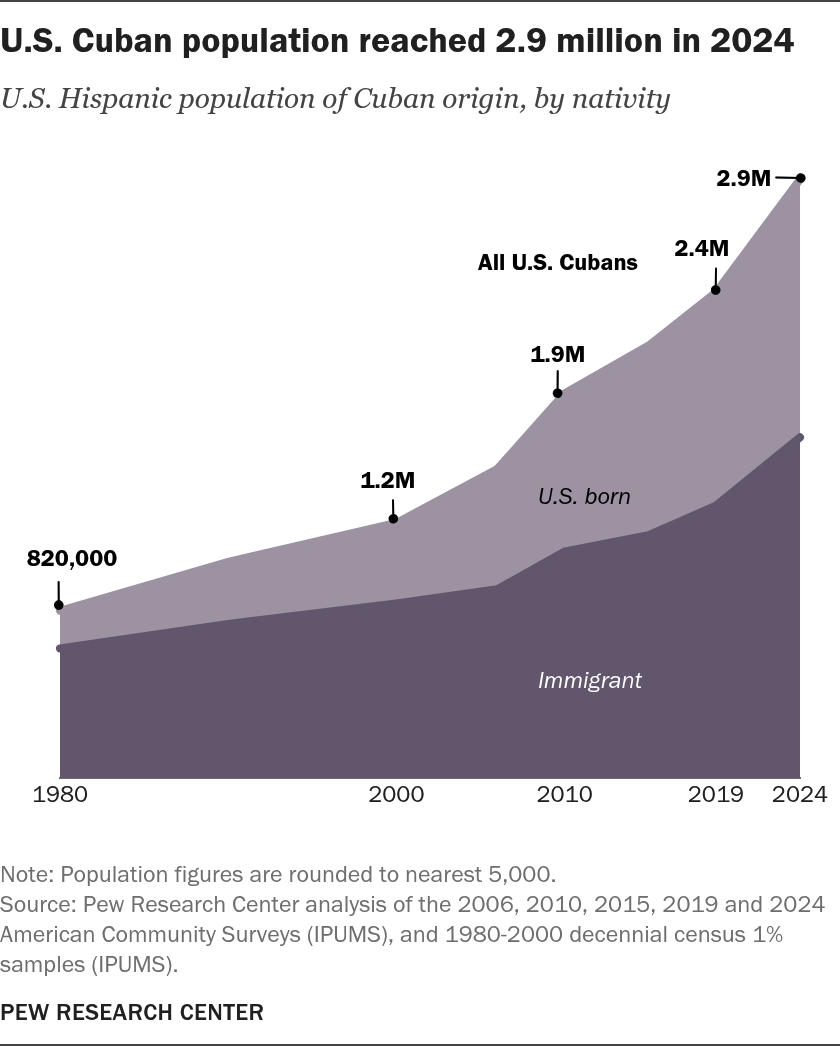
The intricate relationship between Cuba and the United States is a narrative woven through centuries of history, marked by shared colonial roots, waves of migration, and evolving political landscapes. This enduring connection has shaped a vibrant Cuban American community within the United States, a demographic tapestry rich with unique experiences and significant contributions. As of 2024, an estimated 2.9 million individuals of Cuban origin reside in the U.S., representing a substantial increase of 23% since 2019, according to a Pew Research Center analysis of U.S. Census Bureau data. This growth trajectory outpaces that of major Hispanic groups like Mexicans and Puerto Ricans, highlighting the dynamic nature of Cuban immigration.
Historical Roots and Early Migration Waves
The historical entanglement of Cuba and the U.S. predates the very existence of the United States as a nation. Both Cuba and Florida were integral parts of the Spanish colonial empire in the 1500s, laying a foundational, albeit distant, link. Over the subsequent centuries, political upheavals and economic disparities on the island have catalyzed significant migratory flows to the U.S. The most transformative period began with the Cuban Revolution in 1959, which ushered in an era of profound societal and political change and triggered a substantial exodus of Cubans seeking new opportunities and freedoms.
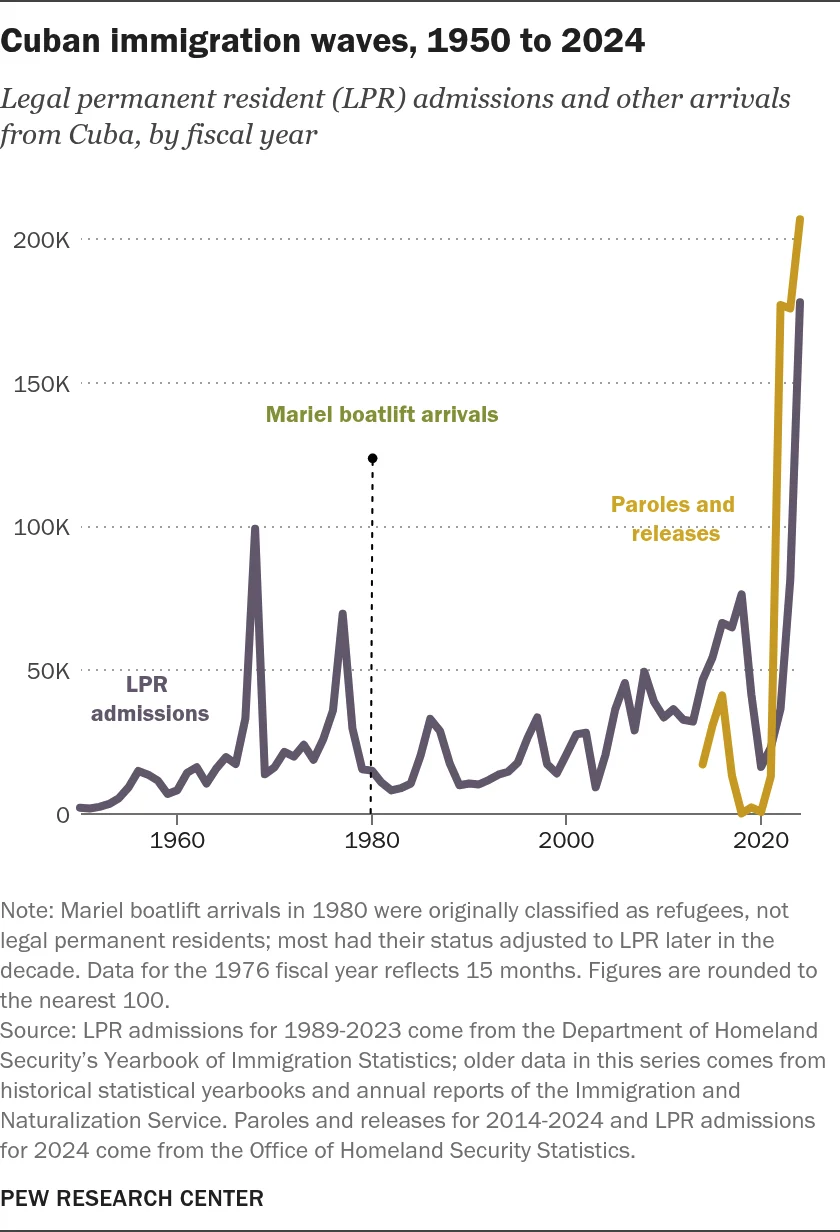
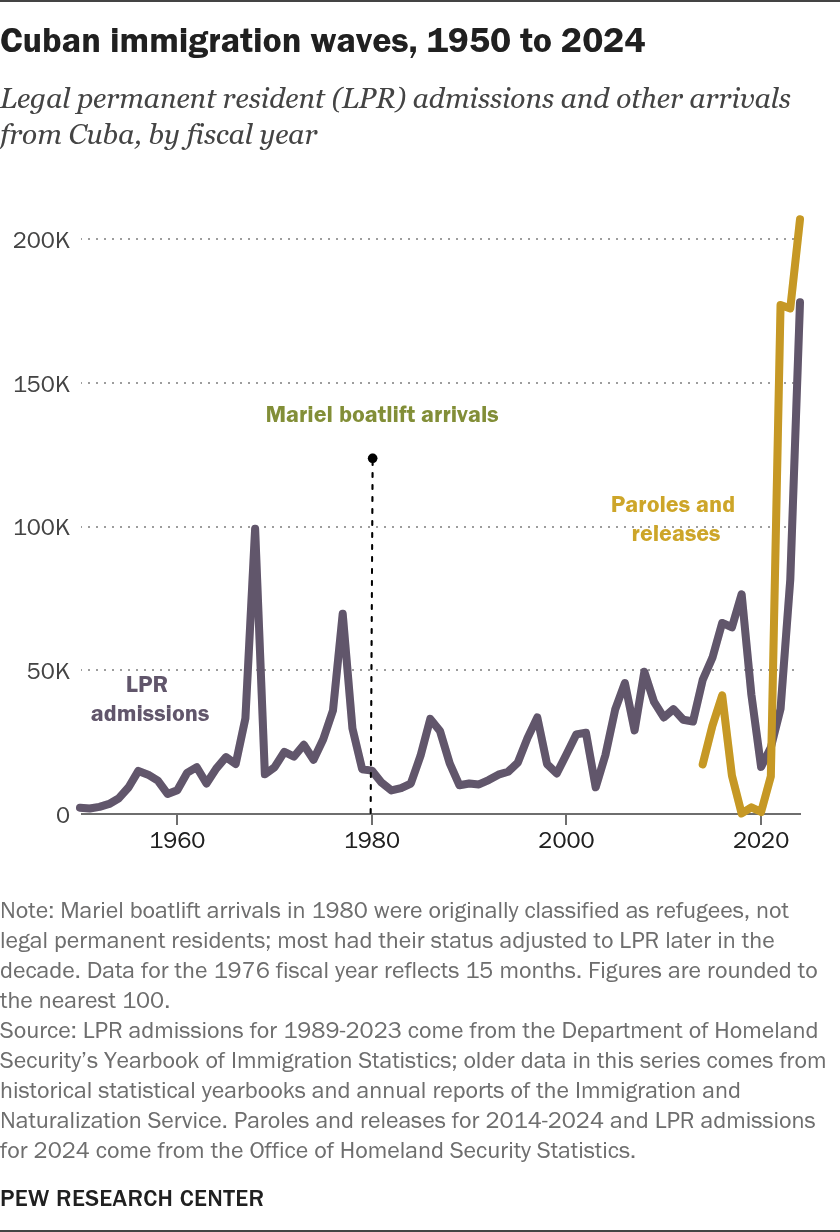
The initial wave of Cuban migration in the 1960s saw a quarter-million individuals arrive in the U.S., many of whom were welcomed as refugees. This was followed by another substantial influx of approximately 250,000 people in the 1970s. These early arrivals often settled in Florida, particularly in Miami, laying the groundwork for the robust Cuban American communities that exist today.
The Mariel Boatlift and Shifting Immigration Policies
A pivotal moment in Cuban-American immigration history was the Mariel boatlift in 1980. Over a period of several months, an estimated 125,000 Cubans departed the island, many in a large-scale exodus prompted by political unrest and economic hardship. This event significantly reshaped the demographic landscape of Cuban Americans and underscored the complex relationship between the two nations, often influenced by Cold War dynamics.

U.S. immigration policy toward Cubans has undergone considerable evolution over the past seven decades. Initially, a significant portion of Cuban arrivals were admitted legally, often under refugee status, reflecting a response to the political climate in Cuba. This policy shifted with the implementation of the "wet foot, dry foot" policy, which allowed Cubans who reached U.S. soil without visas to remain and pursue legal residency. This policy, a hallmark of U.S.-Cuba relations during a period of tentative normalization, was ended by President Barack Obama in January 2017 as part of his administration’s broader initiative to re-establish diplomatic ties with Cuba. Since its termination, Cubans entering the U.S. have largely been subject to the same immigration regulations as other nationalities.
The Rise of Unauthorized Immigration and Policy Changes
The termination of the "wet foot, dry foot" policy, coupled with subsequent policy shifts, has led to a notable increase in the number of unauthorized Cuban immigrants in the U.S. Prior to 2017, the proportion of unauthorized Cuban immigrants was virtually non-existent, a direct consequence of the favorable immigration pathways available. However, recent data from the Pew Research Center indicates a dramatic change. As of July 2023, an estimated 475,000 unauthorized Cuban immigrants were residing in the U.S. Furthermore, preliminary figures suggest that at least an additional 250,000 Cubans entered the country between July 2023 and the end of 2024.
The Biden administration introduced humanitarian parole programs, such as the CHNV (Cuba, Nicaragua, Haiti, Venezuela) parole program, which offered a pathway for individuals from these nations to live and work legally in the U.S. These programs, alongside special parole and release policies implemented at the southwestern border, provided temporary protection from deportation for many unauthorized Cuban immigrants. However, in 2025, the Trump administration announced the cancellation of the CHNV program and moved to terminate or alter other programs that had offered temporary protections. These policy adjustments have significant implications for the legal status and future of many Cuban immigrants in the United States.
Demographic Snapshot: Population Growth and Distribution
The Cuban American population in the U.S. is not only growing but also diversifying. As of 2024, the total number of people of Cuban origin stands at 2.9 million, marking a significant 23% increase since 2019. This rate of growth is notably faster than that of Mexicans (5%) and Puerto Ricans (5%) over the same period. However, it trails behind the growth rates of some other Latin American origin groups, such as Venezuelans (119%), Colombians (43%), and Hondurans (37%), indicating a complex interplay of factors driving migration from different regions.
A substantial portion of the Cuban population in the U.S. comprises immigrants. In 2024, 57% of Cubans in the U.S., or approximately 1.7 million individuals, were foreign-born. This high proportion reflects the continuous arrival of immigrants over several decades, with a marked surge in recent years.
Geographically, Florida remains the undisputed epicenter of the Cuban American population. An overwhelming 61% of all Cubans in the U.S., translating to roughly 1.8 million individuals, reside in the Sunshine State. This concentration is unparalleled among other Hispanic origin groups, underscoring the deep-rooted historical and cultural ties between Cuba and Florida. Texas follows with 8% of the Cuban population (225,000), while California, New Jersey, and New York each host around 3% of Cubans in the U.S.
The concentration is even more pronounced in metropolitan areas. The Miami metropolitan area is home to a remarkable 42% of all Cubans in the U.S. (1.2 million people). The Tampa Bay area also hosts a significant Cuban population, with 177,000 residents. Beyond Florida, the New York City and Houston metro areas are home to the largest Cuban populations, with 153,000 and 107,000 residents, respectively. Notably, 94% of U.S. Cubans live in metropolitan areas, a considerably higher share than the overall U.S. population (79%), suggesting a strong urban orientation among this demographic.
Age, Education, and Political Leanings
Cuban Americans represent the oldest Hispanic origin group in the United States, with a median age of 38.2 years. This figure is identical to the median age of the overall U.S. population but significantly higher than the median age for all Hispanics (30.2 years). This age demographic is attributed to the arrival of older immigrants from Cuba and a comparatively lower fertility rate among Cuban Americans.
In terms of educational attainment, Cubans as a whole exhibit a nuanced profile. While they possess somewhat less education than the general American population, this varies significantly based on nativity. Foreign-born Cubans are less likely to hold a bachelor’s degree or higher compared to the overall U.S. population. Conversely, U.S.-born Cubans demonstrate a higher level of educational achievement, with 45.4% holding a bachelor’s degree or higher, surpassing both the U.S. population average (36.9%) and that of all Hispanics (21.6%). For Cuban immigrants, 27.2% hold a bachelor’s degree or higher, indicating a strong emphasis on education within the community, particularly among those born in the United States.
Historically, Cuban Americans have shown a greater propensity to identify with the Republican Party compared to other Hispanic groups. However, this political alignment has seen shifts over time, with periods of softening support for the GOP. A Pew Research Center survey conducted in October 2025 revealed that Cuban Americans were more likely than Hispanics overall to express approval of the Trump administration’s immigration policies (40% versus 21%). Despite this, they were similarly likely to express concerns about deportation, with 47% of Cuban Americans and 52% of Hispanics overall worrying about deportation for themselves or a close relative. This suggests a complex political landscape where economic and immigration concerns intersect with broader anxieties about personal security and family well-being.
Enduring Cultural Influence and Future Outlook
The Cuban American community has profoundly enriched the cultural fabric of the United States, particularly in areas such as cuisine, music, art, and literature. Their contributions have not only shaped the cultural landscape of cities like Miami but have also gained national recognition, fostering a greater understanding and appreciation of Cuban heritage.
Looking ahead, the Cuban American population is poised to remain a significant and influential demographic in the United States. Continued migration, coupled with natural growth, will likely ensure its sustained presence and evolving impact. The community’s resilience, adaptability, and strong sense of cultural identity will continue to be defining characteristics as it navigates the complexities of contemporary American society and its ongoing relationship with Cuba. The data underscores a dynamic community, deeply rooted in its history yet continuously shaped by new arrivals and evolving socio-political realities.