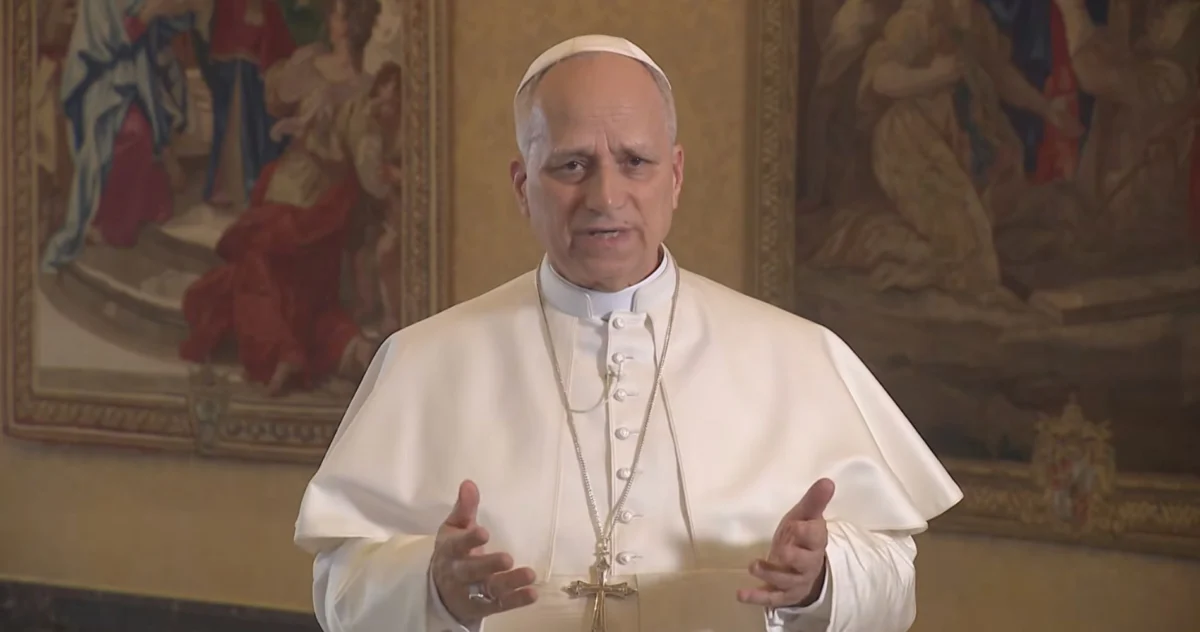
Vatican City — Pope Leo XIV, in a significant reaffirmation of the Catholic Church’s unwavering commitment to human dignity and the sanctity of life, recently marked the 15th anniversary of Illinois’ historic abolition of the death penalty with a powerful video message. Addressing advocates from across the United States and around the globe, His Holiness offered fervent support to those working tirelessly to eradicate capital punishment, echoing the Church’s evolving yet firm stance against the practice. The Pontiff’s message, delivered on April 24, underscored the moral imperative to recognize the inherent dignity of every individual, irrespective of their actions, and to pursue justice through means that uphold the possibility of redemption.
In his address, Pope Leo XIV articulated a profound theological and ethical foundation for the Church’s position. "I pray that your efforts will lead to a greater acknowledgment of the dignity of every person," the pope stated, urging further inspiration for "others to work for the same just cause." He emphasized that the Church has consistently taught the sacredness of human life, asserting that "only when a society safeguards the sanctity of human life will it flourish and prosper." This pronouncement serves not merely as a moral guideline but as a vision for a just and compassionate society where life is revered at every stage and under all circumstances.
A central tenet of the Pope’s message was the conviction that "the dignity of the person is not lost even after very serious crimes are committed." This principle challenges retributive justice models by asserting that even those who have committed grave offenses retain an intrinsic worth bestowed by their creator. Pope Leo XIV further explained that in contemporary society, with "effective systems of detention that protect citizens while preserving the possibility of redemption for those who are guilty," the Catechism of the Catholic Church now instructs that "the common good can be safeguarded and the requirements of justice can be met without recourse to capital punishment." This pragmatic and moral assessment highlights the availability of alternative, non-lethal means to ensure public safety while honoring human life.
Drawing directly from the landmark revision of the Catechism under Pope Francis, Pope Leo XIV declared, "Consequently, the Church teaches that ‘the death penalty is inadmissible because it is an attack on the inviolability and dignity of the person.’" This definitive statement cements the modern Catholic Church’s absolute rejection of capital punishment, moving beyond earlier allowances for its use in extremely rare circumstances where public safety could not otherwise be ensured. The use of the term "inadmissible" signifies a fundamental moral opposition, classifying the death penalty as incompatible with Christian teaching.
A Consistent Papal Voice on Justice and Dignity
The April 24 video message was not an isolated pronouncement but part of a consistent pattern of papal engagement with issues of justice and incarceration. Just two days prior, on April 22, Pope Leo XIV had spoken directly to inmates at Bata Prison in Equatorial Guinea. Amidst a rainstorm, a poignant symbol of renewal, he underscored the necessity for the administration of justice to "always promote the dignity and potential of every person." He offered a message of hope and transformation, reminding the incarcerated individuals, and by extension, society at large, that "life is not defined solely by one’s mistakes, which are often the result of difficult and complex circumstances. There is always the possibility to start over, learn and become a new person." These combined messages paint a comprehensive picture of a pontificate dedicated to advocating for a more humane and restorative approach to justice worldwide.
The Catholic Church’s Evolving Stance: A Historical Perspective
The Catholic Church’s unequivocal condemnation of the death penalty, as articulated by Pope Leo XIV, represents the culmination of a significant evolution in its moral theology regarding capital punishment. Historically, the Church, like many societies, accepted the death penalty as a legitimate, albeit extreme, measure for serious crimes, often citing Old Testament passages or the need for societal self-defense. St. Thomas Aquinas, for instance, in his Summa Theologica, affirmed the state’s right to execute criminals as a means to protect the common good, likening it to a physician amputating a diseased limb to save the body.
However, the latter half of the 20th century witnessed a profound re-evaluation of this stance, driven by a deeper understanding of human dignity, the sacredness of all life, and the practical realities of modern justice systems. Pope John Paul II’s encyclical Evangelium Vitae (The Gospel of Life) in 1995 marked a pivotal moment. While not entirely ruling out the death penalty, he argued that its use should be "very rare, if not practically non-existent," primarily reserved for cases where the protection of society could not otherwise be achieved. He emphasized that modern penal systems offered sufficient means to punish criminals and ensure public safety without resorting to execution.
This trajectory continued with Pope Benedict XVI, who consistently called for the abolition of the death penalty and encouraged Catholic leaders to work towards this goal. The most definitive shift, however, came in 2018 under Pope Francis, who ordered a revision of paragraph 2267 of the Catechism of the Catholic Church. The updated text now states: "Recourse to the death penalty on the part of legitimate authority, following a fair trial, was long considered an appropriate response to the gravity of certain crimes and an acceptable, albeit extreme, means of safeguarding the common good. Today, however, in the light of the Gospel, it is increasingly understood that the death penalty is inadmissible because it is an attack on the inviolability and dignity of the person." This revision cemented the Church’s position, establishing a moral imperative against capital punishment rooted in the inherent dignity of human life. Pope Leo XIV’s recent statements serve to reinforce and actively promote this updated teaching globally.
Illinois’ Landmark Decision: A Beacon for Abolition
The 15th anniversary of Illinois’ abolition of the death penalty, celebrated by Pope Leo XIV, holds particular significance given the state’s history. Illinois became the 16th U.S. state to ban capital punishment when then-Governor Pat Quinn signed the abolition bill into law on March 9, 2011, effective July 1, 2011. This decision was not made lightly but was the culmination of a decades-long struggle marked by profound legal and moral challenges.
Prior to abolition, Illinois had a deeply troubled history with the death penalty. Between 1977 and 2003, the state executed 12 people, yet it also saw 13 death row inmates exonerated – more than any other state at the time. These exonerations, often the result of investigative journalism by Northwestern University students and legal aid, exposed systemic flaws, including false confessions, prosecutorial misconduct, and unreliable forensic evidence. The alarming number of wrongful convictions led Governor George Ryan to declare a moratorium on executions in 2000, calling the state’s capital punishment system "fraught with error." He later commuted the sentences of all 167 death row inmates to life imprisonment in 2003, citing his inability to guarantee that innocent people would not be executed.
The moratorium provided a crucial period for reflection and study. A commission appointed by Governor Ryan recommended 85 reforms, but even with these, many legislators and advocates concluded that the system remained inherently flawed and irreversible. Organizations like the Illinois Coalition to Abolish the Death Penalty, the American Civil Liberties Union (ACLU) of Illinois, and the Catholic Conference of Illinois played instrumental roles in building bipartisan support for abolition. Their efforts, combined with the moral authority of the Catholic Church and the stark reality of past injustices, ultimately led to the legislative repeal. Illinois’ decision sent a powerful message nationally, demonstrating that a state with a history of capital punishment could choose to embrace a more just and humane system.
The Global and National Landscape of Capital Punishment
Pope Leo XIV’s call for global abolition resonates within a complex international and national landscape. Globally, the trend toward abolition is clear. According to Amnesty International, as of the end of 2023, 112 countries had abolished the death penalty for all crimes, and 144 countries had abolished it in law or practice. This means a significant majority of the world’s nations no longer use capital punishment. However, a minority of retentionist countries, including China, Iran, Saudi Arabia, and the United States, continue to carry out executions.
In the United States, the death penalty remains a contentious issue. While 23 states, along with the District of Columbia, have abolished capital punishment, 27 states retain it. However, within these retentionist states, many have not carried out an execution in over a decade, with several under gubernatorial moratoriums. The number of executions and new death sentences has steadily declined since the late 1990s. In 2023, 24 people were executed across five states, and 21 new death sentences were imposed, marking a continued low trend compared to historical peaks. Public support for the death penalty has also waned, with polls consistently showing a majority of Americans now favoring life imprisonment without parole over execution for convicted murderers.
Arguments against the death penalty frequently cited by abolitionists, and increasingly acknowledged by legal and religious authorities, include:
- Irreversibility: The risk of executing an innocent person is ever-present, and such a mistake can never be undone. Since 1973, over 190 individuals sentenced to death in the U.S. have been exonerated.
- Racial and Socioeconomic Bias: Studies consistently show that the death penalty is disproportionately applied based on race, particularly against Black and Hispanic defendants, and is heavily influenced by the victim’s race. Furthermore, access to competent legal counsel often correlates with socioeconomic status, disadvantaging indigent defendants.
- Cost: Contrary to popular belief, capital cases are significantly more expensive than life imprisonment due to lengthy appeals processes, specialized legal teams, and heightened security.
- Lack of Deterrence: Numerous studies have found no credible evidence that the death penalty deters crime more effectively than life imprisonment.
- Cruel, Inhuman, and Degrading Punishment: Many international bodies and human rights organizations view capital punishment as a violation of fundamental human rights.
Reactions and Advocacy: A Unified Front
Pope Leo XIV’s unequivocal statement has been met with strong affirmation from abolitionist groups, particularly those with Catholic affiliations. The Catholic Mobilizing Network to End the Death Penalty (CMN), a leading organization working to end capital punishment in the U.S., immediately lauded the Pope’s message. Krisanne Vaillancourt Murphy, Executive Director of CMN, commented, "Pope Leo XIV’s words are a powerful reminder of our shared responsibility to uphold the dignity of every human life. His message reinforces the consistent teaching of the Church and invigorates our efforts to bring an end to this unjust practice, both in the U.S. and globally." Such organizations view papal pronouncements as crucial moral guidance that mobilizes Catholics to engage in advocacy and challenges lawmakers to reconsider existing capital punishment laws.
Secular human rights and legal advocacy groups also welcomed the Pope’s intervention. Representatives from the ACLU and Amnesty International USA frequently cite the moral authority of religious leaders, including the Pope, as a significant factor in shifting public opinion and legislative action. "When a global moral leader like Pope Leo XIV speaks with such clarity, it adds immense weight to the abolitionist cause," stated a spokesperson for the Death Penalty Information Center. "His emphasis on redemption and dignity provides a compelling counter-narrative to arguments for retribution."
In Illinois, individuals who spearheaded the abolition efforts expressed renewed pride and commitment. Former Governor Pat Quinn, reflecting on the 15-year milestone, noted, "Illinois demonstrated that it is possible to move beyond the death penalty, upholding justice without resorting to state-sanctioned killing. Pope Leo XIV’s message is a testament to the enduring moral rightness of that decision and an encouragement for other states to follow suit."
Implications and the Path Forward
Pope Leo XIV’s latest message holds significant implications for the ongoing debate surrounding capital punishment.
- Reinforcement of Catholic Teaching: It solidifies the Church’s modern teaching, making it unequivocally clear to Catholics worldwide that the death penalty is morally unacceptable. This provides a clear directive for Catholic politicians, judges, and citizens to advocate for and implement policies that align with this teaching.
- Global Abolition Movement: The Pope’s statements lend powerful moral support to international efforts to abolish the death penalty. The Vatican’s diplomatic efforts, combined with the Pope’s moral authority, can influence countries still employing capital punishment, especially those with significant Catholic populations.
- Criminal Justice Reform: By emphasizing redemption, rehabilitation, and the inherent dignity of even those who have committed serious crimes, Pope Leo XIV’s message encourages a broader re-evaluation of criminal justice systems. It advocates for restorative justice approaches that focus on healing, accountability, and the reintegration of offenders into society, rather than purely punitive measures.
- Dialogue in Retentionist States: While the impact may not be immediate, papal pronouncements contribute to the ongoing public discourse in U.S. states and other countries that still retain the death penalty. They provide a moral framework for arguments against capital punishment, potentially swaying public opinion and influencing legislative debates over time.
- Ethical Leadership: In an increasingly polarized world, the Pope’s consistent call for human dignity and the sanctity of life serves as a powerful example of ethical leadership, urging societies to aspire to higher moral standards in their administration of justice.
As the world grapples with complex questions of crime, punishment, and justice, Pope Leo XIV’s message serves as a beacon, reminding humanity of the profound moral responsibility to uphold the dignity of every person. The commemoration of Illinois’ 15-year abolition milestone is not just a look back at a past achievement, but a forward-looking call to action, inspiring continued efforts towards a future where capital punishment is universally relegated to the annals of history, and justice is administered with unwavering respect for the sanctity of all human life. The Church, under Pope Leo XIV, remains steadfast in its conviction that a truly just society is one that cherishes and protects life, offering hope and the possibility of redemption to all.