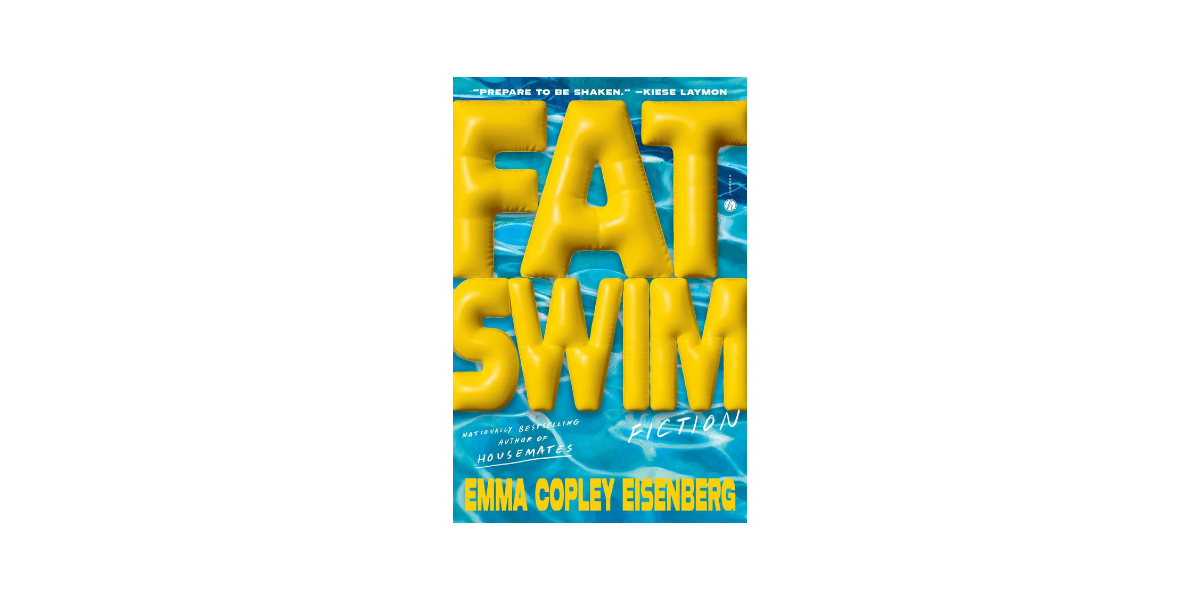
The publication of Fat Swim, a collection of ten interconnected short stories by Emma Copley Eisenberg, marks a significant addition to the landscape of contemporary American literary fiction. Published by Hachette, the collection navigates the complexities of embodiment, queer identity, and the social fabric of Philadelphia and its surrounding regions. Eisenberg, an acclaimed author known for her investigative non-fiction and previous novels, utilizes this short story format to examine the lives of characters who are often relegated to the periphery of traditional narratives. The collection’s release coincides with a growing literary movement that seeks to deconstruct societal stigmas surrounding fatness and the physical form, positioning the body not as a problem to be solved, but as a lived reality to be explored.
Narrative Structure and the Centrality of the Body
The collection opens with the titular story, "Fat Swim," which introduces Alice, an eight-year-old living in West Philadelphia with her father. Alice’s narrative serves as a foundational exploration of the "long hard work of having a body." The story centers on her burgeoning awareness of her own fatness and her transformative encounter with a group of fat women who frequent a local public pool. This specific setting—the public pool—acts as a stage for bodily visibility and communal acceptance, contrasting sharply with the isolation Alice feels within her own home and neighborhood.
Eisenberg’s prose focuses on the emotional realities of her characters, glimpsed through the windows, stoops, and urban landscapes of Philadelphia. The relationship between Alice and her father is characterized by a shared sense of loneliness and shifting boundaries. As a functionally single parent, the father attempts to protect Alice, yet the narrative suggests that children are inherently tied to their parents’ emotional states, much like they are tied to their own physical forms. This "lived bodily reality" is a recurring motif throughout the ten tales, distinguishing the work from more abstract contemporary fiction.
Geographic Context and the Urban Microcosm
While the majority of the stories are rooted in Philadelphia, the collection expands its geographic scope to include the Jersey Shore, Central Pennsylvania, and even Paris. However, Philadelphia remains the emotional and structural anchor of the book. The city, with a population of approximately 1.6 million and a metropolitan area exceeding 6.3 million, is rendered not as a monolithic entity but as a collection of distinct neighborhoods that function as townships.
The narrative highlights the specificities of West Philadelphia, utilizing local landmarks and cultural touchstones to ground the stories in reality. For example, "Ray’s Happy Birthday Bar" and the presence of invasive spotted lanternflies in the story "Lanternfly" provide a sense of place that is uniquely Pennsylvanian. This focus on the microcosm allows Eisenberg to explore how individual identity is shaped by immediate community and physical environment. The characters are depicted as "recognizable persons out of many," navigating a web of social connections that are both supportive and suffocating.
Chronology of the Author’s Work and Literary Trajectory
The release of Fat Swim follows a productive period for Emma Copley Eisenberg. Her literary career gained significant momentum with the 2020 publication of The Third Rainbow Girl: The Long Life of a Double Murder in Appalachia, which was a finalist for the Edgar Award and the Lambda Literary Award. In early 2024, she published her debut novel, Housemates, which also explored themes of queer community and the American landscape.
Fat Swim represents a return to the short story form, a medium Eisenberg has refined through her participation in the American MFA (Master of Fine Arts) system. The collection reflects her deep ties to the Philadelphia literary scene; she is a co-founder of Blue Stoop, a local organization dedicated to supporting writers and readers. This background informs the collection’s portrayal of academia and the queer literary community, particularly in stories like "The Dan Grave Situation," which examines the pervasiveness of alcohol culture and loneliness within MFA programs.
Detailed Analysis of Key Stories and Recurring Characters
Eisenberg employs a "linked" structure, where characters recur across different stories, providing a multi-faceted view of their lives.
- "The Dan Grave Situation" and "Mama": These stories feature Cara, a character who navigates the intersections of queer solidarity and the challenges of academia. "Mama" provides a deeper look into Cara’s family dynamics, presenting a mother-daughter relationship that is both miraculous and unsettling.
- "Beauty": This story tackles the physical reality of the fat body with clinical yet empathetic detail. It addresses the "consequences" of weight gain and the reckoning required when a person’s body shifts from a socially "acceptable" thinness to fatness.
- "Lanternfly": Set against the backdrop of an environmental nuisance, this story explores the uncomfortable nature of desire. It posits that desire is particularly complex in a body that society does not typically deem desirable.
- "I Want a Friend": Set in Paris, this narrative introduces the concept of the "other self"—the persistent, socially programmed internal monologue that many fat individuals experience. This voice is described as an "air conditioning unit that constantly runs," representing the mental labor required to exist in a body that is constantly scrutinized.
- "Swiffer Girl": This story brings back Alice’s father, casting the events of the opening story in a new, more complex light. It addresses the societal misconception that fat people are unaware of their own size until informed by a thinner person.
Statistical and Societal Context of Body Image
The themes explored in Fat Swim are supported by broader societal data regarding body image and the impact of parental influence. According to the National Eating Disorders Association (NEDA), approximately 40% to 60% of elementary school girls (ages 6-12) are concerned about their weight or about becoming "too fat." This statistic underscores the realism of Alice’s character in the opening story. Furthermore, research consistently shows that parental attitudes toward weight and food can significantly impact a child’s long-term relationship with their body.
In the context of contemporary digital culture, the collection addresses the "endless scroll" of social media platforms like Instagram and Meta. These platforms often promote a singular, thin ideal that Eisenberg’s characters must contend with. The narrative suggests that modern society encourages a disconnection from "the matter of our flesh," favoring an emaciated or sanitized version of the human form. By centering fat bodies that are healthy, sexual, and flawed, Eisenberg provides a counter-narrative to the prevailing digital aesthetic.
Critical Reception and Metatextual Analysis
Early critical responses to Fat Swim have highlighted its daring narrative experiments. One of the collection’s most discussed features is the recurring "I" narrator, who appears in various stories to act as an "interstitial" or connective tissue. This narrator orbits the other characters, offering a perspective that is both intimate and detached.
Some critics have characterized the collection’s conclusion as a "ponderous metatextual coda," suggesting it favors abstract reflection over character depth. However, proponents of the work argue that this approach is essential to the book’s mission. The shifting perspectives allow the reader to "embody a body" that is not their own, facilitating a deeper empathy and understanding of the transitory nature of life. The collection does not shy away from "filth" or the messiness of human desire, but it also does not linger unnecessarily, maintaining a forward momentum driven by the recurring narrators.
Broader Impact and Implications for Contemporary Literature
Fat Swim contributes to a broader literary shift toward "body neutrality" and the normalization of fatness in fiction. Unlike older tropes that often portrayed fat characters as comic relief or tragic figures in need of a transformation, Eisenberg’s characters are afforded full humanity. They contend with money, space, time, pleasure, and pain, just as any other person would.
The collection’s emphasis on "in-betweenness" and the transitory nature of human encounters reflects a post-pandemic sensibility where the fragility of life and the importance of community have become more pronounced. By documenting the "microcosms" of Philadelphia, Eisenberg captures a specific moment in American social history, characterized by a tension between digital disconnection and the undeniable reality of the physical self.
Ultimately, Fat Swim is framed as a celebration of looking closely and observing the human form without prejudice. The collection asserts that while fatness is a central theme, the underlying subject is the universal experience of "having this thing we call a body." This universal appeal, combined with the specific cultural and geographic detailing, positions the book as a significant work for both local Philadelphia readers and a broader national audience interested in the evolution of American short fiction.