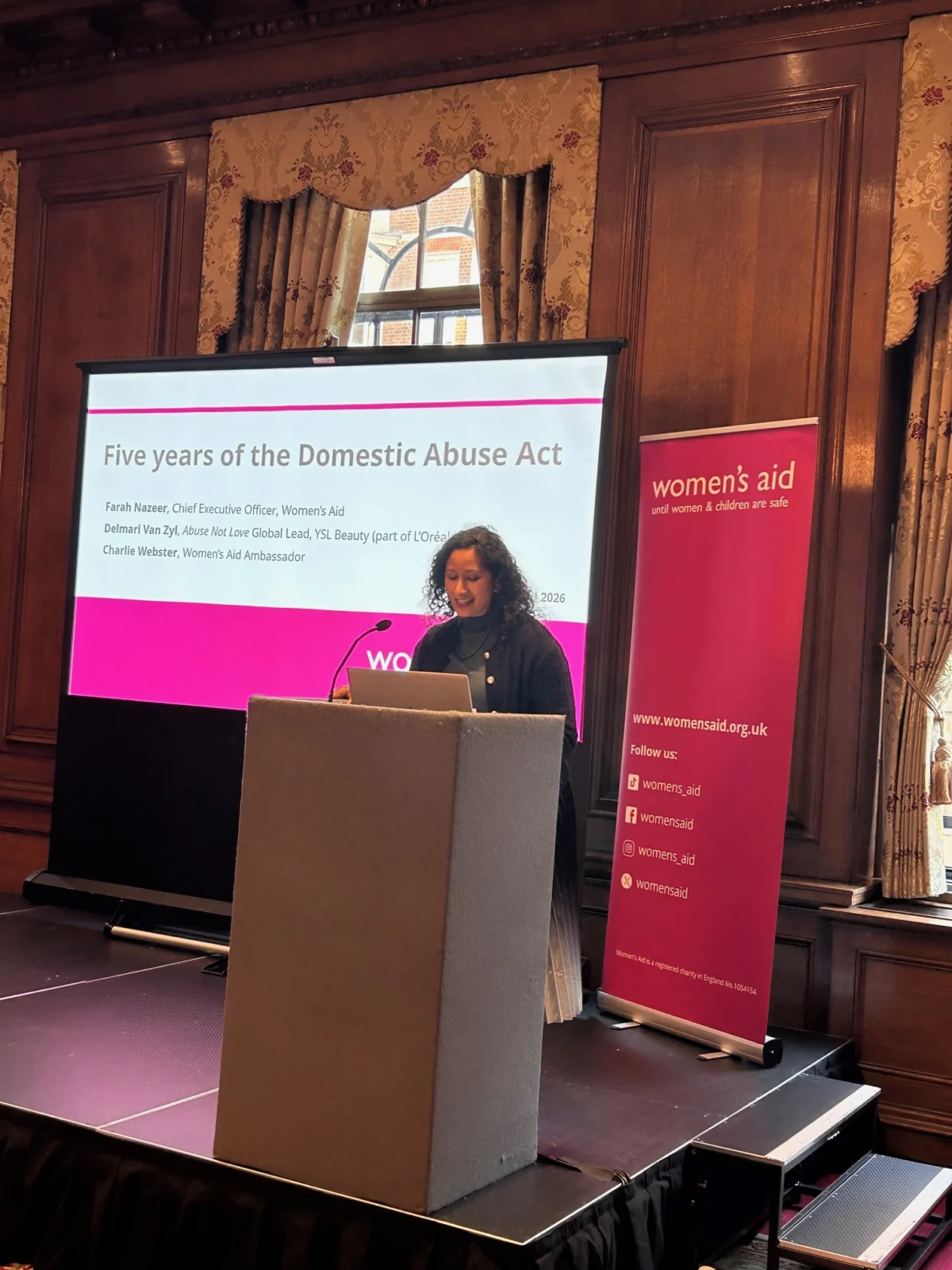
April 29, 2026, marks the fifth anniversary of the Domestic Abuse Act being signed into law, a pivotal moment that fundamentally reshaped the United Kingdom’s approach to tackling domestic violence and supporting survivors. Enacted following years of tireless campaigning by organisations like Women’s Aid, alongside dedicated survivors and activists, the legislation was heralded as a monumental step towards comprehensive protection and justice. To commemorate this significant milestone, Women’s Aid hosted a dedicated reception, bringing together a diverse array of voices committed to enhancing the lives of those affected by domestic abuse, and launched an anniversary film reflecting on the journey and future imperatives.
A Landmark Legislative Journey: The Road to the 2021 Act
Before the passage of the Domestic Abuse Act 2021, the legal framework for addressing domestic abuse in the UK was often described as fragmented and inadequate, failing to fully capture the complex and insidious nature of abuse. While various pieces of legislation touched upon aspects of domestic violence, there as a critical absence of a cohesive, overarching legal instrument that provided a comprehensive definition of domestic abuse and established a coordinated response across different sectors. For decades, campaigners highlighted how the existing laws predominantly focused on physical violence, often overlooking the profound psychological, emotional, financial, and coercive control that constitutes the vast majority of abusive relationships.
The journey to the 2021 Act was protracted and arduous, beginning with a groundswell of grassroots activism and sustained advocacy from organisations like Women’s Aid, Refuge, and SafeLives. These groups, often working in conjunction with parliamentarians and individuals with lived experience, meticulously documented the gaps in existing protections and presented compelling evidence of the devastating impact of domestic abuse on individuals, families, and society at large. Key milestones included the publication of a government consultation in 2018, followed by a draft bill in 2019. This period saw extensive parliamentary debate, scrutiny from select committees, and amendments proposed by peers and MPs, all aimed at strengthening the legislation. The unwavering commitment of survivors, who bravely shared their stories and insights, proved instrumental in shaping the Act’s provisions and ensuring that it reflected the realities faced by those experiencing abuse. Their advocacy transformed policy discussions from abstract legal points into tangible human experiences, underscoring the urgent need for systemic change.
Core Provisions and Transformative Impact
The Domestic Abuse Act 2021 introduced several groundbreaking provisions that marked a genuine ‘step change’ in societal understanding and response to domestic abuse. Central to its innovation was the statutory definition of domestic abuse, explicitly encompassing not only physical violence but also emotional, coercive or controlling behaviour, economic abuse, and threatening behaviour. This broadened definition was crucial for legal professionals, law enforcement, and support services, providing a clearer framework for identification and intervention that moved beyond visible injuries.
One of the Act’s most significant achievements was the explicit recognition of children as victims of domestic abuse in their own right, if they see or hear, or are otherwise affected by, the abuse. Prior to this, children were often viewed merely as witnesses, rather than directly experiencing the trauma and harm of living in an abusive environment. This new legal standing has profound implications for safeguarding, allowing for more targeted support and interventions for children, and ensuring their voices are heard in family court proceedings and protection orders.
Furthermore, the Act extended the reach of coercive control laws, which had been introduced in 2015. Notably, it clarified that a victim did not necessarily need to live with a perpetrator to experience this form of abuse, addressing cases where abuse continued post-separation or in non-cohabiting relationships. This expansion acknowledged the enduring power dynamics inherent in abusive relationships, regardless of living arrangements. The Act also introduced Domestic Abuse Protection Notices (DAPNs) and Domestic Abuse Protection Orders (DAPOs), offering immediate and longer-term protection for victims by imposing conditions on perpetrators, such as prohibiting contact or requiring them to attend behaviour change programmes. It also placed a statutory duty on local authorities in England to provide support to victims of domestic abuse and their children in refuges and other safe accommodation, aiming to ensure a more consistent and adequately funded network of safe havens. The Act’s provisions touched a wide range of areas, from housing and welfare to the intricacies of the family court system, reflecting the pervasive nature of domestic abuse across every facet of a survivor’s life.
Reflecting on Five Years: Voices from the Frontline
The anniversary reception served as a powerful platform for reflection and renewed commitment. Speakers highlighted both the successes achieved and the substantial work that remains. Farah Nazeer, CEO of Women’s Aid, articulated the core challenge: "Our task is clear: match the promise of the law with the reality of peoples’ lives." This statement encapsulates the ongoing struggle to translate legislative intent into tangible, positive outcomes for every survivor. It speaks to the need for robust implementation, adequate funding for specialist support services, consistent training for professionals across the justice system, and a cultural shift in how society perceives and responds to domestic abuse. Without these complementary efforts, the legislative "promise" risks remaining an aspiration rather than a lived reality.

Adding a crucial survivor perspective, Charlie Webster, an ambassador for Women’s Aid, delivered a poignant address emphasizing the irreplaceable value of lived experience in policy formulation. "You can’t design a system to protect people whose reality you don’t understand," Webster asserted. "Survivor voice is not a nice addition to policy. It’s quality control." Her words underscored that authentic, effective policies must be co-produced with those they are designed to serve. Webster also highlighted a critical aspect of recovery that often goes unaddressed: "The abuse ending is not the end of the story. We need long term wrap around support. Because healing is not an incident, it’s a journey. And right now we’re leaving too many people to walk it alone." This powerful call for comprehensive, sustained support – encompassing everything from trauma-informed therapy and safe housing to legal aid, financial independence, and community reintegration – resonates deeply with the experiences of countless survivors whose journeys to healing extend far beyond the immediate cessation of abuse.
Statistical Impact and Implementation Challenges
Since its enactment, the Domestic Abuse Act has undeniably led to positive shifts. Data from the Office for National Statistics (ONS) and organisations like Women’s Aid indicate a growing awareness of domestic abuse in its broader forms, with an increase in reports of coercive control to police forces across England and Wales. In the year ending March 2023, there were over 1.7 million domestic abuse-related incidents and crimes recorded by the police, with a significant proportion now involving non-physical forms of abuse. The number of coercive control offences recorded by the police has risen consistently since the original legislation in 2015, with the 2021 Act further reinforcing this trend through its expanded definition. Furthermore, the introduction of DAPNs and DAPOs has provided immediate avenues for protection, with thousands of such orders issued since the Act’s implementation, offering a crucial layer of safety for victims at imminent risk.
However, the path to full implementation has not been without significant challenges. While the Act placed a statutory duty on local authorities to provide safe accommodation, funding remains a critical issue. Many specialist domestic abuse services, particularly those catering to specific demographics such as Black and minoritised women, LGBTQ+ individuals, or disabled survivors, continue to face precarious funding models. This leads to a ‘postcode lottery’ of provision, where access to vital support varies significantly depending on geographical location. Data from Women’s Aid’s annual surveys consistently highlights funding shortfalls and the closure of essential services, demonstrating that the ‘promise’ of the law is often undermined by inadequate resources.
Moreover, while the legal framework has improved, consistent understanding and application across the criminal justice system remain areas for development. Training for police, prosecutors, and judiciary on the nuances of coercive control and the expanded definition of domestic abuse is crucial. Survivors often report inconsistencies in how their cases are handled, with some experiencing re-traumatisation within the very systems designed to protect them. The family courts, despite reforms, still face criticism for not always adequately safeguarding children and victims from abusive ex-partners, particularly in contact disputes.
Persistent Gaps and the Path Forward
As Women’s Aid underscored, while celebrating progress, it is vital to acknowledge the "vital provisions" that were regrettably left out of the Domestic Abuse Act 2021 and are still urgently needed. Chief among these is comprehensive protection for migrant women. Current immigration policies often tie a victim’s right to remain in the UK to their abusive partner, creating a significant barrier to reporting abuse and seeking help for fear of deportation. This vulnerability is exploited by perpetrators, trapping women in dangerous situations. Calls for firewalls between immigration enforcement and domestic abuse services, as well as guaranteed access to public funds and specialist support for all migrant survivors, remain a key advocacy priority.
Another critical area requiring further legislative and policy attention is the robust and consistent funding of specialist domestic abuse services. While the Act mandated local authority provision, the funding streams are often insufficient and short-term, failing to meet the demand for services that are experiencing unprecedented levels of need. Long-term, sustainable funding is essential to ensure that every survivor, regardless of their background or location, can access the bespoke support they require. There is also a recognised need for stronger accountability mechanisms for perpetrators, with a greater focus on early intervention and behaviour change programmes to prevent reoffending, rather than solely reacting to abuse after it has occurred.
The anniversary film launched by Women’s Aid, featuring survivors, supporters, ambassadors, and policymakers, powerfully articulates a collective vision for a future free from abuse. This vision encompasses not just legal protection but also societal prevention, fostering healthy relationships from a young age, challenging harmful gender stereotypes, and creating communities where abuse is neither tolerated nor hidden. The next steps, five years on from the Act, involve sustained political will, cross-governmental collaboration, and continued investment in the entire ecosystem of prevention, protection, and recovery.
In conclusion, the fifth anniversary of the Domestic Abuse Act stands as a testament to the power of collective action and a significant stride in the nation’s commitment to ending domestic abuse. The legislation has undeniably laid a stronger foundation for protecting victims and holding perpetrators accountable. However, as Farah Nazeer and Charlie Webster eloquently articulated, the journey is far from over. The coming years must see a renewed focus on filling the identified gaps, ensuring equitable access to justice and support for all survivors, and translating the law’s promise into a lived reality where healing is universally supported, and a future free from abuse is within reach. The work of organisations like Women’s Aid and the countless dedicated individuals and services on the frontline remains paramount in this ongoing struggle.