The escalation of hostilities in Iran has reached the proportions of a definitive human catastrophe, creating a geopolitical shockwave that is forcing the United Kingdom to confront a long-deferred question regarding its fundamental economic architecture. As the civilian toll mounts and the regional stability of the Middle East fractures, the humanitarian crisis has become the catalyst for a profound domestic debate in London. While the immediate focus remains on the tragic loss of life and the displacement of millions, the conflict is simultaneously exposing the vulnerabilities of Britain’s decades-long reliance on the American economic and strategic umbrella. This moment, described by analysts as a "geopolitical epiphany," suggests that the UK may finally be forced to choose between its current trajectory of deregulated finance and the more egalitarian models seen in Northern Europe.
The Humanitarian Crisis and the Regional Context
The war in Iran, which intensified in early 2026 following a series of diplomatic collapses and maritime skirmishes, has resulted in a civilian reality that defies easy description. Major urban centers have faced significant infrastructure damage, leading to a breakdown in basic services including water, electricity, and medical care. International observers report that the humanitarian corridors are struggling to cope with the volume of internally displaced persons.
Beyond the immediate theater of war, the conflict has disrupted global energy markets and shipping lanes, particularly through the Strait of Hormuz. For Britain, a nation heavily dependent on stable global trade routes and international energy pricing, the instability has underscored the fragility of its current economic positioning. However, as Priya Sahni-Nicholas, Co-Executive Director of the Equality Trust, notes, any discussion of economic opportunity must be secondary to the recognition of the human suffering currently unfolding. The crisis serves as a grim backdrop to a more clinical, yet necessary, evaluation of Britain’s long-term strategic alliances and its internal economic philosophy.
A Chronology of Economic Drift: From 1980 to 2026
To understand the current dilemma, one must examine the four-decade trajectory that brought the United Kingdom to this juncture. Beginning in the early 1980s, Britain consciously began to pivot away from the post-war consensus of a mixed economy toward a model that closely mirrored the United States.
- The 1980s Transition: The era of privatization and the "Big Bang" in the City of London established finance as the primary engine of the UK economy, prioritizing deregulation and the weakening of organized labor.
- The Post-2008 Era: Following the global financial crisis, while some nations moved toward greater regulation, the UK maintained its commitment to an American-style austerity and market-led recovery, further entrenching the role of private capital in public services.
- The Brexit Gamble (2016–2020): The departure from the European Union was largely framed by its proponents as an opportunity to double down on the "Anglosphere." This involved a strategic bet that a "Global Britain" could thrive by aligning even more closely with US regulatory standards, technology platforms, and defense priorities.
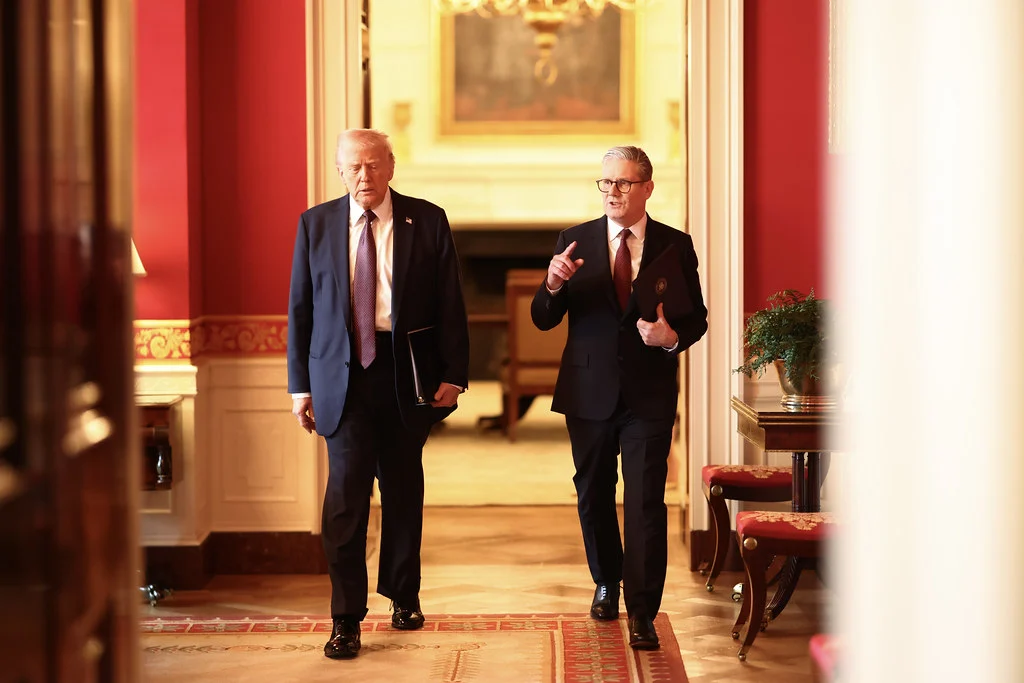
- The 2024–2026 Realignment: Recent shifts in American domestic policy—characterized by a turn toward erratic alliances and aggressive economic nationalism—have left the UK in an exposed position. The current conflict in Iran has acted as the final proof that the American strategic guarantee is no longer a stable foundation for British economic planning.
Comparing Economic Models: The Gap in Equality
The fundamental choice facing Britain is not merely one of diplomatic alignment, but of social outcomes. The American model, which the UK has largely adopted, is characterized by high levels of income inequality, concentrated corporate power, and a shrinking social safety net. In contrast, the Northern European models—found in nations such as Germany, Sweden, Norway, and the Netherlands—consistently produce lower levels of inequality and higher levels of social mobility.
Data from the World Bank and the OECD highlights this disparity. As of 2025, the UK’s Gini coefficient—a standard measure of income inequality where 0 represents perfect equality and 1 represents perfect inequality—stood at approximately 0.35. In comparison, Norway and Denmark maintained coefficients closer to 0.25 and 0.27, respectively. These differences are not accidental; they are the result of deliberate policy choices:
- Labor Rights: In Scandinavia, collective bargaining coverage often exceeds 80%, compared to less than 25% in the UK.
- Corporate Governance: The German model of "codetermination" requires worker representation on company boards, a practice that limits executive pay excess and encourages long-term industrial investment.
- Public Investment: Northern European states consistently invest a higher percentage of GDP into public infrastructure and R&D, creating "productive" economies rather than "speculative" ones.
The Influence of Concentrated Wealth
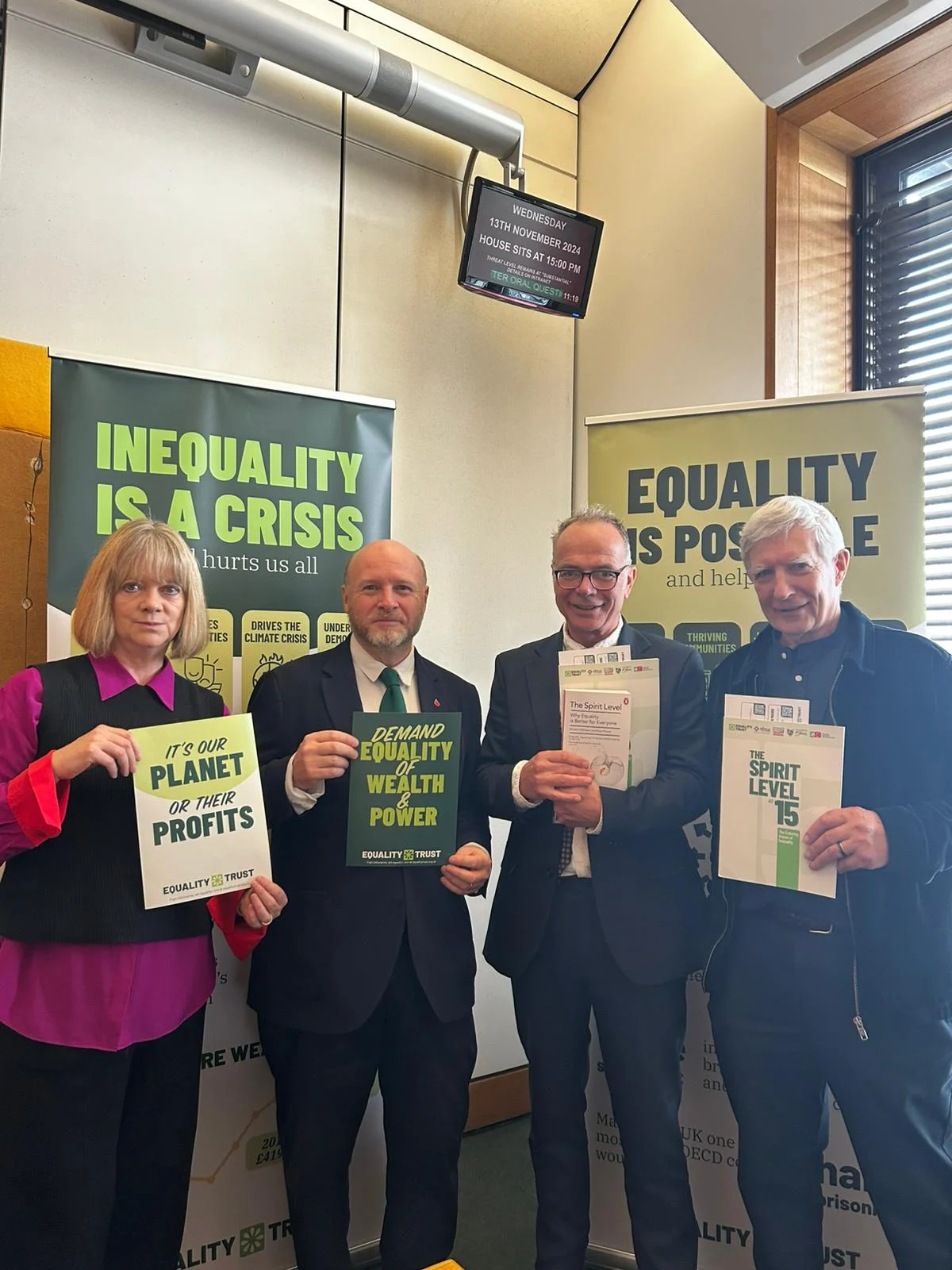
A significant hurdle to Britain’s reorientation is the entrenched influence of the ultra-wealthy and concentrated corporate power. According to a recent briefing by the Equality Trust titled Money, Media and the Lords: How the Ultra-wealthy are Shaping Britain, the UK’s political culture has become increasingly susceptible to lobbying from oligopolistic interests. These structures often bend regulations to favor the largest players, particularly in the finance and technology sectors.
This feedback loop creates an environment where wealth is extracted from the economy rather than reinvested. In the tech sector, for instance, the UK has become a "branch plant" economy for Silicon Valley, where data and value are harvested domestically but profits are offshored. The defense sector shows a similar pattern, with the UK military-industrial complex becoming increasingly inseparable from American hardware and strategic software, limiting Britain’s ability to pursue an independent foreign policy in crises like the one currently seen in Iran.
Strategic Recommendations for an Independent Economy
If Britain is to use this moment of global instability to pivot toward a more resilient and equitable model, experts suggest several key policy shifts. The goal is to move toward "strategic autonomy," a concept gaining traction across the European continent.
Community Wealth Building
Rather than relying on trickle-down economics, a national strategy for community wealth building would focus on keeping money circulating within local economies. This involves "anchor institutions"—such as hospitals, universities, and local councils—prioritizing local procurement and supporting worker-owned cooperatives. This model, pioneered in cities like Preston, has shown that it is possible to build resilience in "left-behind" regions without relying on overseas contractors.
Domestic Industrial Investment
The conflict in Iran has highlighted the risks of over-extended supply chains. A new British economic model would require a robust industrial strategy that builds domestic capacity in green energy, advanced manufacturing, and biotechnology. By focusing on high-value domestic production, the UK can reduce its vulnerability to the erratic trade policies of larger superpowers.
Financial and Competition Regulation
To break the cycle of value extraction, the UK needs competition policy with "real teeth." This includes breaking up monopolies that stifle innovation and implementing financial regulations that incentivize lending to the productive economy—small and medium-sized enterprises (SMEs)—rather than speculative real estate or complex derivatives.
Official Responses and Global Implications
The response from Whitehall has been cautious but telling. A spokesperson for the Department for Business and Trade stated that the government is "constantly reviewing its strategic partnerships in light of global volatility," though they stopped short of endorsing a full pivot toward the European social model. Meanwhile, voices within the shadow cabinet and various think tanks have been more vocal, suggesting that the "era of uncritical alignment with Washington" must come to an end.
International reactions have also been noted. Brussels has signaled a cautious openness to closer regulatory alignment with the UK, provided London is willing to adopt higher standards for labor and environmental protections. Conversely, analysts in Washington have warned that a British shift toward a "European-style" economy could strain the "Special Relationship," particularly in areas of intelligence sharing and defense procurement.
Conclusion: The Path Forward
The war in Iran is a tragedy that serves as a mirror for the United Kingdom. It reflects a nation that has, for decades, traded its economic sovereignty for the perceived security of the American model—a security that now appears increasingly illusory. The choice ahead is stark: Britain can remain a satellite of an erratic American capitalism, or it can begin the difficult work of building an economy that prioritizes equality, domestic resilience, and social cohesion.
As Priya Sahni-Nicholas argues, these propositions are not radical; they are the proven methods of the world’s most stable and successful democracies. The question is no longer whether the American model is working for Britain—the data and the current geopolitical crisis suggest it is not—but whether the UK has the political will to name the problem and act upon it. The human catastrophe in Iran is a reminder that the world is changing rapidly; Britain must decide if it will be a passenger in that change or an architect of its own future.