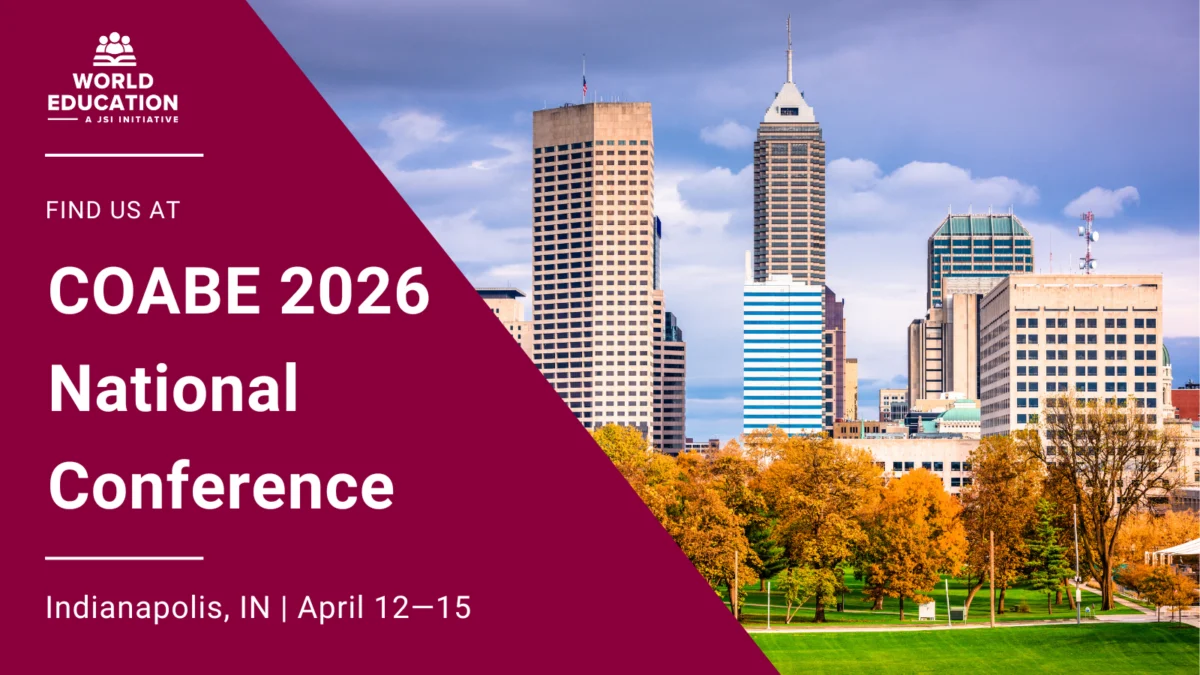
World Education, a prominent initiative of JSI Research & Training Institute, Inc., has officially announced its comprehensive participation in the Coalition on Adult Basic Education (COABE) 2026 National Conference, scheduled to take place in Indianapolis, Indiana, from April 12 to April 15. As the adult education sector continues to navigate the rapid integration of emerging technologies and the persistent challenges of the digital divide, World Education’s delegation of experts will lead a series of high-impact sessions focused on digital literacy, professional development, and the ethical implementation of Generative Artificial Intelligence (AI). The conference, which serves as the premier gathering for adult education practitioners, administrators, and policymakers in the United States, provides a critical platform for World Education to showcase its research-driven methodologies and practical tools designed to enhance learning outcomes for diverse adult populations.
The 2026 COABE conference arrives at a pivotal moment for the field. According to recent data from the Program for the International Assessment of Adult Competencies (PIAAC), approximately 43 million adults in the United States possess low literacy skills, and a significant portion of this demographic lacks the digital proficiency required for the modern workforce. World Education’s presence in Indianapolis aims to address these systemic gaps by offering scalable solutions that bridge the distance between educational policy and classroom practice. By leveraging their extensive experience in systems strengthening and program design, the organization’s presenters will offer insights into how educators can foster inclusive environments that empower learners through technology.
Chronological Overview of Sessions and Expertise
The four-day event features a robust schedule of presentations from World Education’s leading specialists. These sessions are structured to provide both theoretical frameworks and actionable strategies for educators working in various contexts, from community-based organizations to large-scale state initiatives.
Monday, April 13: Bridging Skills and Policy
The week begins with a focus on foundational digital skills and the translation of urban policy into educational practice. At 8:00 AM, Jeff Goumas will lead a session titled "Using BRIDGES Skills Checklists to Drive Digital Skills Development in Any Context." This presentation, available to both in-person and virtual attendees in the JW Grand Ballroom 2, introduces the BRIDGES framework—a tool designed to help educators assess and track digital competency in a standardized manner. The session addresses the critical need for measurable benchmarks in adult education, allowing instructors to tailor their curriculum to the specific needs of their students.
Later that morning, at 11:50 AM, Sandy Goodman and Catalina González will present "From Policy to Practice: Implementation Lessons from Boston’s Digital Literacy Initiative." Held in the JW Grand Ballroom 4, this session will provide a case study of how municipal policy can successfully drive educational change. By examining the Boston model, the presenters will highlight the importance of cross-sector collaboration between city government, philanthropic organizations, and educational providers to ensure that digital equity is prioritized at the local level.
The afternoon of April 13 will see a collaborative effort in Room 205 at 3:50 PM. Jen Vanek and Jeff Goumas, alongside representatives from the American Institutes for Research (AIR) and other CREATE Network partners, will present "Practical Solutions from Research: Digital Tools to Support Teaching and Learning from the CREATE Network." This session is exclusive to in-person attendees and focuses on evidence-based tools derived from rigorous academic research, emphasizing the importance of data-driven instruction in the adult education classroom.
Tuesday, April 14: The Intersection of AI and Adult Literacy
Tuesday’s agenda is heavily centered on the transformative potential of Artificial Intelligence. At 8:00 AM, Rachel Riggs will present "Aligning AI Literacy with Learning and Work Goals in Adult Ed" in the JW Grand Ballroom 3. As AI continues to reshape the labor market, Riggs will argue that AI literacy is no longer an optional skill but a necessity for career advancement and economic mobility. This session will explore how educators can integrate AI concepts into existing curricula without overwhelming learners.
At 11:50 AM, the focus shifts to literacy resources with "Free and Open Online Literacy Curriculum: Leveraging SkillBlox and ASAP for Adult Readers." Presenters Jen Vanek and Jeff Goumas, joined by Stephen Sireci of UMass Amherst, will demonstrate how the SkillBlox platform can be used to organize and distribute Open Educational Resources (OER). This is particularly relevant given the rising costs of proprietary educational materials and the need for flexible, high-quality content that can be accessed remotely.
The 2:00 PM timeslot offers two concurrent sessions. In Room 206, Vanek and Goumas will join Stephanie Cronen and Neha Nanda from AIR to discuss "Practitioner-Friendly Findings: How to Leverage Free Research-based Resources to Teach In-Demand Skills." Simultaneously, in the JW Grand Ballroom 3, Rachel Riggs will return to the stage for "Generative AI and the EdTech Maker Space: Leveraging GenAI to Fill Learning Resource Gaps." This session will provide a hands-on look at how instructors can use AI to create customized learning materials, effectively "filling the gaps" where traditional textbooks may fall short for specific student populations.
Wednesday, April 15: Professional Development and Instructional Design
The final day of the conference focuses on the sustainability of educational efforts through professional development and specialized instructional strategies. At 11:50 AM, Dani Scherer will present "Maximum Impact Professional Development: A Three-Pronged Approach" in Room 209. This session outlines World Education’s philosophy on educator support, emphasizing that one-off workshops are less effective than sustained, multi-layered coaching and community-building efforts.
In the afternoon, Eliana Stanislawski will lead two consecutive sessions in the JW Grand Ballroom 4 and Room 209. The first, "EdTech in Action: Structuring a Digital Literacy Learning Series for Adult Educators," provides a roadmap for organizations looking to build their own internal capacity for digital instruction. The second, "Engaging Strategies for Online Instruction of Literacy-Level Adults," addresses the specific pedagogical challenges of teaching foundational reading and writing skills through digital platforms—a task that became significantly more common following the global shift toward remote learning.
Supporting Data and the Digital Equity Gap
The urgency of the topics presented by World Education is underscored by national data regarding the "digital divide." Research from the Pew Research Center indicates that roughly 40% of adults with lower incomes do not have home broadband services or a desktop/laptop computer. In the context of adult education, this lack of infrastructure is often compounded by a lack of "digital navigability"—the ability to find, evaluate, and use information via technology.
World Education’s focus on frameworks like BRIDGES and platforms like SkillBlox is designed to mitigate these disparities. By providing free, open-access resources, the organization helps programs with limited budgets provide high-quality instruction. Furthermore, their emphasis on AI literacy aligns with federal initiatives, such as the Digital Equity Act, which seeks to ensure that all individuals have the skills and tools necessary to participate in the digital economy.
Broader Impact and Industry Implications
The strategies showcased at COABE 2026 are expected to have a ripple effect throughout the adult education sector. By prioritizing "practitioner-friendly" research, World Education is helping to democratize access to academic findings, ensuring that the latest pedagogical innovations are not confined to ivory towers but are instead utilized in classrooms from Indianapolis to rural Appalachia.
Industry analysts suggest that the integration of Generative AI into adult education—a major theme of World Education’s 2026 contributions—represents a significant shift in the field. AI has the potential to provide personalized tutoring at scale, translate complex materials into multiple languages instantaneously, and help instructors automate administrative tasks. However, as Rachel Riggs and her colleagues will likely emphasize, these tools must be implemented with a focus on ethics and equity to ensure that they do not exacerbate existing biases.
The collaborative nature of World Education’s presentations, featuring partners like the American Institutes for Research and UMass Amherst, also highlights a growing trend toward "collective impact" in education. By pooling resources and expertise, these organizations are better equipped to tackle the complex, multi-faceted problems facing adult learners today.
Conclusion and Future Outlook
As World Education prepares for the COABE 2026 National Conference, the organization remains committed to its mission of fostering enduring partnerships and advancing education outcomes for all. Their role at the conference is not merely as a presenter but as a catalyst for systemic change. By offering a blend of high-level policy analysis and ground-level instructional tools, World Education continues to set the standard for how the adult education community can adapt to a rapidly changing technological landscape.
Following the conference, World Education plans to continue its outreach through its various initiatives, including the EdTech Center, which provides ongoing support for digital literacy efforts. The insights shared in Indianapolis will likely inform the development of future curricula and professional development programs, reinforcing the organization’s position as a leader in the field of adult basic education and digital inclusion. For practitioners and policymakers alike, the sessions led by World Education at COABE 2026 represent a vital opportunity to engage with the cutting edge of educational technology and research-based practice.