By Clemente Flores and Soledad Sede
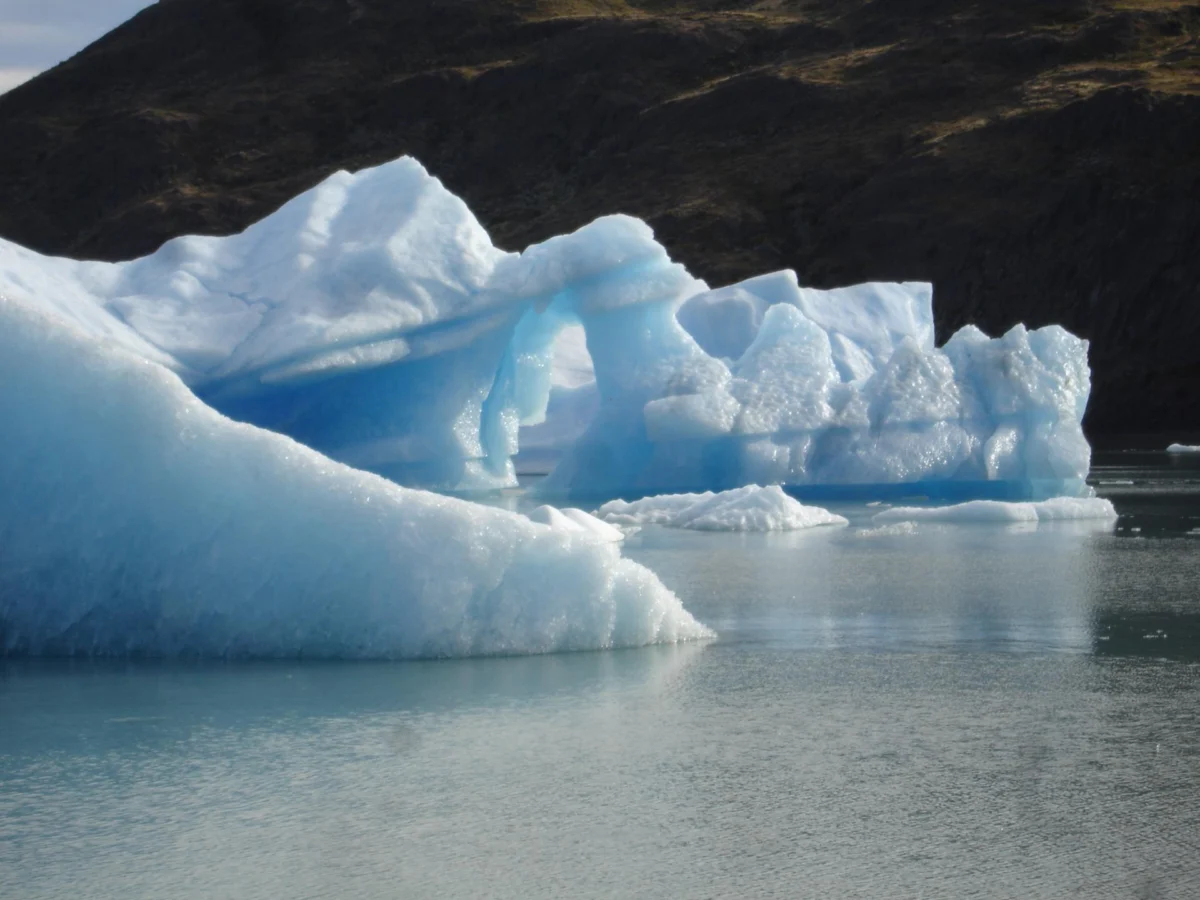
Argentina’s recent reform of its Glacier Law, approved by the National Congress, represents a significant regression in environmental protection standards, threatening water security, mountain ecosystems, and the rights of Indigenous Peoples. What was once a cornerstone of environmental policy, safeguarding vital water resources and ancestral territories, has been weakened by changes that prioritize intensive exploitation over the protection of common goods and collective rights. This legislative shift signals a concerning departure from the principles that guided the original law, potentially opening the door to intensified extractive activities in sensitive high-mountain zones. The authors, writing from their direct experience within these territories, assert that this is not a minor technical adjustment but a profound step backward, jeopardizing the future of glaciers, water availability, and the integrity of fragile mountain environments.
The Genesis of Protection: A Law Forged in Conflict
The National Law on Minimum Standards for the Protection of Glaciers and the Periglacial Environment was enacted in 2010 after a protracted and contentious legislative battle. The initial attempt in 2008 faced a presidential veto, a move widely attributed to pressure from the powerful mining sector. This early resistance highlighted the inherent tension between the pursuit of economic interests, particularly extractive industries, and the imperative of environmental preservation. The original statute, a landmark piece of legislation, unequivocally prohibited extractive activities within glaciers and the periglacial environment. This prohibition was grounded in the recognition of these areas as crucial strategic water reserves, a vital resource for both ecosystems and human populations. By enacting this law, Argentina positioned itself as a regional leader in environmental stewardship, setting a precedent for other nations in the protection of these critical natural assets.
The law mandated a comprehensive inventory of glaciers and periglacial areas, establishing a framework for their monitoring and protection. It recognized the multifaceted importance of these environments, extending beyond their role as water reservoirs to encompass their ecological functions and the biodiversity they support. The periglacial environment, defined as the areas surrounding glaciers, was also brought under protection, acknowledging its interconnectedness with glacial systems and its contribution to overall ecosystem health. This holistic approach was central to the law’s effectiveness in safeguarding these fragile landscapes from the impacts of human activities.
The Reform: Undermining Protection Through Deregulation
The recently approved reform fundamentally alters key provisions of the Glacier Law, significantly weakening its protective mechanisms. Central to the changes are modifications to the scope of protection afforded to the periglacial environment and the criteria used to determine which areas are effectively safeguarded. Crucially, the reform grants provincial governments considerably more autonomy in defining protection zones and authorizing economic activities within territories previously subject to stringent restrictions.
This decentralization of authority, rather than fostering legal certainty or improving regulatory implementation, has the opposite effect. It leads to a fragmentation of environmental protection standards across different provinces. This creates a scenario of "regressive competition," where provinces may lower their environmental standards in an effort to attract extractive investments, potentially leading to a race to the bottom in terms of environmental safeguards. Such a dynamic undermines the national commitment to environmental protection and can lead to uneven and inadequate protection across the country’s sensitive high-mountain regions.
The reform directly clashes with the principle of environmental non-regression, a cornerstone of modern environmental law. This principle, enshrined in Article 41 of Argentina’s National Constitution and the General Environmental Law (Law 25,675), mandates that environmental protection levels, once achieved, should not be unjustifiably lowered. Furthermore, Argentina’s international commitments, including the Escazú Agreement and the Inter-American Court of Human Rights’ Advisory Opinion OC-23/17, reinforce the obligation of states to maintain and, where possible, improve environmental protection standards for essential assets like water. The reform’s rollback of protections directly contradicts these established legal and ethical obligations.
Public Participation: A Formal Facade, Substantive Restrictions
The legislative process leading to the reform’s approval also raised serious concerns regarding public participation. The public hearing convened in the Chamber of Deputies occurred late in the legislative process, after the bill had already received preliminary approval in the Senate. This timing significantly curtailed the ability of citizens and civil society organizations to meaningfully influence the reform’s content.
Over 100,000 individuals registered to participate in the public hearing, reflecting a widespread public interest in the legislation. However, only a fraction of these, approximately 360 to 400 speakers, were granted the opportunity to present their views during the scheduled sessions. This stark disparity between registered participants and those able to speak highlights a substantial gap between the formal openness of the process and the actual conditions for citizen influence.
Environmental matters, by their very nature, demand robust and inclusive public participation. The Escazú Agreement, ratified by Argentina, explicitly mandates that participation in environmental decision-making be open, inclusive, informed, timely, and effective. Restricting speaking opportunities to a small percentage of interested parties, especially on a bill of such profound socio-environmental significance and one that had already cleared a significant legislative hurdle, raises serious questions about the procedural adequacy and democratic legitimacy of the reform. Genuine participation requires more than just establishing a formal channel; it necessitates creating conditions for affected communities and citizens to exert tangible influence on public policy. This procedurally flawed process leaves the reform vulnerable to institutional and legal challenges regarding the quality and fairness of the legislative process.

Indigenous Consultation: A Critical Omission with Grave Implications
Perhaps the most critical omission in the reform process is the complete absence of a specific consultation and participation process with Indigenous peoples whose territories, water sources, and ways of life are directly impacted by the weakening of glacial and periglacial protections. This is not a minor political oversight but a potential violation of Argentina’s constitutional and international legal obligations.
The 1994 Constitution of Argentina recognizes the ethnic and cultural pre-existence of Indigenous peoples and guarantees their right to participate in the management of their natural resources. Furthermore, International Labour Organization (ILO) Convention 169, ratified by Argentina, obliges the state to conduct prior, free, and informed consultations whenever legislative or administrative measures may directly affect Indigenous communities.
The amendment to the Glacier Law has direct implications for high-altitude Indigenous territories, the water sources vital for their communities’ survival, and sacred sites of spiritual, cultural, and ancestral importance. Proceeding without consulting these communities not only undermines the legitimacy of the law but also jeopardizes the state’s international responsibilities. In regions like Salinas Grandes and the Andean Puna basin, where Indigenous communities have long-standing connections to these territories, this omission carries significant weight. These are not abstract legal concepts; these are living territories with distinct histories, spiritualities, and intricate relationships with water and the mountains. The decision-making process has, therefore, failed to acknowledge and respect the inherent rights of these peoples to self-determination and to be consulted on matters that profoundly affect their lands, cultures, and futures.
The Temporal Conundrum: Legal Uncertainty for Existing Projects
A significant legal quandary introduced by the reform concerns its application to ongoing projects. The amendment raises a fundamental question: which legal framework governs projects that were initiated, are in process, or have received partial authorizations under the previous, more protective regime? This is not a trivial procedural issue; it touches upon core principles of environmental law and legal certainty.
While general principles of public policy regulations suggest they can be applied immediately, this does not automatically permit the alteration of established legal situations or the reduction of previously existing protection standards, especially when vital collective assets like water and strategic ecosystems are at stake. The reform’s potential application to pre-existing projects creates significant legal uncertainty, potentially leading to protracted administrative and judicial disputes.
The core of the issue lies in determining a clear cutoff point for the reform’s application. If the logic were to be applied consistently, one might expect that if a regulatory change were to increase environmental restrictions or introduce greater requirements for mining activity, the sector would rightly invoke principles of legal certainty, legitimate expectation, and regulatory predictability, arguing against retroactive application to ongoing projects. The current situation, where the regulations are being relaxed, presents a parallel challenge. The analysis of the reform’s application cannot be dictated by shifting economic interests or whether the regulatory change expands or restricts exploitation margins. A clear, predictable, and consistent legal criterion is essential.
The reform, therefore, does not simply relax regulations for future projects; it introduces potential instability for existing ones. This creates a tension with the structural principles of Argentine and international environmental law, including the precautionary principle, the principle of progressive development and non-regression, and the duty to guarantee effective participation. The institutional message sent by such a regulatory change, altering rules for protecting strategic ecosystems amidst existing territorial conflicts, ongoing environmental assessments, and compromised collective rights, is deeply problematic. It signals a potential erosion of the rule of law and the principle that the protection of water and common resources should not be rolled back.
A Pattern of Instability: The Glaciers Law in Retrospect
The reform of the Glacier Law is not an isolated incident but reflects a broader pattern of regulatory instability in Argentina concerning the protection of strategic common resources. In a mere sixteen years, the country has transitioned from enacting a robust glacier protection law to attempting to weaken it, defending it in court against challenges, and now, reforming it by lowering its protective standards. This lack of predictability and consensus on fundamental environmental policies serves neither robust environmental protection nor the long-term investment climate.
The invocation of legal certainty by some stakeholders, particularly when it serves to safeguard economic interests, highlights a selective application of this principle. True legal certainty demands clear rules, legitimate procedures, adherence to prevailing environmental principles, and institutional predictability in the management of essential resources.
While the need for development, investment, and productive activity is widely acknowledged, the critical debate revolves around the conditions under which these activities should take place. This includes defining the limits that must be observed and ensuring adequate guarantees for the communities and ecosystems that sustain life. Reforms that are pushed through without sufficient participatory processes, meaningful consultation with Indigenous peoples, or broad social consensus do not foster a stable investment climate. Instead, they tend to generate increased litigation, exacerbate territorial conflicts, and deepen regulatory uncertainty.
Ultimately, the defense of the Glacier Law’s protective provisions is not an act of opposition to development. Rather, it is a demand for clear rules, legitimate institutions, and a national development model that does not compromise its water sources or the rights of present and future generations. Protecting water is not an impediment to development; it is the fundamental prerequisite for any sustainable development to be possible at all. The current reform, by weakening these protections, jeopardizes not only the environment but also the very possibility of equitable and lasting progress.