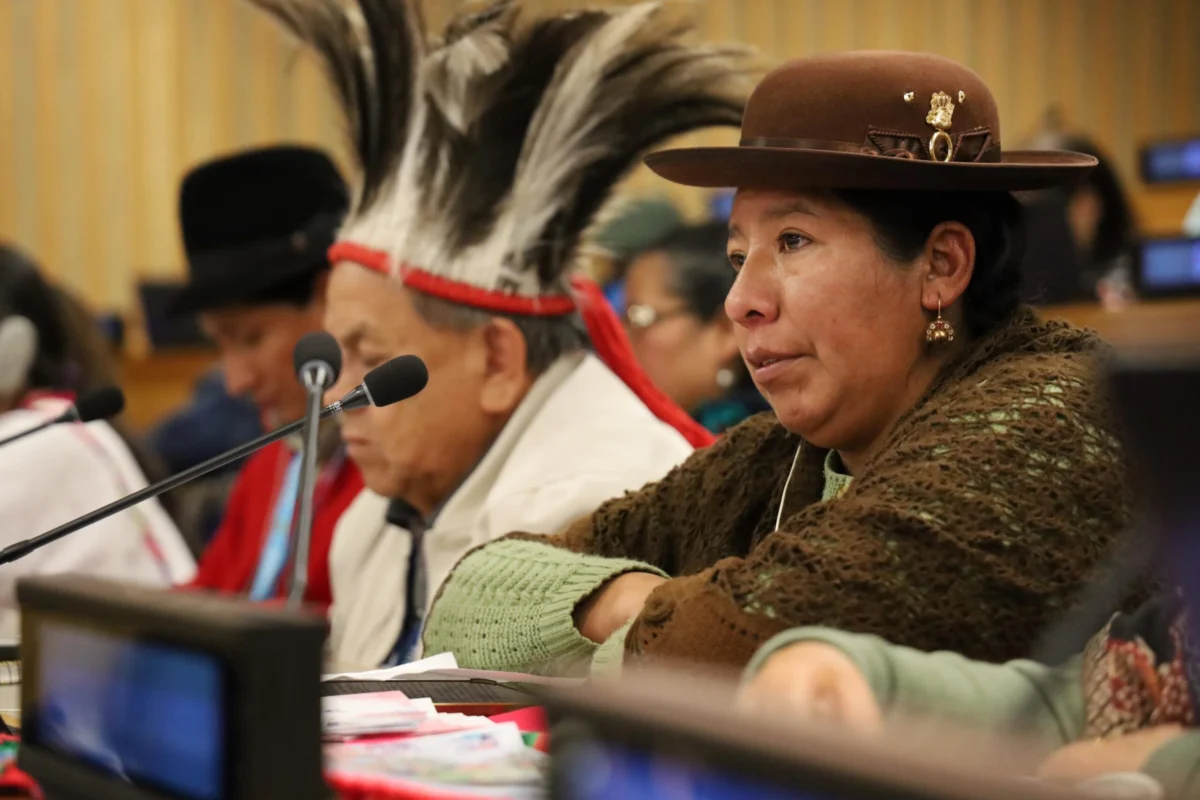
New York – On April 21, 2026, during the 25th session of the UN Permanent Forum on Indigenous Issues (UNPFII), Rosa Fátima Mamani Quispe, representing the Chimpu Warmi Network of Bolivia and a partner of the Cultural Survival Indigenous Community Media Fund, delivered a powerful statement. Her address to the international body served as a stark indictment of the Bolivian government’s failure to address the ecological devastation and health crises plaguing indigenous territories. Quispe’s plea highlighted the tragic death of Lake Poopó, a vital ancestral water source, and the broader desecration of Pachamama, or Mother Earth, by unregulated mining activities that inundate indigenous lands with toxic substances, directly impacting the health and well-being of indigenous peoples, particularly women and children.
Background: The UN Permanent Forum on Indigenous Issues and the Bolivian Context
The UN Permanent Forum on Indigenous Issues, established by the Economic and Social Council (ECOSOC) in 2000, serves as a critical advisory body to the UN system. Its annual sessions bring together indigenous representatives from around the globe to discuss pressing issues, share experiences, and make recommendations to governments and UN bodies. The 25th session, with its timely theme, "Ensuring the health of Indigenous Peoples, including in the context of conflicts," provided a crucial platform for Quispe to articulate the urgent situation faced by indigenous communities in Bolivia.
Bolivia, a nation with a significant indigenous population, has a complex history of land rights struggles and resource exploitation. While the Bolivian State ratified the United Nations Declaration on the Rights of Indigenous Peoples (UNDRIP) in 2007, enacting it into national law (Law 3760), the practical implementation of these rights has been fraught with challenges. Indigenous communities often find their traditional territories encroached upon by extractive industries, agricultural expansion, and infrastructure projects, frequently leading to environmental degradation and social conflict. The Chimpu Warmi Network, as a voice for indigenous women, has been at the forefront of advocating for the protection of these ancestral lands and the unique cultural heritage they embody.
A Plea for Mother Earth and Indigenous Health
Quispe’s address, delivered with profound conviction, began by acknowledging the president of the session and expressing gratitude to the International Work Group for Indigenous Affairs (IWGIA) for facilitating her participation. She emphasized that her message emanated from the heart of Bolivia’s indigenous peoples, especially its women, who are engaged in a fierce struggle to defend their territories, their ancestral homes, and their fundamental right to self-determination. The theme of the 25th UNPFII session, she noted, offered an essential space for their voices to be heard, contributing to the preservation of life itself.
"We, indigenous women, have sustained life by preserving our knowledge and wisdom, our languages, our institutions and systems of self-governance, and our life plans—by spinning and weaving the threads of life itself," Quispe stated, underscoring the integral role of women in maintaining cultural continuity and ecological balance. She drew a direct parallel between their traditional textile arts, a legacy passed down from female ancestors, and the defense of their territories. For indigenous peoples, she explained, the land is not merely a physical space but a sacred entity, Pachamama, a fertile and benevolent Mother Earth. The defense of territory, therefore, is intrinsically linked to the defense of life.
Undermining Rights: Extractivism and Institutional Complicity
Despite the recognition of indigenous rights to their lands, territories, and resources under UNDRIP, Quispe asserted that these rights are systematically violated within the Bolivian State. She detailed how indigenous territories are subjected to encroachment and violence, driven by the relentless pursuit of extractivist policies. These policies are fueled by both large-scale mining companies and informal mining operations, often operating with impunity.
Furthermore, Quispe pointed to the complicity of state institutions, specifically naming the National Institute for Agrarian Reform (INRA) and the Authority for the Oversight and Social Control of Forests and Land (ABT). These bodies, she argued, facilitate the entry of third parties into indigenous territories. These newcomers, historically referred to as "colonizers" and now euphemistically termed "intercultural settlers," along with so-called "mining cooperatives," are systematically weakening and fragmenting the autonomy, traditional ways of life, and self-governance systems of indigenous communities. Simultaneously, these activities lead to the widespread pollution and degradation of Mother Earth.
The Devastating Impact of Mining on Health and Environment
The destructive impact of mining, particularly gold mining, was a central focus of Quispe’s testimony. The indiscriminate use of mercury in these operations has inflicted severe and irreparable environmental damage. Rivers have been contaminated, ecosystems decimated, and indigenous territories impoverished. The consequences for the health of indigenous communities and families are dire.
For indigenous women, the ramifications are even more profound. Access to clean water, nutritious food, and the very means to sustain their families and livelihoods are increasingly precarious. The poisoned environments created by mining also foster conditions of pervasive violence, disproportionately affecting the most vulnerable: women, children, and the elderly. This underscores the interconnectedness of environmental health and human health, a concept central to indigenous worldviews.
The Loss of Lake Poopó: A Symbol of Ecological and Cultural Trauma
Quispe’s statement resonated with deep sorrow as she described the pain inflicted by the death of Lake Poopó, their Mamacocha (Mother Lake), a sacred and living entity for the Andean peoples. The ecological collapse of this vital water body serves as a potent symbol of the broader environmental crisis. She articulated the profound grief experienced by communities living in the aftermath of the lake’s demise, emphasizing that its death signifies more than the loss of water; it represents a wound to culture, worldview, and collective memory.
A Holistic Understanding of Health: Reciprocity with Nature
The address challenged the predominantly Western, individualistic understanding of health. Quispe asserted that for indigenous communities, health is an intrinsic, reciprocal relationship with Mother Earth. "If Mother Earth is healthy, we are healthy too, for she provides us with sustenance, balance, and the space to live," she explained. Conversely, when Mother Earth suffers, indigenous peoples fall ill—physically, emotionally, and spiritually. This holistic perspective underscores the deep spiritual and material connection indigenous peoples have with their environment.
The destruction of sacred sites—the Mamacocha, hills, rivers, and ceremonial spaces—by toxic substances like mercury and arsenic, severs the vital bond of care between the community and its environment. Quispe concluded this point by stating that for indigenous peoples, speaking of well-being is inseparable from speaking of respect for nature, territorial integrity, and the safeguarding of their collective rights.
A Call to Action and Upholding Legal Commitments
Despite the immense challenges, Quispe conveyed a message of resilience and unwavering commitment. "As Indigenous women, we stand firm; we are resisting, sowing seeds of hope, and weaving the fabric of life," she declared. The defense of their territory is a defense of life itself; the defense of water is a defense of the future.
Her statement concluded with a direct and urgent demand for the Bolivian State to fulfill its legal obligations. This includes honoring the commitments made under the United Nations Declaration on the Rights of Indigenous Peoples, which, in Bolivia, has the force of law through Law 3760. Quispe stressed that the State has a fundamental responsibility to create an environment that allows indigenous peoples to live with dignity, health, and freedom.
Broader Implications and Potential Responses
Quispe’s testimony at the UNPFII has significant implications beyond Bolivia. It highlights a global pattern of indigenous rights being undermined by extractive industries and governmental policies that prioritize economic development over environmental sustainability and human rights. The case of Lake Poopó serves as a stark warning of the irreversible consequences of ecological destruction.
The UN Permanent Forum on Indigenous Issues is expected to consider Quispe’s statement and the broader issues raised by indigenous representatives in its final recommendations. These recommendations will be forwarded to various UN bodies and member states, including the Bolivian government, urging them to take concrete action.
Potential Reactions and Next Steps:
- Bolivian Government: The Bolivian government, having ratified UNDRIP and its national law, faces increased international scrutiny. It may issue a statement acknowledging the concerns, promising further investigation, or outlining existing policies aimed at environmental protection and indigenous rights. However, past experiences suggest that promises may not always translate into immediate or effective action on the ground.
- UN Bodies: The UN Department of Economic and Social Affairs (DESA), which supports the UNPFII, will likely incorporate these concerns into its reporting and advocacy efforts. Other UN agencies focused on environmental protection, human rights, and indigenous issues may also engage with the Bolivian government.
- International NGOs and Advocacy Groups: Organizations like Cultural Survival and IWGIA will likely amplify Quispe’s message, engaging in advocacy campaigns to pressure the Bolivian government and raise global awareness. They may also offer support to the Chimpu Warmi Network in their ongoing efforts.
- Academic and Research Community: The situation in Bolivia provides critical case study material for researchers examining the intersection of resource extraction, environmental justice, and indigenous rights. Data on mercury contamination levels, water quality, and health impacts within indigenous communities will be crucial for future analysis and policy recommendations.
Looking Ahead: Sustaining the Fight for Environmental Justice
The courageous testimony of Rosa Fátima Mamani Quispe at the UN Permanent Forum on Indigenous Issues underscores the urgent need for a paradigm shift in how development is pursued, particularly in regions rich in natural resources but vulnerable to exploitation. The interconnectedness of environmental health, cultural integrity, and indigenous well-being, as articulated by Quispe, demands a holistic approach that respects ancestral knowledge and prioritizes the rights and sovereignty of indigenous peoples. The fight for the health of Mother Earth and the health of indigenous peoples in Bolivia is a fight for the future of all, a testament to the enduring spirit of resilience and the unwavering commitment to a life lived in balance and respect.