
The landscape of competitive athletics is currently undergoing a period of significant regulatory transformation, marked by an unprecedented surge in policies aimed at restricting the participation of transgender and gender-diverse athletes. While often framed as a modern phenomenon driven by recent social visibility, the debate over gender eligibility in sports is rooted in nearly a century of institutional surveillance. As of 2024, the intersection of legislative action, sports governing body mandates, and academic scholarship has created a complex environment where the definitions of fairness, biology, and inclusion are being rigorously contested.
The Contemporary Legislative and Regulatory Environment
In the United States, the movement to regulate transgender participation in sports has transitioned from a fringe political issue to a central pillar of state-level policy. Since 2020, more than 20 states have enacted laws that prohibit transgender youth from participating in school sports categories that align with their gender identity. These legislative efforts primarily target K-12 education but have increasingly expanded to include collegiate athletics.

On the international stage, the governing bodies of elite sports have shifted away from a centralized model of inclusion. In 2021, the International Olympic Committee (IOC) released a new "Framework on Fairness, Inclusion and Non-discrimination on the Basis of Gender Identity and Sex Variations." This document signaled a departure from the 2015 guidelines, which had mandated specific testosterone suppression levels for all transgender women. The 2021 framework instead devolved the authority to individual international federations (IFs), urging them to develop sport-specific criteria based on "robust and peer-reviewed evidence."
Following this shift, several high-profile federations implemented more restrictive measures. World Aquatics (formerly FINA), World Athletics, and the Union Cycliste Internationale (UCI) have all adopted policies that effectively bar transgender women who have gone through any stage of male puberty from competing in the female category. Most recently, the IOC has faced scrutiny for the reintroduction of sex testing protocols under specific circumstances, a move that critics argue signals a return to more intrusive forms of gender surveillance.
A Chronology of Gender Surveillance in Athletics
The history of sex testing and gender exclusion is not a recent development but a continuum that dates back to the early 20th century. Understanding this timeline is essential for contextualizing current policies.

1936: The Berlin Olympics and the Genesis of Suspicion
The 1936 Berlin Games are often cited by historians, including Michael Waters in The Other Olympians, as the starting point for formalized gender anxieties. The rivalry between American sprinter Helen Stephens and Polish-American athlete Stella Walsh led to the first public accusations of gender "fraud." While Stephens passed a physical examination at the time, the sensationalism surrounding the event prompted sports officials to consider permanent verification systems.
1940s–1950s: The Cold War Influence
During the Cold War, the perceived dominance of Soviet and Eastern Bloc female athletes fueled Western suspicions that these nations were using "men in disguise" to win medals. This era linked athletic performance with nationalistic pride and gender purity, leading to the institutionalization of gender verification.
1966–1968: The Era of "Nude Parades" and Chromosomal Testing
In the mid-1960s, international sports federations introduced "nude parades," where female athletes were forced to undergo visual inspections by medical panels. Due to the humiliating nature of these exams, the IOC transitioned to "Barr body" chromosomal testing in 1968. This method was scientifically flawed, as it failed to account for various intersex conditions and biological nuances.

2003–2015: The Stockholm Consensus and Testosterone Limits
The 2003 Stockholm Consensus allowed transgender athletes to compete in the Olympics for the first time, provided they underwent genital surgery and legal recognition of their gender. By 2015, the surgical requirement was dropped in favor of a one-year testosterone suppression requirement.
2021–Present: The Shift Toward Exclusion
The current era is defined by a move away from hormone-based inclusion toward policies based on "retained male advantage," leading to the near-total exclusion of transgender women from elite women’s categories in several major sports.
Scientific Discourse and the Question of "Fairness"
The primary justification for exclusionary policies is the concept of "competitive fairness." Proponents of restrictions argue that individuals who have undergone male puberty retain physiological advantages—such as increased bone density, muscle mass, and lung capacity—that cannot be fully reversed by hormone replacement therapy (HRT).

However, scholars and researchers, such as Harrison and Rachel Browne in Let Us Play, argue that the scientific consensus is far from settled. Critics of current bans point out that much of the research cited by sports federations relies on studies of cisgender men or sedentary transgender individuals rather than elite transgender athletes. Furthermore, the focus on testosterone as the sole arbiter of fairness is increasingly viewed as an oversimplification.
The debate also touches on the selective application of "fairness." In elite sports, biological advantages are generally celebrated. Exceptional height in basketball, arm span in swimming, or unique mitochondrial efficiency in long-distance running are viewed as "natural gifts." Critics argue that the singling out of gender-related traits for regulation reflects a social bias rather than a purely scientific one.
Academic Perspectives and the Literature of Exclusion
A growing body of literature has emerged to document the social and historical roots of these policies. These works provide a framework for understanding how sports serve as a microcosm for broader societal debates on gender.
- Historical Origins: Michael Waters’ The Other Olympians details how the 1936 Olympics created a template for gender surveillance that was rooted in the era’s burgeoning fascist and eugenicist ideologies. This research suggests that sex testing was never purely about sports but about reinforcing a binary social order.
- The Impact of Misogyny: In A Short History of Trans Misogyny, Jules Gill-Peterson explores how the policing of transgender women is inextricably linked to the historical policing of all women’s bodies. This perspective suggests that the same systems used to exclude transgender athletes have historically been used to marginalize Black and brown cisgender women who do not conform to Western standards of femininity.
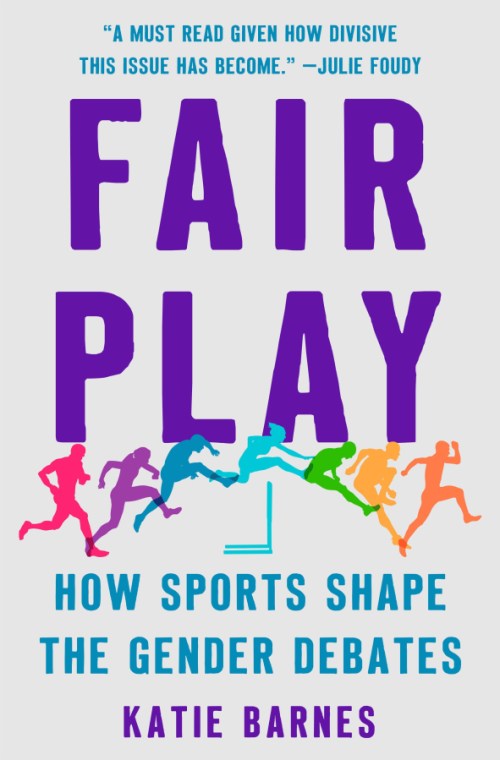
- Legal and Social Implications: Katie Barnes, in Fair Play, examines how Title IX—originally intended to ensure gender equity—is now being used as a legal battleground both for and against transgender inclusion. Barnes’ work highlights the irony of focusing on "fairness" in the context of trans inclusion while systemic inequities in women’s sports, such as disparities in funding, coaching, and media coverage, remain largely unaddressed.
Institutional Responses and Advocacy
The response to exclusionary policies has been divided between advocacy groups and governing bodies. Organizations such as the American Civil Liberties Union (ACLU) and the Human Rights Campaign (HRC) have filed numerous lawsuits challenging state bans, arguing that they violate the Equal Protection Clause of the Fourteenth Amendment and Title IX.
In the legal case Hecox v. Little, which challenged Idaho’s Fairness in Women’s Sports Act, the Ninth Circuit Court of Appeals maintained an injunction against the ban, noting the significant harm caused by excluding students from the benefits of athletic participation. Advocacy groups emphasize that for youth, sports are a vital tool for social integration, mental health, and physical well-being.
Conversely, groups like the Women’s Sports Policy Working Group argue for a "middle ground" that protects the female category based on biological sex while creating alternative spaces for transgender participation. However, critics argue that "open categories" often lack the funding, prestige, and competitive infrastructure of established categories, effectively serving as a form of secondary exclusion.

Broader Impact and Future Implications
The implications of trans-exclusionary sports policies extend beyond the playing field. For transgender youth, these bans can lead to increased social isolation and a higher risk of depression and anxiety. According to data from The Trevor Project, transgender and nonbinary youth who have access to gender-affirming environments, including inclusive sports, report significantly lower rates of attempted suicide.
Furthermore, the reintroduction of sex testing has profound implications for intersex athletes. The case of Caster Semenya, the South African middle-distance runner, illustrates how regulations aimed at "fairness" can result in the forced medical intervention of cisgender women with natural hormonal variations. This highlights a critical intersection where the policing of transgender bodies inevitably leads to the policing of all female bodies that fall outside of a narrow biological norm.
As the 2024 Olympic Games and future international competitions approach, the tension between inclusion and traditional definitions of fairness is expected to intensify. The legal precedents currently being set in the United States and the policy shifts within international federations will likely dictate the participation of transgender people in public life for decades to come. The ongoing debate underscores a fundamental question in modern society: whether sports should be a tool for universal human flourishing or a guarded institution defined by rigid biological boundaries.