In an era defined by profound global uncertainties, ranging from pandemics to geopolitical shifts and rapid technological evolution, the strategic composition of organizational teams has emerged as a paramount concern for sustained success. While discussions around diversity, equity, and inclusion (DEI) have rightfully gained prominence, often centering on demographic attributes such as gender and race, an increasingly robust body of research points to a more nuanced, yet equally critical, dimension: cognitive diversity. This distinct form of diversity, focusing on how individuals perceive, process, and apply information, is being identified as a pivotal differentiator for teams navigating complex, ambiguous, and novel challenges, yet it frequently remains an overlooked aspect in organizational strategy.
The foundational understanding that a multiplicity of perspectives enriches problem-solving, fuels innovation, and mitigates risks is now widely accepted. When synergistically combined with inclusive leadership practices, this diversity not only leads to superior decision-making but also ensures smoother implementation through enhanced buy-in and trust across an organization. Despite this established wisdom, many corporate DEI initiatives and organizational structuring efforts continue to prioritize the attainment of demographic representation and parity. While these efforts are indispensable for social justice and creating equitable workplaces, they often stop short of fully harnessing the multifaceted potential inherent in people’s diverse ways of thinking. True organizational strength is unlocked when both visible and invisible forms of diversity are acknowledged, valued, and strategically integrated.
The Evolving Understanding of Team Dynamics and Diversity
The journey towards understanding effective team composition has evolved significantly over decades. Early models often focused on hierarchical structures and individual technical competencies. However, as the global economy grew more interconnected and challenges became less predictable, the limitations of homogenous teams became starkly apparent. The mid-20th century saw the rise of behavioral science influencing management theory, highlighting the importance of group dynamics. The late 20th and early 21st centuries then brought a greater emphasis on demographic diversity, driven by civil rights movements and the realization that diverse workforces better reflect global markets and bring varied cultural insights. However, the current frontier of research increasingly emphasizes that beyond who people are, how they think is a critical, often unaddressed, component of high-performing teams.
This evolution can be seen as a chronological progression. Initial diversity efforts often stemmed from compliance requirements and affirmative action mandates in the 1960s and 70s, aiming to correct historical injustices and ensure equal opportunity. By the 1980s and 90s, the "business case for diversity" began to emerge, linking demographic diversity to market access, talent attraction, and improved public image. The early 2000s deepened this understanding, showing correlations between diverse boards and financial performance, particularly emphasizing gender diversity. Now, in the 2020s, the focus is expanding beyond the visible to the cognitive, recognizing that the true power of diversity lies in the varied mental models and problem-solving approaches that individuals bring to the table. This is not to diminish the importance of demographic diversity, which remains crucial for fairness and representation, but rather to complement it with a deeper understanding of intellectual pluralism. Industry leaders and organizational development experts increasingly advocate for this broader view, recognizing that a holistic approach to diversity yields superior outcomes.
Empirical Evidence for Cognitive Diversity
Decades of rigorous academic inquiry consistently underscore the profound impact of cognitive diversity on team performance, particularly when confronting novel, uncertain, and complex scenarios. Leading this charge are distinguished professors, researchers, and authors Alison Reynolds and David Lewis, whose extensive studies have meticulously examined how individuals conceptualize and engage with ambiguity and complexity. Their findings unequivocally demonstrate that the most adept and agile problem-solving teams are those characterized by high cognitive diversity coupled with a strong foundation of psychological safety.
Reynolds and Lewis’s research, drawing on an assessment tool originally developed by psychiatrist Peter Robertson, categorizes cognitive diversity into two primary dimensions, focusing on information processing styles and expertise facilitation:
- Knowledge and Information Processing: This dimension measures an individual’s inherent preference when faced with new, uncertain, or complex situations. Do they tend to consolidate and implement existing knowledge, relying on established frameworks and proven methodologies? Or do they lean towards generating entirely new knowledge, exploring uncharted territories, and developing innovative solutions from first principles? A team balanced across this spectrum ensures both stability and adaptability.
- Perspective and Expertise Facilitation: This second dimension assesses how individuals leverage knowledge. Do they primarily prefer to apply their own specialized expertise, functioning as a deep specialist in their domain? Or do they excel at orchestrating and synthesizing the ideas and expertise of others, acting as a facilitator who draws out and integrates diverse viewpoints? Teams with a mix here can both delve deep into specific issues and build comprehensive, cross-functional solutions.
Teams that exhibit a high degree of diversity across both these parameters consistently outperform their homogenous counterparts in dynamic environments. Such teams inherently access a broader repository of knowledge and a wider array of perspectives. Crucially, when this intellectual breadth is combined with a culture of psychological safety—a concept extensively explored by Harvard Business School professor Amy Edmondson, where team members feel safe to take interpersonal risks without fear of negative consequences—it fosters an environment conducive to constructive conflict and vigorous exploration. In these psychologically safe spaces, curiosity and experimentation thrive, leading to more robust solutions and a quicker adaptation to unforeseen challenges. Conversely, teams lacking either sufficient cognitive diversity or psychological safety often fall prey to groupthink or become mired in unproductive, combative internal dynamics. For instance, studies have shown that cognitively diverse teams can solve problems up to 30% faster than homogenous teams, especially when the problems are complex and require creative solutions.
Further supporting these findings, research by figures like Scott E. Page, author of "The Difference: How the Power of Diversity Creates Better Groups, Firms, Schools, and Societies," highlights that diverse groups, even if individual members are not exceptionally skilled, often outperform groups of high-ability but homogenous individuals when tackling complex problems. This is because diverse perspectives provide a wider search space for solutions and a greater capacity to avoid common pitfalls or blind spots, ultimately leading to more innovative outcomes and significantly reduced risks.
Beyond the Binary: Nuances of Cognitive Diversity
The scope of cognitive diversity extends beyond just information processing and expertise facilitation. It encompasses a broader spectrum of individual differences, including personality styles (e.g., introversion and extroversion), preferred mental frameworks for approaching problems, varying levels of risk tolerance, different approaches to process adherence versus flexibility, and diverse ways of managing complexity. For instance, an analytical thinker might break down a problem into its constituent parts, while a systems thinker might look at the interdependencies and emergent properties. A highly pragmatic individual might seek immediate, tangible solutions, whereas a visionary might prioritize long-term strategic implications. The need for complementary team members, therefore, becomes evident; a team composed solely of visionaries might struggle with execution, just as a team of pure pragmatists might miss opportunities for radical innovation. Tools such as the Herrmann Brain Dominance Instrument (HBDI) or similar psychometric assessments are increasingly being used by organizations to identify and leverage these varied cognitive preferences.
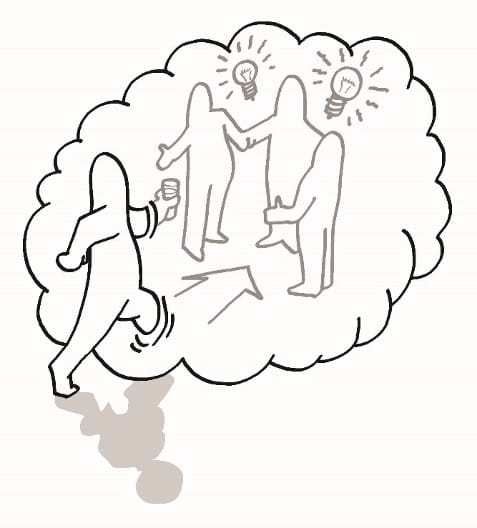
The current challenge is not necessarily a lack of understanding regarding the necessity of diverse approaches in handling unknown issues – logically, it makes sense to both leverage existing knowledge and explore the unknown. Rather, the primary hurdle lies in the insufficient attention given to strategically composing teams to achieve this balance. The prevalent organizational emphasis on demographic diversity, while critically important for equity and inclusion, inadvertently overshadows the equally vital task of cultivating cognitive diversity. Organizations must recognize that harvesting the full potential of human capital requires acknowledging and integrating diverse ways of processing information, applying expertise, and framing perspectives. This necessitates a proactive shift in talent management and team formation strategies.
The Indispensable Role of Inclusive Leadership and Culture
For cognitive diversity to truly flourish and translate into tangible organizational benefits, it must be embedded within a robust framework of inclusive leadership and an inclusive organizational culture. Such an environment ensures that every team member feels treated with fairness and respect, perceives their contributions as valued, experiences a genuine sense of belonging, is actively invited and encouraged to voice their perspectives, and feels empowered to act on their insights. Without psychological safety, cognitively diverse teams risk becoming paralyzed by conflict or, paradoxically, falling into groupthink as members self-censor.
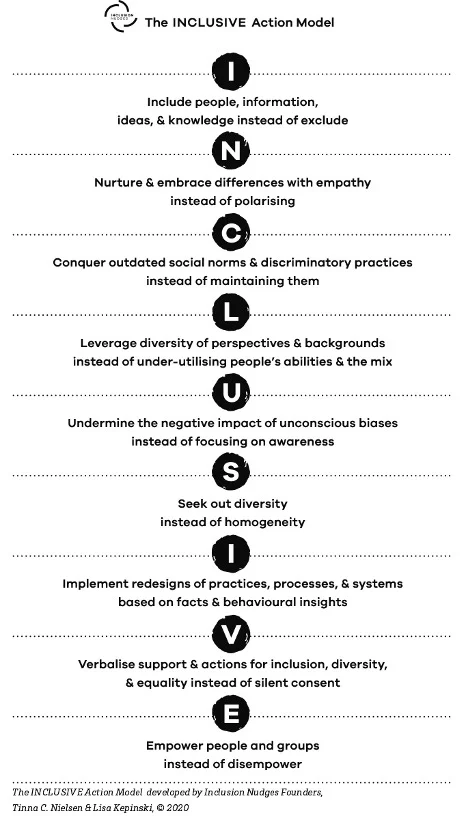
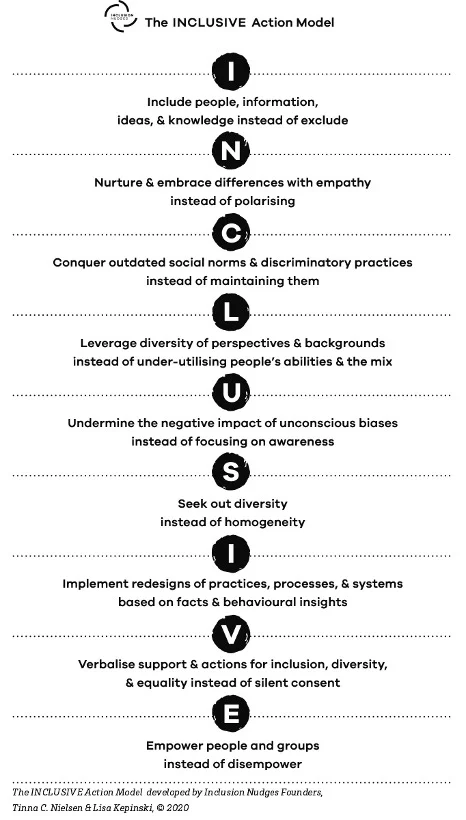
Achieving this multifaceted cultural shift necessitates a concerted effort from both leaders and individual team members. It requires leaders to actively cultivate psychological safety, mediate constructive conflict, and champion diverse thinking. This includes behaviors like active listening, soliciting dissenting opinions, admitting their own fallibility, and openly sharing information. It also demands that team members engage with open minds, practice active listening, and contribute their unique insights even when they diverge from the majority. Recognizing this complex interplay, experts like Tinna Nielsen and Lisa Rasmussen, co-founders of Inclusion Nudges, have developed models such as the Inclusion Nudges Inclusive Action Model. This model provides a holistic framework outlining various strategies to systematically build inclusive cultures, embed inclusive structures, and foster inclusive behaviors across an organization, moving beyond abstract concepts to actionable interventions.
The year 2021 saw a notable surge in CEOs and global leaders publicly advocating for diversity, equity, and inclusion, signifying a crucial shift in executive awareness. However, the perennial challenge remains the effective cascading of this top-level support across all managerial echelons within organizations, ensuring that advocacy translates into concrete, consistent action-taking. This executive-level commitment is only the first step in catalyzing genuine cultural transformation. Without middle management engagement, initiatives often falter.
The profound impact of leadership behavior on organizational inclusion is well-documented. Research from Deloitte Australia, for instance, indicates that the behaviors exhibited by leaders can account for up to a 70 percentage point difference in the proportion of employees who report feeling highly included versus those who do not. This effect is even more pronounced for members of minority groups, highlighting the disproportionate responsibility leaders bear in creating equitable and inclusive environments. Leaders who actively promote psychological safety and demonstrate curiosity about different perspectives significantly enhance team performance and individual engagement.
Despite an observed increase in leaders actively pursuing organizational change towards greater inclusion, a significant proportion still report feeling "ill-equipped" to act inclusively. They often express uncertainty regarding the practical steps required, particularly when navigating sensitive conversations and facilitating dialogues about experiences of exclusion or discrimination. This gap between intent and capability represents a critical barrier to widespread cultural change. Many leaders fear making mistakes or saying the wrong thing, leading to inaction.
To address this specific leadership challenge, practical resources have become essential. The "Inclusion Nudges for Leaders" Action Guide, developed by Lisa and Tinna, offers 30 easily applicable inclusive actions designed to empower leaders. These behavioral designs provide step-by-step guidance, enabling leaders across diverse organizations and sectors to embed inclusion as the default and norm in their daily leadership practices. The effectiveness of such tools lies in their ability to demystify inclusive leadership, breaking down complex concepts into actionable steps. As leaders successfully apply these proven designs, their confidence grows, fostering a virtuous cycle where initial positive actions inspire further inclusive behaviors, ultimately sparking broader organizational culture change. This initiative aims to dismantle the common barrier where leaders hesitate to act due to a perceived lack of knowledge or fear of missteps, providing them with the confidence and tools to lead inclusively and effectively.
Broader Implications and Future Outlook
The strategic integration of cognitive diversity carries significant implications across various sectors. In technology, diverse thinking can lead to more robust product design, innovative software solutions, and ethical AI development, actively avoiding algorithmic bias by challenging assumptions from various angles. In finance, it can enhance risk assessment, identify novel investment opportunities, and foster more resilient financial models in volatile markets. In healthcare, it fosters more holistic patient care strategies, accelerates innovative research methodologies, and improves diagnostic accuracy. Even in public policy and governance, cognitively diverse teams can develop more resilient, equitable, and comprehensive solutions for complex societal challenges, ranging from climate change to economic inequality.
The future of organizational excellence will undoubtedly hinge on an organization’s ability to not only attract diverse talent but also to cultivate an environment where diverse ways of thinking are actively sought, respected, and leveraged. This necessitates a proactive approach to team formation, moving beyond serendipitous mixtures to intentional design based on an understanding of cognitive styles and preferences. It also demands continuous investment in leadership development programs that equip managers with the skills to identify, facilitate, and synthesize varied cognitive contributions, ensuring that all voices are heard and valued.
The journey towards fully realizing the potential of cognitive diversity is ongoing. It requires a sustained commitment to research, the development of practical assessment tools, and, most importantly, a cultural shift that values intellectual humility and the robust exchange of differing ideas. By prioritizing cognitive diversity alongside demographic diversity, organizations can build teams that are not merely representative but are truly resilient, innovative, and equipped to thrive in an increasingly complex and unpredictable world. The invitation remains for all leaders and organizations to explore these frameworks and contribute to a growing repository of best practices that empower others to foster truly inclusive and high-performing environments.