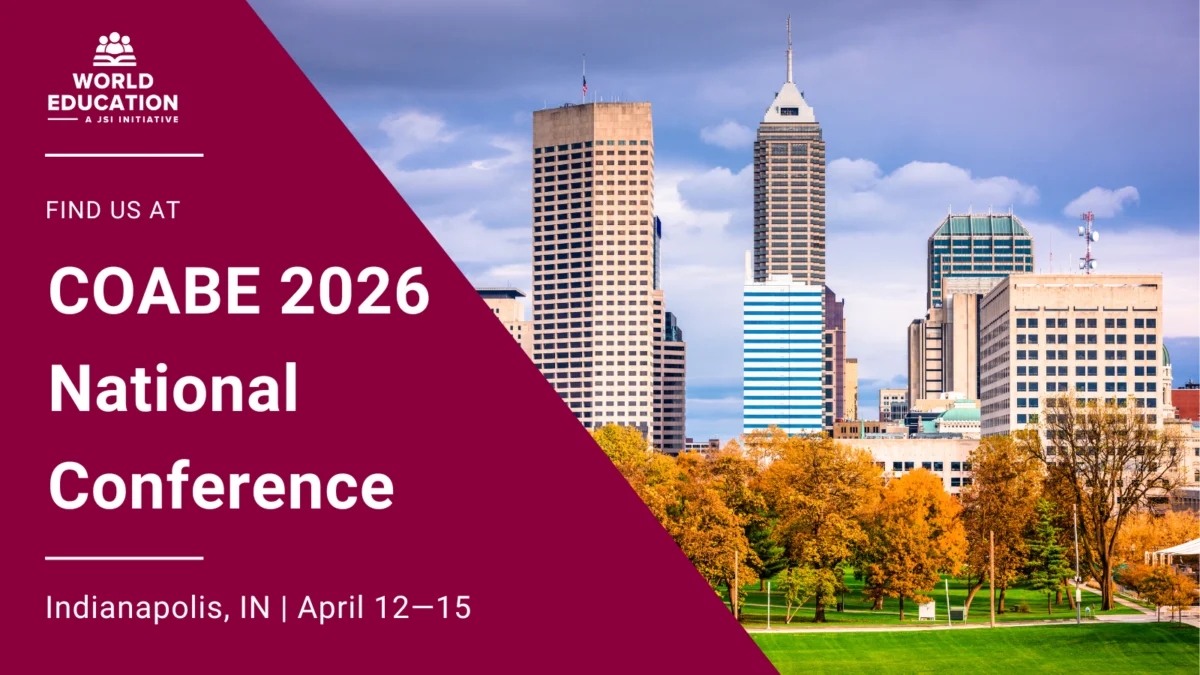
World Education, an initiative of JSI Research & Training Institute, Inc., has announced its comprehensive participation in the Commission on Adult Basic Education (COABE) 2026 National Conference, scheduled to take place in Indianapolis, Indiana, from April 12 to April 15. As a leading voice in the field of adult learning, World Education will deploy a team of experts to present a series of workshops and sessions focused on the critical intersection of digital literacy, professional development, and the burgeoning role of Generative Artificial Intelligence (AI) in the classroom. This multi-day engagement underscores the organization’s commitment to addressing the evolving needs of adult learners and educators in an increasingly digitized global economy.
The COABE National Conference serves as the premier annual gathering for adult education practitioners, administrators, and policymakers in the United States. With the 2026 event hosted in Indianapolis, the conference arrives at a pivotal moment for the sector, as federal and state governments continue to prioritize digital equity and workforce readiness. World Education’s involvement is set to highlight practical applications of research-driven strategies, ranging from institutional policy implementation to the granular use of digital checklists for skill development.
Strategic Context: The State of Adult Education in 2026
The backdrop for the 2026 conference is defined by a rapid transformation in how adult education is delivered and measured. According to data from the Program for the International Assessment of Adult Competencies (PIAAC), a significant portion of the adult population in the United States continues to face challenges with literacy, numeracy, and digital problem-solving. As industry demands shift toward high-tech proficiency, organizations like World Education are pivoting toward "Digital Equity" frameworks that ensure no learner is left behind by the technological divide.
World Education’s presence at COABE 2026 reflects a strategic response to these challenges. By focusing on Generative AI and digital literacy, the organization aims to provide educators with the tools necessary to bridge the gap between basic foundational skills and the sophisticated digital competencies required by the modern workforce. The sessions planned for the conference are designed to translate high-level research into actionable classroom techniques, ensuring that the latest academic findings from networks like CREATE are accessible to frontline practitioners.
Chronological Overview of World Education Sessions
The four-day conference will feature an extensive lineup of presentations by World Education staff, beginning with foundational digital skills and progressing toward advanced AI integration and curriculum design.
Monday, April 13: Foundations and Policy Implementation
The first full day of the conference will see World Education experts addressing both the micro and macro levels of digital education. At 8:00 AM, Jeff Goumas will lead a session titled "Using BRIDGES Skills Checklists to Drive Digital Skills Development in Any Context." This presentation, available to both in-person and virtual attendees in the JW Grand Ballroom 2, focuses on the BRIDGES framework, a tool designed to standardize the assessment and development of digital skills across diverse educational environments.
Later in the morning, Sandy Goodman and Catalina González will present "From Policy to Practice: Implementation Lessons from Boston’s Digital Literacy Initiative." This session will provide a case study of how urban centers can successfully roll out large-scale digital literacy programs, offering a roadmap for other municipalities looking to replicate Boston’s success. Simultaneously, Dani Scherer will conduct a session in Room 209 titled "Maximum Impact Professional Development: A Three-Pronged Approach," which outlines a holistic model for educator training that emphasizes sustainability and measurable outcomes.
The afternoon of April 13 will feature a collaborative session involving the CREATE Network. Presenters Jen Vanek and Jeff Goumas, alongside representatives from the American Institutes for Research (AIR), will discuss "Practical Solutions from Research: Digital Tools to Support Teaching and Learning." This in-person-only session in Room 205 is intended to bridge the gap between educational research and classroom reality, showcasing tools that have been vetted for effectiveness in adult learning environments.
Tuesday, April 14: The AI Frontier and Open Resources
Tuesday’s agenda is heavily weighted toward the transformative potential of Artificial Intelligence. Starting at 8:00 AM, Rachel Riggs will present "Aligning AI Literacy with Learning and Work Goals in Adult Ed" in the JW Grand Ballroom 3. This session addresses the growing necessity for adult learners to not only use AI but to understand its implications for their career trajectories. Concurrently, Jeff Goumas will present on "Generative AI and the EdTech Maker Space," exploring how educators can use AI to fill gaps in learning resources, effectively democratizing the creation of high-quality educational content.
The midday sessions will shift focus toward Open Educational Resources (OER). Jen Vanek and Jeff Goumas, joined by Stephen Sireci of UMass Amherst, will present "Free and Open Online Literacy Curriculum: Leveraging SkillBlox and ASAP for Adult Readers." This presentation highlights the importance of accessible, cost-free materials in scaling literacy programs. This will be followed by a session in Room 206, where Vanek and Goumas will join Stephanie Cronen and Neha Nanda from AIR to discuss "Practitioner-Friendly Findings," focusing on research-based resources for teaching in-demand skills.
Wednesday, April 15: Sustainable Instruction and Digital Series
The final day of the conference focuses on the long-term sustainability of digital literacy programs. Eliana Stanislawski will lead two consecutive sessions designed to provide educators with a structured path forward. The first, "EdTech in Action: Structuring a Digital Literacy Learning Series for Adult Educators," provides a blueprint for professional development. The second, "Engaging Strategies for Online Instruction of Literacy-Level Adults," addresses the specific pedagogical challenges of teaching adults with low literacy levels in a virtual environment, ensuring that digital instruction remains inclusive and effective.
Analysis of Implications for the Adult Education Sector
The heavy emphasis on AI and digital literacy at the COABE 2026 conference signals a broader shift in the adult education landscape. For decades, the primary focus was on GED attainment and basic ESL instruction. However, the sessions proposed by World Education suggest that "literacy" in 2026 is no longer just about reading and writing; it is about "digital fluency."
The integration of Generative AI into the curriculum represents a double-edged sword for the sector. On one hand, it offers unprecedented opportunities for personalized learning and resource generation. On the other, it risks widening the equity gap if adult learners are not taught how to navigate these tools ethically and effectively. World Education’s approach—focusing on "AI Literacy"—suggests a proactive stance that seeks to empower learners rather than just teaching them to use a specific software.
Furthermore, the collaboration between World Education and research institutions like the American Institutes for Research (AIR) and UMass Amherst indicates a push for "evidence-based" practice. In an era of tightening budgets, demonstrating the efficacy of educational interventions through data is essential for securing continued funding under the Workforce Innovation and Opportunity Act (WIOA).
Supporting Data: The Digital Divide and Economic Impact
The necessity of the topics covered by World Education is supported by recent economic data. According to the National Skills Coalition, nearly one-third of workers in the U.S. lack the digital skills required for their current jobs. This gap is even more pronounced among adult learners who may have been out of the formal education system for years.
Research indicates that workers with digital skills earn significantly higher wages than those without. By focusing on "In-Demand Skills" and "Digital Literacy Learning Series," World Education is directly addressing the economic mobility of adult learners. The use of open-source tools like SkillBlox and ASAP also addresses the financial barriers that often prevent adult education programs from accessing the latest curriculum.
Official Stance and Institutional Goals
World Education has long maintained that educational equity is a cornerstone of social justice. By functioning as an initiative of JSI, the organization leverages a global network of experts to apply systems-thinking to educational challenges. The "Partner with Us" initiative mentioned in their conference materials emphasizes a collaborative approach to education systems strengthening.
While official statements from the presenters were not explicitly released prior to the event, the focus of the sessions suggests a unified organizational goal: to move adult education beyond the "basics" and toward a comprehensive model of digital empowerment. The organization’s role in the CREATE Network and its ongoing work with the EdTech Maker Space are indicative of a leadership role in the "Open Education" movement, which advocates for the free sharing of knowledge and resources.
Broader Impact and Future Outlook
The outcomes of the COABE 2026 National Conference are expected to influence adult education policy at the state and federal levels for the remainder of the decade. As Indianapolis hosts thousands of educators, the strategies shared by World Education will likely be integrated into state-level professional development plans across the country.
The move toward AI-integrated learning is perhaps the most significant takeaway. As World Education experts demonstrate how to use GenAI to fill resource gaps, they are providing a solution to the perennial problem of underfunded adult education centers. If educators can use AI to generate tailored lesson plans and assessments, they can focus more of their time on direct student support and mentorship.
In conclusion, World Education’s extensive presence at COABE 2026 represents a critical milestone in the professionalization and modernization of adult education. By aligning research-based practices with the cutting-edge technological realities of 2026, the organization is helping to define a new standard for what it means to be a literate and empowered adult in the 21st century. The transition from "Policy to Practice," as highlighted in their sessions, remains the ultimate goal for a sector striving to ensure that the digital revolution serves as a bridge, rather than a barrier, to opportunity.