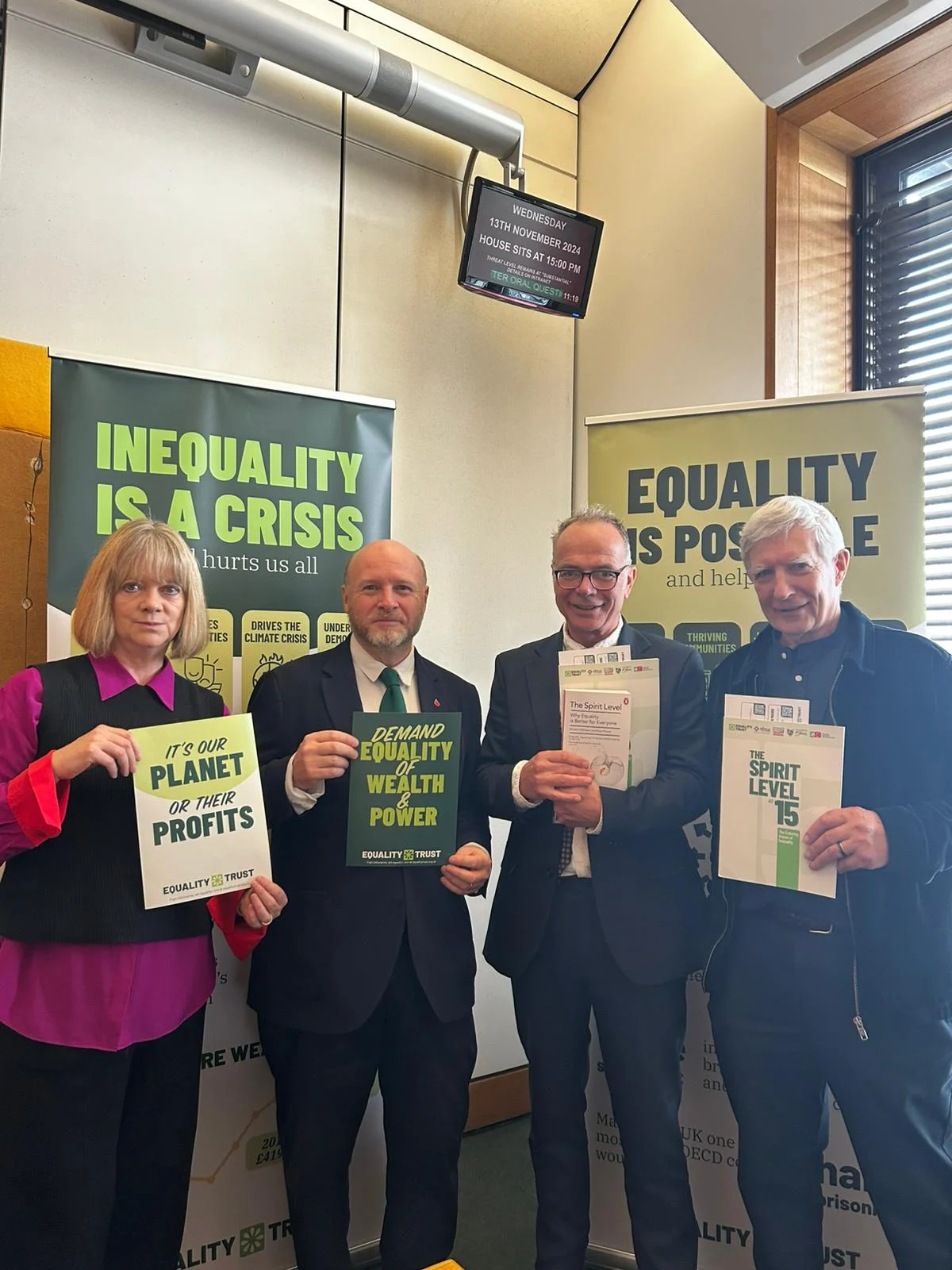
The virtual launch of Professor Kate Pickett’s latest work, The Good Society, took place on February 4, 2026, marking a significant milestone in the ongoing international discourse regarding economic inequality and social reform. Hosted in partnership with the progressive advocacy group Compass, the event drew an audience of over 500 participants, including policymakers, academics, and activists. The launch featured a high-profile panel consisting of Baroness Ruth Lister, environmental journalist George Monbiot, and former Green Party leader Caroline Lucas, all of whom provided critical commentary on the book’s central thesis: that systemic equality is the foundational requirement for a functional and sustainable modern civilization.
Professor Pickett, a renowned epidemiologist and co-founder of The Equality Trust, has spent nearly two decades documenting the correlation between income disparity and social dysfunction. This latest publication serves as both a culmination of her previous research and a forward-looking roadmap for structural change. The event served not only to introduce the text but also to re-engage a public that has seen significant economic volatility throughout the mid-2020s.
The Evolution of Inequality Research: From The Spirit Level to The Good Society
The Good Society arrives seventeen years after the publication of The Spirit Level (2009), a seminal work co-authored by Pickett and Richard Wilkinson that fundamentally altered the global understanding of wealth distribution. While their earlier research focused on the empirical evidence linking high inequality to poor health, increased crime, and lower social mobility, The Good Society shifts the focus toward the practical construction of an alternative model.
Since the founding of The Equality Trust in 2009, Pickett’s work has influenced international bodies such as the OECD, the IMF, and the World Bank, all of whom have increasingly acknowledged that extreme inequality acts as a drag on economic stability. The new book addresses the contemporary challenges of the 2020s, including the intersection of climate change and economic justice—a theme that resonated strongly during the launch event’s panel discussion.
The online gathering provided a platform for Pickett to reflect on the progress made since 2009 and the significant hurdles that remain. She emphasized that while the data supporting the benefits of equality is now overwhelming, the political will to implement large-scale redistributive and structural reforms often lags behind the scientific consensus.
Perspectives from the Panel: A Multidisciplinary Analysis
The inclusion of Baroness Ruth Lister, George Monbiot, and Caroline Lucas provided a multi-dimensional perspective on Pickett’s work, bridging the gap between academic theory and political practice.
Baroness Ruth Lister, a leading scholar in social policy and a member of the House of Lords, focused on the human dignity aspect of the book. Lister argued that inequality is not merely a matter of statistics but a fundamental violation of the "social citizenship" required for a healthy democracy. She noted that The Good Society provides the necessary intellectual framework to advocate for social security systems that empower rather than punish the vulnerable.
George Monbiot, known for his work on environmental justice and the "commons," connected Pickett’s findings to the ecological crisis. Monbiot suggested that the "private luxury" pursued in highly unequal societies is ecologically unsustainable. He praised the book for highlighting how a more equal society would reduce the competitive consumption that drives carbon emissions. Monbiot’s contribution underscored a key takeaway from the event: that the fight for a "good society" is inextricably linked to the fight for a habitable planet.
Caroline Lucas offered a legislative perspective, discussing how the principles outlined in Pickett’s book could be translated into parliamentary action. As a long-standing advocate for a wellbeing economy, Lucas highlighted the need to move beyond Gross Domestic Product (GDP) as the primary measure of national success. She argued that the "all-star" panel represented a growing consensus across different sectors of the progressive movement that the current economic paradigm is no longer fit for purpose.
Statistical Foundations and the Cost of Inequality
Central to the discussion during the book launch was the empirical data that underpins Professor Pickett’s arguments. The Good Society draws on an extensive array of metrics to demonstrate that more equal societies consistently outperform unequal ones across nearly every social indicator.
Supporting data cited in the book and discussed during the event includes:
- Life Expectancy and Health: In societies with lower Gini coefficients (a measure of statistical dispersion representing the income or wealth inequality of a nation’s residents), life expectancy is significantly higher, and infant mortality rates are lower.
- Social Mobility: Data from the 2020s continues to show a "Great Gatsby Curve" effect, where higher levels of inequality are associated with lower levels of intergenerational mobility, effectively stifling the "equality of opportunity" often cited as a goal by political leaders.
- Trust and Social Cohesion: Pickett’s research indicates that high-inequality nations suffer from a "trust deficit." Surveys analyzed in the book show that in more equal countries, citizens are more likely to trust one another and their government institutions, which is a critical factor in managing national crises such as pandemics or economic shifts.
- Economic Stability: The book references recent IMF studies suggesting that prolonged periods of high inequality are associated with more frequent and more severe economic recessions, as the concentration of wealth limits aggregate demand.
By presenting these facts in a cohesive narrative, The Good Society aims to move the conversation from "why inequality is bad" to "how equality can be built."
Chronology of the Equality Movement (2009–2026)
The launch of The Good Society is a key marker in a timeline of escalating advocacy for social and economic reform.
- 2009: Publication of The Spirit Level and the establishment of The Equality Trust. The book becomes a bestseller and sparks global debate.
- 2011–2015: Rise of global movements such as Occupy Wall Street and anti-austerity protests in Europe, which popularized the "1% vs. 99%" rhetoric.
- 2018: Pickett and Wilkinson publish The Inner Level, focusing on the psychological impact of inequality, including its links to anxiety and status competition.
- 2020–2022: The COVID-19 pandemic exposes deep-seated structural inequalities, as low-income workers and marginalized communities are disproportionately affected.
- 2023–2025: Several European and Commonwealth nations begin experimenting with "wellbeing budgets," prioritizing social outcomes over raw economic growth.
- February 4, 2026: Online launch of The Good Society, signaling a shift toward holistic, systemic solutions that integrate economic, social, and environmental policy.
Broader Implications for Policy and Governance
The implications of Professor Pickett’s latest work are vast, suggesting that a "good society" requires more than incremental changes to the tax code. The book advocates for a fundamental redesign of the relationship between the state, the market, and the individual.
Analysts observing the event noted that the strategies discussed by Pickett and her guests represent a shift toward "pre-distribution"—policies that make the market work more fairly in the first place, such as stronger labor unions, employee ownership models, and more progressive corporate governance. This contrasts with "redistribution," which relies solely on taxing wealth after it has been concentrated.
The event also highlighted the role of grassroots organizations like Compass in fostering the "politics of togetherness." By bringing together over 500 people for a book launch, the organizers demonstrated that there is a significant public appetite for intellectual depth and long-term vision in political discourse.
The Good Society suggests that the path to a better future involves:
- Democratizing the Economy: Encouraging cooperatives and community-led initiatives.
- Investing in the Commons: Expanding public services and shared spaces to reduce the "cost of living" through collective provision.
- Reforming Education and Health: Ensuring that these sectors are insulated from market pressures that exacerbate inequality.
Conclusion and Future Outlook
As Professor Pickett’s new work enters the public sphere, it is expected to serve as a cornerstone for progressive policy development heading into the late 2020s. The recording of the event, now available via The Equality Trust and Penguin Books, continues to circulate, extending the reach of the discussion beyond the initial 500 attendees.
The Good Society does not merely diagnose the ills of modern civilization; it offers a rigorous, evidence-based argument that a more equal world is not only possible but necessary for the survival of democratic institutions. By aligning the interests of social justice with those of environmental sustainability and economic stability, Pickett has provided a comprehensive framework for the next generation of reform.
For those interested in the detailed findings, the book is currently available through major retailers, and the ongoing work of The Equality Trust remains a primary resource for those seeking to implement the book’s recommendations at the local and national levels. The success of the launch event underscores a critical reality: sixteen years after Professor Pickett first alerted the world to the dangers of inequality, the drive to build a "good society" remains a central priority for the global community.