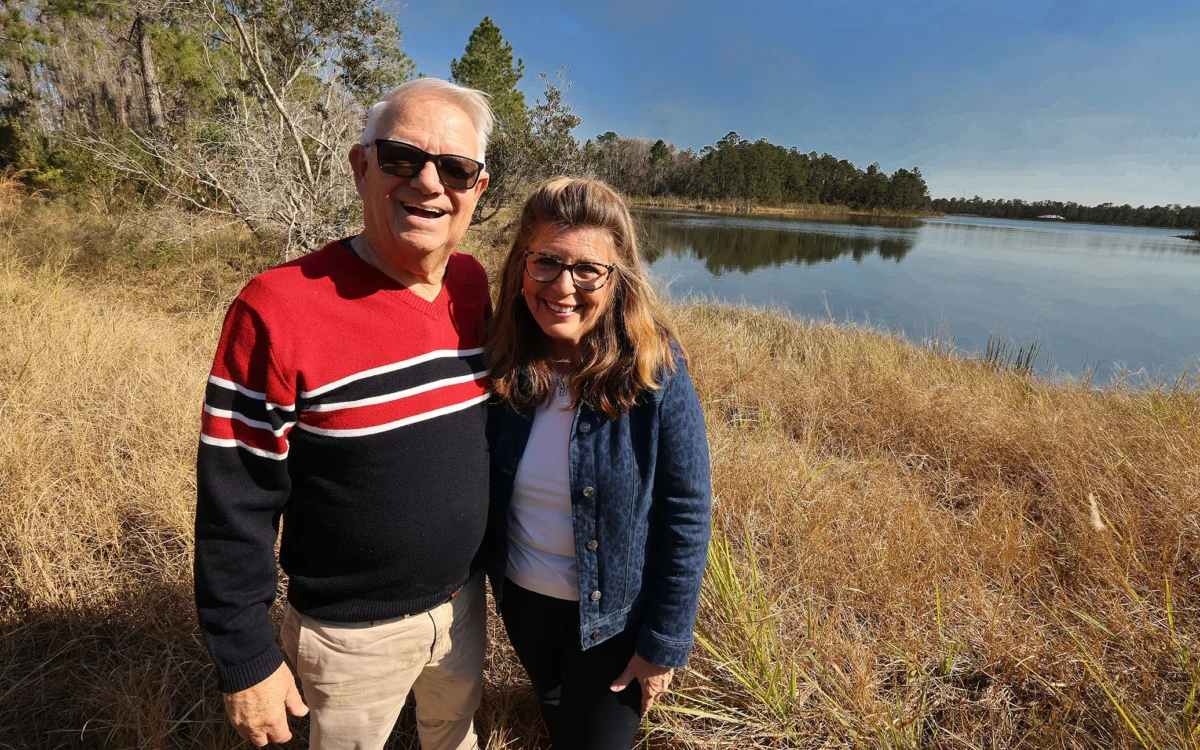
ORLANDO, Fla. — The daily reality for Chip and Kasinee Tolman is a testament to unwavering parental devotion, a 24/7 commitment to their two adult children, ages 24 and 28, who live with severe cerebral palsy and cognitive delays. Each morning begins with the physically demanding task of lifting their children from bed into their wheelchairs, assisting them with personal care, and then returning them to their chairs. While one parent attends to feeding, the other manages laundry. “It’s a twenty-four seven situation. You have to do everything for them. Their cognitive skills are like babies,” Chip Tolman, 71, shared, his voice tinged with the weariness that comes from years of strenuous caregiving. The physical toll on his knees and back is constant, but his most profound anxiety centers on the future: who will care for his children once he and his wife are no longer able?
This pressing concern, shared by countless families across the nation, is precisely what Tim and Marie Kuck, founders of the Orlando-based nonprofit Nathaniel’s Hope, aim to address with their ambitious Hopetown project. The Kucks, motivated by their own experiences raising a son with a disability, have embarked on a transformative initiative to create a comprehensive community designed to offer a sustainable and enriching environment for adults with disabilities.
A Vision for Inclusive Living
The cornerstone of the Hopetown vision is the acquisition of nearly 400 acres in east Orlando, a sprawling expanse slated for development into a vibrant community capable of housing approximately 200 adults with disabilities. The overarching goal is to provide not just a place to live and work, but also a sanctuary that offers peace of mind to families, assuring them that their loved ones will receive exceptional care and a high quality of life.
The proposed master plan for Hopetown is remarkably comprehensive, envisioning a diverse range of living options, including independent homes and group residences, alongside a skilled nursing facility to cater to varying levels of need. The community will also feature a central cafeteria, a town center designed to be a hub for social and recreational activities, ample recreational land, and integrated businesses that will provide employment opportunities for residents.
Tim Kuck emphasizes that Hopetown is being designed as a true community, drawing parallels to established neighborhoods like Baldwin Park rather than resembling traditional institutions. "It’s a community like Baldwin Park and not anything remotely close to an institution," Kuck stated. "It’s a place that will have residents but also be for the Orlando community. We hope to make it very inviting." This inclusive approach aims to foster interaction and integration between residents and the broader Orlando population.
A Strategic Acquisition and Ambitious Development
The Kucks’ commitment to this vision is underscored by their significant land acquisition. In 2022, they purchased 171 acres, followed by an additional 200 acres earlier this year. The total investment for this prime real estate amounts to $7 million. The projected cost for the full development of Hopetown is an estimated $100 million, a testament to the scale and scope of the project. The Kucks are drawing inspiration from Marbridge, a well-established residential community near Austin, Texas, founded in 1953. Marbridge was conceived as a pioneering alternative to the prevailing institutional models of the era, aiming to provide adults with cognitive disabilities a supportive environment for living, working, and learning.
Roots in Personal Experience and Compassion
The genesis of Nathaniel’s Hope and the Hopetown project lies in the profound personal journey of Tim and Marie Kuck. Their nonprofit was established over two decades ago following the tragic death of their son, Nathaniel, at the age of four. Nathaniel had an undiagnosed condition that resulted in significant disabilities. "We were thrown into a community that we weren’t prepared to be a part of," Marie Kuck recalled. "But once we were there, we learned so much." This immersion into the world of disability support fueled their desire to create a more robust and compassionate system for families facing similar challenges.
Nathaniel’s Hope has since grown into a national and international organization, operating in 38 states and three countries. The nonprofit currently provides vital respite care services by renting space in local churches and employing skilled caregivers. This allows parents to entrust their children for several hours each week, offering them a much-needed break from the relentless demands of caregiving.
Chip Tolman speaks with deep appreciation for the respite services Nathaniel’s Hope has historically provided. "When you went there, you always knew that the people taking care of your kids were top notch, top notch all the way," he said, recalling how his children attended a program at Calvary Orlando for three hours every Saturday when they were younger. The relief and trust these services offered were invaluable, and now, he hopes his children will be among the first residents of Hopetown, where they can continue to experience enriching activities.
Fostering Engagement and Independence
The vision for Hopetown extends beyond basic care to actively promoting engagement and a sense of belonging for its residents. The plans include accessible trails around a lake, where caregivers can facilitate activities like pushing residents on wheelchairs along the path. The town center is envisioned as a place where residents can enjoy simple pleasures, such as browsing shops or dining in the cafeteria with peers.
“My kids have a good time looking around and seeing stuff. They don’t want to sit at home and look at the big screen TV, watch Disney videos. I can tell they get real bored with that,” Chip Tolman noted, highlighting the importance of stimulating environments for his children’s well-being and happiness.
A Sustainable Model of Ownership and Operation
The Kucks, who are also principals of Regal Boats, an internationally recognized luxury boat manufacturer, will retain ownership of all properties within Hopetown. They plan to lease these spaces to businesses and residents, creating a sustainable economic model for the community. This ownership structure allows for greater control over the development and ensures that the vision for an inclusive and supportive environment remains paramount.
Furthermore, approximately 200 acres of conservation land on the Hopetown property are slated to be opened to the public for recreational activities such as hiking, fishing, and birdwatching, further integrating the community with the wider Orlando area.
Affordability and Accessibility as Core Principles
A critical aspect of the Hopetown project is its commitment to affordability. The Kucks aim to keep resident rents low, with community donations playing a crucial role in achieving this goal. "We don’t want this to be a community just for the wealthy," Marie Kuck emphasized. "Everybody should be welcome here." This sentiment is echoed by Steven McAvoy, CEO of Marbridge, the Texas community that serves as a model. At Marbridge, where the monthly fee is $4,475 (inclusive of rent, utilities, food, caregiver access, and job training), approximately half of the residents receive financial assistance through fundraising efforts to reduce their costs. Marbridge’s ambition is to expand its endowment significantly to offer scholarships, making residency accessible to anyone.
A Hub for Comprehensive Services
The Kucks envision Hopetown as a nexus for a wide range of services, fostering partnerships with local hospitals and other agencies. They hope to attract medical facilities to the community, providing convenient access to healthcare for both residents and non-residents with disabilities. The development also includes plans for a comprehensive athletics complex, featuring a gymnasium, splash pad, and a pool that will be accessible to the broader Central Florida community.
Additionally, Hopetown will feature a dedicated work center for job skills training, a petting zoo, and various shops and restaurants. The goal is to create a lively atmosphere where residents can engage in meaningful work and leisure activities, and where community members can interact. "We’re hoping to have an ice cream shop. And wouldn’t it be great if the people in the community across the street brought their friends over for ice cream?" Marie Kuck mused, illustrating the envisioned social integration.
A Beacon of Hope for Families
The profound impact of the Hopetown project on families like the Tolmans is palpable. Chip Tolman, speaking about the initiative, expressed his admiration for the Kucks, stating, "Tim and Marie are amazing people. And it’s such an ambitious project." His voice faltered with emotion, prompting him to pass the phone to his wife. Kasinee Tolman, her voice thick with tears, shared, "We’re doing the best we can right now. And I hope a lot of people, like us, can look forward to Hopetown, like a candle that lights up." Their words encapsulate the immense hope that Hopetown represents for families seeking a secure, supportive, and enriching future for their adult children with disabilities. The project is poised to redefine the landscape of disability care and community living in Central Florida and beyond, offering a tangible solution to long-standing societal challenges.