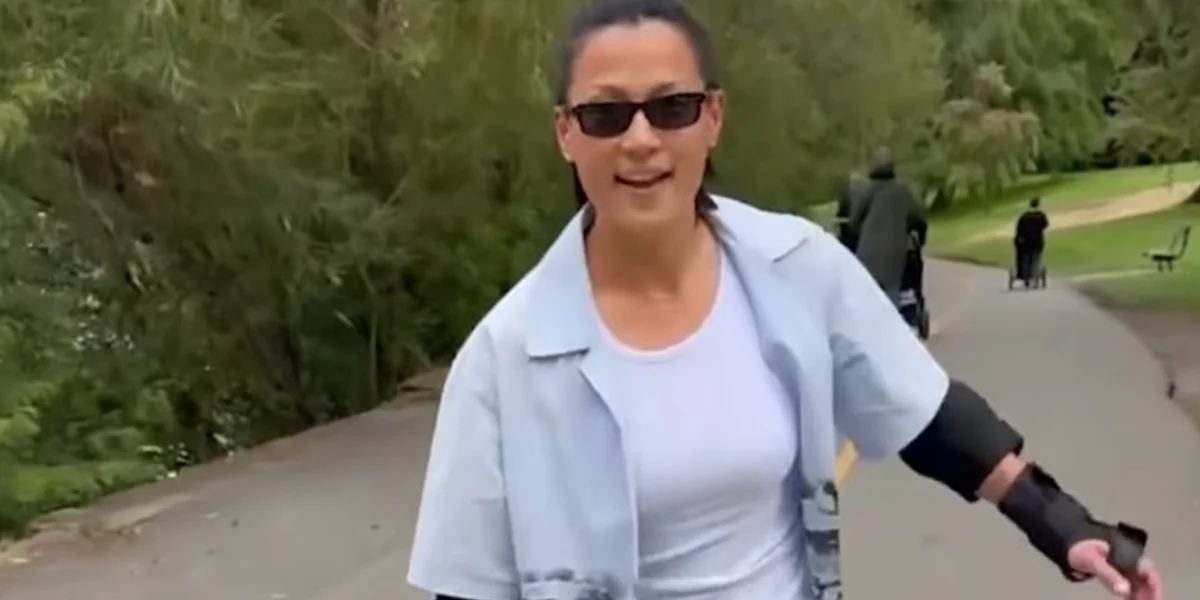
HBO’s critically acclaimed adaptation of the Naughty Dog video game franchise, The Last of Us, has reached a new turning point in its production cycle with the casting of Kyriana Kratter for the pivotal role of Lev in the upcoming third season. While the series has historically enjoyed both commercial success and critical adulation, this specific casting decision has ignited a complex debate among fans, industry advocates, and the LGBTQ+ community. At the heart of the controversy is the misalignment between the gender identity of the character and the actor cast to portray him, a move that many argue contradicts modern standards for authentic representation in media.
Lev, a character introduced in the 2020 video game The Last of Us Part II, is canonically a transgender boy. His narrative arc is deeply intertwined with his gender identity; he is a former member of the Seraphites, a fundamentalist cult, who is forced into exile after defying the group’s rigid gender roles. Within the gaming community, Lev’s story was hailed as a landmark for transgender visibility in AAA titles. Consequently, the transition of this character to the television screen has been one of the most anticipated aspects of the series’ expansion into the events of the second game.
The Context of the Casting Decision
The announcement that Kyriana Kratter, a cisgender female actor, will portray Lev has been met with a mixture of confusion and criticism. This decision follows a series of casting choices for the show’s second and third seasons that have previously divided the fanbase, albeit for different reasons. Earlier casting announcements included Bella Ramsey as Ellie and Isabela Merced as Dina, both of whom identify as queer, a move that was generally praised for its alignment with the characters’ identities. Conversely, the casting of Kaitlyn Dever as Abby Anderson faced a different brand of scrutiny, primarily from fans who questioned if the actor’s physical stature would match the character’s muscular build as depicted in the source material.
However, the discourse surrounding Kratter’s casting as Lev operates on a fundamentally different level, touching upon the ethics of "authentic casting." For over a decade, advocacy groups such as GLAAD and various coalitions of trans creators have lobbied for transgender roles to be filled by transgender actors. The rationale behind this movement is twofold: it provides rare professional opportunities for a marginalized group of performers and ensures that the lived experience of the character is handled with nuance and accuracy.
Historical Timeline and Production Trajectory
To understand the weight of this decision, one must look at the production timeline of The Last of Us on HBO. Following the massive success of the first season in 2023, showrunners Craig Mazin and Neil Druckmann confirmed that the narrative of the second game would be too expansive for a single season. This led to the bifurcated production of Season 2 and Season 3.
As rumors of Season 3’s development began to circulate in late 2024 and throughout 2025, the casting of the "Seattle" characters—Abby, Lev, and Yara—became a focal point for the production team. By early 2026, as the show moved into active filming for the third season, the announcement of Kratter’s involvement surfaced. The timing is notable; in an era where major productions like Pose, Euphoria, and The Umbrella Academy have successfully integrated transgender actors into both trans and cisgender roles, the decision to cast a cisgender actor in a high-profile transgender role is viewed by many as a regression in industry standards.
Analysis of Representation and Industry Implications
The primary critique from the LGBTQ+ community centers on the message that casting a cisgender girl as a transgender boy sends to the audience. Advocates argue that this choice inadvertently reinforces the "trans-exclusionary" trope that transgender men are essentially "girls playing a role." In the context of Lev’s story—which is specifically about his rejection of female identity and his assertion of manhood despite his birth sex—critics argue that having a female actor portray him undermines the very essence of his struggle.
Statistically, the opportunities for transgender actors remain limited. According to GLAAD’s "Where We Are on TV" report for the 2025-2026 season, while LGBTQ+ representation has seen an overall increase, the number of transgender characters remains a small fraction of the total. Furthermore, the report highlights a persistent "glass ceiling" where transgender actors are rarely considered for cisgender roles, making the loss of a prominent transgender role to a cisgender actor particularly impactful.
Some industry analysts suggest that the casting directors may have prioritized specific acting range or chemistry with other cast members. However, others point out that given the global scale of the production, a comprehensive search for an Asian transgender youth actor would likely have yielded several qualified candidates. The decision to cast Kratter suggests a creative philosophy that prioritizes traditional performance metrics over the sociopolitical nuances of identity-based casting.
Broader Trends in Queer Media for 2026
The controversy surrounding The Last of Us does not exist in a vacuum. It comes at a time when queer representation in television and film is experiencing both significant milestones and ongoing challenges. Other recent developments in the industry provide a backdrop for this debate:
- Broadcast Television: Juani Feliz, an openly queer actor, has recently gained attention for her role as Roxie, a lesbian EMT in 9-1-1: Nashville. Feliz has spoken publicly about the importance of authentic representation, noting that her personal identity allows her to bring a level of depth to the character that resonates with the audience.
- Prestige Drama: The Morning Show has announced the return of Reneé Rapp for its fifth season. Rapp’s presence on the show has been a significant draw for younger, queer audiences, further cementing the trend of casting high-profile queer talent in mainstream hits.
- Independent and A24 Cinema: The upcoming film Peaked has cast transgender model and actor Alex Consani, a move that has been praised for its forward-thinking approach to casting in the teen comedy genre. Similarly, the Oscar-winning short film Two People Exchanging Saliva has been celebrated for its experimental and unapologetically queer narrative.
- Upcoming Horror: The slasher film Teenage Sex And Death At Camp Miasma, from the creators of I Saw the TV Glow, features an ensemble of queer talent including Hannah Einbinder, Gillian Anderson, and Jasmin Savoy Brown. This project is being cited as a prime example of "community-led" casting that prioritizes authentic voices.
Official Responses and Community Impact
As of the latest reports, HBO and the show’s creators have not issued an official statement addressing the specific backlash regarding Kratter’s casting. In previous interviews, Craig Mazin has emphasized a commitment to the "spirit" of the game’s characters while allowing for reinterpretations suitable for the medium of television. However, the disconnect between this philosophy and the specific requirements of Lev’s identity remains a point of contention.
For the actor, Kyriana Kratter, the situation presents a complex professional challenge. At a young age, she is stepping into a role that carries immense cultural weight. While her individual talent is not being questioned by the majority of critics, the systemic decision-making process that led to her casting is being scrutinized.
Conclusion and Future Outlook
The casting of Lev in The Last of Us Season 3 serves as a case study for the evolving expectations of television audiences in the mid-2020s. As the industry moves forward, the demand for authenticity is no longer a niche concern but a mainstream expectation. The success or failure of this casting choice will likely be judged not only by Kratter’s performance but by how the show handles the delicate nuances of Lev’s gender identity within the narrative.
As production continues, the conversation remains focused on whether the series can maintain its reputation for high-quality storytelling while navigating the significant disappointment of a community that saw Lev as a rare and vital representative of their lived experience. The broader impact of this decision may influence how future adaptations of diverse source materials approach casting, highlighting the ongoing tension between traditional Hollywood practices and the push for genuine representation.