In a poignant tribute marking the 20th anniversary of The Gordon Parks Foundation, a powerful solo exhibition titled Gordon Parks: We Shall Not Be Moved has been unveiled, curated by the esteemed civil rights attorney Bryan Stevenson. Presented by Alison Jacques in partnership with the Foundation, this exhibition powerfully demonstrates the enduring capacity of art to confront societal injustices and champion social change. It offers a vital re-examination of Parks’ groundbreaking work, affirming its continued relevance in contemporary dialogues surrounding race, equality, and justice in America.
A Curatorial Vision Rooted in Justice
Bryan Stevenson, founder and executive director of the Equal Justice Initiative (EJI), brought a unique and deeply personal perspective to the curation of this exhibition. Known globally for his tireless advocacy for the incarcerated and the wrongfully convicted, and for establishing the National Memorial for Peace and Justice and the Legacy Museum in Montgomery, Alabama, Stevenson’s commitment to truth-telling about America’s racial history aligns profoundly with Parks’ artistic mission. Stevenson meticulously selected photographs spanning a pivotal 25-year period of Gordon Parks’ prolific career, from 1942 to 1967. This era encapsulates some of the most intense struggles and significant advancements in the American Civil Rights Movement, providing a rich tapestry against which Parks’ lens offered unparalleled insights.
"The scope of the images from Parks represents the struggle, resilience, and constant striving of Black Americans," Stevenson articulated, underscoring the profound narrative thread that binds the diverse collection. His curatorial focus deliberately highlights Parks’ unwavering dedication to social justice, a commitment born from lived experience. "As an African American survivor of racial injustice," Stevenson explained, "Parks was keenly aware of race and class in America, and this palpably informed his work." This insight from Stevenson provides critical context, framing Parks not merely as an observer but as a deeply empathetic participant whose artistry was intrinsically linked to his identity and experiences within a racially stratified society. The partnership with Alison Jacques, a gallery renowned for its commitment to artists who challenge conventions and explore significant societal themes, further elevates the exhibition’s platform and reach, ensuring Parks’ message resonates with a broad international audience.
Gordon Parks: A Life Dedicated to Bearing Witness
Gordon Parks’ life story is itself a testament to resilience and the pursuit of justice against overwhelming odds. Born in Fort Scott, Kansas, in 1912, Parks came of age in an America deeply entrenched in Jim Crow segregation, racial discrimination, and systemic oppression. He witnessed and personally endured the daily humiliations and violence that defined the era for African Americans. In his early life, he experienced poverty, homelessness, and the pervasive stress of racial hierarchy. Yet, amidst these struggles, he also observed and celebrated the extraordinary strength, resilience, artistry, and resolve that animated Black life, fostering community and culture despite adversity.
Parks picked up a camera in his late twenties, transforming it into what he famously termed his "weapon of choice." He quickly realized the power of photography to document the untold stories of America, particularly those concerning Black people. His lens illuminated the pain and humiliation of segregation, the despair of poverty, the violence perpetrated by abusive law enforcement, and the appalling hypocrisy of a nation that preached democracy and equality abroad while simultaneously perpetuating egregious racial bigotry at home. His career trajectory, from a self-taught photographer to a groundbreaking photojournalist for Life magazine, a filmmaker, composer, and author, reflects an extraordinary commitment to artistic expression as a means of social commentary and activism.
Iconic Works: Confronting Injustice Through the Lens
The exhibition features several of Parks’ most iconic and historically significant works, each a powerful narrative in itself. Among them is American Gothic, Washington, D.C. (1942), an image that immediately established Parks as a photographer of profound social insight. This photograph features Ella Watson, a cleaning woman at the Farm Security Administration (FSA) building, standing stiffly with a broom in one hand and a mop in the other, against a large American flag. It is a direct and searing response to Grant Wood’s famous painting, reimagining the archetype of American stoicism through the lens of racial inequality and labor. Parks intended for the image to reveal the stark realities of racial segregation and economic hardship faced by Black Americans, challenging the idealized vision of American life. The image became an enduring symbol of systemic injustice and the invisible labor that sustained a discriminatory society.
Another cornerstone of the exhibition is Parks’ documentation of the monumental 1963 March on Washington for Jobs and Freedom. His photographs from this historic event, including a striking portrait of Dr. Martin Luther King Jr. delivering his immortal "I Have a Dream" speech, capture the profound hope, unity, and determination that characterized the Civil Rights Movement at its zenith. These images not only chronicle a pivotal moment in American history but also convey the emotional depth and moral urgency of the struggle for equality.
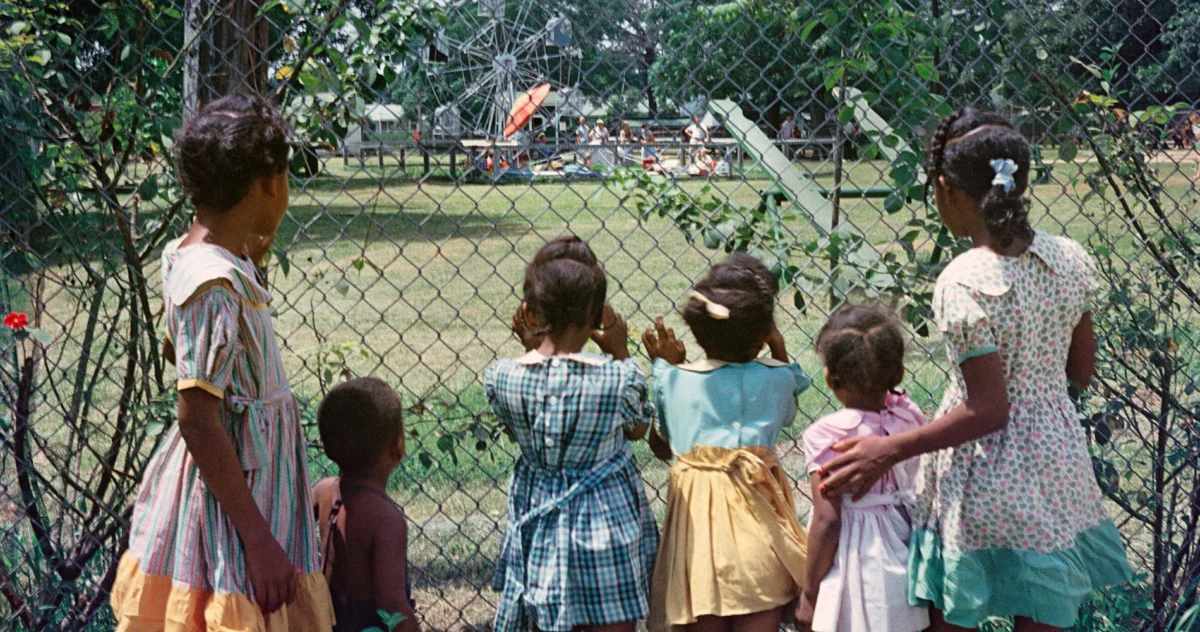
The exhibition also prominently features works from Parks’ seminal Segregation Story series, commissioned by Life magazine and published under the title "The Restraints: Open and Hidden" in 1956. This groundbreaking series offered an unprecedented look into the daily lives of Black families in segregated Alabama. Images such as Outside Looking In, Department Store, and Mr. and Mrs. Albert Thornton from this series vividly illustrate the pervasive and insidious nature of Jim Crow laws. Parks eschewed sensationalism, instead choosing to humanize the effects of segregation by focusing on the dignity, resilience, and complex humanity of his subjects. By following families like the Thorntons as they navigated segregated spaces – from water fountains and waiting rooms to churches and schools – Parks created narratives that starkly contrasted with mainstream, often dehumanizing, representations of Black Americans. The Gordon Parks Foundation notes that Parks often wrote his own accompanying articles, a practice that allowed him to "inject his personal perspective and challenge stereotypes," adding another layer of authenticity and impact to his photo essays.
A Call to Resist Erasure: The Enduring Message
Bryan Stevenson’s essay accompanying the exhibition provides crucial historical context and articulates why Gordon Parks’ courageous, innovative, and challenging work remains profoundly compelling and necessary today. He emphasizes the current moment as one characterized by "an intense and active effort of erasure, retreat from civil rights and silencing of Black voices and history in the United States." In this climate, Parks’ images offer "insight and relevance to our current discourse," serving as a potent "resistance to bigotry and oppression."
Stevenson meticulously details the long arc of racial injustice in America, beginning with the 246 years of chattel slavery that enslaved ten million Black people. He recounts the remarkable decision of four million emancipated people post-1865 to commit to building a more just America, choosing citizenship and nation-building over retribution. This extraordinary commitment, however, was tragically undermined by the withdrawal of protections for African Americans, the rise of white supremacists, and the abandonment of constitutional commitments to equal protection and voting rights by Congress and the Supreme Court in the post-Reconstruction era.
Parks, born in the early 20th century, inherited this legacy of marginalization, terror (through mob violence and lynching), and systemic disenfranchisement. Yet, he also witnessed and was energized by the burgeoning resistance to oppression and the vibrant creativity within the Black community. He brilliantly captured the essence of the Civil Rights Movement, the emergence of "Black power," and the triumphs of Black athletes, musicians, and community leaders, presenting these as powerful counter-narratives to racial discrimination. His art, Stevenson argues, was instrumental in challenging the legitimacy of racial caste and empowering a new generation of leaders, both Black and white, to dismantle the architecture of Jim Crow. Parks helped to imagine a more hopeful future, less burdened by racial bigotry and violence, an artistic narrative that, in the words of Langston Hughes, helped "America be America."
Contemporary Echoes and Future Imperatives
The exhibition’s message resonates with particular urgency in 2024, as the United States grapples with renewed efforts to distort and deny its racial history. Stevenson points to a current retreat from a full commitment to equality and justice, characterized by attempts to rewrite history, minimize the harms of slavery, lynching, segregation, and racial bigotry. He highlights the demonization of people of color, the sabotage of Black political power through various schemes, and the erosion of civil rights gains. In this environment, where censorship and the whitewashing of history are on the rise, and even artistic freedom is under attack, the temptation to retreat into silence can be strong.
However, Gordon Parks, Stevenson asserts, was an artist who unequivocally rejected silence and retreat. His unwavering commitment to documenting truth, even in the face of cruel and abusive power, provides a potent retort to those who seek to regress to an earlier era of perceived greatness built on racial and gender hierarchy. Parks understood the persistence and strength of the human spirit, and his art continues to inspire resistance.
Gordon Parks: We Shall Not Be Moved is more than an exhibition; it is, as Stevenson powerfully states, "history, education and protest." It serves as a vital reminder that the struggle for true justice is ongoing and that complacency is not an option. The artistry of Gordon Parks makes it clear that society "cannot turn back, we cannot remain silent and we cannot retreat from advancing true justice." Through his lens, Parks articulated what many felt compelled to say, and his legacy continues to empower voices of resistance, ensuring that, indeed, "We Shall Not Be Moved." This exhibition stands as a beacon, urging viewers to engage with history, understand its echoes in the present, and commit to a more equitable future.