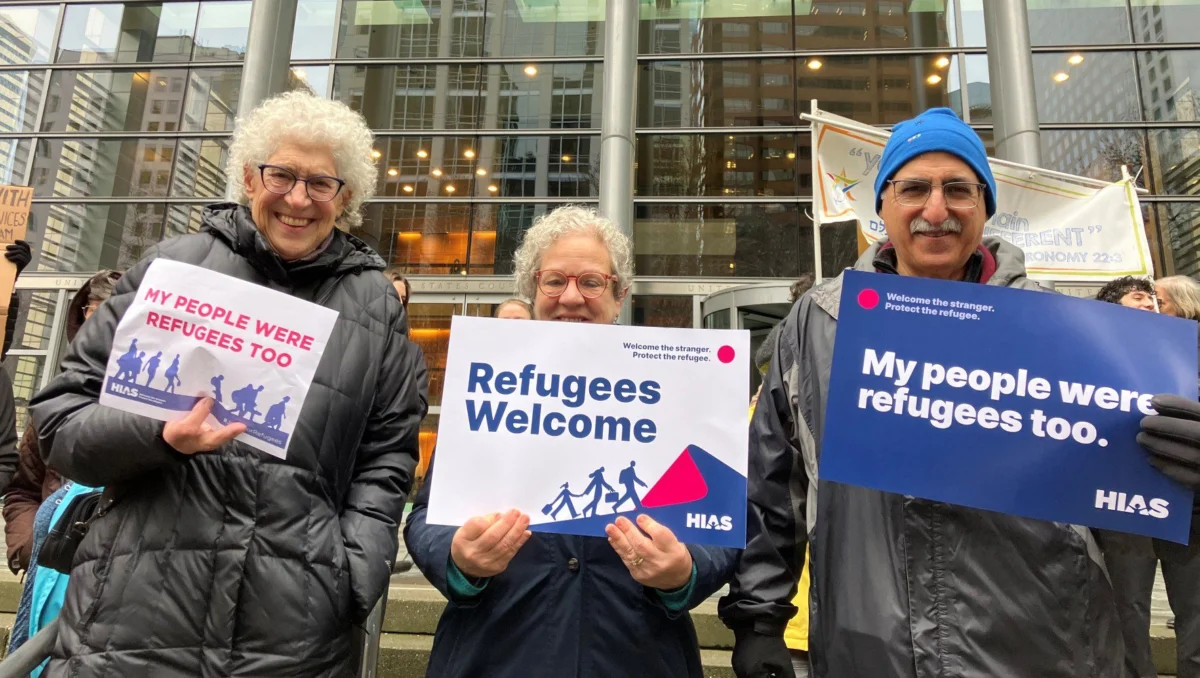
The Supreme Court is poised to adjudicate a case of profound significance this week, hearing arguments in Trump v. Barbara. This pivotal lawsuit challenges an executive order aimed at dismantling the long-standing principle of birthright citizenship in the United States, a cornerstone of American identity and a beacon for immigrants for generations. The potential ramifications of this ruling extend far beyond legal interpretation, touching upon the nation’s commitment to inclusivity, the stability of millions of families, and its global standing as a haven.
In a powerful display of unified advocacy, HIAS, a global Jewish refugee and immigration agency, has joined forces with 57 other faith-based organizations. Representing a diverse spectrum of religious denominations including Catholics, Protestants, Muslims, Hindus, and Jews, these organizations have submitted an amicus brief to the Court. Their collective submission underscores the deep moral and ethical considerations at play, emphasizing the importance of birthright citizenship to the fabric of many faith communities and immigrant groups. The brief argues that the executive order directly conflicts with fundamental values of compassion and human dignity that are central to their respective faiths.
Understanding Birthright Citizenship: A Global and Historical Perspective
Birthright citizenship, commonly known as jus soli or "right of the soil," is the legal principle that grants citizenship to all individuals born within a country’s territorial boundaries. This contrasts with jus sanguinis, or "right of blood," where citizenship is determined by the nationality of one’s parents. Globally, just over three dozen countries currently uphold jus soli. This principle serves several critical functions: it provides a clear and unambiguous legal status for all children born within the nation, crucially prevents the tragic phenomenon of statelessness, and fosters social cohesion by encouraging the integration of newcomers into the national community.
The historical roots of birthright citizenship in the United States are deeply intertwined with the nation’s struggle for equality and its post-Civil War Reconstruction. The principle was enshrined in the 14th Amendment of the U.S. Constitution, ratified in 1868. Its primary objective was to secure citizenship for newly freed enslaved people, ensuring they were no longer denied fundamental rights based on their ancestry. Since its adoption, this constitutional guarantee has been consistently applied, automatically conferring citizenship upon every child born on American soil, irrespective of their parents’ immigration status. This has been the bedrock upon which countless immigrant families, from the waves of Irish and Italian immigrants to those from Russia, Japan, Vietnam, and more recently, Afghanistan, have built their lives, contributing to the rich tapestry of American diversity and prosperity.
The Genesis of Trump v. Barbara: A Direct Challenge to Constitutional Law
The case before the Supreme Court, Trump v. Barbara, arose directly in response to a bold and, according to critics, unconstitutional attempt by the Trump Administration to unilaterally revoke birthright citizenship via executive order on its first day in office. This action represented one of the most significant legal challenges to the administration’s broader immigration agenda, sparking widespread condemnation from legal scholars, civil rights organizations, and immigrant advocacy groups. The administration’s rationale, which largely focused on deterring undocumented immigration, was met with immediate and fierce opposition, asserting that such a fundamental right could not be abrogated by executive fiat.
The Supreme Court’s decision to hear this case, with oral arguments scheduled for April 1, 2026, underscores its immense importance. The outcome will have a profound and potentially irreversible impact on the United States’ identity and its standing in the global community. A ruling that upholds the executive order would fundamentally alter America’s historical narrative as a nation that welcomes immigrants and offers a pathway to belonging. Conversely, a decision that affirms the constitutionality of birthright citizenship would reinforce a legal and moral tradition that has defined the nation for over 150 years. The immediate consequences for non-citizen families residing in the United States could be severe, creating uncertainty and potentially fracturing families.
The Peril of Statelessness: A Global Crisis Highlighted by the Case
The implications of a world without birthright citizenship are starkly illustrated by the global challenge of statelessness. Each nation establishes its own distinct laws regarding the acquisition and loss of citizenship. While some countries prioritize jus soli, others adhere to jus sanguinis. This divergence can leave individuals in a legal limbo, falling through the cracks between these differing legal frameworks.
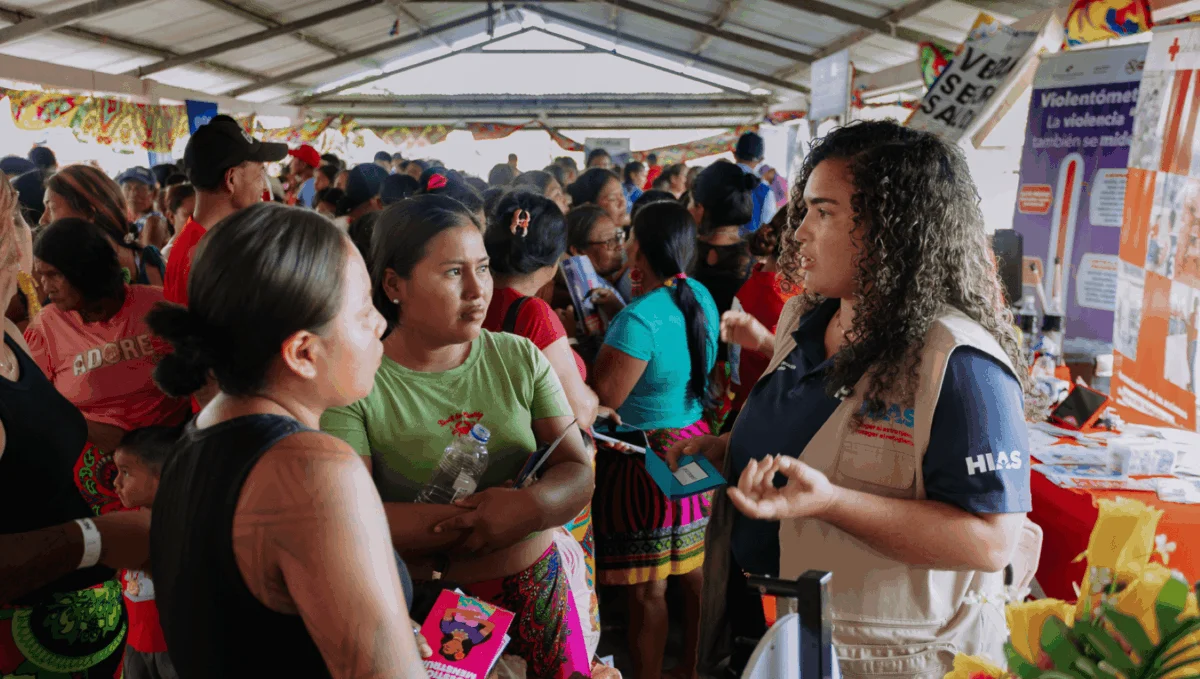
HIAS, with its extensive experience as a global organization operating in diverse legal environments, possesses a unique perspective on this issue. The agency works in countries that embrace birthright citizenship, such as the United States, as well as those that do not. Their work has exposed them to the harsh realities faced by the approximately 4.4 million stateless people worldwide. These individuals lack any legal documentation, rendering them invisible to governments and denying them access to fundamental human rights. They are routinely excluded from essential services like education and healthcare, face significant barriers to employment and housing, and are often unable to marry legally or secure basic protections. The threat of increased statelessness, should birthright citizenship be curtailed, is a grave concern for international humanitarian organizations.
Mobilizing for Action: Public Engagement and Support for Birthright Citizenship
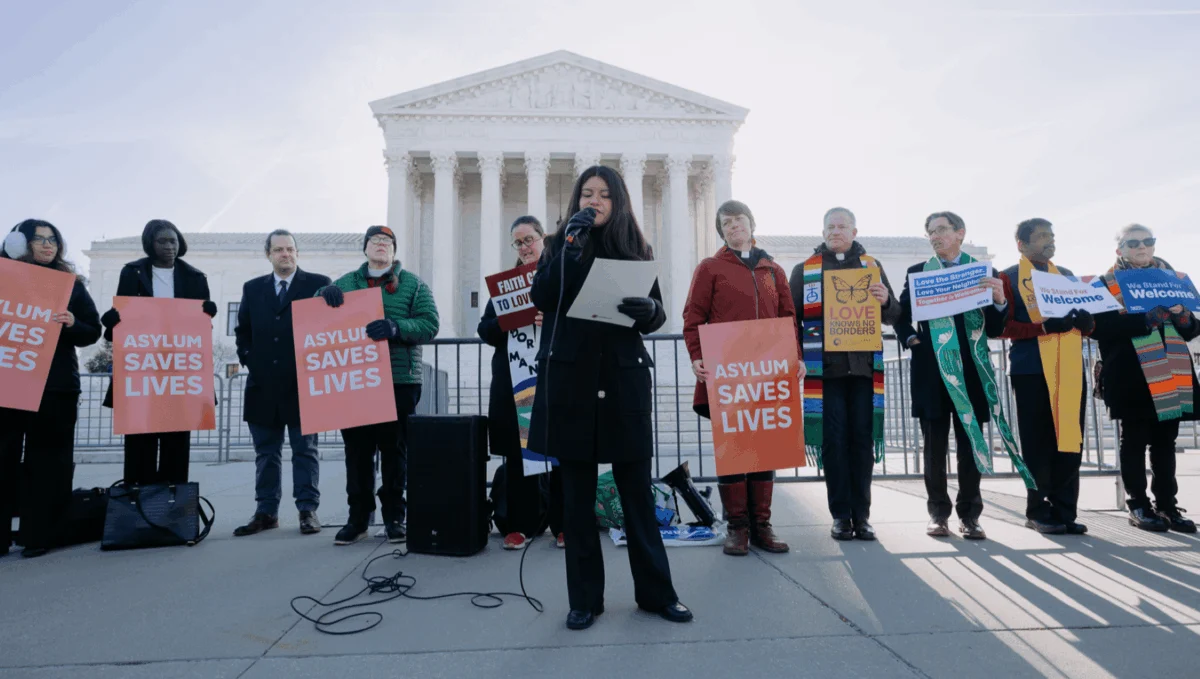
In response to the impending Supreme Court hearing, a broad coalition of organizations is actively mobilizing to defend birthright citizenship. HIAS, in collaboration with the ACLU and the other 57 faith-based organizations that co-authored the amicus brief, is participating in a public rally scheduled to take place in front of the Supreme Court at 10:00 AM on April 1st. This event aims to demonstrate widespread public support for maintaining birthright citizenship and to urge the Court to uphold this fundamental constitutional right.
The Supreme Court is expected to take several months to deliberate and issue its decision following the oral arguments. During this critical period of waiting, organizations like HIAS are providing resources and avenues for public engagement. Recognizing that refugees and immigrants are often under attack, HIAS offers a range of resources for individuals and communities seeking to actively support immigrant neighbors and advocate for policies that uphold human dignity and legal protections. These resources empower citizens to take concrete actions, fostering a more inclusive and welcoming society.
The potential erosion of birthright citizenship raises profound questions about the future of American immigration policy and the nation’s commitment to its founding ideals. As the Supreme Court prepares to weigh in on Trump v. Barbara, the nation watches, aware that the outcome will not only shape legal precedent but also redefine what it means to be an American in the 21st century. The case serves as a potent reminder of the ongoing struggle to balance national sovereignty with humanitarian principles and the enduring importance of constitutional protections in safeguarding the rights of all individuals.