A recent comprehensive survey by the Pew Research Center reveals that economic concerns continue to dominate the list of significant challenges confronting the United States. The analysis, based on a nationally representative sample of 5,103 U.S. adults surveyed from April 20 to April 26, 2026, indicates a growing public perception of the severity of issues such as health care affordability, the federal budget deficit, and inflation. This marks a notable shift in national priorities over the past year, underscoring the persistent anxieties surrounding the nation’s economic well-being.
The Pew Research Center, a non-partisan fact tank renowned for its in-depth public opinion research, conducted this study to provide crucial insights into the perceptions of American citizens regarding the most pressing issues facing their country. For decades, the Center has been a leading source of data on public attitudes toward politics and major policy debates, offering a vital barometer for policymakers, media, and the public alike. The methodology employed in this analysis involved a rigorous survey administered to members of the Pew Research Center’s American Trends Panel, ensuring the findings accurately reflect the views of the broader U.S. adult population. The detailed survey questions, comprehensive response data, and full methodology are publicly available for review.

Economic Headwinds Intensify
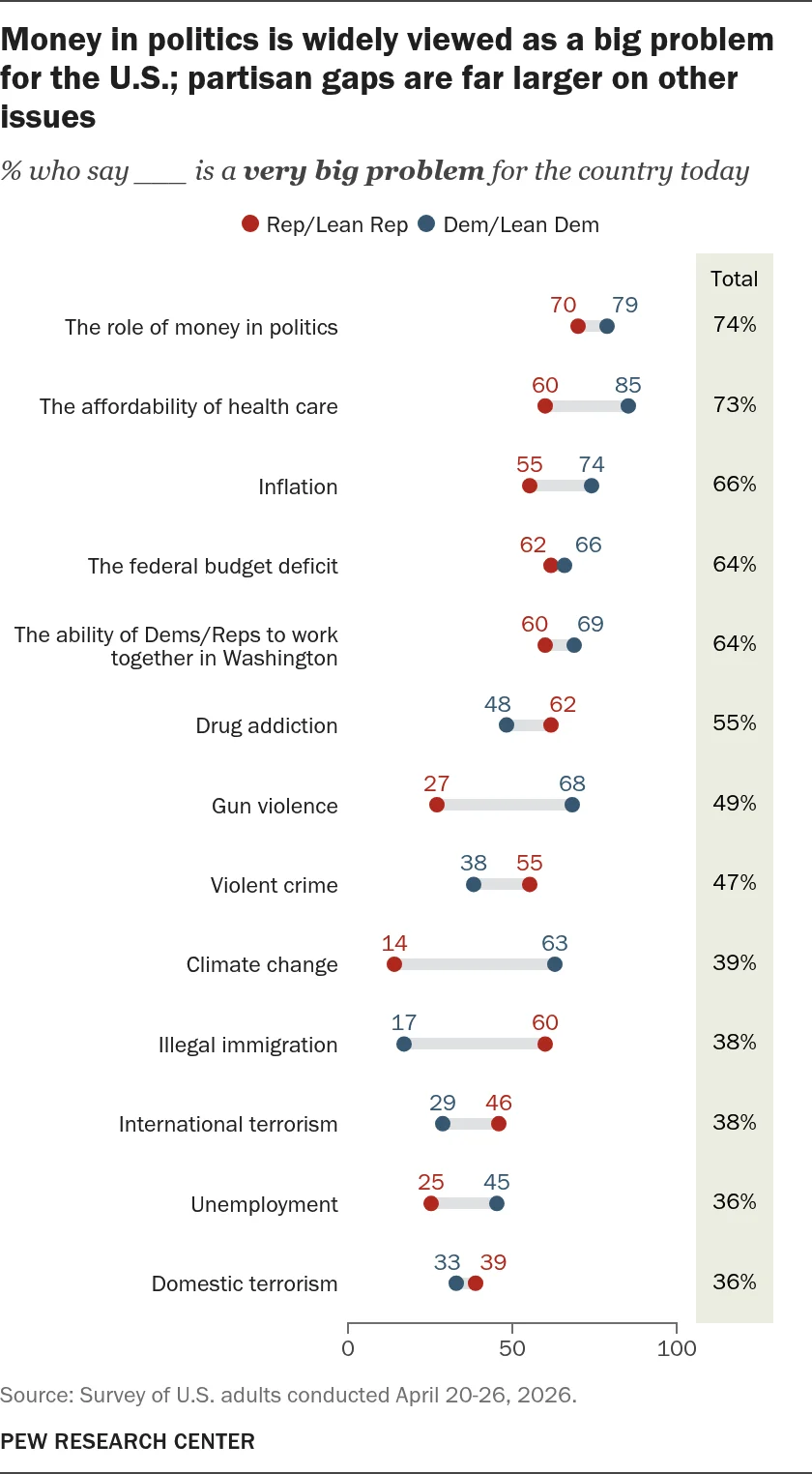
The survey data clearly illustrates that economic factors are at the forefront of Americans’ minds when considering national problems. A significant majority of respondents identified health care affordability as a "very big problem," with 73% expressing this concern. This figure represents a notable increase from 67% in February 2025, signaling a growing public alarm over the rising costs associated with healthcare services and insurance.
Inflation also remains a potent source of public anxiety. The latest survey found that 66% of Americans consider inflation a very big problem, a modest but discernible rise from 63% in the previous year. While the rate of increase is less dramatic than for health care costs, the sustained high level of concern indicates that the erosion of purchasing power continues to weigh heavily on households across the nation.
Furthermore, the federal budget deficit has emerged as a more prominent concern. In the current survey, 64% of Americans identified the deficit as a very big problem, an increase from 57% in February 2025. This upward trend suggests a growing awareness and apprehension regarding the nation’s fiscal health and the long-term implications of accumulating debt.

Even unemployment, which typically fluctuates with economic cycles, has seen a significant uptick in public concern. While a smaller proportion of the population (36%) currently views unemployment as a very big problem, this represents an substantial 11-point increase from early 2025, indicating a renewed apprehension about job security and economic opportunity.
Shifting Partisan Dynamics
Beyond the overarching concerns, the Pew Research Center’s analysis also highlights significant shifts in how different partisan groups perceive these economic challenges. A key finding is the increasingly uniform concern among Democrats regarding economic issues. Across the board, Democrats and those leaning Democratic are now more likely to identify each of the surveyed economic issues as a "very big problem" compared to their views in early 2025, shortly after the inauguration of President Joe Biden.
Conversely, the views of Republicans and those leaning Republican have remained largely stable on most economic fronts, with one notable exception: a significant decrease in the proportion of Republicans who perceive inflation as a major problem. This divergence in partisan perspectives on inflation suggests differing interpretations of its causes and impacts, or perhaps a greater reliance on different information sources.
Health Care Affordability: A Bipartisan, Yet Uneven, Concern
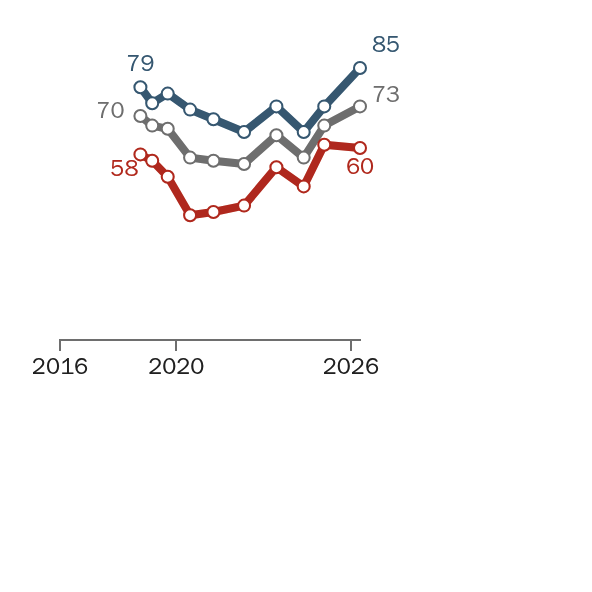
The affordability of health care stands out as an issue where both parties express significant concern, though with differing levels of intensity and historical context. Currently, 85% of Democrats and Democratic-leaning independents view health care affordability as a very big problem, an increase of 12 percentage points since February 2025. This surge underscores a deep-seated dissatisfaction with the healthcare system’s accessibility and cost among the Democratic base.
For Republicans and GOP leaners, 60% currently label health care affordability as a very big problem. While this represents a majority, it is a lower proportion than among Democrats. Importantly, this figure has remained relatively unchanged from the previous year. However, it is worth noting that Republican concern about healthcare costs has been higher in the current period (2026) than it was between 2020 and 2024, suggesting a gradual, yet persistent, rise in awareness of this issue within the Republican party over a longer timeframe.
The Federal Budget Deficit: A Shifting Political Landscape
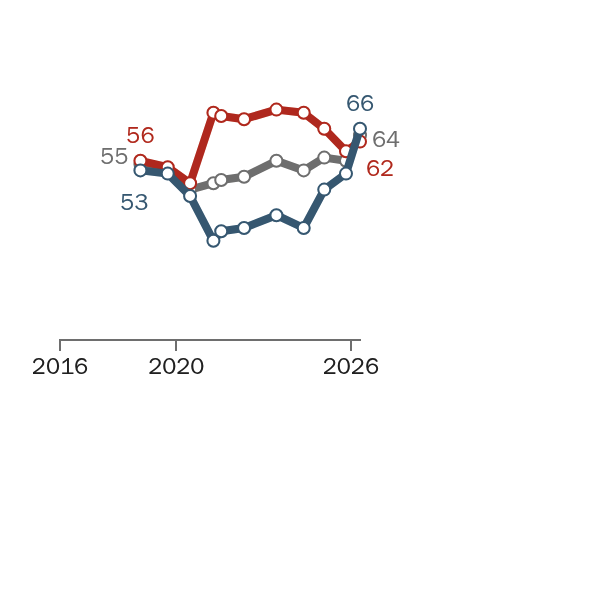
The federal budget deficit has historically been a more salient issue for Republicans. During the Biden administration, Republicans were typically twice as likely as Democrats to express concern about the deficit. However, the latest data reveals a notable shift. While Republicans continue to express concern, the gap between the parties has narrowed considerably. In April 2026, 62% of Republicans and 66% of Democrats identified the federal budget deficit as a very big problem. This convergence suggests a potentially growing bipartisan recognition of fiscal challenges, or perhaps a political recalibration of priorities. The data from previous years shows a stark contrast, with a significant partisan divide consistently favoring Republican concern. For instance, in May 2024, 71% of Republicans viewed the deficit as a major problem, compared to only 35% of Democrats. This dramatic shift in the Democratic perception, now matching Republican levels, is a significant development.
Inflation: A Tale of Divergent Trends
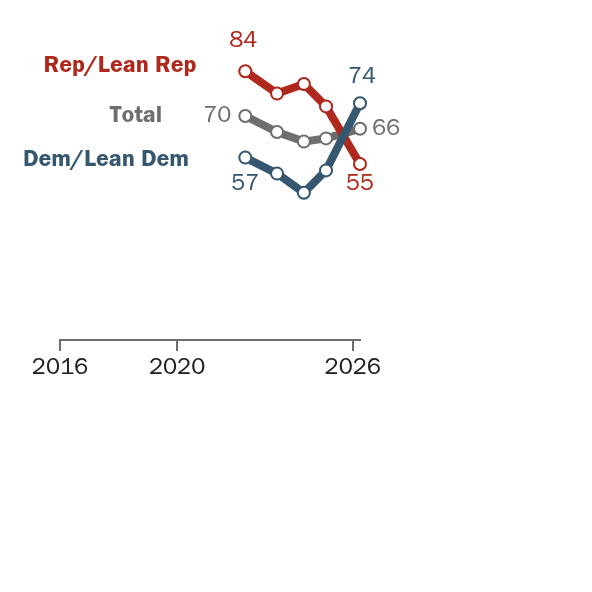
Inflation presents a complex picture with distinct partisan trajectories. Currently, approximately three-quarters of Democrats (74%) rate inflation as a very big problem, a substantial increase from 53% in February 2025. In contrast, only 55% of Republicans hold this view, a decrease from 73% in February 2025. This reversal is particularly striking when comparing current data to May 2024, when 80% of Republicans considered inflation a major problem, while only 46% of Democrats did. This sharp decline in Republican concern about inflation, coupled with a significant increase in Democratic concern, suggests a dynamic that may be influenced by evolving economic conditions, political messaging, and the perceived effectiveness of current economic policies.
Unemployment: A Growing Concern for Democrats
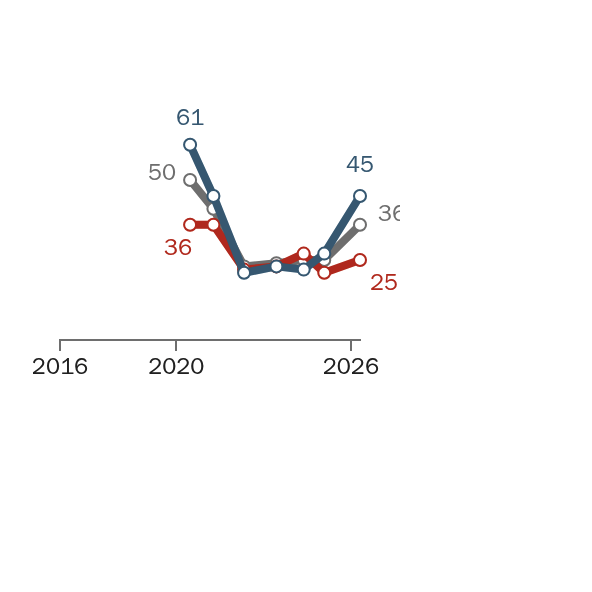
While unemployment is not currently the most pressing concern for a majority of Americans, its perception as a "very big problem" has increased over the past year. This rise is largely attributed to a significant shift in the views of Democrats. A year ago, in early 2025, 21% of Republicans and 27% of Democrats considered unemployment a major issue. Today, the Republican figure has slightly increased to 25%, but the Democratic concern has surged dramatically to 47%. This substantial increase among Democrats indicates a growing unease about the job market and economic opportunities within their demographic.
Other National Challenges: Areas of Consensus and Division
Beyond the core economic issues, the Pew Research Center’s survey also gauged public opinion on a broader range of national problems, revealing both areas of broad consensus and stark partisan divides.
Money in Politics: A Unifying Concern
A striking area of bipartisan agreement is the perceived role of money in politics. A substantial 74% of all Americans believe that the influence of money in politics is a very big problem for the country. This sentiment is widely shared across the political spectrum, with 70% of Republicans and 79% of Democrats concurring. This high level of agreement suggests that concerns about campaign finance, lobbying, and the potential for wealth to disproportionately influence political outcomes resonate deeply with a broad cross-section of the American electorate.
Bipartisan Gridlock: A Shared Frustration
Another issue eliciting significant bipartisan concern is the perceived inability of Democrats and Republicans to work together in Washington. Nearly two-thirds of adults (64%) identified this as a very big problem. Democrats expressed this concern at a slightly higher rate (69%) than Republicans (60%). This widespread frustration with political polarization and legislative gridlock points to a public desire for greater cooperation and effectiveness in governance.
Divergent Priorities: Key Issues by Party
The survey also illuminated significant differences in the issues that rank highest for each political party:
-
Issues Prioritized by Republicans: Republicans consistently express greater concern about illegal immigration, with 60% deeming it a very big problem, compared to only 17% of Democrats. Other issues that rank higher among Republicans include violent crime (55% vs. 38% for Democrats), drug addiction (62% vs. 48% for Democrats), and international and domestic terrorism. While these gaps are not as pronounced as with immigration, they indicate differing perceptions of the most immediate threats to national security and public safety.
-
Issues Prioritized by Democrats: Conversely, Democrats place a significantly higher emphasis on gun violence (68% vs. 27% for Republicans) and climate change (63% vs. 14% for Republicans). These issues represent substantial partisan divides, highlighting fundamentally different views on environmental policy and the causes and solutions for societal violence.
Illegal Immigration: A Declining, Yet Persistent, Concern for Some
While illegal immigration remains a significant concern for Republicans, the overall perception of it as a "very big problem" has seen a decline since its peak in early 2025. In April 2026, 38% of all adults considered illegal immigration a very big problem, down from 48% in February 2025. For Republicans, the decline is less pronounced, with 60% viewing it as a major issue in April 2026, compared to 73% in February 2025. Democrats’ concern has remained relatively low and stable throughout this period. This suggests that while immigration continues to be a salient issue, particularly for Republicans, its intensity as a national concern may be waning for the broader population.

Implications and Future Outlook
The findings from the Pew Research Center’s latest survey underscore a nation grappling with persistent economic anxieties, characterized by growing concerns about health care costs, inflation, and the federal deficit. The diverging partisan perspectives on key issues like inflation and unemployment highlight the complex and often polarized nature of public discourse in the United States.
The widespread agreement on issues like money in politics and partisan gridlock suggests potential avenues for bipartisan dialogue, even amidst deep ideological divides. However, the starkly different priorities placed on issues such as climate change, gun violence, and immigration indicate ongoing challenges in forging national consensus.
As the nation navigates these complex issues, the Pew Research Center’s data provides an essential, data-driven foundation for understanding the public’s perception of the challenges ahead. The trends observed in this survey will likely inform policy debates, political strategies, and public engagement in the coming months and years, shaping the national agenda and influencing the direction of the country. The sustained focus on economic well-being, coupled with the evolving partisan interpretations of these challenges, will be critical to monitor as the political and economic landscape continues to develop.