Family and friends across the United States provide an immeasurable amount of care for adults with disabilities and complex medical conditions, contributing billions of hours annually through largely unpaid efforts. A groundbreaking new report from AARP has quantified this critical contribution, revealing that the economic value of this care not only surpasses all Medicaid spending but also highlights a profound, often overlooked, pillar of the nation’s healthcare and support system.
This extensive network of informal caregivers, comprising an estimated 59 million individuals, dedicates approximately 49.5 billion hours of care each year. When assessed at current market rates, where caregivers are valued at an average of $20.41 per hour, this invaluable service amounts to a staggering $1.01 trillion. This figure, released in AARP’s "Valuing the Invaluable" report, represents a significant increase from previous estimations and underscores the sheer scale of the unpaid labor that underpins the well-being of millions of Americans.
The Magnitude of Unpaid Care: A Deep Dive into the Numbers
The AARP report’s findings present a stark economic reality: the value generated by family caregivers in a single year ($1.01 trillion) eclipses the combined spending of all federal, state, and local governments on Medicaid in 2024. Furthermore, it surpasses the total healthcare expenditures by private businesses during the same period. This comparison is not merely an academic exercise; it underscores the substantial, yet largely unrecognized, economic contribution that enables individuals with disabilities and chronic illnesses to remain in their homes and communities, rather than relying solely on more expensive institutional care.
The report details that the majority of long-term services and supports (LTSS) in the U.S. are delivered by family members. This encompasses a broad spectrum of responsibilities, ranging from the most intimate tasks of daily living – such as dressing, toileting, bathing, and feeding – to highly complex medical and nursing interventions. Caregivers often become adept at managing medications, administering injections, monitoring vital signs, and navigating intricate healthcare systems, including coordinating appointments with multiple specialists and social service agencies.
A Chronicle of Growing Dependence and Undervalued Labor
The AARP’s commitment to tracking the value of family caregiving began in 2006. Since then, the estimated value of this care has nearly tripled. This dramatic increase is attributed, in part, to rising wages in the professional caregiving sector, which then sets a higher benchmark for valuing the equivalent services provided by unpaid family members. This trend suggests a growing reliance on informal care as formal care options become increasingly costly and, in some regions, less accessible.
The report highlights the personal sacrifices inherent in this role. Dr. Myechia Minter-Jordan, CEO of AARP, articulated the human cost behind the impressive financial figures. "This new report confirms what we have long known," she stated. "Family caregivers are holding up a system that Americans nationwide rely on every day, but at a cost." She further emphasized the profound emotional and financial toll on caregivers, noting that many are stretching their finances, sacrificing their own health and well-being, and often facing these challenges in isolation.
The Personal Story: Emily Brooke Holth and Ry
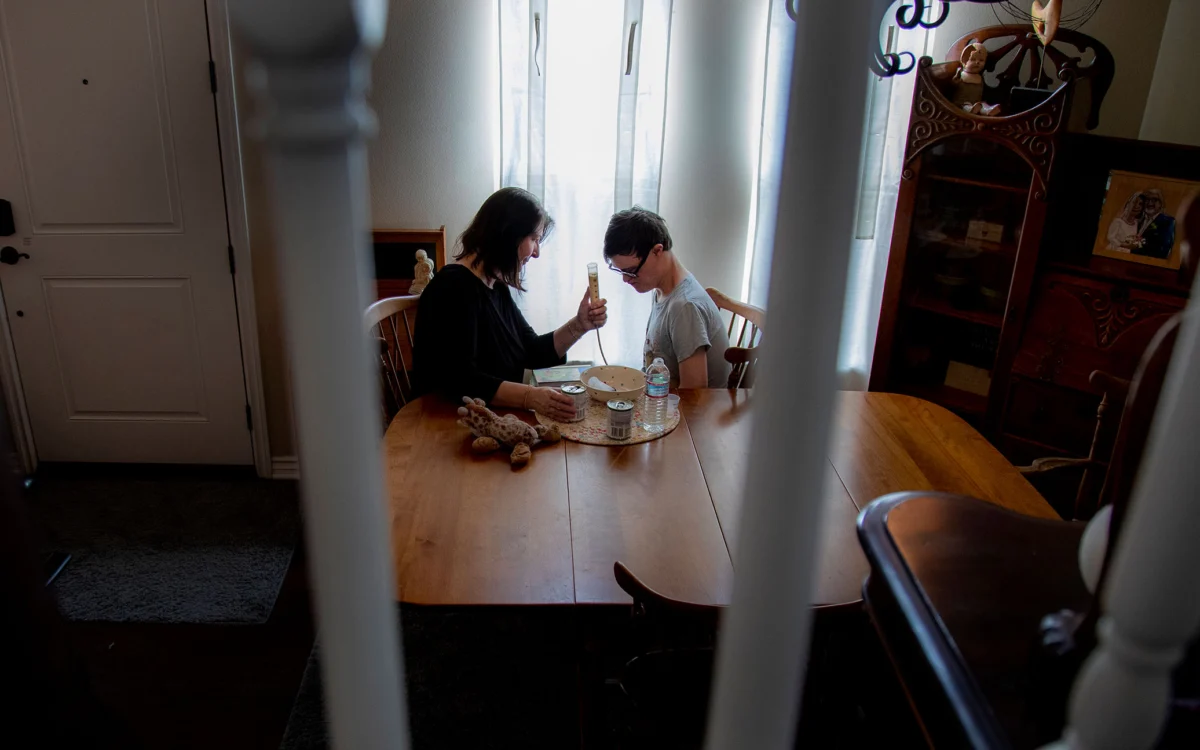
The abstract statistics gain a powerful human dimension when viewed through the lens of individual families. Emily Brooke Holth of Monrovia, California, exemplifies the dedication and commitment of countless caregivers. She provides round-the-clock care for her adult son, Ry Brooke, who, along with his twin sister Kaia, has autism and is immunocompromised. Ry requires feeding through a tube, a task that demands precision, constant vigilance, and a deep understanding of his specific medical needs. Emily’s daily life is intricately woven around Ry’s care, a testament to the profound personal investment made by family caregivers. The challenges faced by families like the Holths are replicated in millions of households across the country, forming the invisible backbone of support for individuals with complex health and developmental needs.
Policy Implications and Calls for Action
The AARP’s report serves as a potent call to action for policymakers to acknowledge and address the critical role of family caregivers. The organization is actively advocating for national policies that would provide greater support, including the implementation of a national paid family and medical leave policy. Such a policy would allow individuals to take time off from work to care for loved ones without jeopardizing their employment or income.
Additionally, AARP is championing the expansion of respite services. Respite care provides temporary relief for primary caregivers, allowing them to rest, attend to personal needs, or simply recharge, thereby mitigating burnout and improving their overall well-being. Tax credits for caregivers are also a key focus, aiming to alleviate some of the significant financial burdens associated with providing care, such as increased utility costs, specialized equipment, and lost income.
"Given that most Americans will either be a caregiver or need one at some point in their lives, we need to do better," Minter-Jordan urged. "Today’s report should be a wake-up call." This sentiment underscores the universal nature of caregiving and the urgent need for societal and governmental recognition of its value.
Broader Societal Impact and Future Outlook
The findings of the AARP report have far-reaching implications for the future of healthcare, social services, and the economy. The sustained reliance on unpaid caregiving, while demonstrating the remarkable resilience of families, also points to potential systemic vulnerabilities. As the population ages and the prevalence of chronic conditions continues to rise, the demand for care will inevitably increase. Without adequate support structures for family caregivers, the system faces the risk of collapse, leading to potential crises in elder care and disability support.
The economic analysis presented by AARP is crucial for informing policy decisions. By quantifying the immense financial contribution of unpaid caregivers, the report provides a compelling argument for investing in programs and policies that support them. This includes not only direct financial assistance and leave policies but also increased access to affordable home healthcare services, assistive technologies, and community-based support networks.
Furthermore, the report implicitly calls for a societal shift in perspective. Caregiving is not merely a private family matter; it is a vital public service that benefits society as a whole. Recognizing and valuing this contribution is essential for building a more equitable and sustainable care infrastructure for all Americans. The data suggests that current policies have not kept pace with the evolving needs of a population increasingly reliant on the dedication of its informal caregivers. As the report serves as a "wake-up call," the onus is now on policymakers and the public to heed its message and enact meaningful change to support the millions who provide indispensable care. The economic value may be astronomical, but the human value is beyond measure, and it is imperative that this is reflected in the support systems that enable it.