Anthony Bouyer, a 55-year-old internet marketer, has become a ubiquitous presence in the San Fernando Valley’s legal landscape, filing an astonishing number of lawsuits under the Americans with Disabilities Act (ADA). In Los Angeles County alone, his legal actions reached at least 231 cases by September 24th of the current year. Bouyer’s litigation spree targets a wide array of businesses, from humble Mexican eateries to convenience stores and liquor shops, often citing accessibility issues such as difficult-to-reach counters, out-of-reach produce scales, cracked parking lots, and cumbersome door hardware.
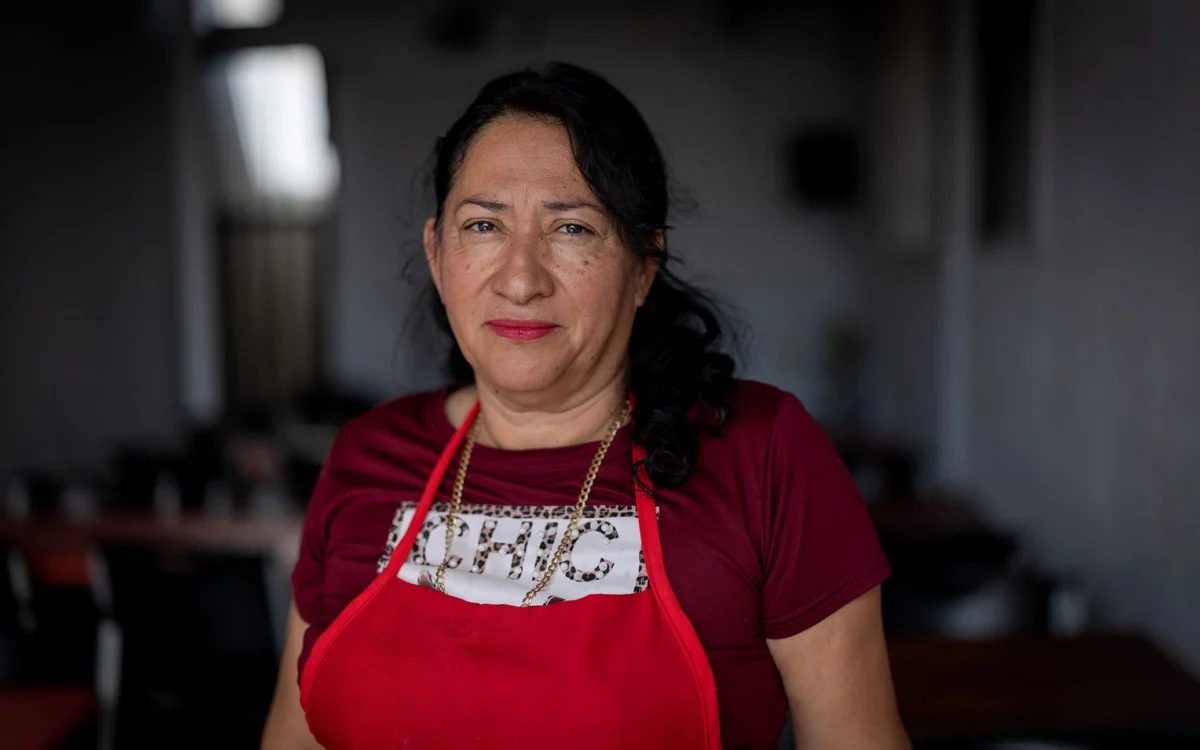
The sheer volume of these filings has drawn significant attention, particularly from small business owners who feel besieged by what they describe as nitpicking complaints leading to costly settlements. Elia Barraza, owner of a Mexican restaurant in the Valley, found herself served with a lawsuit the day before her 53rd birthday, citing issues with her establishment’s parking lot and door. Her son, Steven Barraza, expressed frustration, stating, "This person is just suing anyone. It’s just for nitpicking things." Similar sentiments echo across the San Fernando Valley, where business owners report being inundated with claims, often represented by a single, highly active law firm.
The Rise of Serial ADA Litigation
The landscape of ADA litigation in California is uniquely shaped by a state law that facilitates financial payouts for various infractions. Advocates argue that these financial incentives are crucial for compelling businesses to comply with the landmark ADA, a federal civil rights law designed to ensure equal access for Americans with disabilities. This legislation has, over decades, transformed public spaces and services, making them more navigable and inclusive for individuals with disabilities. However, a segment of the business community contends that a concentrated effort by a few serial plaintiffs, often represented by the same legal counsel, has created an environment where minor technical violations are leveraged into significant financial demands, pushing many small businesses to the brink.
Manning Law: A Central Player in ADA Lawsuits
At the heart of this surge in litigation is Manning Law, an Orange County-based firm that has become a go-to legal representative for numerous serial ADA plaintiffs, including Anthony Bouyer. Court filings reveal a staggering statistic: last year, seven regular clients of Manning Law collectively filed over 1,000 lawsuits against businesses across Southern California. This concentration of legal action has not gone unnoticed by authorities.
Joseph Manning, the owner of Manning Law, recently faced a suspension of his professional license by the State Bar. The disciplinary action stemmed from allegations of making false statements regarding billable hours in connection with dozens of ADA lawsuits. While the firm denied any wrongdoing, asserting that its billing practices have been "modified" to the bar’s satisfaction, Manning himself stated at the time that all billing was "true and correct." This regulatory scrutiny adds another layer of complexity to the ongoing debate surrounding ADA enforcement and the business practices of firms specializing in such litigation.
The Financial Stakes for Small Businesses
The financial burden of these lawsuits is a significant concern for small business owners. The Barraza family reported that a lawyer representing Bouyer initially demanded $25,000 to settle their case. This sum represents several months of profit for their restaurant, El Huarachito Casero, which has already seen its profit margins squeezed by recent immigration raids affecting its lunchtime construction worker clientele. Ultimately, the family negotiated the settlement down to $10,000, a figure that still represents a substantial financial hit.
Zuheir Nakkoud, manager of a Sylmar liquor store, recounted a similar experience in October. He observed Bouyer meticulously measuring the width of his establishment’s handicapped parking space before entering to make a purchase. Nakkoud stated that patients from a nearby dialysis center, who utilize wheelchairs, navigated his aisles without issue. However, he estimated that fighting the ensuing lawsuit would be more costly than settling. Consequently, his store agreed to pay $14,000, a settlement that marked Bouyer’s 232nd lawsuit in Los Angeles County for the year. "This money’s for my kids, not for him," Nakkoud stated, emphasizing the financial strain placed upon his business. Bouyer also filed suits against a produce market and another store down the block on the same day, both of which were subsequently represented by Manning Law.
Bouyer’s Perspective: An Advocate for Accessibility
Anthony Bouyer himself could not be reached for comment, nor did he respond to a letter left at his residence. However, through legal filings and depositions, he has presented himself as a dedicated disability advocate. Bouyer, who became paralyzed a decade ago following surgery to remove a spinal cord tumor, asserts that his mission is to "improve the lives of disabled people." He describes his approach as proactive, traversing the county armed with a 12-inch level gauge to meticulously measure the slopes of store aisles and parking spaces. In a 2023 deposition, Bouyer stated, "Everywhere I go, if I see something that doesn’t look correct, I measure it."
California’s legal framework, specifically the Unruh Civil Rights Act, allows individuals to seek statutory damages of $4,000 or more for each ADA violation they encounter. This provision aims to incentivize businesses to proactively consider the needs of customers with disabilities. However, critics argue that this legal structure, while well-intentioned, has been exploited by a small number of professional plaintiffs and their legal representatives to generate a substantial stream of income by identifying and litigating minor accessibility infractions.
A Pattern of Litigation and Legal Challenges
The legal strategies employed by Manning Law and its clients have attracted scrutiny beyond the State Bar. In 2019, the Riverside County District Attorney filed a lawsuit against the founder of Manning Law and three other attorneys. The suit alleged that they had filed over 100 ADA cases based on false information, on behalf of a plaintiff who prosecutors claimed had exaggerated the severity of his disability. This case was ultimately dismissed "with prejudice" after a judge ruled that the communications at the core of the lawsuit were protected by litigation privilege.
Mike Manning, an attorney with the firm, characterized the Riverside D.A.’s lawsuit as "misguided." He maintained that every case undertaken by Manning Law undergoes a rigorous vetting and inspection process. In an email statement, he emphasized, "Unfortunately, the most common practice today is to wait to get sued and only then take action." He added that no court has ever deemed one of the firm’s disability cases frivolous.
Similar legal challenges have been brought against other prominent firms involved in ADA litigation. Brian Whitaker, identified as one of Manning Law’s most active plaintiffs, was previously represented in hundreds of lawsuits by the law firm Potter Handy. In 2022, the District Attorneys of Los Angeles and San Francisco sued Potter Handy, alleging the firm had filed numerous ADA lawsuits based on what they claimed were fabricated claims. This lawsuit was also dismissed, with a judge again citing litigation privilege as the protective factor for the firm. Notably, Rene Potter, a lead attorney at Potter Handy, has since shifted his focus to representing over 700 plaintiffs in a new wave of sex abuse claims against Los Angeles County.
Legislative Efforts and Stalemate
The pervasive nature of these lawsuits has prompted bipartisan concern among lawmakers in Sacramento. Both Republicans and Democrats acknowledge that the current legal environment surrounding ADA compliance has become problematic. However, efforts to reform the system have faced significant hurdles. A bipartisan bill sponsored by Senator Roger Niello (R-Fair Oaks) last year, which aimed to provide businesses with more time to rectify ADA violations before penalties were imposed, never made it to a hearing in the Assembly.
Senator Niello has expressed frustration, stating his bill is being "held hostage" by Assemblyman Ash Kalra (D-San Jose). Niello alleges that Kalra, who chairs the California Assembly Judiciary Committee, favors a competing bill. A spokesperson for Assemblyman Kalra responded to inquiries by referencing a previous statement where the lawmaker indicated his desire for a "more balanced" bill that would secure buy-in from a broader range of disability rights and civil rights organizations. This legislative gridlock leaves the current system largely in place, continuing to fuel the ongoing legal battles.
Defense Attorneys’ Perspective and the Business of ADA Lawsuits
The majority of businesses facing ADA claims opt for out-of-court settlements, often due to the prohibitive cost and emotional toll of protracted litigation. However, a dedicated group of defense attorneys are choosing to fight these cases. Ara Sahelian, who estimates he has litigated over 100 cases against Manning Law, is one such attorney. He expresses a passion for taking these cases to trial, stating, "Four years ago, I had a fuse trip, and I said I’m not settling these cases anymore."
Sahelian, who contracted polio at six months old and uses a wheelchair, maintains a home office filled with thick black binders, each dedicated to a serial plaintiff. Bouyer is represented by three such binders, as is Perla Mageno, another Manning Law plaintiff who has filed hundreds of ADA suits. Mageno’s claims often focus on website accessibility, arguing that websites are not compatible with her screen-reading software.
The legal precedent for website accessibility lawsuits was significantly bolstered by a 2019 Supreme Court decision, following a lawsuit filed by Manning Law on behalf of a blind client against Domino’s Pizza. The ruling established that websites must be coded to ensure their features can be converted into audio for visually impaired users. This has opened a new frontier for ADA litigation.
In one instance, Sahelian faced Mageno in a Pasadena courthouse for the fourth time. Mageno testified about her frustration with a picture on a Tustin burger shop’s website, claiming it failed to convey that it was "an amazing burger" and instead was merely a "graphic of a cheeseburger that has lettuce, tomato sauce coming out of the side." Mageno sued the shop for failing to make its website navigable for a screen reader. The case remained pending, with a jury slated to decide if Peter’s Gourmade Grill had violated her civil rights. Sahelian questioned the validity of such claims, asking the judge, "Why are we here? I’m just asking for common sense."
Sahelian argues that basic logic is often disregarded in these cases. He points to businesses with genuinely problematic physical accessibility issues, such as a tuxedo store with a staircase entrance or a French bistro with tables too low for a wheelchair. He contrasts these with a small burger joint that has made an effort to ensure its website is screen-reader compliant, arguing that such businesses should not be targets for lawsuits.
The proliferation of website accessibility lawsuits may see a decline with the advent of AI chatbots, which can easily read aloud website content. However, Sahelian predicts that lawsuits targeting physical accessibility issues will continue to generate substantial revenue for both plaintiffs and lawyers on both sides of the legal aisle. Some defense attorneys proactively monitor court dockets for filings by Manning Law, then send letters to business owners offering legal assistance before they have even been formally served with a lawsuit. One such letter, sent to a Sylmar laundromat after it was sued by Bouyer, advertised services from a more expensive but purportedly superior firm, warning against "LOW PRICED LAWYERS."
The Sylmar laundromat, incidentally, gained local fame as a filming location for the critically acclaimed movie "Everything Everywhere All At Once." Its owner, Kenny Majers, revealed that the establishment has been sued twice for ADA violations. Majers has resorted to taking on handyman work at neighboring laundromats to cope with the financial strain. "All the money’s going to lawyers," he lamented. "It’s not fair." The ongoing surge in ADA litigation continues to present a complex challenge, balancing the critical need for accessibility with the economic realities faced by small businesses.