Since 2012, World Education, an initiative of JSI Research & Training Institute, Inc. (JSI), has spearheaded a transformative movement within the educational landscape of Côte d’Ivoire. By targeting the intersection of education quality and the systemic challenges of the cocoa industry, the organization has moved beyond traditional aid to foster community-led sustainability. Central to this mission is the Mondelez International-funded CocoaLife Quality Education Project, an initiative designed to dismantle the barriers that keep children out of classrooms and in the cocoa groves. Ferdinand Beblai, Country Director for JSI Côte d’Ivoire, recently provided an in-depth look into the project’s progress, highlighting a decade of strategic interventions that have redefined how local communities value and manage their educational assets.
The Socio-Economic Landscape of Education in the Cocoa Belt
Côte d’Ivoire stands as the world’s largest producer of cocoa, a commodity that serves as the backbone of its national economy. However, the prosperity of the cocoa sector has historically been shadowed by the prevalence of child labor and a lack of educational infrastructure in rural regions. In these communities, the school calendar and the cocoa harvest cycle are often in direct conflict. When the harvest peaks, the demand for labor increases, and children are frequently withdrawn from school to support family incomes.
The challenges facing education in these regions are multi-faceted. According to 2021 statistics, more than 15% of primary school children in Côte d’Ivoire repeat a grade annually. This high rate of academic failure is often a symptom of irregular attendance and late arrivals, which are direct consequences of child labor. When a child falls behind, the risk of expulsion or voluntary dropout increases significantly, perpetuating a cycle of low literacy and poverty. Furthermore, the physical environment of many rural schools has long been a deterrent. Many "classrooms" in remote areas were historically constructed from wood and straw—materials that are not only uncomfortable but increasingly dangerous as climate-driven weather events become more frequent and severe.
A Chronology of Community-Led Governance
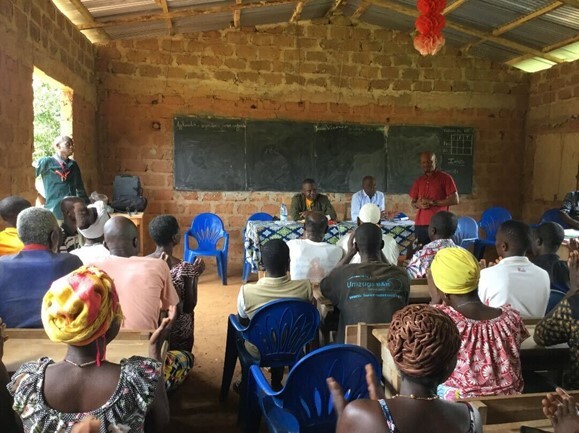
The intervention strategy led by World Education since 2012 has focused on the revitalization of the Comité de Gestion Établissement Scolaire (COGES), or School Management Committees. While the Ivorian government established these committees to manage student and teacher resources, many remained dormant or ineffective due to a lack of funding and training.
In 2012, World Education introduced a specialized tool to evaluate the functional health of these committees. The diagnosis revealed a recurring theme: a total absence of independent financial resources. To solve this, the CocoaLife Quality Education Project shifted its focus toward capacity building, training COGES members not just in administration, but in entrepreneurship. By integrating local stakeholders—including Mothers’ Associations, youth groups, and cocoa cooperatives—the project transformed the COGES from a passive administrative body into an active economic engine for the school.
The timeline of this evolution shows a shift from dependency to autonomy. By the mid-2010s, many COGES had begun implementing income-generating activities (IGAs). Villages began cultivating maize or raising poultry, with the profits earmarked specifically for school operations. These funds allowed schools to provide "motivation" stipends for teachers to conduct remedial tutoring in core subjects like French and mathematics, directly addressing the 15% grade-repetition crisis.
The N’drikro Transformation: A Case Study in Synergy
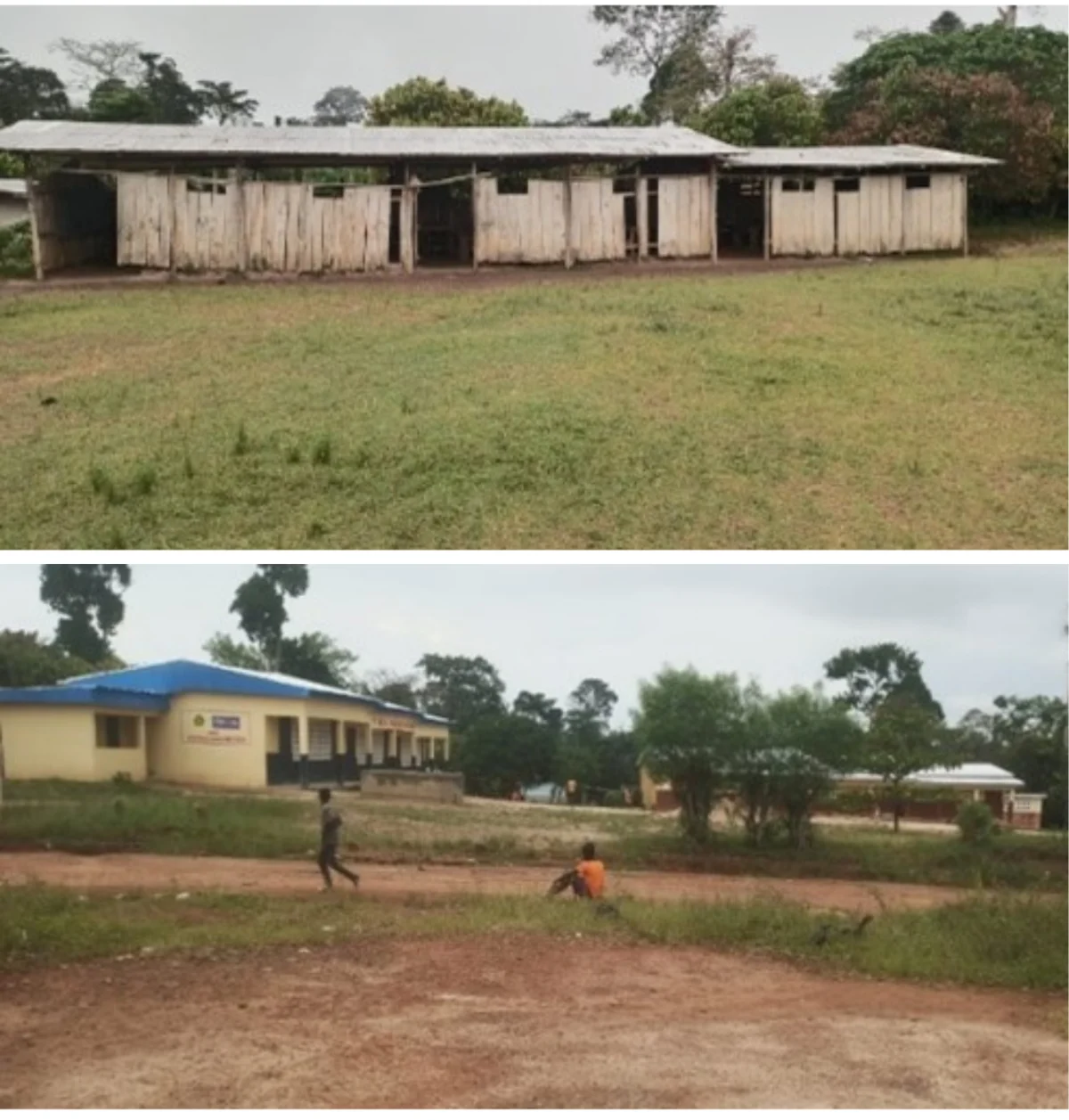
The impact of this model is perhaps most visible in the community of N’drikro, located in the Soubre region. Prior to the project’s intervention, the N’drikro school was a collection of precarious sheds. Students lacked desks, toilets, and basic protection from the elements. The lack of infrastructure was mirrored by weak governance; the school was viewed as a peripheral government service rather than a community priority.
The transformation began when the COGES mobilized a diverse coalition: village leadership, youth groups, and the local Village Savings and Loan Association (VSLA). By framing the school as a "community asset that must be saved," the COGES secured both financial and labor commitments. The VSLA provided initial capital, and the community cultivated a cassava field to generate ongoing revenue.
The result was a radical environmental shift. The straw sheds were replaced by two modern school buildings equipped with administrative offices and sanitation facilities. Beyond the physical structure, the culture of the school changed. Today, N’drikro serves as a regional model where children participate in remedial classes and excel in their studies, motivated by community-funded "excellence awards." This success story illustrates that when a community perceives the school as their own creation, they are more likely to ensure its long-term maintenance and the enrollment of their children.
Addressing the Data Deficit in Rural Education
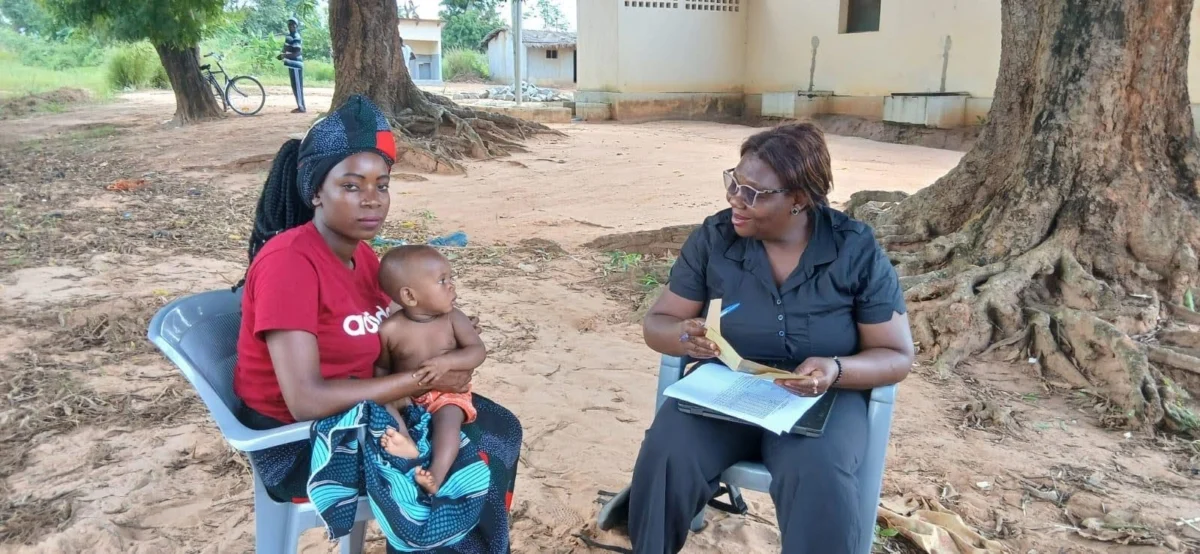
One of the most significant hurdles in improving education in Côte d’Ivoire is the "invisibility" of rural children in national data. While the state provides comprehensive national and district-level statistics, these aggregate figures often obscure the specific needs of individual villages. Ferdinand Beblai noted that at the start of the project, it was nearly impossible to find consistent data on the exact number of six-year-olds—the critical age for school entry—within a specific cocoa-producing community.
World Education’s approach involved the collection of community-level data points to understand the specific economic pressures guiding local decisions. This granular analysis revealed that farmers are most vulnerable between the two annual cocoa harvests, a period when they lack the liquid cash to purchase essential school supplies.
Armed with this data, the project implemented a targeted grant program. Vulnerable families received 80,000 West African CFA francs (approximately USD 140) to cover the costs of kits and supplies. By addressing the financial gap during the "lean months," the project removed a primary excuse for keeping children out of the classroom. This data-driven intervention ensures that aid is not just distributed, but specifically timed to prevent dropouts.
Economic and Agricultural Implications of Literacy
The CocoaLife project also bridges the gap between education and the practical realities of life in a farming community. A recurring theme in World Education’s work is the changing perception of the value of schooling among cocoa farmers. Parents are increasingly recognizing that even if their children follow in their footsteps to become cocoa farmers, formal education is a modern necessity.
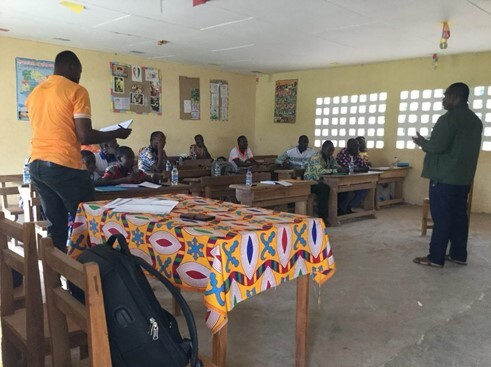
Literacy and numeracy provide practical agricultural benefits. For instance, farmers who have attended school are better equipped to read chemical labels on insecticides and pesticides, ensuring they mix and apply them correctly. This reduces health risks for the farmers and their families while improving crop yields through more precise chemical management. This "practical literacy" serves as a powerful argument for education in areas where traditional academic pursuits were once seen as irrelevant to the local economy.
Sustainability and the Role of Government Collaboration
As the CocoaLife Quality Education Project looks toward the future, the focus has shifted entirely to sustainability. The ultimate marker of success is the ability of a community to maintain its educational standards without external funding. In several regions where World Education has phased out direct financial support, the COGES committees have continued to thrive. They maintain transparent accounting records, build community trust through receipts and audits, and continue to fund remedial classes through their own income-generating activities.
Recognizing the efficacy of this model, the Ivorian government has moved to institutionalize the partnership. A formal collaboration protocol is currently being established between World Education and the Ministry of Education. This agreement signifies a shift from a non-governmental organization (NGO) operating independently to a collaborative effort where the state adopts and scales the project’s methodologies.
The government’s involvement is critical for the long-term goal of national self-sufficiency. By integrating COGES capacity building into the national education strategy, the government aims to ensure that every rural school has the organizational and economic foundation to support its students.
Analysis: A Blueprint for Global Supply Chain Responsibility
The success of World Education in Côte d’Ivoire offers a blueprint for how international corporations like Mondelez International can engage with their supply chains. Rather than focusing solely on productivity or basic compliance, the CocoaLife project addresses the root causes of child labor by strengthening the social infrastructure of the communities that produce the world’s cocoa.
By empowering the COGES, the project creates a "traceability of trust." When local communities manage their own resources and see tangible results—like the modern buildings in N’drikro—they become the most effective advocates for child protection and education. The project demonstrates that education quality is not just about textbooks and teachers; it is about community ownership, economic resilience, and the strategic use of local data to solve local problems.
As Côte d’Ivoire continues to modernize its education system, the lessons learned from the CocoaLife Quality Education Project will likely influence policy far beyond the cocoa belt. The transition from straw sheds to modern classrooms, and from passive committees to empowered economic actors, marks a new chapter in the country’s journey toward universal, high-quality education. For the children of N’drikro and hundreds of other villages, this means a future where the classroom is a place of safety, excellence, and opportunity, rather than a secondary thought to the harvest.