The relationship between Cubans and the United States is a rich and complex narrative, stretching back centuries and continuing to evolve through waves of migration, shifting political landscapes, and profound cultural exchange. From their shared colonial past with Spain in the 1500s to their current status as the third-largest Hispanic origin group in the U.S., Cubans have carved a significant presence in American society. This in-depth analysis, drawing from Pew Research Center data and historical records, explores the multifaceted story of Cubans in the United States, examining their demographics, migration patterns, political leanings, and geographic distribution.
A Growing and Diverse Population
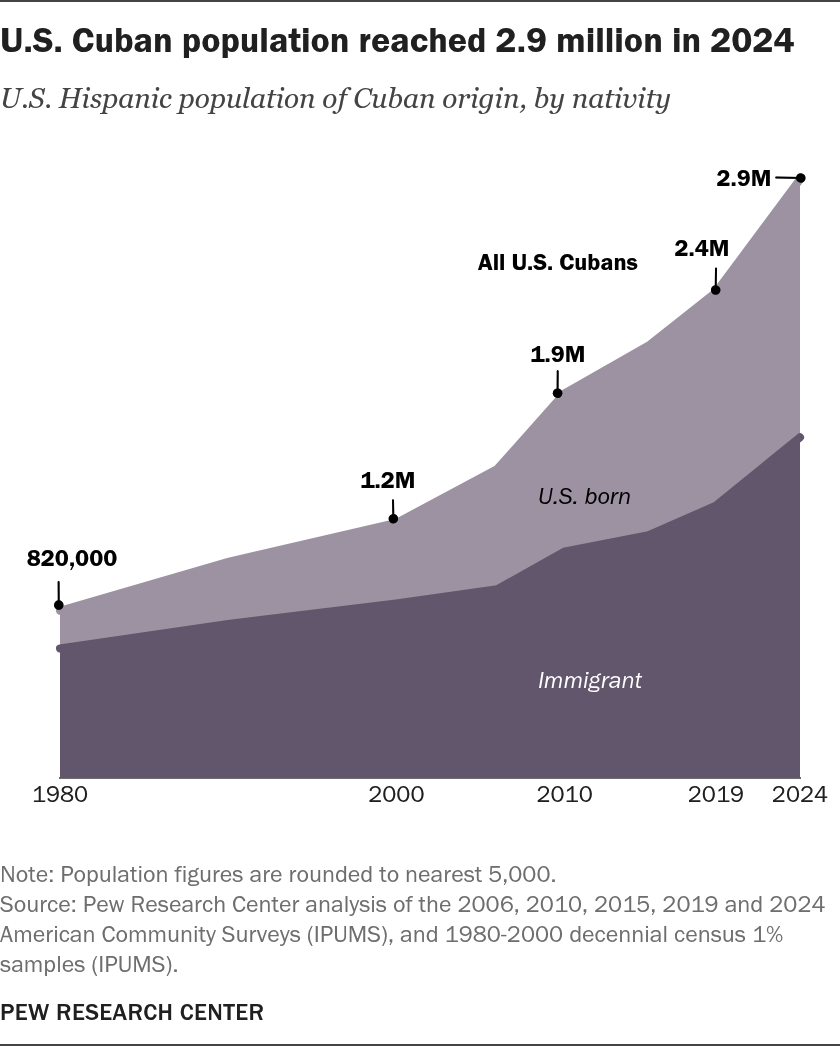
As of 2024, the Cuban-origin population in the United States stands at an impressive 2.9 million individuals, marking a substantial increase of 23% since 2019. This growth rate outpaces that of both Mexican and Puerto Rican populations over the same period, highlighting the dynamic nature of Cuban immigration. However, it is slower than the remarkable growth seen among some other Latin American groups, such as Venezuelans, Colombians, and Hondurans, indicating varying migratory pressures and opportunities across the region.
The Cuban-origin population in the U.S. is comprised of both U.S.-born and foreign-born individuals. In 2024, immigrants accounted for 57% of the total, numbering 1.7 million. This significant proportion of foreign-born residents underscores the continuous flow of individuals from Cuba to the United States over several decades, with a notable surge in recent years. Examining the historical data reveals a consistent presence of immigrants, with the foreign-born population growing from 635,000 in 1980 to an estimated 1.67 million in 2024. Conversely, the U.S.-born Cuban population has also seen substantial growth, increasing from 185,000 in 1980 to 1.26 million in 2024, reflecting generations of settlement and family establishment in the United States.
Waves of Migration: A Historical Perspective
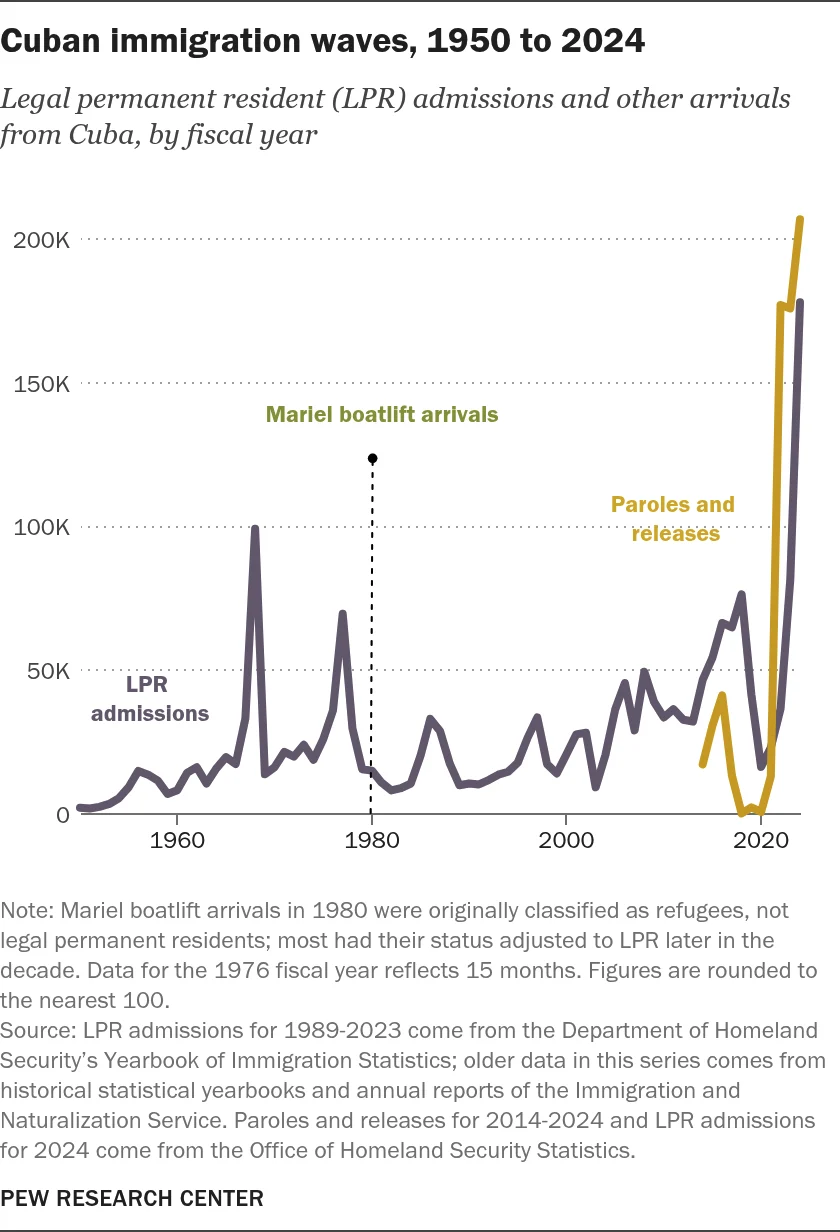
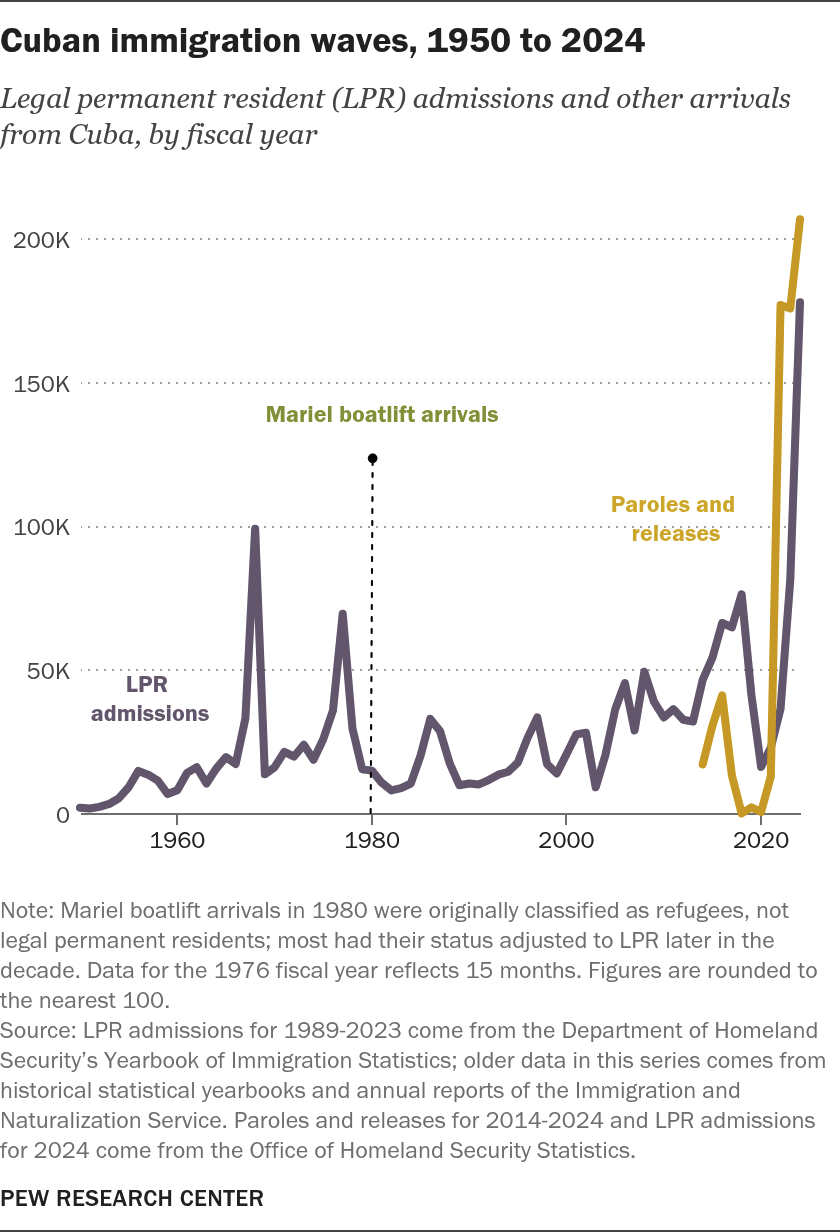
The history of Cuban migration to the U.S. is intrinsically linked to the political and economic realities of the island. Following the Cuban Revolution in 1959, a significant exodus of Cubans seeking political asylum and new economic opportunities began. The 1960s witnessed the arrival of approximately 250,000 Cubans, many of whom were admitted as refugees under policies designed to accommodate those fleeing communist regimes. The subsequent decade saw a similar influx, with another quarter-million Cubans making the journey to the United States.

A pivotal moment in Cuban-American migration history was the Mariel boatlift in 1980. Over a period of months, an estimated 125,000 Cubans arrived in the U.S. in a mass exodus that was a response to escalating political tensions and economic hardship on the island. While initially classified as refugees, many of these individuals later had their legal status adjusted to that of permanent residents.
Throughout the late 20th and early 21st centuries, immigration from Cuba continued, with fluctuations influenced by policy changes and conditions in Cuba. The mid-2000s saw an uptick in arrivals, a trend that persisted until the onset of the COVID-19 pandemic. More recently, a dramatic surge in Cuban immigration began in 2022, largely attributed to shifts in U.S. immigration policies under the Biden administration that offered new pathways for entry and asylum.
Evolving U.S. Immigration Policies Toward Cubans
U.S. immigration policy concerning Cubans has undergone significant transformations over the past seven decades, profoundly impacting the nature and legality of arrivals. Beginning in the 1960s, a welcoming stance was established, with most Cubans entering legally, often as refugees. This was followed by the "wet foot, dry foot" policy, which allowed Cubans who reached U.S. soil without prior visas to remain and pursue legal residency. This policy, a cornerstone of U.S.-Cuba relations for years, was a direct result of President Barack Obama’s efforts to normalize diplomatic ties with Cuba, culminating in its termination in January 2017.
The cessation of the "wet foot, dry foot" policy marked a significant shift, subjecting Cubans to the same immigration regulations as other nationalities. This policy change has had a direct consequence on the number of unauthorized immigrants from Cuba. Prior to 2017, the number of unauthorized Cuban immigrants was negligible. However, by July 2023, this figure had surged to an estimated 475,000, with an additional 250,000 entering the country by the end of 2024, according to Pew Research Center estimates and U.S. Department of Homeland Security data.
The Biden administration implemented new humanitarian parole programs, such as the CHNV (Cuba, Nicaragua, Haiti, Venezuela) parole program, which allowed individuals from these nations to live and work legally in the U.S., offering a pathway for many Cubans. However, in June 2025, the Trump administration announced the termination of the CHNV program and sought to end other temporary protection measures, signaling another potential recalibration of immigration policy and its impact on Cuban arrivals.
Geographic Concentration: The Enduring Pull of Florida
Florida remains the undisputed hub for Cubans in the United States, serving as the primary destination for the vast majority of the community. Approximately 61% of all Cubans in the U.S., totaling 1.8 million individuals, reside in Florida. This level of state-specific concentration is unparalleled among any other Hispanic origin group in the country, reflecting deep historical ties, established community networks, and economic opportunities.
Beyond Florida, Texas is the next most significant state for the Cuban population, home to 8% of the total, or 225,000 individuals. California, New Jersey, and New York each host around 3% of the U.S. Cuban population, with approximately 99,000, 98,000, and 85,000 residents, respectively.
The influence of Cuban settlement is particularly pronounced in the Miami metropolitan area. A staggering 42% of all Cubans in the U.S., equating to 1.2 million people, live in and around Miami. This concentration has profoundly shaped the cultural, economic, and political landscape of South Florida. The Tampa Bay area also hosts a substantial Cuban community, with an estimated 177,000 residents. Outside of Florida, the New York City and Houston metro areas represent the next largest Cuban enclaves, with 153,000 and 107,000 residents, respectively. This data indicates that a significant majority, 94%, of U.S. Cubans reside in metropolitan areas, a trend that is considerably higher than the national average of 79% for all Americans.
Demographic Profile: An Aging Population with Varying Educational Attainment
Cubans in the United States represent the oldest Hispanic origin group, with a median age of 38.2 years. This figure aligns precisely with the median age of the U.S. population overall but is notably higher than the median age for all Hispanics, which stands at 30.2 years. This age disparity can be attributed to two primary factors: the arrival of older immigrants from Cuba and a relatively lower fertility rate among Cuban Americans compared to other Hispanic groups.
Educational attainment among Cubans shows a divergence between those born in the U.S. and those who immigrated. While foreign-born Cubans are less likely to hold a bachelor’s degree compared to the overall U.S. population, U.S.-born Cubans exhibit a higher propensity for obtaining at least a bachelor’s degree. Specifically, 45.4% of U.S.-born Cubans aged 25 and older hold a bachelor’s degree or higher, surpassing the national average of 36.9%. In contrast, only 27.2% of immigrant Cubans have attained a bachelor’s degree or higher. This distinction highlights the varying educational pathways and opportunities available to different segments of the Cuban-American community.
Political Leanings and Public Opinion
Historically, Cubans in the U.S. have demonstrated a stronger tendency to identify with the Republican Party compared to the broader Hispanic population. This inclination has been shaped by a variety of factors, including political grievances related to the Cuban government and a shared emphasis on conservative social values. However, this allegiance has not been monolithic and has shown signs of softening over time.
Recent surveys reveal a nuanced political landscape. In an October 2025 Pew Research Center survey, Cuban Americans were more likely than the overall Hispanic population to express approval of the Trump administration’s approach to immigration, with 40% of Cuban Americans holding this view compared to 21% of all Hispanics. Despite this difference on immigration policy, Cuban Americans were similarly likely to express concern about potential deportation, with 47% worried about themselves or someone close facing deportation, compared to 52% of all Hispanics. This suggests that while policy preferences may differ, the underlying anxieties related to immigration status and family separation remain a shared concern within the broader Latino community.
Broader Implications and Future Trends
The demographic trajectory of Cubans in the United States points towards continued growth, albeit with evolving patterns of immigration and settlement. The increasing number of unauthorized immigrants, driven by policy shifts, presents ongoing challenges and necessitates careful consideration of immigration reform and integration strategies. The aging demographic profile also suggests a growing need for social services and healthcare tailored to an older population.
Furthermore, the dynamic political landscape and the evolving educational attainment of U.S.-born Cubans indicate a community that is increasingly diverse and integrated into the broader American fabric. As new generations establish roots and contribute to the nation’s economy and culture, the narrative of Cubans in the United States will undoubtedly continue to be written, shaped by the enduring legacy of their heritage and their ongoing engagement with the nation they now call home. The deep historical connections between Cuba and the U.S., coupled with the resilience and adaptability of the Cuban people, ensure that their story will remain a vital and compelling chapter in the American experience.