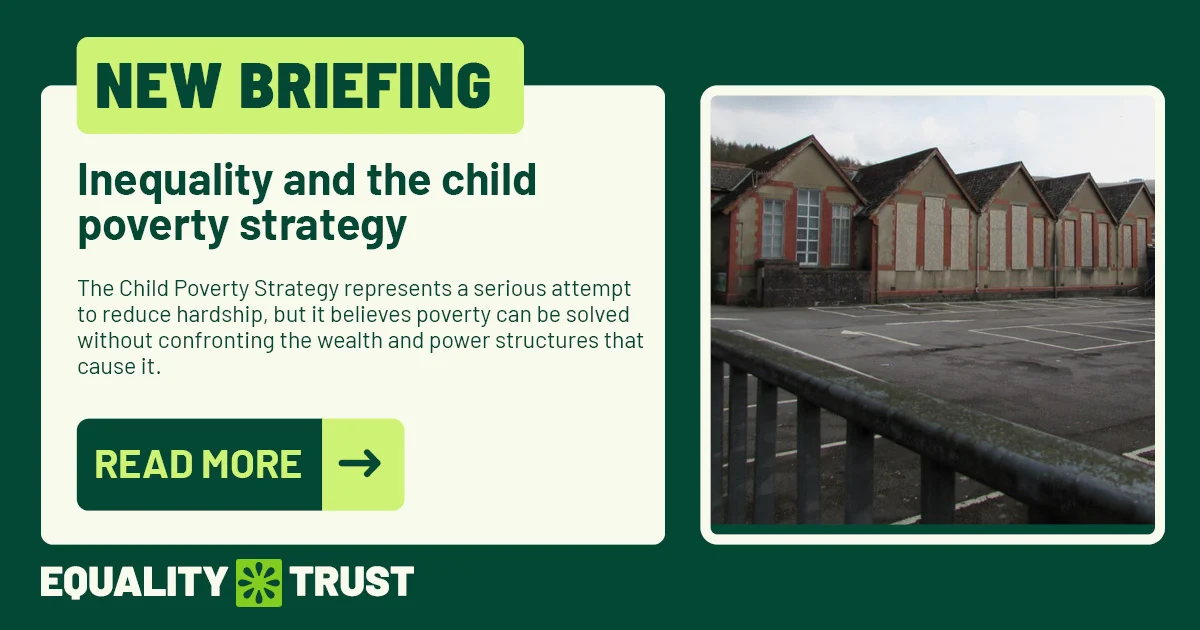
The government’s Child Poverty Strategy, released in December 2025, represents the first UK-wide initiative of its kind since the early 2000s. It explicitly frames child poverty not as an individual failing but as a systemic moral and economic breakdown, inherited from over a decade of policy choices. While the strategy aims to "end child poverty" in the long term and achieve significant reductions within the current parliament, critics and advocates alike are scrutinizing whether the proposed measures go far enough to dismantle the root causes of economic disparity.
The Current State of Child Poverty in the United Kingdom
The context for this strategy is a national crisis that has seen the United Kingdom diverge from other advanced economies. While many European nations have successfully implemented policies that reduced child poverty over the last decade, the UK has seen a steady increase. By the start of 2026, official figures indicated that 4.5 million children—approximately one in three—were living in poverty. Perhaps more alarming is the statistic that nearly one in five children reside in households experiencing food insecurity, where families cannot consistently afford or access nutritional meals.
The Equality Trust’s analysis suggests that the current strategy is a serious attempt to mitigate the "sharp end" of this inequality. However, by focusing primarily on income supplements and cost-of-living adjustments, the government may be leaving the most powerful drivers of poverty untouched. The briefing emphasized that poverty does not exist in a vacuum; it is the inevitable outcome of a highly unequal distribution of assets and influence.
A Chronology of UK Child Poverty Policy (1997–2026)
To understand the significance of the 2026 strategy, it is necessary to examine the historical trajectory of UK welfare policy. Between 1997 and 2010, the then-Labour government oversaw a period where child poverty fell by approximately 600,000. This was achieved through a combination of tax credits, benefit increases, and significant investment in public services. This era demonstrated that direct income redistribution is an effective tool for immediate poverty reduction.
Following 2010, the policy landscape shifted toward austerity. Measures such as the benefit cap and the controversial two-child limit were introduced, which research has since linked to the stagnation of social mobility and the rise in relative poverty. The 2026 strategy explicitly identifies these post-2010 choices as "policy failures" that have entrenched hardship.
The December 2025 release of the new strategy marks the end of this era of retrenchment. By reinstating child poverty as a core national priority, the government has signaled a return to the cross-departmental approaches seen at the turn of the millennium. However, as Sahni-Nicholas noted in her briefing, the economic landscape of 2026 is vastly different from that of 1997, particularly regarding the concentration of private wealth and the cost of essential assets like housing.
Key Pillars and Successes of the 2026 Strategy
The Equality Trust identified several "wins" within the government’s new framework that represent a departure from previous years. The most significant policy change is the total abolition of the two-child limit. Economic modeling suggests that this single move will lift approximately 450,000 children out of relative poverty. The policy had long been criticized for disproportionately harming larger families and minority ethnic communities, effectively acting as a "poverty trap" for households with three or more children.

Furthermore, the strategy moves away from the stigmatization of the "working poor." It acknowledges that the majority of children in poverty live in households where at least one parent is employed. To address this, the strategy includes:
- The expansion of free school meals and breakfast clubs: Ensuring that children have access to nutrition regardless of their parents’ daily financial fluctuations.
- Childcare expansion: Aiming to remove the primary barrier for parents—particularly mothers—seeking to enter or progress in the workforce.
- Caps on school uniform costs: Addressing the "hidden costs" of education that strain low-income budgets.
Another notable strength is the strategy’s commitment to "lived experience." By involving organizations like Changing Realities and consulting directly with parents who have experienced poverty, the government has integrated the concepts of dignity and mental load into its diagnosis of the problem. This intersectional approach also recognizes that poverty is not uniform; it varies significantly by region, disability status, and ethnicity.
The Wealth Gap: The Missing Dimension in Poverty Analysis
Despite the positive steps, the Equality Trust’s briefing highlighted a glaring omission in the strategy: the total absence of "wealth" from the discourse. While the strategy focuses on income (the flow of money) and costs (the outflow), it ignores assets (the stock of money and property).
In the UK, wealth inequality is significantly more pronounced than income inequality. Data from the Office for National Statistics (ONS) shows that the wealthiest 10% of households hold nearly half of the nation’s total wealth, while the bottom 50% hold less than 5%. This disparity is a critical predictor of long-term security. Families with savings, owned property, or inherited assets can weather economic shocks—such as illness or redundancy—that would otherwise push a family into poverty.
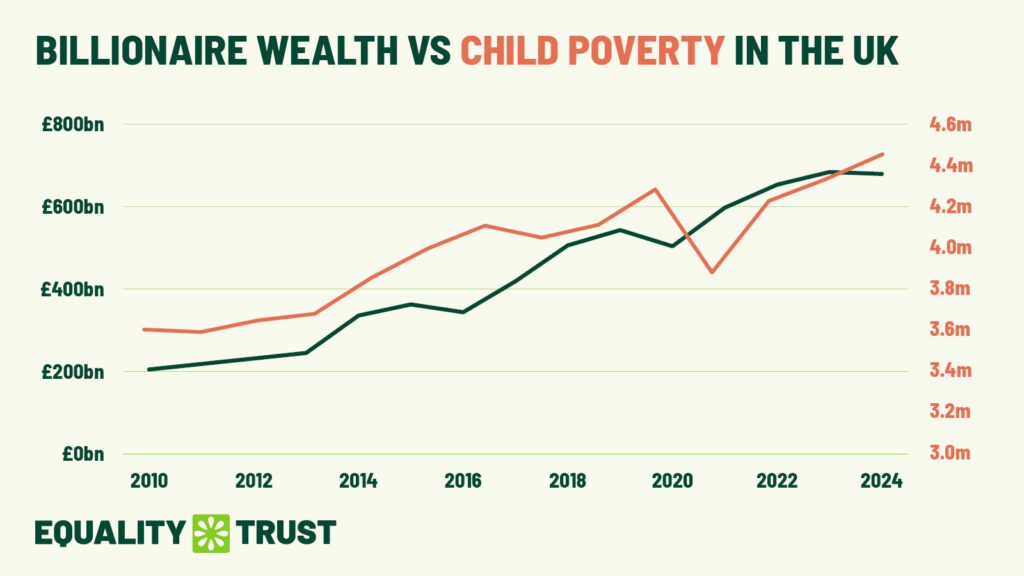
The briefing referenced the economic theories of Thomas Piketty, specifically the concept that the return on capital (r) often outpaces economic growth (g). When wealth grows faster than wages, those who do not own assets are structurally guaranteed to fall behind. By ignoring wealth, the government’s strategy treats the symptoms of the problem rather than the cause. Sahni-Nicholas argued that a child poverty strategy focusing only on wages and benefits is akin to "trying to empty a bath while leaving the taps running."
Corporate Power and the Systemic Production of Poverty
Beyond wealth, the briefing raised concerns about the "unspoken dimension" of power. The Equality Trust posits that inequality is maintained through corporate influence, the deregulation of housing markets, and a tax system that favors capital gains over labor income.
The strategy discusses "opportunity" and "life chances" but avoids a critique of how the economy is designed. For example, the UK’s housing crisis is a primary driver of child poverty, as a significant portion of family income is diverted to private landlords. Without addressing the power dynamics of the property market or the low taxation of high-value assets, the government must continuously spend more on benefits just to keep families at the poverty line.
Historical data supports the idea that systemic shifts are required for lasting change. The most dramatic reductions in UK inequality occurred after World War II, not through targeted poverty programs alone, but through the creation of the National Health Service, the expansion of social housing, and the implementation of progressive taxation that narrowed the gap between the top and the bottom of society.

Implications and Recommendations for Future Reform
The Equality Trust’s analysis concludes that the 2026 strategy should be viewed as a "floor," not a "ceiling." To achieve a truly transformative impact, the next phase of government policy must integrate fiscal reform with social investment. This includes:
- Taxing Wealth Equally to Income: Currently, returns on assets are often taxed at lower rates than wages. Aligning these rates could provide the sustainable funding necessary for long-term social programs without relying solely on economic growth.
- Narrowing the Gap: Success should be measured not just by lifting children above an arbitrary poverty line, but by reducing the overall ratio between the highest and lowest earners in society.
- Binding Accountability: A ten-year ambition requires more than just rhetoric. It needs legally binding targets and transparent reporting mechanisms that hold various government departments (DWP, Health, Education, and Housing) accountable for their specific roles in poverty reduction.
- Addressing the Housing Crisis: Directly tackling the power of the private rental sector and investing in social housing is essential to ensure that income gains are not simply absorbed by rising rents.
The reaction from other advocacy groups has been cautiously optimistic but mirrors these concerns. Organizations such as the Child Poverty Action Group (CPAG) have welcomed the abolition of the two-child limit but warned that without a broader strategy to tackle the "cost of living floor," many families will remain in a state of precariousness.
Conclusion: A Necessary Corrective, Not a Total Solution
The 2026 Child Poverty Strategy represents a real and welcome shift in UK social policy. It reverses some of the most harmful measures of the last decade and places the dignity of the family at the center of the conversation. By acknowledging the systemic nature of poverty and the role of the state in providing a safety net, the government has taken a vital step toward social repair.
However, the analysis provided by The Equality Trust serves as a reminder that income redistribution, while effective, is only a partial solution. As long as wealth remains concentrated in the hands of a few and the structures of power favor capital over labor, poverty will continue to be produced by the economy itself. To truly end child poverty, the government will eventually need to confront the harder questions of wealth distribution and the fundamental design of the British economy. The strategy marks the beginning of a long journey, but the most difficult structural challenges still lie ahead.