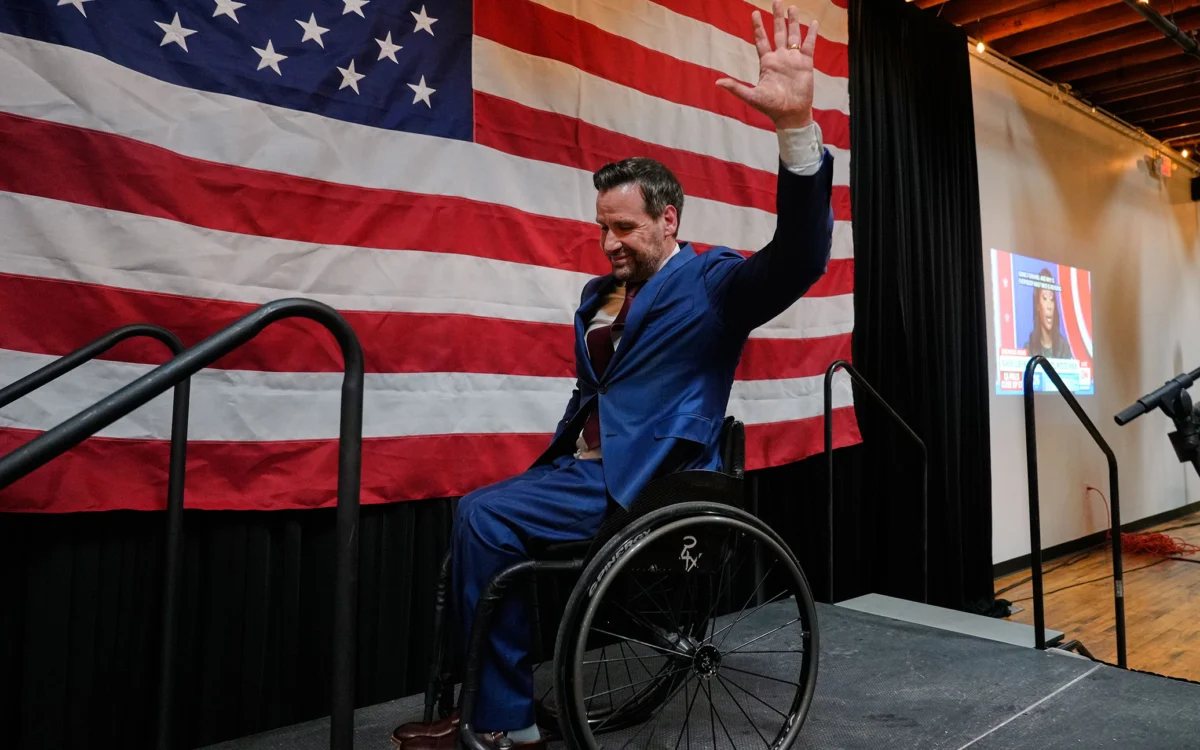
Iowa state Rep. Josh Turek, a decorated Paralympic champion and advocate for individuals with disabilities, has achieved a significant milestone in his political career, clinching the Democratic nomination for the U.S. Senate in Iowa. Turek, who lives with spina bifida, emerged victorious in a closely contested primary election on Tuesday, June 2, 2026, defeating state Sen. Zach Wahls. This win positions Turek to potentially represent Iowa in the U.S. Senate, a seat historically held by figures deeply connected to disability rights legislation.
The primary race was marked by intense campaigning and voter engagement, with Turek’s compelling personal narrative and unwavering commitment to public service resonating with a broad spectrum of the electorate. His journey from a childhood marked by extensive medical interventions due to spina bifida, to becoming a world-class athlete and now a state legislator, forms the bedrock of his campaign. Turek has attributed his condition to his father’s exposure to Agent Orange during his service in Vietnam, a connection that underscores the long-term health consequences faced by veterans and their families. His athletic achievements include competing in four Paralympic Games and earning two gold medals in wheelchair basketball, a testament to his resilience and dedication.
Turek’s victory sets the stage for a high-stakes general election in November, where he will face Republican Congresswoman Ashley Hinson. The seat Turek aims to win is currently held by Republican Joni Ernst, who has announced her retirement from the Senate. This transition presents a pivotal opportunity for Iowa to elect a new voice in federal representation.
Shifting Political Landscape and Turek’s Moderate Appeal
Political analysts are closely monitoring the Iowa Senate race, with Turek’s candidacy injecting a dynamic element into what is traditionally considered a Republican-leaning state. The influential Cook Political Report has already adjusted its assessment of the race, moving it from "likely Republican" to "leans Republican" following Turek’s primary win. This shift suggests that Turek’s campaign is perceived as having a strong chance of flipping the seat.
Turek has strategically positioned himself as a moderate candidate, seeking to appeal to a wide range of voters across the political spectrum. His campaign has been characterized by a visible and active approach, often highlighted by his practice of ascending stairs with his wheelchair during campaign events, a symbolic gesture demonstrating his determination and connection with constituents facing daily challenges. This personal commitment has resonated deeply with voters, underscoring his lived experience and his commitment to accessibility and inclusivity.
A Journey Rooted in the "American Dream"
In his victory speech following the primary, Turek articulated a powerful vision of the "American dream," emphasizing his own unlikely path to political candidacy. "My story is truly the American dream," Turek declared. "In no other country on earth can someone born into a working-class family in Council Bluffs, Iowa, who went to the Goodwill, who shared clothes, had the wrong color lunch ticket, who was born with my disability of spina bifida due to my father’s exposure to Agent Orange in Vietnam, who had 21 surgeries before the age of 12, be able to represent the United States in four Paralympic Games and bring home two gold medals and represent their community in the legislature. Only in America is that possible, and I am running for the United States Senate to protect that American dream for future generations."
This narrative of overcoming adversity and achieving success against significant odds forms a central theme of his campaign. Turek’s background, originating from humble beginnings in Council Bluffs, Iowa, and marked by numerous medical challenges from a young age, provides a stark contrast to the often privileged backgrounds of many political figures. His ability to connect with working-class families and individuals who have faced systemic barriers is a key asset in his bid for the Senate.
Motivation for Public Service and Advocacy
Turek’s foray into politics was significantly influenced by his experiences working within the healthcare field. He has spoken candidly about witnessing a concerning rise in denials and delays of essential medical services for individuals with disabilities and other chronic conditions. He attributes this trend, in part, to the increasing privatization of Medicaid, which he argues can compromise the quality and accessibility of care. This firsthand observation fueled his desire to enter public service and advocate for policies that protect and expand access to healthcare for all Americans.
Legacy of the ADA and a Poetic Connection
The U.S. Senate seat Turek is contesting carries a profound historical significance within the disability rights movement. Prior to the current incumbent, Joni Ernst, the seat was held for three decades by Senator Tom Harkin, a towering figure in disability advocacy and the chief architect of the Americans with Disabilities Act (ADA) of 1990. The ADA, a landmark civil rights law, prohibited discrimination based on disability and mandated accessibility in public spaces and employment.
Turek has openly acknowledged the pivotal role Senator Harkin’s work has played in shaping his life and the lives of countless other Americans with disabilities. "Sen. Harkin and his work on the ADA gave me and so many other disabled Americans an on-ramp onto society," Turek stated in a release following Harkin’s endorsement of his candidacy last month. "It will be beautifully poetic when the man who takes back Sen. Harkin’s seat is only here because of his work."
The endorsement from Senator Harkin, a respected elder statesman of the disability rights community, provides Turek with significant validation and a powerful connection to the legislative legacy he seeks to uphold and build upon. Harkin’s endorsement signifies a belief in Turek’s ability to carry forward the torch of disability rights and inclusive policy-making in the U.S. Senate.
Broader Implications for Disability Representation
Josh Turek’s candidacy and potential election to the U.S. Senate carry significant implications for the representation of people with disabilities in American politics. His presence on the national stage as a candidate for federal office can serve as a powerful inspiration for individuals with disabilities, demonstrating that leadership and public service are attainable goals.
The election outcome could also influence the broader discourse around disability inclusion and accessibility in policy-making. As a candidate who has lived experience with disability, Turek is uniquely positioned to bring an informed perspective to legislative debates on healthcare, education, employment, and infrastructure. His advocacy for policies that address the specific needs and challenges faced by the disability community could lead to more effective and equitable legislation.
Furthermore, Turek’s moderate political stance and his ability to connect with a diverse voter base suggest that disability advocacy can be integrated into mainstream political platforms without being confined to niche issues. His campaign demonstrates that a candidate with a disability can be a viable contender for high office, potentially paving the way for increased political participation and representation for individuals with disabilities across the country.
The general election campaign is expected to be a vigorous one, with both Turek and Hinson presenting their visions for Iowa and the nation. Turek’s ability to mobilize his supporters, articulate his policy proposals, and connect with undecided voters will be crucial in the coming months. The race will undoubtedly be a closely watched contest, with national implications for both the future of Iowa’s representation in the Senate and the ongoing evolution of disability rights and inclusion in American society. The election of Josh Turek would mark a historic moment, signifying a growing recognition of the valuable contributions individuals with disabilities can make in shaping the future of the United States.