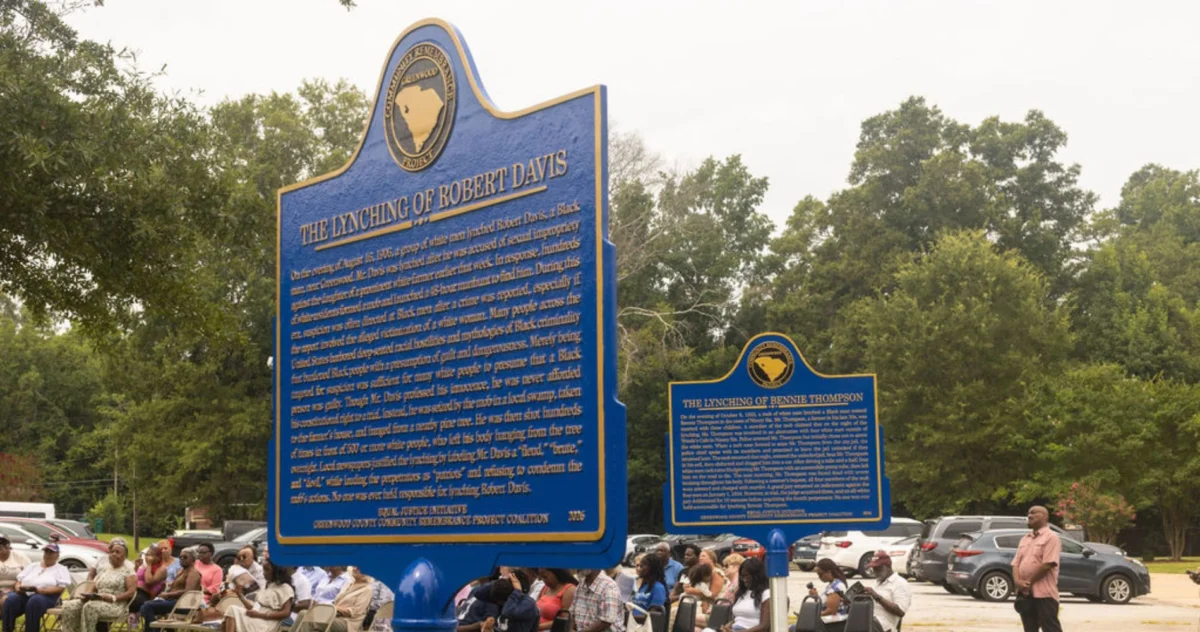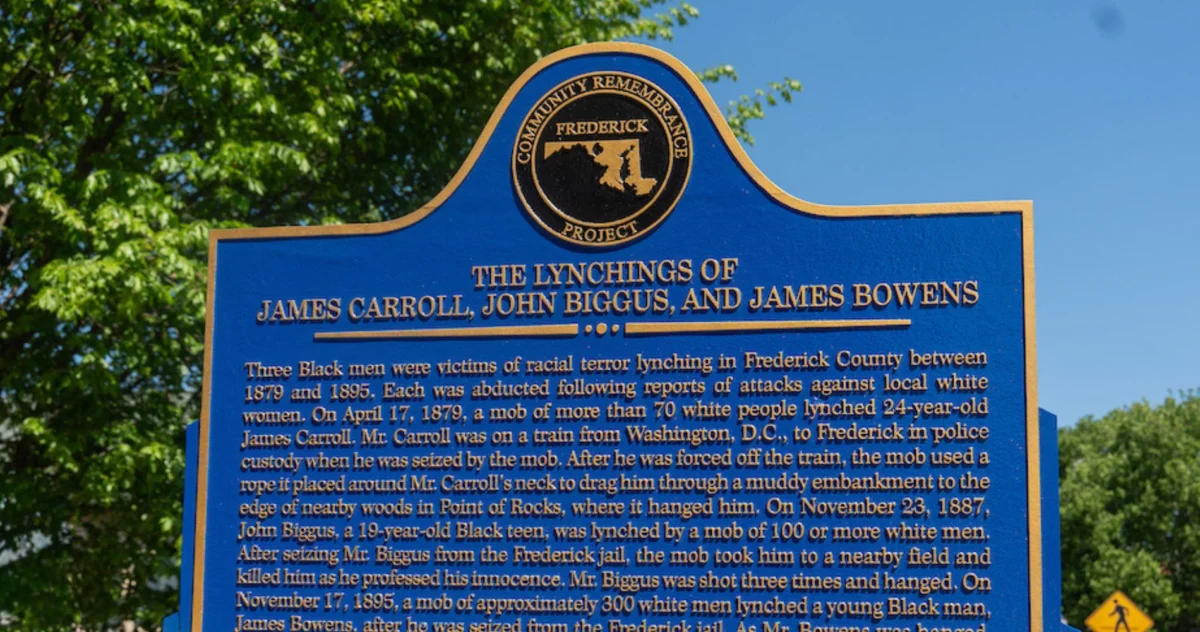
Community leaders and descendants, in partnership with the Equal Justice Initiative (EJI), dedicated a powerful historical marker on April 18 in Frederick County, Maryland, memorializing the lives of lynching victims James Carroll, John Biggus, and James Bowens. This significant act of remembrance, facilitated by the Frederick Remembrance Memorial Coalition, unfolded on historic South Market Street near Carroll Creek in downtown Frederick, drawing a diverse crowd committed to confronting a painful chapter of local history and advancing racial reconciliation. The ceremony marked a pivotal moment for Frederick, a community grappling with the enduring impact of racial terror and striving for a more just and equitable future.
A Day of Remembrance and Reckoning in Frederick
The dedication ceremony was not merely an unveiling but a profound civic gathering, reflecting years of diligent research, advocacy, and community organizing. It brought together local officials, descendants of the victims, and concerned citizens, all united in the imperative to speak truth about past injustices. Organizer Tina Allen opened the proceedings by underscoring the vital importance of memorializing lynching victims and directly confronting the pervasive legacy of racial terror that has shaped American society. "Today, we are here to honor the lynching victims James Carroll, John Biggus, and James Bowens," Allen stated, setting a solemn yet determined tone for the event.
The Reverend Ernest Thomas led an opening prayer, invoking a plea for strength for the county to "confront the legacy of this violence, to speak truth, and to walk humbly towards true racial reconciliation and justice." His words encapsulated the dual purpose of the ceremony: to honor the lives tragically cut short and to lay groundwork for a future where "all are safe, protected, and treated with dignity." The atmosphere was one of quiet reflection, punctuated by powerful calls for acknowledgment and healing.
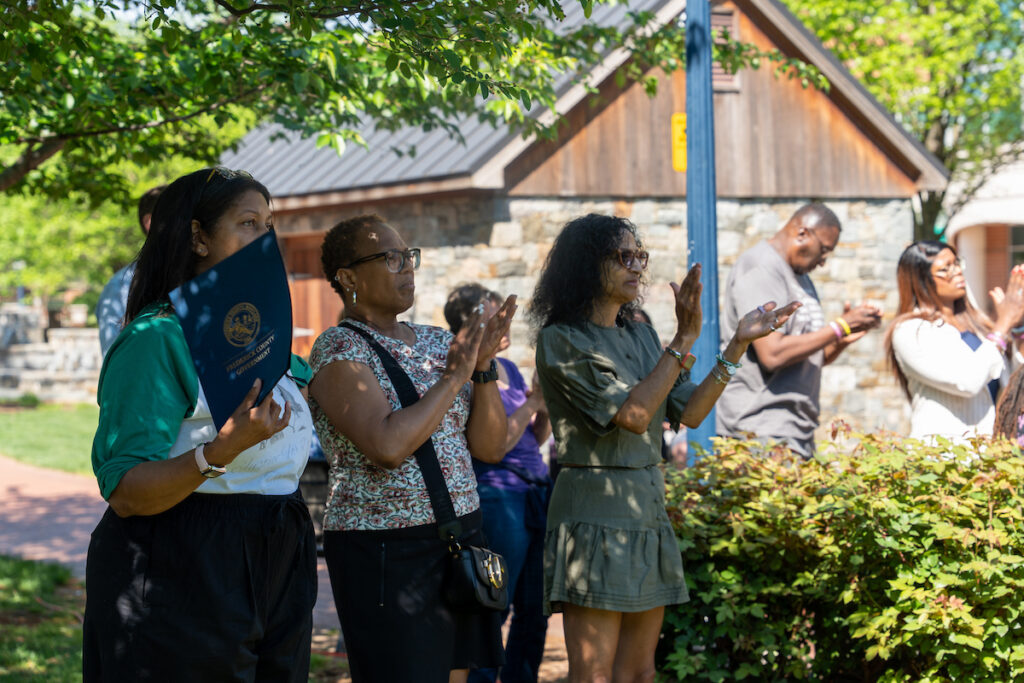
Frederick County Executive Jessica Fitzwater presented the Frederick Remembrance Memorial Coalition with a certificate of recognition, further solidifying the county’s commitment to this historical reckoning. She also issued a proclamation, officially declaring April 18th as Frederick Remembrance Memorial Day in Frederick County. In her address, Ms. Fitzwater reflected on the diverse, multi-ethnic communities that now call Frederick County home. "It is essential that all residents become aware of the painful legacy of racism and discrimination faced by African Americans through openly commemorating, reflecting on, and grieving past injustices," she emphasized, articulating the county’s aspiration to "promote healing and advanced reconciliation for all." This official recognition underscores a broader trend among local governments nationwide to acknowledge and atone for historical wrongs.
Unearthing the Truth: The Stories of James Carroll, John Biggus, and James Bowens
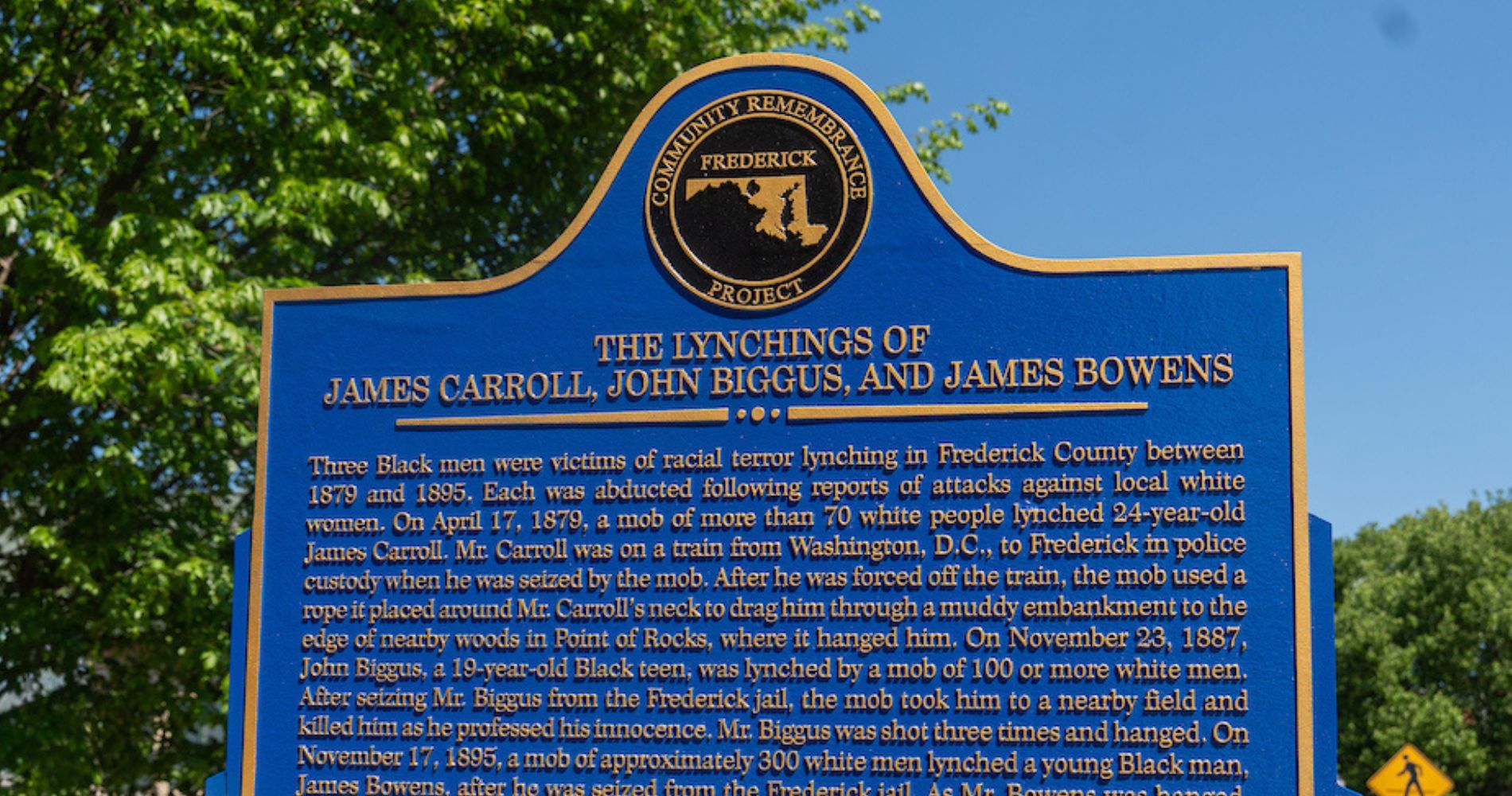
The historical marker now stands as a permanent testament to the brutal realities faced by Black Americans in post-Reconstruction Maryland. Each of the three men honored – James Carroll, John Biggus, and James Bowens – fell victim to racial terror lynchings in Frederick County between 1879 and 1895. Their stories, meticulously researched by local family history researcher Jane Weir and others, reveal a chilling pattern of mob violence, legal impunity, and systemic racial hierarchy.
James Carroll (April 17, 1879): The first of the three to be lynched, 24-year-old James Carroll was abducted by a mob of more than 70 white people while in police custody. Accused of an unspecified attack against a local white woman – a common pretext for racial terror – Carroll was being transported by train from Washington, D.C., to Frederick. The mob forcibly removed him from the train, dragged him through a muddy embankment, and hanged him from a tree in Point of Rocks. In a macabre display of cruelty, members of the mob took "souvenirs" from the tree and even a tip of Carroll’s finger. His lifeless body was left on public display until the following afternoon. Despite numerous witnesses to the abduction and murder, a coroner’s jury failed to identify, much less prosecute, a single perpetrator. This case starkly illustrates the breakdown of law and order when Black lives were at stake and white supremacy was enforced through violence.
John Biggus (November 23, 1887): Eight years later, 19-year-old John Biggus met a similar fate. A mob of 100 or more white people, wielding axes and a rope obtained from a nearby fire station, brazenly broke into the Frederick jail where Biggus was held. Like Carroll, Biggus was accused of an attack against a local white woman. Dragged from his cell by a rope around his neck, he was taken down South Street to a nearby field, reportedly professing his innocence the entire way. The mob hoisted him from a tree limb, and as he slowly suffocated, he was shot three times. This public spectacle, occurring within the town itself, demonstrated the absolute impunity enjoyed by lynch mobs and the terrorizing message it sent to the entire Black community.
James Bowens (November 17, 1895): The final lynching commemorated occurred eight years after Biggus’s murder, reinforcing a grim pattern. A mob of approximately 300 white people seized James Bowens from the Frederick jail. He was dragged to the very same field where John Biggus had been murdered, a deliberate choice designed to amplify the terror and memory of previous atrocities. As Bowens was hanged, one of his perpetrators fired a gunshot into his head. The chilling motivation behind this lynching was explicitly articulated by a mob member who announced their actions were "to teach men of his class that they must let the white women of Frederick county alone or suffer the consequences." Echoing the Carroll lynching, photographs of Bowens’s corpse were taken as mementos, and the rope used to hang him was divided and distributed as souvenirs, transforming instruments of death into tokens of white supremacy. Ms. Weir’s powerful recounting of these narratives during the ceremony underscored the importance of ensuring these truths are "not forgotten, not silenced."
Lynching in America: A System of Racial Terror
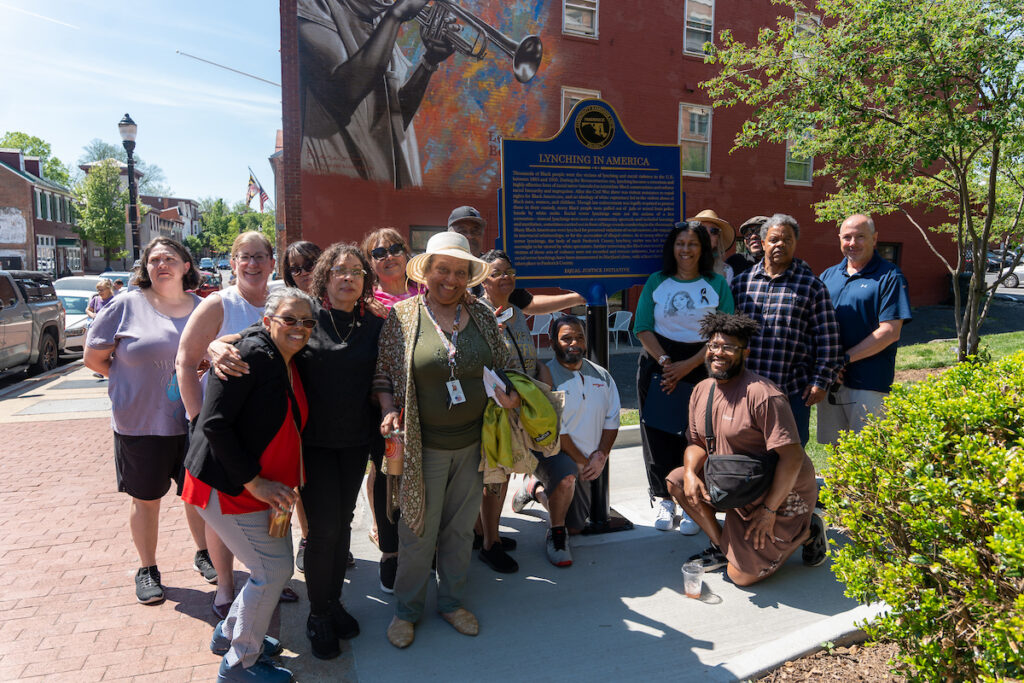
The lynchings in Frederick County were not isolated incidents but part of a widespread campaign of racial terror that gripped the United States, particularly the South and border states, from the end of Reconstruction through the mid-20th century. The Equal Justice Initiative estimates that over 6,500 Black men, women, and children were killed in racial terror lynchings between 1865 and 1950. This era, following the Civil War, saw many white Americans fiercely resist the newly won rights and freedoms of Black people. Lynching emerged as a brutal and public form of social control, designed to enforce racial hierarchy, economic subjugation, and political disenfranchisement.
Common pretexts for lynchings included accusations of assault or inappropriate behavior between a Black man and a white woman, which, as seen in the Frederick cases, were often fabricated or exaggerated. Such accusations regularly fueled fatal mob violence, bypassing any semblance of due process. Beyond alleged crimes, lynchings also served to punish Black people for perceived transgressions like disrespecting white individuals, economic competition, or attempting to vote. The goal was to instill fear and maintain a rigid caste system.
A defining characteristic of this era was the systemic failure of the justice system. Lynch mobs frequently seized their victims from jails, prisons, courtrooms, or directly from police custody. Despite being armed and charged with protecting those in custody, law enforcement officials almost invariably failed to resist white lynch mobs. In numerous documented cases, police were complicit or even active participants in these extralegal killings. The lack of accountability was staggering; grand juries rarely indicted perpetrators, and trials almost never resulted in convictions. This impunity sent a clear message that Black lives held little value in the eyes of the law.
The violence was often extreme, designed not only to kill but to terrorize. Victims’ bodies were frequently mutilated, left hanging for hours or days, and often became sites for public spectacle, where crowds gathered and collected "souvenirs." This public display prevented families from claiming their loved ones and served as a chilling warning to the entire Black community, ensuring racial subordination through the constant threat of violence. James Carroll, John Biggus, and James Bowens are three of at least 34 documented Black victims of racial terror lynching killed in Maryland between 1865 and 1950, highlighting Maryland’s own complicity in this national tragedy.
The Journey to Remembrance: EJI and Community Efforts
The dedication of the historical marker in Frederick is a tangible outcome of EJI’s groundbreaking Community Remembrance Project. This nationwide initiative is a cornerstone of EJI’s broader campaign to acknowledge the victims of lynching, foster public education, and advance healing. The project involves several key components: collecting soil from lynching sites, erecting historical markers like the one in Frederick, and developing the Legacy Museum and the National Memorial for Peace and Justice in Montgomery, Alabama. EJI’s core belief is that by confronting the truth of racial violence and its enduring legacy, communities can initiate essential conversations that lead to genuine healing and reconciliation.
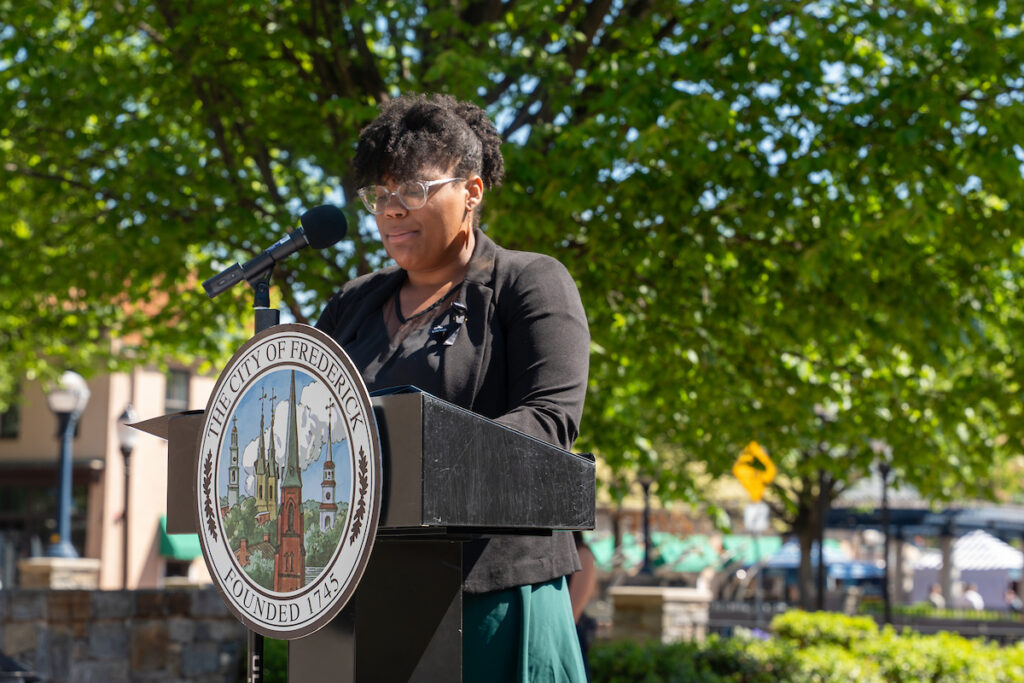
The Frederick Remembrance Memorial Coalition played a crucial local role in bringing this project to fruition. Their partnership with EJI involved years of meticulous research, community outreach, and persistent advocacy. Robin Dorsey-Cosley, the grand-niece of victim John Biggus, spoke movingly at the ceremony, describing her family’s discovery of this painful history and their subsequent efforts to unearth and share the truth. "We should be able to talk about it," she told participants, expressing profound gratitude for the community support that enabled "this commemorative moment in honor of the ones whose lives were taken without true justice being served." Her words underscored the intergenerational trauma caused by these acts and the healing power of public acknowledgment.
Mia Taylor, an EJI Project Manager, emphasized the profound significance of the community’s collective effort. "You are embracing the process of truth, justice, and reconciliation with difficult histories that is essential for us to recover from a history of racial injustice," Taylor remarked, highlighting the courageous step Frederick has taken towards genuine civic healing.
Voices of Acknowledgment and Hope
The ceremony was punctuated by moments of deep emotion and powerful statements. Following Terrence Boyd’s moving rendition of "Total Praise," Mayor Michael O’Connor delivered a particularly poignant address. On behalf of the city, Mayor O’Connor offered an apology for the "acts and omissions of government officials that contributed to the three racial terror lynchings." This official apology from a sitting mayor for historical governmental complicity is a significant and often rare gesture, signifying a deeper level of institutional accountability and a willingness to confront uncomfortable truths.
"I ask each of us to let this moment guide us, let it deepen our commitment to being a community where truth is not feared, where justice is not delayed, and where every person’s story is honored," Mayor O’Connor urged. He concluded by expressing hope that the marker would "serve as a place of reflection, a place where we remember James Carroll, John Biggus, and James Bowens." His words resonated with the community’s aspiration to move forward with integrity and a renewed commitment to justice.
Before the marker’s unveiling, organizer Tina Allen announced that the monument would be formally entrusted to the city, ensuring its perpetual care and visibility. She also affirmed the ongoing commitment of the Frederick Remembrance Memorial Coalition, stating, "This is just the beginning." Her statement signals that while the marker is a monumental achievement, it is also a starting point for further education, dialogue, and community engagement.
Implications and the Path Forward
The dedication of this historical marker in Frederick County carries profound implications, both locally and nationally. It serves as a permanent, visible reminder of a dark period in American history, ensuring that the victims are not forgotten and that the lessons learned are passed down through generations. For Frederick, it represents a public acknowledgment of systemic racial violence that previously existed largely in whispers or suppressed memories. By confronting this past, the community takes a vital step towards healing and building a more inclusive future.
The event contributes to a broader national movement to reckon with the legacy of racial terror. Communities across the country are increasingly engaging in similar initiatives, inspired by organizations like EJI, to erect markers, establish memorials, and integrate this difficult history into public education. These efforts are crucial for understanding the roots of contemporary racial disparities and for fostering a society committed to justice and equity. The Frederick marker is not just a piece of metal; it is a catalyst for ongoing dialogue, education, and advocacy. It challenges residents to reflect on how historical injustices continue to impact the present and to actively work towards a future where such atrocities can never again occur. As Tina Allen rightly noted, this dedication is "just the beginning" of a continuous journey towards truth, reconciliation, and lasting justice in Frederick County and beyond.